

In my twelve years of navigating the halls of both urban and rural schools, I have seen every kind of “breakthrough” imaginable. But if you asked me what consistently bridges the gap for a child struggling with a new concept, it isn’t a better worksheet or a more rigid schedule, it’s play. In the world of early childhood special education, we often feel a mountain of pressure to “catch up” to developmental milestones, sometimes at the expense of the child’s natural curiosity.
However, I’ve found that when we harness a child’s natural inclination to explore, we aren’t just passing the time; we are building the cognitive and emotional architecture they need for life. Play-based learning is the ultimate “low floor, high ceiling” strategy. It allows a student with sensory processing challenges to engage at their own pace while a peer might be using the same activity to test complex social boundaries.
I’ve watched students who were completely non-verbal in a seated lesson suddenly find their voice while navigating a robotics challenge or a dramatic play scenario. It’s about creating an interactive environment where they are the protagonists of their own discovery. As we dive into these strategies, I want you to remember that for our students, play is the highest form of research.
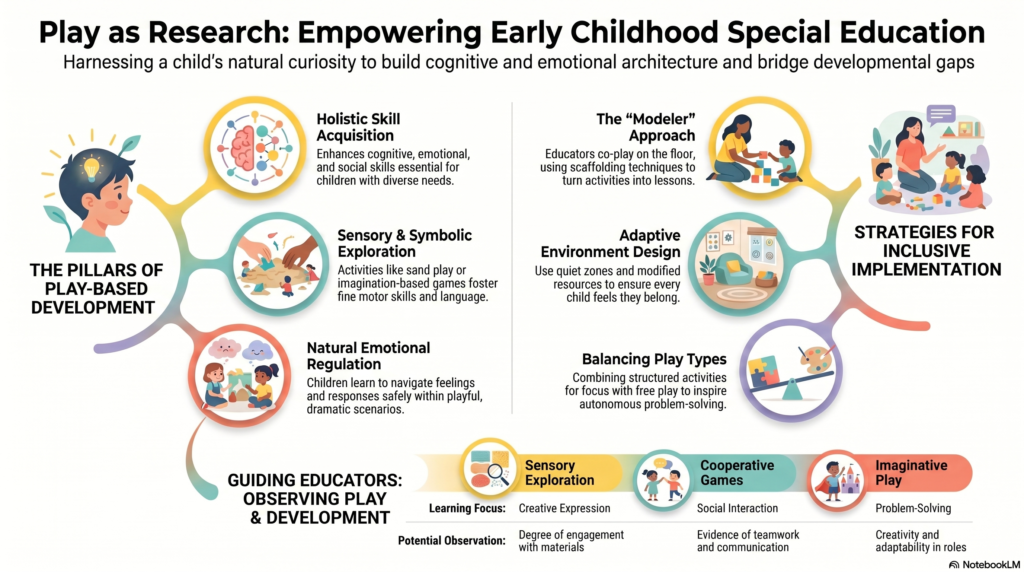
Play-based learning is vital in early childhood special education, as it fosters holistic development and skill acquisition. By harnessing the natural inclination to play, children with special needs engage in activities that enhance cognitive, emotional, and social skills. This approach promotes vital interactions among peers, encourages emotional regulation, and nurtures motor development. Effective implementation involves tailored play activities, adult facilitation, and a focus on inclusive environments. Families and specialists play a vital role in supporting this learning journey. For a deeper understanding of how these strategies benefit young learners, further information awaits you.
KEY TAKEAWAYS
- Play-based learning promotes holistic development, enhancing cognitive, emotional, and social skills essential for children with special needs.
- Engaging in play fosters social interactions, helping children develop essential cooperation and communication skills.
- Adult facilitation is crucial in guiding play experiences, ensuring that each child’s individual needs are met effectively.
- Varied play activities, including sensory and dramatic play, support emotional regulation and creative expression in children.
- Observational assessments during play provide valuable insights into children’s developmental progress and unique strengths.
UNDERSTANDING PLAY-BASED LEARNING
Play-based learning is an educational approach that utilizes the natural inclination of young children to engage in play as a means for exploration and discovery. This method fosters an interactive environment where children actively participate in their learning, enhancing their cognitive development and nurturing essential social skills. Through play, children not only learn to communicate effectively but also develop language acquisition, as they express themselves and engage with peers.
Moreover, play-based learning promotes emotional regulation, as children navigate their feelings and responses in various scenarios. The dynamic nature of play allows for physical engagement, encouraging children to develop fine and gross motor skills while exploring their surroundings. This physical activity is fundamental in building a strong foundation for overall health and well-being.
Creative expression flourishes in a play-based setting, allowing children to explore their imaginations and think outside the box. As they engage in problem solving during play, they learn to overcome obstacles and think critically, skills that are essential for lifelong learning. Additionally, sensory exploration promotes an understanding of the world around them, enhancing cognitive processes through hands-on experiences.
In essence, play-based learning is more than just fun and games; it is a foundational approach that supports holistic development in young children. By fostering an environment rich in play, educators and caregivers can guarantee that every child not only thrives academically but also emotionally and socially, paving the way for a successful future.
Benefits for Children With Special Needs
The advantages of play-based learning extend greatly to children with special needs, creating a unique and supportive educational environment tailored to their individual requirements. This approach fosters essential social skills by encouraging peer interaction, allowing children to build friendships and develop important cooperative behaviors. Through shared play experiences, children learn to navigate social norms, enhancing their ability to communicate effectively.
Moreover, play-based learning considerably contributes to emotional development. Engaging in playful activities helps children express their feelings, promoting self-regulation and emotional resilience. As they face challenges in play scenarios, they also cultivate problem-solving skills, which are essential for cognitive growth.
In addition, sensory integration is a key benefit of play-based learning, as it provides opportunities for children to engage their senses in a safe and stimulating environment. This can be particularly advantageous for children with sensory processing disorders, enabling them to explore and understand their surroundings at their own pace.
Furthermore, play enhances motor skills through activities that involve movement, coordination, and fine motor tasks. As children manipulate toys, engage in creative expression, and participate in physical activities, they build confidence in their abilities and learn to take risks in a supportive setting.
Key Components of Effective Play
When we talk about the “how” of play-based learning, I always tell my fellow educators to look at themselves as “Modelers”. In my experience, and as supported by recent research out of Finland, the most effective way we can support our kids is by getting down on the floor and co-playing. This isn’t just about supervising; it’s about using scaffolding techniques to turn a simple block tower into a lesson on structural integrity or social cooperation.
Effective play requires us to be observers first, using what we see to tailor the next day’s activity to a child’s specific developmental needs. I’m a huge advocate for balancing free and structured play. In my own robotics coaching, I see how a bit of structure can give a student the confidence to start, but it’s the “free play” moments where they truly learn to problem-solve and think outside the box. We also have to be intentional about our environments.
Whether it’s setting up quiet zones for those who face sensory overload or using adaptive resources to ensure a student with mobility aids can reach the sensory bin, our physical space should say “you belong here” before we even speak a word. We aren’t just teaching subjects; we’re teaching children how to navigate a world that wasn’t always built with them in mind.
Effective play in early childhood special education is characterized by a variety of engaging play activities that cater to diverse developmental needs.
Adult facilitation techniques play an essential role in guiding children through these activities, ensuring that each experience is enriching and supportive.
Understanding these key components not only enhances the play experience but also fosters meaningful learning opportunities for children with special needs.
Types of Play Activities
Engaging children in various types of play activities is crucial for fostering their development in early childhood special education. Each type of play serves a unique purpose, encouraging growth across multiple domains. Below are four essential types of play activities that can greatly benefit children:
- Symbolic Play: This form of play allows children to use objects to represent something else, enhancing their cognitive and language skills through imagination.
- Sensory Play: Involving activities that stimulate the senses, such as water play or sand exploration, sensory play fosters fine motor skills and emotional regulation.
- Cooperative Games: These games encourage teamwork and social interaction, helping children develop communication skills and learn the importance of collaboration.
- Dramatic Play: Through role-playing and storytelling, children can express emotions and explore different perspectives, fostering empathy and creativity.
Incorporating activities like outdoor play, art activities, music play, constructive play, and exploratory play further enriches the learning experience. The teacher’s role is to motivate and encourage the children to learn through interactions that expand their thinking.
Each type of play is not only enjoyable but also essential for holistic development, paving the way for a brighter future.
Adult Facilitation Techniques
Facilitating play in early childhood special education requires a thoughtful approach by adults to maximize its developmental benefits. Effective facilitators play multiple roles, including observer, guide, and supporter. By employing scaffolding techniques, adults can create a supportive framework that encourages children to explore and engage with their environment.
Interaction styles greatly impact children’s participation; facilitators should adopt a responsive approach, adjusting their techniques based on individual needs. Feedback methods are essential, offering praise and constructive suggestions that help children refine their skills while boosting their confidence. Educators may also explore additional instructional materials and activity resources from the engineering teacher shop to support engaging play experiences for children with diverse learning needs.
The environment setup is equally important, as it should be inclusive and motivating, providing varied play materials that cater to diverse interests and abilities. Additionally, emotional support is essential; facilitators must cultivate a safe atmosphere where children feel valued and understood.
Communication strategies, including visual aids and clear verbal cues, enhance understanding and participation, particularly for children with communication challenges.
Strategies for Implementing Play-Based Learning
The implementation of play-based learning in early childhood special education embodies a commitment to nurturing the unique developmental needs of each child. This approach not only fosters engagement but also facilitates critical growth in areas such as social skills, emotional regulation, and creative expression. These strategies demonstrate that teaching special education requires creativity, adaptability, and an understanding of how play can support meaningful learning experiences.
Here are four effective strategies to contemplate:
- Incorporate Peer Interactions: Encourage children to engage in cooperative games and structured play that promote teamwork, communication, and friendship. These interactions can build essential social skills and create lasting bonds among peers.
- Promote Sensory Exploration: Utilize materials that stimulate the senses, allowing children to explore textures, sounds, and colors. Such sensory experiences can enhance cognitive development and support emotional regulation through calming and stimulating activities.
- Facilitate Imaginative Play: Create opportunities for role playing scenarios that reflect real-life situations. This form of play allows children to experiment with different roles, fostering empathy and understanding while enhancing their creative expression.
- Balance Free and Structured Play: While structured activities can provide focus, integrating free play allows children to direct their own learning. This balance encourages autonomy and inspires imaginative thinking, crucial for personal development.
Implementing these strategies not only supports the growth of individual children but also nurtures an inclusive community where every child feels valued and empowered.
CREATING INCLUSIVE LEARNING ENVIRONMENTS
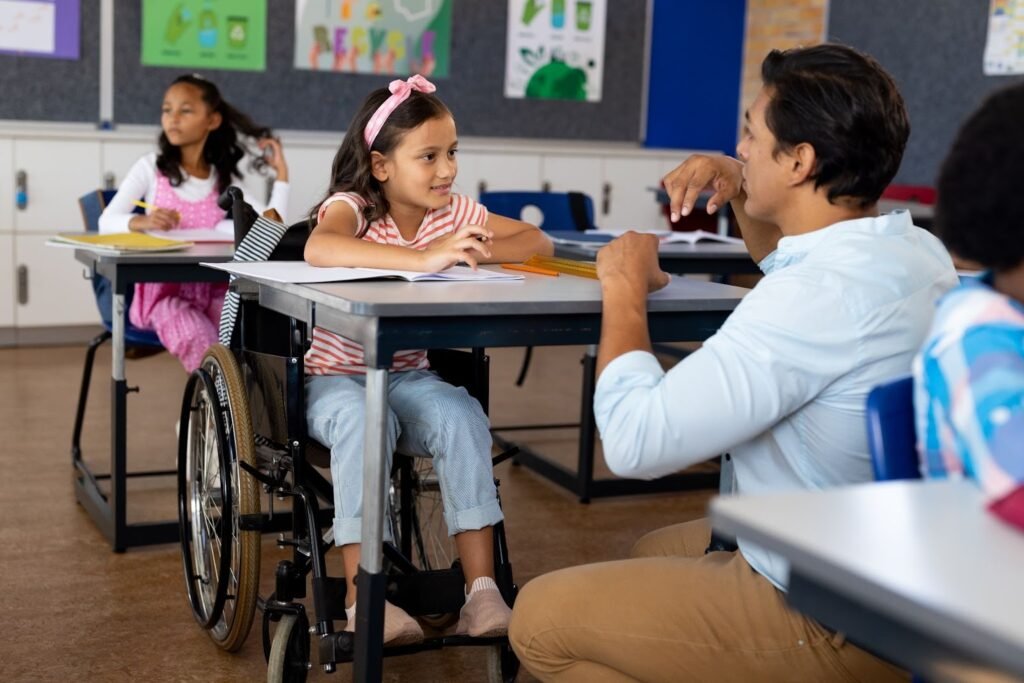
Creating inclusive learning environments is integral to maximizing the benefits of play-based learning in early childhood special education. Such environments are designed to embrace diverse abilities and backgrounds, ensuring that every child can engage meaningfully in the learning process.
Implementing inclusive practices involves recognizing individual strengths and needs, facilitating social integration through tailored experiences that promote peer interactions. One effective strategy is the use of adaptive resources, which can make play activities more accessible. For instance, incorporating sensory play with materials that cater to various sensory preferences can enhance engagement for children with different abilities.
Differentiated instruction further supports this by providing varied approaches to learning, allowing each child to thrive at their own pace. Environmental modifications play a critical role in fostering inclusivity. Adjusting spaces to accommodate mobility aids or creating quiet areas for children who may experience sensory overload can make a significant difference.
Additionally, cultural responsiveness enriches the learning environment by valuing and integrating the diverse backgrounds of all children, ensuring that every child feels seen and heard. Ultimately, creating an inclusive atmosphere in early childhood special education not only promotes learning but also nurtures empathy and understanding among peers.
Assessing Progress Through Play
Evaluating progress in early childhood special education through play is an essential process that captures children’s developmental achievements in a natural context. With play-based learning implemented into a special needs student’s curriculum, educators can create learning scenarios that involve group discussions, peer-to-peer collaboration, and teacher-student connection.
By employing observational assessment techniques, educators can gain valuable insights into each child’s unique abilities and challenges during engaging play activities.
Additionally, tracking developmental milestones within this framework not only fosters growth but also enhances the learning experience for every child involved.
Observational Assessment Techniques
Numerous educators and therapists recognize observational assessment techniques as essential tools for evaluating progress in early childhood special education. Playful learning is useful in situations where specific academic skills are not naturally learned in other types of play.
These techniques not only provide valuable insights into a child’s development but also foster a deeper connection between the child and the learning environment.
Utilizing both natural observations and structured assessments, professionals can assess play dynamics and interaction analysis effectively.
Key benefits of observational assessment techniques include:
- Enhanced Child Engagement: Understanding how children interact with peers and materials reveals their interests and motivations.
- Developmental Indicators: Observations help identify key milestones and areas needing support, guiding tailored interventions.
- Behavioral Insights: Tracking behavioral patterns during play offers a window into a child’s emotional and social development.
- Environmental Factors: Recognizing how different settings influence a child’s engagement allows for more effective learning environments.
Engaging Play Activities
Observational assessment techniques provide a solid foundation for understanding a child’s developmental journey, and engaging play activities serve as a dynamic avenue for evaluating progress. Through play, educators can observe key indicators of growth in various domains, including cognitive, social, and emotional development.
| Play Activity | Learning Focus | Potential Observations |
| Sensory Exploration | Creative expression | Engagement with materials |
| Cooperative Games | Social interactions | Teamwork and communication |
| Imaginative Play | Problem-solving tasks | Creativity and adaptability |
| Outdoor Adventures | Emotional regulation and peer relationships | Risk-taking and social bonding |
These engaging play activities not only support sensory exploration but also foster essential peer relationships through cooperative games and imaginative play. Structured activities can enhance problem-solving skills, while outdoor adventures promote emotional regulation and creative expression. As educators observe children in these settings, they gather invaluable insights into each child’s unique strengths and challenges, further guiding tailored interventions. By embracing the holistic nature of play, we can effectively assess and nurture the developmental needs of children in early childhood special education.
Developmental Milestones Tracking
While play serves as a natural and enjoyable context for children to learn, it also provides educators with critical opportunities to track developmental milestones effectively. Through play-based activities, educators can conduct developmental assessments that reveal a child’s progress in various domains, enabling tailored support that fosters growth.
- Observation of Social Skills: Witnessing children interact during play can highlight their ability to share, collaborate, and communicate—essential social milestones.
- Cognitive Development: Engaging in problem-solving tasks during play helps educators assess a child’s cognitive skills, such as critical thinking and creativity.
- Physical Coordination: Play activities allow educators to evaluate fine and gross motor skills as children manipulate objects and navigate their environment.
- Emotional Regulation: Through play, children express their emotions, allowing educators to monitor their ability to manage feelings and respond to challenges.
Collaborating With Families and Specialists
Effective collaboration with families and specialists is crucial for fostering an inclusive environment in early childhood special education. This partnership is grounded in family involvement, recognizing that families are essential contributors to their child’s learning journey. By utilizing effective communication strategies, educators can guarantee that all voices are heard, creating a space where families feel valued and engaged.
Specialist collaboration plays a significant role in enhancing the educational experience for children with diverse needs. Specialists can offer insights and tailored strategies that complement classroom practices, leading to more effective interventions. Joint planning sessions involving families and specialists can facilitate resource sharing, allowing for a more holistic approach to each child’s development. Additionally, understanding policies related to special education law can help educators and families advocate more effectively for services that support children’s developmental and educational needs.
Establishing support networks further strengthens this collaboration, enabling families to connect with one another and share experiences. This sense of community can alleviate feelings of isolation while reinforcing the importance of shared goals.
Additionally, implementing feedback loops, where educators solicit input from families and specialists, fosters continuous improvement in teaching methods and engagement techniques.
Ultimately, the synergy created through these collaborative efforts enhances the overall learning environment, guaranteeing that children with special needs receive the attention and resources necessary to thrive. By prioritizing collaboration, we can create a responsive educational framework that celebrates the unique contributions of families and specialists, empowering our youngest learners to reach their fullest potential.
RELATED STUDIES ABOUT EARLY CHILDHOOD SPECIAL EDUCATION
In the domain of early childhood special education, the irony lies in the notion that play, often dismissed as mere leisure, serves as a profound catalyst for learning and development. Through play-based learning, children with special needs not only discover joy but also acquire essential skills that transcend traditional educational boundaries. By fostering inclusive environments and collaborative partnerships, educators can transform play into a powerful tool, ultimately redefining what it means to educate and support every child’s unique journey.
The Comparison Of Early Childhood Special Education System In Turkey With In Hungary, Italy And Romania
- Overview and Purpose
Early childhood special education is a critical intervention for children aged 0-6 with developmental delays or disabilities, offering benefits not only for the child’s development but also for family well-being and social integration. This study provides a comparative analysis of early childhood special education systems in four countries: Turkey, Hungary, Italy, and Romania. By examining their legislation, key studies, and service delivery models, the research aims to identify similarities and differences, and to offer insights that could inform future policy and practice, particularly in Turkey.
- Methodology
- Design: A qualitative comparative study using document analysis.
- Data Sources: The researchers conducted a systematic review of national and international literature, including academic databases (Google Scholar, Ulakbim, YOK, ScienceDirect, EBSCO) and official documents from the European Education Data Net (EURYDICE), the Turkish Ministry of Education (MEB), and national special education regulations from the four target countries.
- Analysis: Key themes related to legislation, major projects/studies, and service delivery models were identified and compared across the four national contexts.
- Major Findings
The analysis reveals that while the four countries share a common philosophical commitment to inclusion and equal access, their historical paths, legislative frameworks, and specific practices in early childhood special education show distinct national characteristics.
- Legislative Frameworks: All four countries have established legal foundations to support the education of children with special needs.
- Turkey: The foundation is the “Executive Order of Special Education” (No. 573, 1997), which mandates that the education of individuals with special needs should, wherever possible, be conducted with their peers.
- Italy: A pioneer in this area, Italy enacted its National Law in 1971, guaranteeing children with special needs the right to learn alongside other children. Subsequent legislation (e.g., Law 517) limited class sizes and emphasized the role of teachers, management, and families.
- Romania: Following the 1994 Salamanca Conference, Romania passed a new education law in 1995 that mandated the inclusion of children with special needs in mainstream schools.
- Hungary: The “Public Education Act” was enacted in 1993, followed by an Equal Rights Law in 1998, guaranteeing all disabled individuals the right to education and allowing parents to choose between mainstream and special schools.
- Key Studies and Programmes: Each country has implemented specific programs and projects to advance early childhood special education.
- Turkey: Utilizes established early intervention programs like Portage and the Little Steps Early Education Programme, which focus on supporting social development and providing guidance to families.
- Italy: The legacy of Maria Montessori is foundational. Her work, which began with mentally disabled children, led to the development of an activity-based education method that is still widely used today.
- Romania: Implemented the impactful “Special Needs in the Classroom” project with UNICEF in 1993, which focused on improving teacher training. The 1994 Salamanca Conference further accelerated the country’s shift toward inclusion, leading to the transfer of 18,000 children from special to mainstream schools by 2001.
- Hungary: Conducted a large-scale national survey using questionnaires for children aged 6-15 to map the distribution and needs of children with disabilities across different regions.
- Service Delivery Models: The core model of service delivery is consistent, but with national variations.
- Turkey: Employs a dual approach of Individualized Education Programmes (BEP) and inclusion. Special education classes are kept small (max 10 students, 4 for autistic children), and efforts are made to integrate these students with their peers for social activities. Support rooms are also provided.
- Romania: Has transitioned from an “integrated” to a full “inclusion” model, offering differentiated, individualized programs. A key element is providing significant support to classroom teachers.
- Hungary: Uses both “integrated” and “inclusion” systems. The approach is student-oriented, differentiated, and individualized. Special education teachers play a crucial role in building strong ties between schools and families.
- Italy: The inclusion system is supported by a unique and crucial role: the “sostegno” teacher. This is a support teacher who works alongside the classroom teacher to specifically assist children with special needs, fostering a classroom culture where “classes are families.”
- Implications and Conclusion
The comparison shows that all four countries have moved decisively toward inclusive education for young children with special needs, underpinned by national legislation that prioritizes equality. The primary model across all countries is inclusion, with Turkey and Hungary also retaining elements of integrated or individualized programming.
The study highlights key factors that contribute to successful early childhood special education systems:
- Strong Legal Frameworks: Clear, national-level legislation is essential to guarantee rights and provide a foundation for services.
- Targeted Programs and Projects: National and international collaborations (like Romania’s UNICEF project) can accelerate progress, particularly in teacher training.
- The Importance of Teacher Support: The Italian “sostegno” model and the emphasis on teacher support in Romania and Hungary underscore that successful inclusion depends on equipping and supporting classroom teachers, not just placing children in mainstream settings.
- Family and Community Involvement: The Hungarian model’s focus on school-family ties and the Turkish programs’ inclusion of family guidance are critical for holistic child development.
In conclusion, while minor differences exist, the early childhood special education systems of Turkey, Hungary, Italy, and Romania are fundamentally aligned in their goals and core practices. The study suggests that Turkey can benefit from examining the specific support structures (like the “sostegno” teacher) and large-scale teacher training initiatives seen in other European contexts to further strengthen its own system.
| REFERENCE: Mukaddes Sakalli Demirok, Meltem Haksiz, The Comparison of Early Childhood Special Education System in Turkey with in Hungary, Italy and Romania, Procedia – Social and Behavioral Sciences, Volume 205, 2015, Pages 648-654, ISSN 1877-0428, https://doi.org/10.1016/j.sbspro.2015.09.102. (https://www.sciencedirect.com/science/article/pii/S1877042815051204) |
Consultative Roles Of Early Childhood Special Education Teachers: A Modeler, An Advisor, And A Spontaneous Practitioner
- Overview and Purpose
In many countries, Early Childhood Special Education Teachers (ECSETs) are increasingly working as itinerant consultants, providing guidance and support to other early childhood education and care (ECEC) staff to enhance the support children receive in their daily environments. However, the specific practices of this consultative work and the factors that shape it are not well understood. This is particularly true in Finland, where national legislation mandates consultative support but leaves its practical implementation entirely to the discretion of individual municipalities, leading to wide variation.
This study investigates how Finnish ECSETs perform their consultative work and examines how work-related structural factors, such as caseload and municipality type, are associated with different consultative practices.
- Key Research Questions
The study addresses two main questions:
- How do ECSETs perform their consultative work?
- How are work-related factors associated with the consultative work done by ECSETs?
- Methodology
- Design: A quantitative, cross-sectional survey study using a person-centered approach (cluster analysis).
- Participants: 207 ECSETs working in municipal ECEC settings across Finland, representing approximately 13% of the national workforce. The sample was broadly representative of different municipality types (urban, densely populated, rural).
- Data Collection: An electronic survey was developed based on previous research and in collaboration with practicing ECSETs. It collected data on background factors and the forms, goals, and distribution of consultative work. A key question asked respondents to estimate the percentage of their consultative time spent on five specific forms of work during their previous typical workday.
- Analysis: A K-means cluster analysis was performed on the five “previous workday” variables to identify distinct profiles of consultative practice. Chi-square tests and one-way ANOVA were then used to examine how these profiles related to background factors and other work-related variables.
- Major Findings
The analysis revealed three distinct profiles of ECSET consultative practice.
- The Three Consultative Profiles:
- Modelers (44.4%): These ECSETs emphasized hands-on, in-context support. Their consultative work was characterized by modeling, co-teaching, and observing within the child’s group to guide staff.
- Advisors (39.1%): These ECSETs focused on more formal, separate interactions. Their work was characterized by structured consultation discussions and responding to individual questions, functioning as an external expert.
- Spontaneous Practitioners (16.4%): These ECSETs relied on informal, in-the-moment interactions. Their work was characterized by instantaneous information sharing and corridor conversations, providing quick, accessible support.
- Association with Structural Factors:
- Caseload: ECSETs with responsibility for a large number of children were significantly more likely to be Advisors. Those with fewer children were more likely to be Modelers. This suggests that a high caseload may push ECSETs toward a more distal, advisory role and away from hands-on work in the classroom.
- Municipality Type: ECSETs working in rural municipalities were significantly more likely to be Spontaneous Practitioners. This may reflect the need for greater flexibility and informal collaboration in smaller, more remote communities.
- Goals and Expectations:
- All three groups shared the common ultimate goal of strengthening support for children, but their emphasis differed. Advisors reported setting goals related to solving individual child problems more frequently than Modelers.
- Spontaneous Practitioners received significantly fewer requests from staff for identifying children’s needs and supporting staff well-being, compared to the other two groups. This may indicate that their informal, quick-fix style is perceived as less suited for deeper, systemic issues.
- Lack of Training: A striking finding was that 63.8% of all ECSETs reported having received no specific training in consultative work, either in their pre-service education or through in-service professional development. This was consistent across all three profiles.
- Implications for Practice
The findings have significant implications for policy, leadership, and teacher education.
- Recognize and Plan for Differentiated Roles: There is no single “correct” way to do consultative work. Municipalities and ECEC leaders should recognize that different contexts (e.g., high caseload, rural setting) may necessitate different consultative approaches. Job descriptions and resource allocation should reflect this, ensuring ECSETs have the time and support to practice in a way that is both effective and sustainable.
- Address the Training Gap: The lack of formal consultation training is a critical weakness. Given that consultative work is a core part of their job, ECSET preparation programs must integrate specific, research-based training on consultation models, interaction skills, and process management. In-service training is equally urgent for the current workforce.
- Develop Context-Sensitive Models: The field should move toward developing situation-specific consultation models for ECEC. This would help ensure that consultative work is not arbitrary but is guided by a clear, research-based process structure adapted to the local context.
- Focus on the Ultimate Outcome: The Child: While this study illuminates different processes of consultation, it does not measure their effectiveness. The ultimate goal of all consultative work is to improve outcomes for children. Future research and practice must prioritize evaluating how different consultative approaches impact the quality of support children actually receive.
- Conclusion
This study provides the first large-scale, quantitative evidence of how Finnish ECSETs perform their consultative work, identifying three distinct profiles: Modelers, Advisors, and Spontaneous Practitioners. It demonstrates that consultative practice is not uniform but is significantly shaped by structural factors like caseload and municipality type. The pervasive lack of formal consultation training across all profiles is a major concern. The findings underscore the need for a more systematic, research-informed, and context-sensitive approach to defining, supporting, and training for the consultative role of ECSETs, with the ultimate aim of ensuring that this vital work effectively strengthens the support provided to all children.
| REFERENCE: Erika Jokimies, Noora Heiskanen, Hannu Savolainen, Vesa Närhi, Consultative roles of early childhood special education teachers: A modeler, an advisor, and a spontaneous practitioner, Early Childhood Research Quarterly, Volume 70, 2025, Pages 358-366, ISSN 0885-2006, https://doi.org/10.1016/j.ecresq.2024.11.005. (https://www.sciencedirect.com/science/article/pii/S0885200624001558) |
Impacts of the Smart Beginnings Parenting Program on Early Childhood Special Education Evaluation and Service Referral
- Overview and Purpose
Early Intervention (EI) and Early Childhood Special Education (ECSE) are critical federally mandated systems that provide services to young children with developmental delays or disabilities. However, significant disparities exist in access to these services for families from racial and ethnic minority groups and those with low incomes. While parenting interventions are known to support child development, little is understood about how they might influence a family’s engagement with these formal evaluation and service systems.
This study investigates the impact of the Smart Beginnings (SB) parenting program on rates of EI/ECSE evaluation and subsequent service referral for children up to age 4. SB is a tiered intervention that integrates a universal program delivered in primary care (PlayReadVIP) with a targeted home-visiting program for families with additional risks (Family Check-Up). The study is set within a predominantly Black and Latine sample with low incomes, a population historically underrepresented in or underserved by these systems.
- Key Research Questions and Hypotheses
The study tested two main hypotheses:
- H1a: Children with lower expressive vocabulary and higher problem behaviors at age 2 would be more likely to receive an EI/ECSE evaluation and subsequent service referral by age 4. This serves as a check to ensure the system is appropriately identifying children with clear developmental needs.
- H1b: Children in the SB intervention group would receive more referrals for services following evaluation compared to the control group, based on prior research showing that the Family Check-Up component can increase families’ engagement with community services.
- Methodology
- Design: A secondary analysis of data from a two-site randomized controlled trial (RCT) of the Smart Beginnings intervention (NCT02459327).
- Participants: 280 families (132 treatment, 148 control) from New York City and Pittsburgh who completed the age-4 assessment. The sample was 43% Black, 47% Latine, and 37% Spanish-speaking. All families were Medicaid-eligible.
- Intervention (SB): A tiered program delivered from birth to age 3. All treatment families were offered PlayReadVIP at well-child visits (13 sessions), which uses video feedback to promote positive parenting. Families with additional risks (74% of the sample) were also offered the Family Check-Up, a home-visiting program focused on child behavior and family strengths.
- Measures:
- Expressive Vocabulary (age 2): MacArthur Communicative Development Inventories (CDI). Children scoring ≤ 25th percentile were coded “at risk.”
- Problem Behaviors (age 2): Child Behavior Checklist (CBCL) for internalizing and externalizing behaviors. Scores T ≥ 60 (84th percentile) indicated risk.
- EI/ECSE Outcomes (age 4): Parent report on whether their child had ever received a formal evaluation for developmental delay/disability, and if that evaluation resulted in a referral for services.
- Analysis: Hierarchical logistic regression models were used to test the associations between early child skills, intervention group, and the likelihood of evaluation and service referral, controlling for site, child age, and the timing of the assessment relative to the COVID-19 pandemic onset.
- Major Findings
The results confirmed that the EI/ECSE system was responsive to child needs but revealed a significant and unexpected effect of the SB intervention.
- Appropriate Referral Based on Need (H1a Supported): Children with early developmental challenges were correctly identified by the system.
- Lower expressive vocabulary and higher internalizing/externalizing behaviors at age 2 significantly increased the likelihood of being evaluated for EI/ECSE by age 4.
- These same early challenges also significantly increased the likelihood of being referred for services following that evaluation. This confirms that children in the study with legitimate needs were accessing the special education pipeline.
- SB Intervention Reduced Service Referrals (H1b Not Supported): While the SB intervention had no effect on the likelihood of a child being evaluated, it had a significant and substantial effect on the outcome of that evaluation.
- Children in the SB intervention group were significantly less likely to be referred for services after an evaluation, compared to children in the control group.
- This effect held across all models: for expressive vocabulary (AOR = 0.22), internalizing behaviors (AOR = 0.24), and externalizing behaviors (AOR = 0.28).
- Descriptively, only 3% of the total sample in the treatment group were referred for services, compared to 9% in the control group.
- Site Differences: Children in Pittsburgh (predominantly Black, English-speaking) were more likely to receive evaluations than children in New York City (predominantly Latine, Spanish-speaking), highlighting the complexity of factors influencing referral, which may include state policies, provider knowledge, and community resources beyond just race/ethnicity.
- Implications for Practice and Policy
The findings have significant implications for understanding how preventive interventions interact with formal support systems.
- Prevention Can Reduce the Need for Special Education: The most plausible interpretation of the reduced service referrals in the SB group is that the intervention was effective. By enhancing positive parenting and cognitive stimulation from birth, SB may have successfully mitigated some developmental delays, thereby reducing the actual need for intensive EI/ECSE services by age 4. This suggests that high-quality parenting programs can serve as a cost-effective, system-level preventive strategy.
- A Streamlined System of Care: The results support the idea that parenting interventions delivered in primary care and home settings can work in tandem with formal evaluation systems (EI/ECSE). For families who may face systemic barriers, SB may have provided the support needed to address concerns, making a formal service referral less necessary.
- Promoting Equity: For historically marginalized populations who are often either under-referred or over-referred to special education, a preventive program like SB offers a universal, non-stigmatizing approach to supporting child development. It addresses potential root causes of developmental concerns within the family context, rather than waiting for a formal diagnosis and referral.
- Policy Support for Tiered Interventions: The findings bolster the case for policies that fund and support integrated, tiered prevention models like SB, which can reach families in accessible settings (pediatric primary care) and provide targeted support to those who need it most, ultimately reducing burden on the special education system.
- Conclusion
This study from a rigorous randomized controlled trial provides compelling evidence that the Smart Beginnings parenting program reduced the likelihood of children from low-income, minority backgrounds being referred for special education services following an evaluation. While the system appropriately identified children with early challenges, the intervention appears to have lessened the need for those services, likely by boosting child skills through improved parenting. This suggests that investing in preventive, family-focused programs is a powerful strategy to not only support child development but also to reduce disparities and promote equity within the early childhood special education system.
| REFERENCE: Leah J. Hunter, Ashleigh I. Aviles, Elizabeth B. Miller, Caitlin F. Canfield, Katherine Guyon-Harris, Pamela A. Morris-Perez, Alan L. Mendelsohn, Daniel S. Shaw, Impacts of the Smart Beginnings Parenting Program on Early Childhood Special Education Evaluation and Service Referral, Academic Pediatrics, Volume 25, Issue 6, 2025, 102826, ISSN 1876-2859, https://doi.org/10.1016/j.acap.2025.102826. (https://www.sciencedirect.com/science/article/pii/S1876285925000518) |
CONCLUSION
Looking back at the data, especially the studies comparing systems across Turkey, Hungary, Italy, and Romania, it’s clear that the move toward inclusion is a global mission. But as much as we look at policy and teacher-to-student ratios, the heart of this work always comes back to the partnership between families, specialists, and the classroom. I’ve seen firsthand how a preventive approach, like the Smart Beginnings program mentioned in recent literature, can transform a child’s trajectory by supporting parents as their first and most important teachers.
When we empower families, we reduce the need for more intensive interventions later because we’ve built a foundation of resilience early on. As we move forward, I hope we can stop viewing play as “leisure” and start seeing it as the profound catalyst it truly is. Every time a child engages in a cooperative game or navigates a difficult emotion during a role-play, they are practicing for the “real world”.
My goal as an educator has always been to ensure that every student, regardless of their learning challenges, feels empowered to excel. By prioritizing these play-based strategies and keeping our communication lines open with families, we aren’t just educating, we’re advocating for a future where every child’s unique journey is celebrated and supported.