

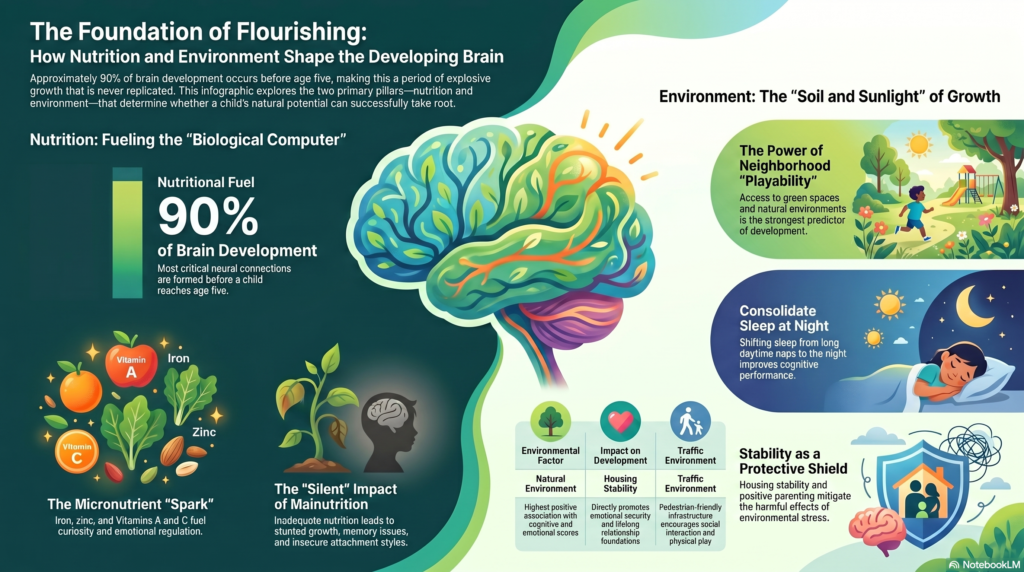
As a child psychologist, I often tell parents and educators that we aren’t just raising children; we are tending to the most complex and delicate “biological computers” in existence. During the first five years, the brain is undergoing a period of explosive growth that will never be replicated again in a person’s life. When we talk about nutrition and environment, it’s easy to get lost in the clinical data, but I see these as the very “soil” and “sunlight” that determine whether a child’s natural potential can actually take root.
In my clinical practice, I’ve seen how a lack of essential micronutrients doesn’t just slow down physical growth; it dims the spark of curiosity and makes it incredibly difficult for a child to regulate their emotions or engage with their peers. I am particularly passionate about the “invisible” factors of a child’s environment.
We often focus on the four walls of a classroom, but a child’s development is just as impacted by the air they breathe, the stability of their housing, and whether they have a safe green space to run in. These elements aren’t just “perks” of a comfortable life; they are fundamental requirements for healthy cognitive and emotional outcomes. My goal is to help you see that every meal served and every safe park built is a direct investment in a child’s future resilience.
Nutrition and environmental factors are foundational to early childhood development, influencing physical, cognitive, and emotional outcomes. Adequate nutrition, including a balanced diet rich in essential micronutrients, fuels brain growth and promotes healthy development. Conversely, malnutrition can lead to stunted growth and cognitive delays, impairing school readiness and emotional regulation. Additionally, environmental conditions—such as air quality, housing stability, and access to community resources—play a pivotal role in shaping resilience and social skills. Together, these elements underscore the importance of a nurturing environment that supports healthy development at a critical life stage. Further insights reveal more about these interconnections.
KEY TAKEAWAYS
- Nutrition is crucial for physical growth and cognitive development, with a balanced diet supporting overall health and learning abilities in early childhood.
- Malnutrition can lead to stunted growth, cognitive delays, and behavioral issues, significantly affecting children’s school readiness and emotional well-being.
- Environmental factors like air quality, housing stability, and access to green spaces influence children’s physical health, emotional security, and social interactions.
- Socioeconomic status affects access to nutritious food and quality education, creating disparities in child development and long-term outcomes.
- Community resources and supportive parenting play vital roles in mitigating stress and promoting healthy emotional and cognitive development in children.
IMPORTANCE OF EARLY CHILDHOOD DEVELOPMENT
Early childhood development plays a significant role in shaping a child’s future, with research indicating that approximately 90% of brain development occurs before the age of five. This formative period is essential for establishing secure attachment styles, which greatly influence emotional and social development.
Parental engagement is crucial; responsive caregiving fosters trust and resilience, laying the groundwork for lifelong relationships.
Sensory experiences during early childhood are equally important, as they enhance cognitive growth and facilitate language acquisition. Engaging children in diverse sensory activities promotes neural connections that are fundamental for effective communication.
In addition, play opportunities serve as a cornerstone of development, allowing children to explore their environment, learn problem-solving skills, and practice social interaction within safe contexts.
Cultural influences also shape a child’s developmental trajectory. Families and communities instill values and practices that affect how children perceive the world, influencing their emotional and cognitive responses.
Community support, including access to educational resources and materials from the engineering teacher shop, plays a significant role in providing children with enriching experiences that promote holistic development.
Ultimately, fostering an environment that prioritizes early childhood development requires a collective effort from parents, educators, and community members.
Role of Nutrition in Growth
Nutrition plays a crucial role in the growth and development of young children, complementing the foundational aspects established through early childhood experiences. A well-balanced diet is necessary for physical and cognitive development, emphasizing the importance of micronutrient intake. Essential vitamins and minerals—such as iron, zinc, and vitamins A and C—play critical roles in various bodily functions, from immune support to cognitive performance.
Nutrient timing and meal frequency greatly influence a child’s growth trajectory. Consistent, family meals foster an environment conducive to healthy dietary patterns while encouraging positive social interactions. Portion control is equally important, promoting awareness of hunger cues and preventing overconsumption. Educating caregivers on balanced meals that incorporate food variety guarantees that children receive the nutrients necessary for peak growth.
Breastfeeding benefits extend beyond infancy, providing essential nutrients during a crucial growth period while also establishing healthy eating habits. As children shift to solid foods, fostering an appreciation for diverse flavors and textures can enhance their willingness to try new foods, further contributing to a balanced diet.
Nutritional education empowers families to make informed choices about their children’s diets, emphasizing the need for regular, nutritious meals. By prioritizing these elements, caregivers can greatly impact early childhood development, setting the foundation for lifelong health and well-being.
Ultimately, a thorough understanding of nutrition‘s role encourages a nurturing environment where children can thrive physically, emotionally, and socially.
Impact of Malnutrition
Malnutrition during early childhood notably impairs physical growth, leading to stunted development and increased susceptibility to illness. Early childhood offers a critical window of opportunity to shape the trajectory of a child’s holistic development and build a foundation for their future. For children to achieve their full potential, as is their human right, they need health care and nutrition, protection from harm and a sense of security, opportunities for early learning, and responsive caregiving – like talking, singing and playing – with parents and caregivers who love them. All of this is needed to nourish developing brains and fuel growing bodies.
Moreover, it poses substantial challenges to cognitive development, affecting a child’s ability to learn and process information effectively.
Additionally, the emotional and behavioral effects of malnutrition can hinder social interactions and overall well-being, emphasizing the urgent need for targeted interventions.
Physical Growth Implications
Although the significance of proper nutrition is often emphasized during early childhood, the detrimental effects of malnutrition on physical growth cannot be overstated. Malnutrition can severely disrupt essential nutritional milestones and hinder the attainment of growth patterns and developmental benchmarks vital for healthy development. Insufficient nutrient intake can lead to adverse changes in body composition, affecting muscle mass and fat distribution.
The implications of malnutrition on physical growth can be summarized as follows:
- Impaired Growth Patterns: Poor nutrition can result in stunted growth and delayed physical development, limiting a child’s overall potential.
- Altered Metabolic Rate: Malnourished children often experience a reduced metabolic rate, which can further hinder their ability to engage in physical activity and achieve ideal health outcomes.
- Increased Vulnerability to Illness: Inadequate nutrition weakens the immune system, making children more susceptible to infections that can impact their physical growth and overall well-being.
Ultimately, addressing malnutrition is essential to guarantee that children can meet their developmental benchmarks and thrive, considering the interplay of genetic influences and environmental factors in their growth journey.
Cognitive Development Challenges
During early childhood, the cognitive development of a child is profoundly influenced by the availability and quality of essential nutrients. Malnutrition can lead to significant cognitive delays, impacting a child’s ability to acquire essential learning skills. Insufficient nutrient intake is associated with learning disabilities that manifest as attention deficits, memory issues, and impaired problem-solving skills.
These cognitive challenges hinder school readiness and can adversely affect language development, leaving children ill-prepared to engage in a structured learning environment. Early childhood development refers to how a child grows and develops physically, emotionally and socially in the first years of life. It also refers to how their communication and cognitive skills develop over time. All of these areas of development are intricately linked, and are important in a child’s early years.
Research highlights that adequate nutrition is critical for peak executive function, which encompasses the ability to plan, focus attention, and manage multiple tasks. Children experiencing malnutrition may struggle with these fundamental cognitive processes, ultimately affecting their academic performance and social interactions.
The implications of these cognitive development challenges extend beyond childhood, as they may lead to long-term educational and occupational disadvantages.
Addressing malnutrition through targeted interventions can greatly enhance cognitive outcomes, promoting healthier brain development and improving the overall life trajectory of affected children.
Emotional and Behavioral Effects
The impact of inadequate nutrition in early childhood extends beyond cognitive challenges, greatly influencing emotional and behavioral development as well. Malnutrition can hinder emotional regulation and contribute to difficulties in social interactions, affecting a child’s overall well-being.
- Attachment Styles: Children experiencing malnutrition may develop insecure attachment styles, leading to challenges in forming meaningful relationships later in life.
- Behavioral Patterns: Nutritional deficits can manifest as increased irritability or aggression, as well as diminished resilience building, making it difficult for children to cope with stress.
- Emotional Intelligence: Malnourished children often struggle with emotional intelligence, which encompasses the ability to understand and manage their own emotions and those of others.
Parental influence plays a significant role in nurturing emotional development; caregivers can employ strategies such as play therapy to foster resilience building and enhance coping mechanisms.
Addressing malnutrition not only supports physical health but also promotes healthier stress responses and emotional well-being. By investing in proper nutrition, we can help children cultivate positive behavioral patterns and develop the emotional intelligence necessary for successful social interactions throughout their lives.

ENVIRONMENTAL FACTORS IN DEVELOPMENT
Environmental factors play an essential role in early childhood development, influencing various aspects of a child’s growth and well-being. The interplay between a child’s environment and their developmental trajectory is complex and multifaceted. Key elements such as air quality, housing stability, and access to green spaces considerably shape children’s physical and mental health.
A supportive environment can enhance developmental outcomes, while adverse conditions can hinder them. For instance, exposure to toxins and poor air quality can negatively affect cognitive function and health, whereas stable housing and neighborhood safety foster a sense of security that is critical for healthy emotional development.
The following table summarizes important environmental factors that affect early childhood development:
| Environmental Factor | Impact on Development |
| Air Quality | Influences respiratory health and cognition |
| Housing Stability | Promotes emotional security and stability |
| Access to Green Spaces | Encourages physical activity and social interactions |
| Community Resources | Provides support systems and educational opportunities |
Parental support and involvement are also fundamental, as they mediate the effects of environmental factors. Cultivating social interactions and community ties can strengthen a child’s resilience, while cultural influences shape their worldview and identity. Additionally, transportation availability affects access to essential services, further highlighting the interconnectedness of these environmental elements. Addressing these factors is essential for fostering ideal development in children, ultimately benefiting communities at large. Addressing these factors is essential for fostering optimal development in children, which is a central goal of early childhood education programs worldwide.
Socioeconomic Status and Access
One of the most profound things I’ve observed in my research is how deeply nutrition and sleep are intertwined with a child’s ability to learn and connect with others. We know that malnutrition can lead to “silent” cognitive delays, issues with memory, attention, and problem-solving that might not be obvious until a child struggles in a structured school setting. But it goes even deeper than that; when a child is undernourished, they often develop insecure attachment styles because their basic biological needs aren’t being met, leading to increased irritability and a lack of emotional intelligence.
In my work with families, I also emphasize the “rhythm” of a child’s day. Recent longitudinal research highlights that sleep organization, specifically consolidating sleep at night rather than relying on excessively long daytime naps, is directly linked to better cognitive performance as a child grows. It’s fascinating to see how socioeconomic status and parenting styles influence these routines.
For example, higher family income often translates to more stable sleep environments, while positive parenting acts as a protective shield that fosters development regardless of other stressors. Furthermore, we must recognize that a “one-size-fits-all” approach doesn’t work; factors like gender can influence developmental pathways, with girls often showing more vulnerability to undernutrition while potentially benefiting more from literacy-rich environments at home.
Socioeconomic status plays a critical role in shaping early childhood development, as income levels directly influence access to essential resources such as nutritious food and quality educational opportunities. For many caregivers and parents trying to understand what is early childhood education, examining how nutrition and environment influence development provides valuable insight.
Families with limited financial means often face significant challenges in providing adequate nutrition, which can adversely affect a child’s physical and cognitive growth.
Addressing these disparities is crucial for promoting equitable development and ensuring that all children have the opportunity to thrive.
Impact of Income Levels
Understanding the impact of income levels on early childhood development reveals significant disparities that can shape a child’s future. Income inequality often results in varying levels of access to essential resources, affecting health, education, and emotional well-being. Children from lower-income families frequently face challenges that hinder their growth and potential.
Key factors include:
- Financial Stability: Families with stable incomes are better equipped to provide consistent nutrition, healthcare, and a nurturing environment, which are crucial for cognitive and emotional development.
- Educational Opportunities: Income levels heavily influence access to quality educational resources and programs, impacting children’s readiness for school and long-term academic success.
- Community Engagement: Higher-income families often have greater access to community support systems and extracurricular activities that foster social skills and engagement.
Addressing these disparities through effective resource allocation, poverty alleviation initiatives, and enhanced family support can promote economic mobility. Care and experiences in early childhood lay critical foundations for the entire life course. Failure to recognize the value of providing necessary support during this crucial period, is liable to adversely impact human development as well as the national development. Ensuring healthy child development right from birth is a wise investment as it results in improved child outcomes, improved long-term productivity that contributes to national development.
Community engagement is essential in creating an environment where all children have equitable opportunities to thrive, ultimately shaping healthier futures and breaking the cycle of poverty.
Food Accessibility Challenges
Access to nutritious food is a significant factor influencing early childhood development, closely linked with income levels and overall socioeconomic status. Many families reside in food deserts, areas with limited access to fresh and healthy food options, exacerbating food insecurity. This challenge is often compounded by transportation barriers, making it difficult for families to reach grocery stores that offer nutritious choices.
To combat these issues, community gardens have emerged as a valuable local resource, providing fresh produce while fostering a sense of community. Additionally, government programs aimed at improving pantry access can help alleviate immediate nutritional needs.
However, addressing food accessibility extends beyond mere availability; it requires nutritional education and culturally relevant meal planning to empower families in making healthy choices. Supportive initiatives that integrate local resources and education can bridge the gap for those facing food insecurity.
Stress and Its Effects
Stress, particularly during early childhood, can have profound implications for a child’s overall development and well-being. Young children are especially vulnerable to stress, which can stem from various sources, including family dynamics, environmental factors, and social interactions.
Understanding the impact of stress, along with effective stress management techniques, is vital for fostering resilience and emotional regulation in children.
To mitigate the adverse effects of stress, it is essential to focus on the following key areas:
- Coping Mechanisms: Teaching children healthy coping mechanisms can empower them to face stressors. Activities such as mindfulness, play, and creative expression can serve as effective tools for stress reduction.
- Parental Support: The role of parents in stress management cannot be overstated. Supportive parenting, characterized by open communication and emotional availability, fosters a secure environment where children can express their feelings and seek guidance.
- Community Resources: Access to community resources, such as counseling services and support groups, can provide valuable assistance for families traversing stress triggers. These resources help in building a supportive network that encourages mental health and resilience building.
Recognizing and addressing stress in early childhood is essential for laying the groundwork for emotional well-being.
Strategies for Supportive Environments
Creating supportive environments for early childhood development is fundamental for fostering emotional resilience and healthy coping mechanisms. Such environments can be cultivated through a combination of strategies that prioritize playful learning and nurturing relationships. By providing safe spaces, caregivers and educators can guarantee that children feel secure, allowing them to explore their surroundings freely and engage in sensory experiences that are essential for cognitive and emotional growth.
Engaging activities that stimulate curiosity and creativity are important components of a supportive environment. These activities can be designed to be inclusive, accommodating the diverse needs and abilities of all children. Implementing inclusive practices not only promotes equity but also enriches the learning experience by fostering peer relationships and collaboration.
Community support plays a significant role in enhancing these environments. When families, educators, and community members work together, they create a network that reinforces the importance of healthy development. By utilizing positive reinforcement, caregivers can encourage desirable behaviors, helping children build confidence and a sense of belonging.
Ultimately, the combination of safe spaces, nurturing relationships, engaging activities, and community support lays the foundation for healthy early childhood development. It is fundamental to recognize that every child is unique, and tailoring strategies to meet individual needs is vital in creating an environment where all children can thrive.

RELATED STUDIES ABOUT EARLY CHILDHOOD DEVELOPMENT
In the intricate tapestry of early childhood development, nutrition and environment weave together to create a foundation for lifelong growth. Malnutrition acts as a silent thief, robbing children of their potential, while adverse environmental factors cast shadows over their budding futures. By recognizing the profound interplay between these elements, society can cultivate supportive environments that nurture resilience and foster flourishing. Ultimately, the investment in holistic development today shapes the architects of tomorrow’s world.
Unequal Beginnings: Gender-Specific Determinants Of Early Childhood Development In Bangladesh
- Overview and Purpose
Early childhood development (ECD) is a critical foundation for lifelong health, learning, and well-being. In low- and middle-income countries like Bangladesh, millions of children are at risk of not reaching their full developmental potential. While previous research has identified general factors influencing ECD, a significant gap remains in understanding how these factors differ for boys and girls, particularly in contexts where cultural norms often dictate differential treatment from birth.
This study addresses this gap by investigating the child, maternal, family, and sociodemographic factors associated with the Early Childhood Development Index (ECDI) in Bangladesh. Crucially, it examines how these determinants vary between male and female children, providing a nuanced, gender-specific analysis to inform targeted policy and interventions.
- Key Research Questions
The study aims to:
- Assess the overall prevalence of on-track ECDI among children aged 36-59 months in Bangladesh.
- Identify the key risk and protective factors associated with ECDI.
- Critically, measure and compare how these factors differ between male and female children.
- Methodology
- Data Source: The Bangladesh Multiple Indicator Cluster Survey (MICS) 2019, a nationally representative survey conducted by the Bangladesh Bureau of Statistics with support from UNICEF.
- Sample: A total of 8,705 children aged 36-59 months were included in the analysis, comprising 4,493 males and 4,212 females.
- Outcome Variable: The Early Childhood Development Index (ECDI), a composite measure of four domains: literacy-numeracy, physical development, socio-emotional development, and learning. A child was classified as developmentally “on track” if they met the criteria in at least three of the four domains.
- Explanatory Variables: A comprehensive set of factors was analyzed, including child characteristics (age, sex, nutritional status), maternal characteristics (age, education), family characteristics (parental involvement, early childhood education attendance, book reading, exposure to violence), and sociodemographic factors (wealth, residence, division).
- Analysis: Descriptive statistics and binary logistic regression were used. Analyses were conducted for the overall sample and then separately for male and female children to identify gender-specific determinants. Results are presented as adjusted odds ratios (AOR) with 95% confidence intervals.
- Major Findings
The study reveals a significant gender gap in early childhood development and uncovers distinct pathways to developmental success for boys and girls.
- Overall Prevalence and Gender Gap: The overall prevalence of on-track ECDI was 78.2%. However, a significant disparity exists: 81.6% of female children were on track, compared to only 74.9% of male children. This shows a clear developmental advantage for girls in this context.
- Shared Protective Factors for Both Genders:
- Older Age (48-59 months): Strongly associated with higher ECDI for both boys (AOR=1.77) and girls (AOR=1.64).
- Early Childhood Education (ECE): Attending an ECE program was a powerful predictor for both boys (AOR=1.57) and girls (AOR=1.65).
- Protection from Violence: Experiencing physical violence was a significant risk factor, strongly and negatively associated with ECDI for both boys (AOR=0.64) and girls (AOR=0.72).
- Geographic Disparity: Children in most divisions (Barisal, Khulna, Mymensingh, Rajshahi, Sylhet) had significantly lower odds of on-track development compared to those in Dhaka, highlighting regional inequalities.
- Gender-Specific Determinants (The Key Novel Finding):
- Maternal Education is Key for Boys: Higher maternal education (secondary and above) was a significant and strong predictor only for male children (AOR for higher secondary+ = 1.89). It was not statistically significant for girls in the adjusted model, suggesting that an educated mother’s resources may be channeled differently or that other factors are more influential for girls.
- Reading Books and Family Wealth are Key for Girls: Reading three or more books was a significant predictor only for female children (AOR=1.53). Similarly, coming from a wealthy household was a significant predictor only for girls (AOR=1.28).
- Nutritional Status: Undernutrition was a significant risk factor only for girls (AOR=0.84), suggesting female children may be more vulnerable to the developmental effects of poor nutrition in this context.
- Implications for Practice and Policy
The findings provide a critical, evidence-based roadmap for policymakers and practitioners working to achieve SDG 4.2 (equal access to quality early childhood development for all girls and boys).
- Adopt Gender-Sensitive Strategies: A one-size-fits-all approach to early childhood development is insufficient. Policies and programs must be designed with a clear understanding of the different pathways to success for boys and girls.
- For boys, interventions should prioritize engaging and educating mothers, as maternal education is the strongest lever for their development.
- For girls, interventions should focus on promoting literacy-rich home environments (providing books) and targeting support to the poorest households, as they are most vulnerable.
- Promote and Invest in Early Childhood Education (ECE): The strong, positive effect of ECE attendance for both genders underscores the urgent need to expand access to quality pre-primary programs nationwide.
- Tackle Child Undernutrition with a Gender Lens: Nutrition programs should be aware that female children may be more susceptible to the developmental harms of undernutrition and ensure they are reaching and effectively supporting girls.
- Address Violence Against Children: The strong negative association between physical violence and development for both sexes is a call to action. Strengthening laws, community awareness, and parenting programs to prevent violence is essential.
- Target Regional Disparities: The significant variation across divisions calls for geographically targeted investments and a deeper investigation into the specific barriers in underperforming regions like Mymensingh.
- Conclusion
This study provides the first comprehensive, gender-disaggregated analysis of early childhood development determinants in Bangladesh. It confirms a significant developmental advantage for girls but, more importantly, reveals that the pathways to achieving that development are fundamentally different for boys and girls. The findings challenge the notion of a universal child development strategy and make a compelling case for designing nuanced, gender-sensitive policies and programs. By recognizing and acting upon these “unequal beginnings,” Bangladesh can more effectively work towards its goal of ensuring that every child, regardless of gender, has the opportunity to reach their full potential.
| REFERENCE: Md Shoebuj Zaman, Md Asadujjaman, Maliha Mahazabin, Sourav Kumar Barman, Benojir Ahammed, Sharlene Alauddin, Unequal beginnings: Gender-specific determinants of early childhood development in Bangladesh, Clinical Epidemiology and Global Health, Volume 36, 2025, 102203, ISSN 2213-3984, https://doi.org/10.1016/j.cegh.2025.102203. (https://www.sciencedirect.com/science/article/pii/S2213398425002933) |
Early Childhood Sleep Patterns And Cognitive Development: Reduced Daytime Sleep And Increased Nighttime Proportion Linked To Better Outcomes
- Overview and Purpose
Sleep is a fundamental biological process that supports the rapid brain development occurring in early childhood. However, the precise relationship between specific early-life sleep patterns and long-term cognitive outcomes remains unclear, with existing research yielding mixed results. This study addresses this gap by conducting a longitudinal investigation in a Southeast Asian context (Thailand), where sleep practices and caregiving norms (such as high rates of co-sleeping) differ from Western populations.
The study examines how two key sleep parameters—naptime duration and sleep ratio (the proportion of nighttime sleep relative to total daily sleep)—from ages 1 to 4 years are associated with cognitive development at ages 4 and 6. It uniquely accounts for intra- and inter-individual variability in sleep and cognition while controlling for a comprehensive set of potential confounders, including child sex, co-sleeping, preschool attendance, parental education, family income, and parenting style.
- Key Research Questions
The study investigates:
- How are naptime duration and sleep ratio in early childhood (ages 1-4) associated with cognitive outcomes at ages 4 and 6?
- Do children with consistently shorter naptimes or higher sleep ratios have better cognitive outcomes than those with longer naptimes or lower sleep ratios?
- What are the direct and indirect pathways linking these sleep patterns, family demographics, parenting, and later cognition?
- Methodology
- Design: A prospective longitudinal cohort study following healthy, typically developing children from age 6 months to 6 years.
- Participants: The analytic sample included 265, 267, 280, 274, and 259 children at ages 1, 2, 3, 4, and 6 years, respectively. Participants were from middle-to-high socioeconomic backgrounds within the Thai context.
- Measures:
- Sleep Parameters (ages 1-4): Parents completed detailed sleep questionnaires annually, reporting on bedtime, sleep onset, wake time, and total naptime duration for weekdays and weekends. A sleep ratio (nighttime sleep / total daily sleep) was calculated.
- Cognitive Outcomes:
- Age 4: Mullen Scales of Early Learning (MSEL).
- Age 6: Wechsler Abbreviated Scale of Intelligence, Second Edition (WASI-II).
- Covariates: Child sex, co-sleeping, nursery/preschool attendance, parental education, family income, and positive parenting (assessed via the Parenting Styles and Dimensions Questionnaire).
- Analysis: Group comparisons (Mann-Whitney U test) were used to compare children with sleep values above vs. at/below the 75th percentile. Partial Least Squares (PLS) path analysis was used to model complex direct and indirect relationships between sleep, demographics, and cognition.
- Major Findings
The study reveals a clear and consistent pattern: a sleep profile characterized by shorter daytime sleep and a greater consolidation of sleep at night is associated with better cognitive outcomes.
- Shorter Naptime is Beneficial: Children whose naptime duration was above the 75th percentile at least once between ages 1-3 (e.g., >3.5h at age 1) had significantly lower scores on all cognitive measures at ages 4 and 6 compared to children whose naptimes were consistently shorter.
- Higher Sleep Ratio is Beneficial: Conversely, children with a higher sleep ratio (>75th percentile) at least once between ages 1-3—meaning a greater proportion of their sleep occurred at night—had significantly higher scores on most cognitive measures at ages 4 and 6.
- Direct and Indirect Pathways (Path Analysis):
- Sleep Ratio → Cognition: A higher sleep ratio from ages 1-3 was directly associated with better cognitive development at age 4. It was also indirectly associated with higher IQ at age 6, fully mediated by cognition at age 4. This shows that the cognitive benefits of a mature sleep pattern are established early and carry forward.
- Socioeconomic Factors → Sleep → Cognition: Higher paternal education and family income were associated with a higher sleep ratio. This suggests that families with greater resources may be better positioned to establish healthy sleep routines.
- Positive Parenting → Cognition: Positive parenting at ages 3-4 was directly associated with better cognitive development at age 4, highlighting the importance of a supportive home environment independent of sleep.
- Sex Differences: Female sex was associated with a higher sleep ratio, which in turn was linked to better cognition, suggesting a potential pathway for the well-documented early cognitive advantage of girls.
- Implications for Practice
The findings offer clear, evidence-based guidance for pediatricians, early childhood educators, and families.
- Promote Consolidation of Nighttime Sleep: Anticipatory guidance during well-child visits should emphasize the importance of transitioning towards a sleep pattern where nighttime sleep constitutes the majority of total daily sleep as the child matures.
- Discourage Excessively Long Daytime Naps: While napping is normal for young children, the results suggest that naps exceeding certain thresholds (e.g., >3.5h at age 1, >2.5h at age 2) may be a marker of less optimal sleep organization and are associated with lower cognitive scores. This does not mean restricting naps for children who clearly need them, but rather being mindful of the overall sleep balance.
- Establish Consistent Bedtime Routines: The findings indirectly support the importance of regular bedtimes and good sleep hygiene to ensure adequate, high-quality nighttime sleep.
- Support Families Holistically: The path analysis highlights that supporting child development is multi-faceted. Interventions should not only focus on sleep but also on bolstering positive parenting and addressing socioeconomic factors that enable families to create healthy routines.
- Contextualize Cultural Practices: The study confirms that in a context where co-sleeping is the norm (over 90% of families), variations in sleep patterns still significantly predict cognitive outcomes, making the findings broadly applicable.
- Conclusion
This longitudinal study provides compelling evidence that the organization of sleep in early childhood matters for long-term cognitive development. Children who transitioned towards a pattern of shorter daytime sleep and a greater proportion of nighttime sleep by age 3 demonstrated better cognitive performance at ages 4 and 6. This association was partially explained by the child’s sex and family background, with higher socioeconomic status and positive parenting also playing crucial roles. The findings underscore the importance of supporting healthy sleep practices from an early age as a modifiable factor to promote optimal brain development and should be a key component of routine pediatric care and parental guidance.
| REFERENCE: Wipawee Wongwilai, Pornchada Srisinghasongkram, Pon Trairatvorakul, Michael Maes, Weerasak Chonchaiya, Early childhood sleep patterns and cognitive development: reduced daytime sleep and increased nighttime proportion linked to better outcomes, Sleep Medicine, Volume 138, 2026, 108707, ISSN 1389-9457, https://doi.org/10.1016/j.sleep.2025.108707. (https://www.sciencedirect.com/science/article/pii/S1389945725023822) |
Neighborhood Playability And Early Childhood Development: A Population-Based Birth Cohort Study
- Overview and Purpose
Outdoor play is increasingly recognized for its physical, social, emotional, and cognitive benefits for children. However, no known studies have directly examined the link between the overall “playability” of a neighborhood—its suitability for young children to engage in outdoor free play—and early childhood development. This study addresses this critical gap by investigating the association between early-life exposure to neighborhood playability and developmental outcomes in a large, population-based cohort of children in Metro Vancouver, Canada.
The research leverages a novel, evidence-based geospatial metric of playability to test the hypothesis that children living in neighborhoods with higher composite playability, and higher scores on its five individual domains, would have better developmental outcomes at school entry.
- Key Research Questions
The study examines:
- Is early-life exposure to higher composite neighborhood playability associated with better early childhood development?
- How do associations vary across the five individual domains of playability: traffic environment, spaces for play, social environment, natural environment, and child-relevant destinations?
- Do these associations differ based on a child’s sex or household socioeconomic status?
- Methodology
- Design: A population-based birth cohort study using linked administrative data.
- Participants: 30,126 children born in Metro Vancouver between 2000 and 2005, followed from age two until the time of their kindergarten developmental assessment.
- Exposure (Neighborhood Playability): A novel geospatial metric measured playability across five domains based on open data sources, georeferenced to residential postal codes. A time-weighted average exposure was calculated for each child from age two to the time of outcome assessment.
- Traffic Environment: Road types, intersections, walking/cycling routes.
- Spaces for Play: Parks, playgrounds, open spaces.
- Social Environment: Presence of other children, residential mobility, recent immigration.
- Natural Environment: Greenness, tree canopy, water.
- Child-Relevant Destinations: Schools, childcare centers, libraries, community centers.
- Outcome (Early Childhood Development): Assessed using the Early Development Instrument (EDI), a teacher-completed tool measuring development in five domains (physical, social, emotional, language/cognitive, communication). The total EDI score (range 0-50) was the primary outcome. A secondary outcome was “developmental vulnerability” (scoring in the bottom 10th percentile in at least one domain).
- Analysis: Multilevel linear and logistic regression models, adjusting for a wide range of individual and neighborhood-level confounders (e.g., child age, sex, language, maternal age, lone-parent status, income subsidy, neighborhood material deprivation and residential instability). Effect modification by child sex and socioeconomic status was tested.
- Major Findings
The study provides the first empirical evidence linking a comprehensive measure of neighborhood playability to early childhood development.
- Overall Positive Association: Children living in neighborhoods with the highest quartile of composite playability had significantly higher total EDI scores (b = 0.30, 95% CI: 0.05, 0.54) and 10% lower odds of being developmentally vulnerable (OR: 0.90, 95% CI: 0.82, 0.98) compared to those in the lowest quartile. While the effect size was small (Cohen’s d = 0.04), such a population-level shift can have substantial public health benefits.
- Domain-Specific Associations (Nuanced Findings): The strength and direction of associations varied markedly across playability domains.
- Strongest Positive Association: The Natural Environment domain showed the strongest positive association with total EDI scores (b = 0.78, 95% CI: 0.50, 1.06), suggesting that access to green and blue spaces is particularly beneficial.
- Positive Associations: The Social Environment (b = 0.34) and Traffic Environment (b = 0.32) domains were also positively associated with development.
- Unexpected Negative Association: The Child-Relevant Destinations domain was negatively associated with total EDI scores (b = -0.40, 95% CI: -0.64, -0.15). The authors suggest this may reflect that such destinations are often located in denser, more urban areas with fewer natural spaces and potentially higher environmental stressors, and that mere presence does not guarantee accessibility or quality for young children.
- Null/Inconsistent: The Spaces for Play domain showed a non-significant negative trend, possibly because the metric includes both formal (beneficial) and informal (potentially harmful) spaces.
- Effect Modification (Who Benefits Most?):
- Sex Differences: Positive associations for composite playability and the social and natural environment domains were generally stronger for boys, who tend to engage in more outdoor free play.
- Socioeconomic Status: The negative association for the spaces for play domain was stronger for children from lower-income households, suggesting they may be more vulnerable to lower-quality play spaces.
- Implications for Practice and Policy
The findings provide a strong evidence base for urban planners, policymakers, and public health practitioners.
- Prioritize Natural Environments in Urban Planning: The strong, consistent positive association for the natural environment domain suggests that integrating and preserving green spaces (parks, trees) and blue spaces (water features) should be a top priority in neighborhood design to support child development.
- Adopt a Nuanced, Multi-Domain Approach: Urban policy should not focus on a single feature but aim to create holistic “playable” neighborhoods by also considering traffic calming, pedestrian-friendly infrastructure, and fostering a positive social environment (e.g., through community-building initiatives).
- Re-evaluate “Child-Friendly” Destinations: The unexpected negative finding for child-relevant destinations challenges the assumption that more amenities are always better. Policy must focus on the quality, accessibility, and safety of these spaces, and ensure they do not come at the expense of natural environments or contribute to stressful urban density for young children.
- Target Interventions to Reduce Inequities: The stronger negative effects for lower-income children highlight the need for equitable investment. Upgrading play spaces in disadvantaged neighborhoods and ensuring all children have access to high-quality natural environments is a crucial equity issue.
- Incorporate Playability into Official Community Plans: The playability metric itself can be a valuable tool for municipalities to assess current neighborhoods, identify priority areas for investment, and guide the development of new communities to be inherently supportive of children’s health and development.
- Conclusion
This landmark population-based study provides compelling evidence that the playability of a child’s neighborhood is a significant, albeit small, determinant of their early development. It moves beyond simple associations with single features to demonstrate that a composite of environmental characteristics matters. The findings powerfully illustrate that investing in neighborhoods with abundant natural spaces, safe traffic environments, and strong social cohesion is an investment in the foundational health and well-being of the next generation. The study provides a clear, actionable roadmap for creating urban environments that do not just accommodate children, but actively foster their development through the simple, powerful act of outdoor play.
| REFERENCE: Ingrid Jarvis, Emily Gemmell, Alicia Cavanaugh, Zoë Davis, Martin Guhn, Hind Sbihi, Tim F. Oberlander, Matilda van den Bosch, Michael Brauer, Neighborhood playability and early childhood development: a population-based birth cohort study, Environmental Research, 2026, 124124, ISSN 0013-9351, https://doi.org/10.1016/j.envres.2026.124124. (https://www.sciencedirect.com/science/article/pii/S0013935126004524) |
CONCLUSION
Ultimately, my years in developmental psychology have taught me that fostering a child’s potential is a collective responsibility. We cannot expect a child to thrive if they are living in a “food desert” without access to fresh produce, or if their neighborhood lacks “playability”, the safe, natural spaces required for outdoor free play. The data is clear: children in neighborhoods with high “natural environment” scores, meaning plenty of trees, parks, and green spaces, show significantly better developmental outcomes at school entry.
As we look at the big picture, it’s vital to remember that a child’s early years set the foundation for their entire life course. When we fail to provide the necessary support, be it nutritional education for families or equitable urban planning for our communities, we aren’t just hurting that individual child; we are impacting national productivity and long-term societal health.
I believe that by prioritizing responsive caregiving, nutritional security, and “playable” neighborhoods, we can break the cycle of poverty and ensure that every child, regardless of their background or gender, has the opportunity to reach their full potential. It takes a village to raise a child, but it takes a well-nourished and well-designed village to help them truly flourish.