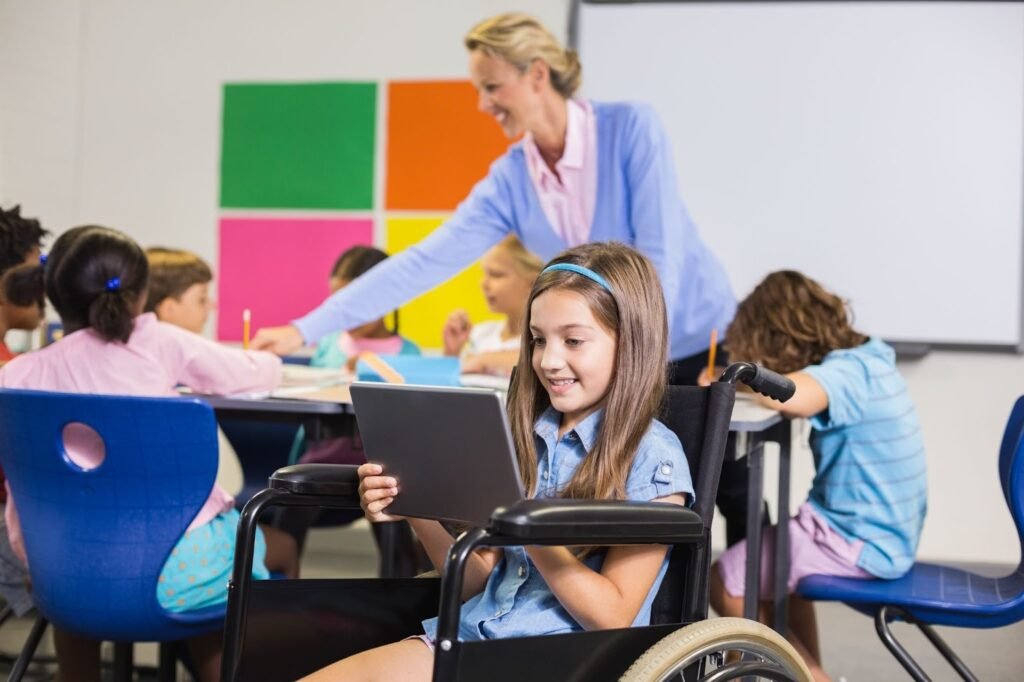
Overcoming common challenges in teaching special education requires a multifaceted approach. First, understanding each student’s unique needs is essential. This involves developing individualized education plans that focus on their strengths and encourage self-advocacy. Effective management of classroom behaviors can be achieved through consistent routines and positive reinforcement. Collaborative relationships with parents enhance communication and support. Additionally, utilizing adaptive technologies can facilitate engagement and learning. Creating inclusive environments promotes social interaction among all students, fostering understanding and respect. By implementing these strategies, educators can create supportive classrooms that empower every learner to thrive. There is much more to explore on this crucial topic.
KEY TAKEAWAYS
- Implement differentiated instruction to cater to diverse learning styles and needs of each student in special education settings.
- Develop individualized education plans (IEPs) through collaboration among educators, specialists, and families to empower student potential.
- Establish consistent classroom routines and positive behavior reinforcement to manage and support student behaviors effectively.
- Foster strong relationships with parents through open communication and regular updates to create a supportive learning environment.
- Utilize adaptive technology and resources to enhance engagement and learning outcomes for students with special needs.
UNDERSTANDING DIVERSE LEARNING NEEDS
As educators endeavor to meet the needs of all students, it is essential to recognize that each learner brings a unique set of abilities, challenges, and backgrounds to the classroom. Understanding diverse learning needs is critical for implementing inclusive practices that foster an environment where every student can thrive.
By acknowledging different learning styles, educators can tailor their approaches, using differentiated instruction to guarantee that lessons resonate with each individual.
Adaptive technologies play a pivotal role in this process, providing tools that facilitate sensory integration and enhance learning experiences. For example, software designed for students with visual impairments or communication challenges can considerably improve engagement and participation. By deeply engaging with students, the engineering teacher can also uncover the nuances of their learning preferences, emotional responses, and social interactions.
Furthermore, assessment accommodations should be thoughtfully integrated, allowing students to demonstrate their knowledge in ways that align with their strengths.
Cultural responsiveness is another essential aspect of understanding diverse learning needs. Educators must be aware of and respect the varied backgrounds of their students, incorporating culturally relevant materials and perspectives into their curriculum. This practice not only enriches the learning environment but also fosters a sense of belonging among students.
Peer support is invaluable in this situation, as collaboration among students can enhance motivation techniques and create an inclusive classroom culture. By cultivating strong relationships and encouraging teamwork, educators can promote resilience and confidence in all learners.
Ultimately, a thorough understanding of diverse learning needs empowers educators to implement effective engagement strategies, guaranteeing that every student has the opportunity to succeed.
Developing Individualized Education Plans
Developing Individualized Education Plans (IEPs) requires a deep understanding of each student’s unique learning needs and strengths. Special education teachers are trained to work with students with the classifications of mild/moderate and moderate/severe disabilities.
Effective collaboration among educators, parents, and specialists is essential to creating tailored strategies that support student growth.
Understanding Student Needs
Understanding the unique needs of each student is essential for creating effective Individualized Education Plans (IEPs) that foster academic and social growth. Each student presents a distinct profile shaped by their strengths, challenges, and aspirations. Extensive student assessments are critical in identifying these individual characteristics, as they inform the development of appropriate, tailored interventions.
Educators and specialists must collaborate closely to analyze assessment data, ensuring that every IEP reflects the child’s specific abilities and needs. This process is not merely an administrative task; it is a profound commitment to understanding the whole child. By deeply engaging with students, teachers can uncover the nuances of their learning preferences, emotional responses, and social interactions.
Tailored interventions should go beyond academic goals, addressing the emotional and social dimensions of learning as well. It is essential to incorporate strategies that promote self-advocacy, resilience, and social skills, allowing students to thrive not just in the classroom but in their broader community.
Ultimately, a well-crafted IEP, grounded in a thorough understanding of student needs, serves as a roadmap for success, empowering each student to reach their full potential.
Collaborative Planning Strategies
A successful Individualized Education Plan (IEP) hinges on effective collaborative planning strategies that engage educators, specialists, families, and the students themselves. In 1975, Congress enacted Public Law 94-142, more commonly known as the Education for All Handicapped Children Act (EHA). The goal of EHA was to ensure children with disabilities gained access to a free and appropriate public education.
The development of an IEP is a dynamic process that necessitates open communication and shared responsibility among all participants. By fostering collaboration, we can guarantee that each student’s unique needs are addressed with empathy and precision.
Key strategies for effective collaborative planning include:
- Utilizing co-teaching models to leverage the strengths of multiple educators, providing extensive support.
- Involving families in the planning process, which helps to align educational goals with the child’s home life and personal aspirations.
- Conducting regular team meetings to assess progress and make necessary adjustments to lesson modifications.
- Providing professional development for educators to enhance their understanding of specialized strategies and resources.
- Encouraging student input during meetings, empowering them to take an active role in their learning journey.
Managing Classroom Behaviors
Effective classroom management is essential for fostering a positive learning environment, especially in special education settings where students may exhibit a range of behaviors. Implementing effective behavior management strategies not only facilitates learning but also promotes emotional regulation and social skills among students. Establishing consistent classroom routines can considerably reduce anxiety and disruptions, allowing students to feel secure and focused. In many inclusive classrooms, a special education teacher works closely with general educators to adapt instruction and ensure every student receives appropriate support.
Utilizing reinforcement strategies reinforces desired behaviors, while behavioral interventions can be tailored to meet individual needs. Positive discipline techniques encourage students to learn from their mistakes rather than feel punished, fostering a sense of accountability. Additionally, incorporating distraction techniques and sensory breaks can help students regain focus and manage overwhelming emotions.
The following table outlines key strategies for managing classroom behaviors:
| Strategy | Description | Purpose |
| Classroom Routines | Structured schedules and activities | Create predictability and security |
| Reinforcement Strategies | Rewards for positive behavior | Encourage desired actions |
| Sensory Breaks | Short intervals for physical activity or relaxation | Aid emotional regulation |
| Conflict Resolution | Techniques for resolving disputes amicably | Promote social skills and cooperation |
COLLABORATING WITH PARENTS AND CAREGIVERS
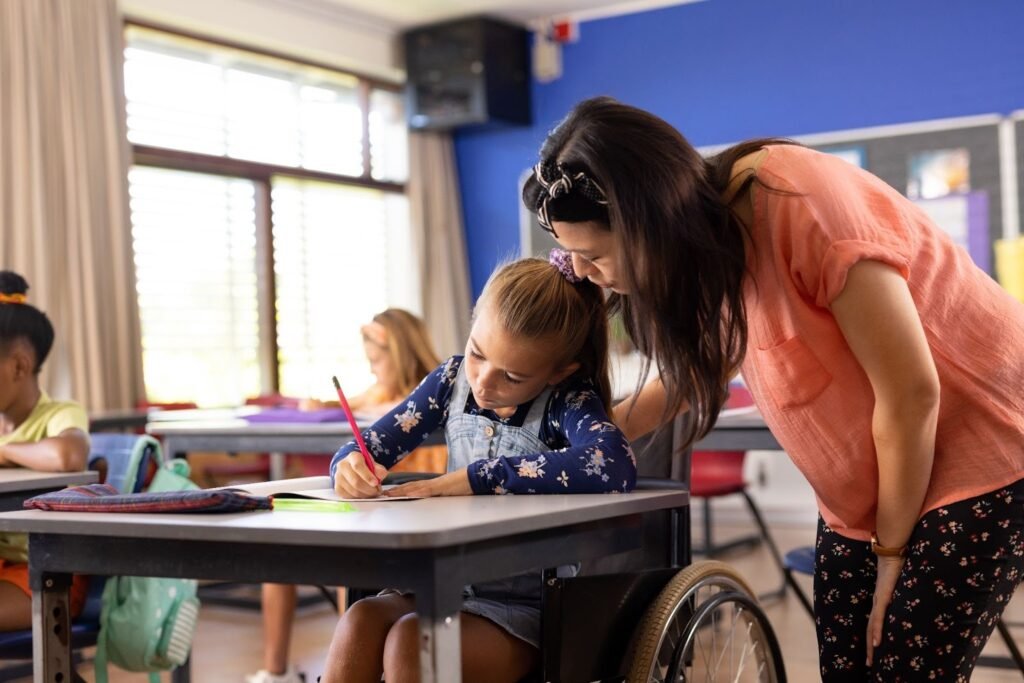
Collaborating with parents and caregivers is essential in special education, as their insights and experiences can greatly enhance a child’s learning journey. Most special education teachers work in public schools, teaching students from preschool to high school. Many work the traditional 10-month school year, but some work year round.
Building trusting relationships and employing effective communication strategies foster a supportive environment where all parties feel valued and heard.
Building Trusting Relationships
Establishing trusting relationships with parents and caregivers is essential for fostering a supportive educational environment for students with special needs. When educators engage with families, it creates a partnership that enhances student success.
By incorporating relationship building activities and trust enhancing techniques, educators can bridge the gaps between home and school.
To cultivate these relationships, consider the following strategies:
- Regular Check-Ins: Schedule consistent meetings to discuss student progress and address concerns.
- Inclusive Events: Organize workshops and family nights that invite participation and create a sense of community.
- Open Dialogue: Encourage parents to share their insights and experiences, fostering a two-way communication channel.
- Personal Touch: Send personalized notes or messages recognizing achievements and milestones, reinforcing positive connections.
- Resource Sharing: Provide families with tools and resources that support their child’s learning at home.
Effective Communication Strategies
How can educators guarantee that parents and caregivers feel valued and heard in the educational process? Effective communication strategies are essential in fostering a collaborative environment. Active listening is the cornerstone of this process; educators must genuinely engage with parents and caregivers, allowing them to share their insights and concerns. By demonstrating empathy and understanding, educators can build stronger partnerships.
Utilizing visual aids can greatly enhance communication, particularly when discussing complex topics related to a child’s needs. Infographics, charts, and images can help clarify information, making it more accessible and easier for parents to comprehend. This approach not only supports understanding but also invites parents into the dialogue, making them feel integral to the educational journey.
Furthermore, regular updates on a child’s progress and open lines of communication—whether through newsletters, emails, or meetings—can empower parents and caregivers. By actively involving them in decision-making and providing resources, educators demonstrate respect for their expertise and commitment to their child’s success.
Ultimately, effective communication strategies not only strengthen relationships but also cultivate an inclusive atmosphere where collaboration thrives.
Accessing Resources and Support
While maneuvering through the complexities of special education, accessing resources and support is essential for both educators and families. The landscape of special education can be intimidating, but understanding the available resources can empower those involved. Effective resource allocation is significant; it involves identifying and obtaining the necessary tools and assistance to guarantee students’ success.
Support networks, including advocacy groups and community partnerships, can provide invaluable guidance and information.
To enhance the educational experience for students with special needs, families and educators should consider the following resources:
- Assistive technology: Tools that can help students engage with the curriculum.
- Training programs: Workshops that offer strategies to better cater to diverse learning needs.
- Professional development: Opportunities for educators to refine their skills and knowledge.
- Mentorship opportunities: Pairing novice teachers with experienced educators for support and growth.
- Online resources: Websites and platforms dedicated to special education that offer tools, articles, and forums.
Additionally, exploring funding sources can alleviate financial burdens and provide access to fundamental services.
By actively seeking out these resources and creating robust support networks, educators and families can collaboratively advocate for children’s educational rights. Empowering each other through shared knowledge and experience not only enhances individual growth but also strengthens the overall special education community.
As we continue to nurture and develop these connections, we pave the way for a more inclusive and supportive environment for all learners.
Utilizing Effective Teaching Strategies
Effective teaching strategies are essential in creating an inclusive environment that meets the diverse needs of students with special needs. By implementing differentiated instruction, educators can tailor their teaching methods to accommodate various learning styles, abilities, and interests. This approach allows teachers to provide individualized support while fostering a sense of belonging among students.
For instance, small group activities can be designed to engage students at different levels, ensuring that everyone has the opportunity to participate meaningfully. Educators may also explore additional teaching materials and classroom tools from platforms like the engineering teacher shop to support differentiated instruction and classroom engagement.
In addition to differentiated instruction, the integration of adaptive technology plays a significant role in enhancing learning experiences for students with special needs. Tools such as speech-to-text software, interactive apps, and personalized learning platforms can empower students to access the curriculum in ways that suit their unique needs.
By utilizing these technologies, educators can promote independence and encourage self-advocacy, enabling students to take ownership of their learning journey.
Moreover, effective teaching strategies should emphasize collaboration among educators, parents, and specialists. Open communication channels allow for the sharing of insights and resources, ultimately leading to a more cohesive support system.
Promoting Social Inclusion
Creating an inclusive learning environment is not only about implementing effective teaching strategies but also about fostering social inclusion among all students. Promoting social inclusion is crucial for students with special needs, as it enhances their peer interaction and helps develop essential social skills.
By facilitating friendship building and encouraging positive group dynamics, educators can create a nurturing atmosphere where every student feels valued and connected.
To achieve this, consider incorporating the following practices:
- Inclusive activities: Design activities that require collaboration among students with varied abilities, guaranteeing everyone participates and contributes.
- Empathy training: Provide opportunities for students to engage in discussions and activities that enhance their understanding of each other’s experiences, fostering empathy and compassion.
- Community involvement: Encourage students to participate in community service projects, helping them develop a sense of belonging and appreciation for diverse perspectives.
- Cultural awareness: Integrate lessons that celebrate different cultures and backgrounds, promoting respect and understanding among students.
- Structured peer interaction: Set up structured opportunities for students to interact, such as buddy systems or cooperative learning groups, to guarantee that students with special needs are included in social networks.
RELATED STUDIES ABOUT TEACHING SPECIAL EDUCATION
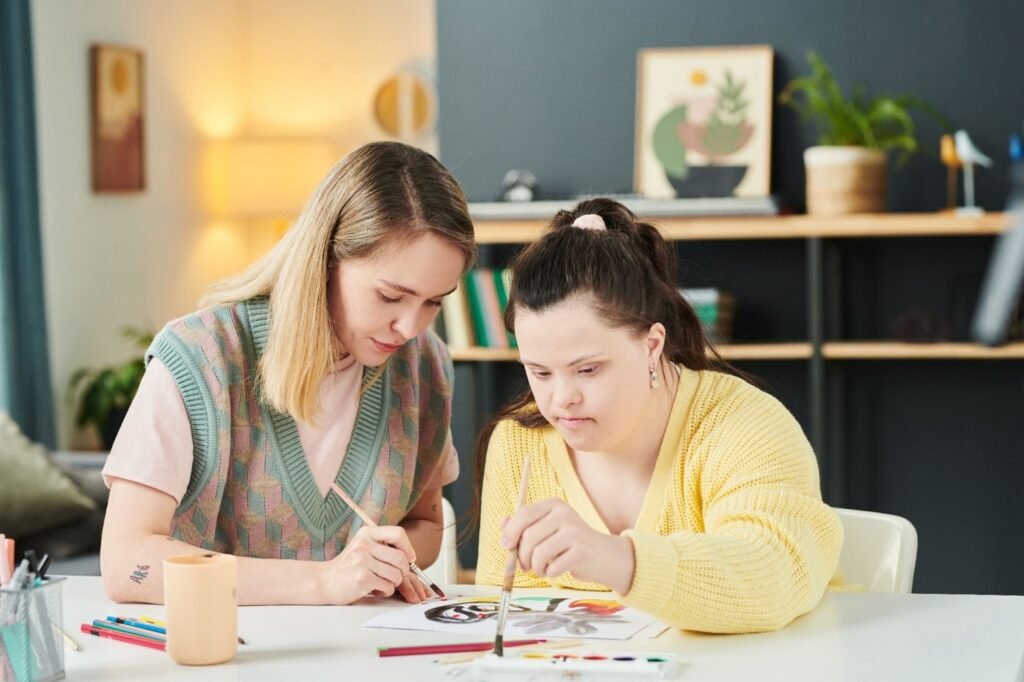
In steering through the complexities of teaching special education, it is essential to recognize and address the unique challenges faced by both educators and students. By embracing diverse learning needs, fostering collaboration, and implementing tailored strategies, a supportive and inclusive environment can be cultivated. Ultimately, when educators and caregivers work hand in hand, the journey toward successful outcomes becomes less overwhelming. Together, they can turn hurdles into stepping stones, paving the way for meaningful educational experiences for all learners.
The Development of a Sense Of Coherence In Teaching Situations Among Special Education Pre-Service Teachers
- Overview and Purpose
Special education pre-service teachers face unique and intense stressors. They must navigate not only the demands of academic coursework but also the emotional and behavioral complexities of practical teaching in both segregated and inclusive settings for children with special needs. This dual burden can lead to high levels of stress, making it crucial to understand the resources that help them cope.
This study investigates the development of a specific inner resource called Sense of Coherence in Teaching Situations (SOCIITS) among Israeli special education pre-service teachers. SOCIITS, adapted from Antonovsky’s general Sense of Coherence (SOC) theory, is defined as the extent to which a teacher has a sense of confidence in predictable and unpredictable teaching situations and the belief that they can cope successfully. It comprises three components:
- Comprehensibility (Cognitive): The perception that teaching situations are structured, predictable, and understandable.
- Manageability (Behavioral): The belief that one has the adequate resources and skills to meet the demands of teaching.
- Meaningfulness (Motivational-Emotional): The feeling that teaching is emotionally meaningful and that its challenges are worthy of investment and engagement.
The study’s primary hypothesis was that the level of SOCIITS would be significantly higher among third-year pre-service teachers than among first-year students, reflecting growth through the training program.
- Methodology
- Design: A mixed-methods approach, combining quantitative and qualitative data.
- Participants: 136 undergraduate special education pre-service teachers from a college in central Israel, consisting of 57 first-year students and 79 third-year students.
- Data Collection:
- Quantitative: A SOCIITS questionnaire was administered to both groups towards the end of the academic year, following a full week of teaching practice.
- Qualitative: Reflective diaries were collected from participants at the end of the academic year to gain deeper insights into their subjective experiences.
- Analysis: Quantitative data were analyzed using descriptive statistics, t-tests, and Pearson correlations. Qualitative data from the diaries were subjected to content analysis.
- Major Findings
The study produced a nuanced set of findings that both challenged and enriched the initial hypothesis.
- No Overall Increase in SOCIITS (Quantitative Surprise): Contrary to the hypothesis, the general SOCIITS score did not significantly increase from the first year to the third year. All three components remained at similar levels, with “Meaningfulness” consistently scoring the highest, followed by “Manageability,” and then “Comprehensibility.”
- Changing Structure of SOCIITS (Key Quantitative Finding): While the overall level did not change, the inter-relationship between the components did.
- In the first year, the Comprehensibility component was not significantly correlated with the overall SOCIITS score.
- By the third year, Comprehensibility had become significantly correlated with the overall score. This suggests that as students progress, their ability to understand and predict teaching situations becomes a more integral part of their overall sense of coherence.
- Qualitative Evidence of Growth (Supporting the Hypothesis): The analysis of reflective diaries told a different story, strongly suggesting developmental progress.
- First-year statements reflected uncertainty and a lack of tools (“I have not really grasped the full meaning of teaching,” “I felt I did not have the tools to cope”).
- Third-year statements reflected understanding, capability, and a sense of place (“I completely understand,” “I have felt that I have gone through a developmental process,” “I feel that I have managed to find my place in teaching”).
- Discussion and Interpretation
The authors reconcile the apparent contradiction between the quantitative and qualitative findings by proposing several explanations for the developmental process.
- A Hierarchy of Components: “Meaningfulness” (the motivational drive to teach) is the foundational and most stable component, present from the start. “Manageability” (having the tools) develops next, followed by “Comprehensibility” (deep understanding), which becomes integrated into the overall sense of coherence only in the later stages of training.
- The Training Program’s Focus: The teacher education program emphasizes practical experience and skill acquisition. It may not explicitly teach SOCIITS as a coping resource or help students consciously reflect on their own sense of coherence, which could explain why the quantitative measure didn’t capture a linear increase.
- The “Incubation” and “Movement” Effect: The authors suggest that the third year is a period of “movement” or “incubation,” where students are aware that their old ways of thinking are being challenged, but a new, consolidated mindset has not yet fully “crystallized” or “refrozen.” The qualitative diaries capture this inner turmoil and development, while the quantitative questionnaire measures the still-forming, not-yet-stable end state.
- The Role of the Induction Year: The authors hypothesize that the most significant leap in SOCIITS may occur not during the three years of pre-service training, but during the subsequent “Induction Year” (the fourth year in Israel), when graduates become fully independent teachers and all the pieces of their training “fall into place.”
- Implications for Practice
The findings offer valuable insights for teacher educators, particularly those guiding special education pre-service teachers.
- Acknowledge the Process: Educators should recognize that the development of a professional identity and coping resources is not always linear. Students in their third year may feel more confused and challenged (the “movement” stage) even as they are fundamentally growing.
- Explicitly Teach Coping Models: Teacher training programs could benefit from directly introducing SOCIITS as a theoretical framework. Discussing its three components can help students understand their own feelings, normalize their struggles, and provide a language for reflecting on their professional development.
- Use SOCIITS as a Guiding Tool: Pedagogical instructors and mentor teachers can use the SOCIITS framework to guide conversations with pre-service teachers, helping them identify whether their current difficulties stem from a lack of comprehension, a feeling of being unmanageable, or a crisis of meaningfulness.
- Support Through the “Movement” Stage: The findings highlight the need for robust support systems in the later stages of training and during the induction year, as this is a critical period of identity consolidation.
- Conclusion
This study provides an initial exploration into the development of a crucial coping resource for special education teachers. While the overall level of SOCIITS did not show a quantitative increase over three years, the qualitative data and the changing structure of its components reveal a clear process of professional and personal growth. The research identifies “Meaningfulness” as the stable core of a teacher’s coping capacity, upon which “Manageability” and finally “Comprehensibility” are built. The findings suggest that the true crystallization of SOCIITS may occur after formal training, during the first year of independent teaching, and that making this framework explicit could better support pre-service teachers through the challenging journey of becoming special educators.
| REFERENCE: Dganit Hoffenbartal, Musata Bocos, The Development of a Sense of Coherence in Teaching Situations among Special Education Pre-service Teachers, Procedia – Social and Behavioral Sciences, Volume 209, 2015, Pages 240-246, ISSN 1877-0428, https://doi.org/10.1016/j.sbspro.2015.11.225. (https://www.sciencedirect.com/science/article/pii/S187704281505572X) |
“What About Special Ed?”: Barriers And Enablers For Teaching With Technology In Special Education
- Overview and Purpose
Technology integration in K-12 education is a critical equity issue, yet the experiences of special education (SPED) teachers and students are often overlooked in research and practice. The rapid, unexpected shift to remote learning during the COVID-19 pandemic created a unique “stress test,” illuminating pre-existing gaps in technology-enabled learning for students with disabilities. This study leverages that moment to investigate the barriers and enablers special educators face when using technology for instruction.
The research seeks to: (1) describe the key enablers and barriers for SPED teachers’ use of technology before and during remote learning, (2) understand how structural, teacher, and student-level factors influence these experiences, and (3) highlight emerging problems for SPED populations in technology-enabled learning environments.
- Methodology
- Design: A qualitative multiple case study design, using in-depth interviews and follow-up surveys to gather rich, contextualized data.
- Participants: 20 K-12 special education teachers from public schools across the United States (primarily California). Participants were full-time lead teachers serving students with mild-to-moderate disabilities (e.g., specific learning disability, autism spectrum disorder). The sample included teachers from both inclusion/collaborative roles and self-contained classrooms, working in schools with varying levels of socioeconomic status (as measured by Free and Reduced Lunch (FARL) percentages).
- Data Collection: Semi-structured individual interviews (45-60 minutes) were conducted via video chat between May and September 2020, during the initial phase of pandemic remote learning. A follow-up survey collected demographic data and information on teacher attitudes, confidence, and practices with technology.
- Analysis: Interview transcripts were analyzed using first-cycle (descriptive, in-vivo, process) and second-cycle (pattern, focused) coding methods with MAXQDA software. Constant comparison methods were used to identify themes across cases. Survey data were triangulated with interview findings to provide context and descriptive detail. Interrater reliability was established at 92% on a subset of interviews.
- Major Findings
The study revealed that while teachers discussed challenges at the student, teacher, and structural levels, the root causes of most barriers were structural, stemming from school and district-level policies and decisions. These structural issues manifested in significant disparities for SPED students and teachers.
- Student-Level Factors (Manifestations of Structural Issues):
- Device and Internet Access: Over half of teachers, especially those in lower-resourced schools (50-100% FARL), reported students lacked adequate devices and reliable home internet. Critically, teachers perceived that when resources were scarce, SPED students were deprioritized in favor of general education (GE) students whose test scores were seen as more consequential.
- Inaccessible Software: School-chosen platforms (e.g., learning management systems) were often complex, not user-friendly, and lacked input from SPED teachers, students, or families. Access to specialized, effective software (e.g., Lexia Core5) was often a matter of budget, with teachers in lower-resourced schools reporting their access was cut.
- Lack of Digital Literacy Training: Students’ difficulties with basic digital skills (logging in, navigating links) were a major barrier. Teachers felt this was due to a lack of school-wide structures for systematically teaching digital literacy and citizenship.
- Teacher-Level Factors (Manifestations of Structural Issues):
- Inadequate and Exclusionary Training: Almost all teachers (n=18) reported insufficient technology training. SPED teachers were often excluded from general technology professional development (PD) and rarely received PD relevant to the needs of students with disabilities. Aides and teaching assistants were almost never included in training.
- Unsustainable Job Roles: SPED teachers’ overwhelming workloads (instruction, paperwork, IEP meetings, case management) left them with no time to learn new technologies. Their ability to use technology was also constrained by their relationships with GE teachers; a lack of shared planning time and collaborative structures meant SPED teachers often had to follow the GE teacher’s technology choices, which were not always accessible.
- School and District-Level Factors (The Root Causes):
- Exclusionary Decision-Making: SPED teachers were almost never included in decisions about which devices, platforms, or software to purchase. This led to a proliferation of inconsistent, inaccessible tools that created significant cognitive load for students with disabilities.
- Inequitable Resource Allocation: Teachers felt that SPED was an afterthought in budgeting for technology, with resources going to departments seen as higher priority. This was starkly illustrated by teachers who had their access to effective software revoked due to budget constraints.
- Inflexible Home-School Communication Policies: Reliance on formal channels like email was ineffective for reaching many families. Successful teachers circumvented school policies by using texting and apps with translation services (e.g., Remind) to connect with families, highlighting a need for more inclusive, flexible communication structures.
- Implications for Practice
The findings point to a clear need for systemic, structural changes rather than placing the onus on individual teachers or students.
- Include SPED in All Technology Decisions: Schools and districts must establish technology advisory boards that include diverse voices, especially SPED teachers. SPED must be at the table when devices, software, and platforms are chosen to ensure they are “born accessible.”
- Revise Resource Allocation Models: Technology resources must be distributed equitably across departments. SPED should not be an afterthought or the first to lose access to specialized software when budgets are tight.
- Reimagine Professional Development: Technology training must be inclusive of all SPED teachers and their aides. PD should be relevant to the SPED context, provide time for hands-on practice and collaboration, and go beyond one-time workshops.
- Foster Collaborative Structures: Schools must create the conditions for effective co-teaching by providing shared planning time and school-wide professional development on collaborative models. GE and SPED teachers need to work together to design technology-enabled curriculum that is accessible to all.
- Integrate Digital Literacy into the Curriculum: Schools should proactively teach digital literacy and citizenship, embedding these skills into the school day to ensure all students have the foundational skills to learn with technology.
- Adopt Flexible, Inclusive Communication: School communication policies should be revised to include multiple modalities, such as texting and apps with translation, to effectively reach and partner with all families.
- Conclusion
This study powerfully demonstrates that the digital divide for students with disabilities is not an accident but a consequence of structural decisions—about who is included in planning, how resources are allocated, and how schools are organized. Special educators’ experiences during the pandemic’s “stress test” reveal that barriers at the student and teacher level are symptoms of deeper, systemic problems. Addressing these inequities requires a fundamental shift from individual teacher heroics to systemic, school- and district-level reforms that center the needs of students with disabilities in all technology-related decisions. The insights from special educators provide a clear roadmap for building a more equitable and inclusive digital future for all learners.
| REFERENCE: Allison C. Starks, Stephanie M. Reich, “What about special ed?“: Barriers and enablers for teaching with technology in special education, Computers & Education, Volume 193, 2023, 104665, ISSN 0360-1315, https://doi.org/10.1016/j.compedu.2022.104665. (https://www.sciencedirect.com/science/article/pii/S0360131522002366) |
Factors Influencing The Intention Of Trainee Special Education Teachers To Integrate Assistive Technology Into Teaching Students With Disabilities In The United Arab Emirates
- Overview and Purpose
Assistive technology (AT) is a critical tool for enhancing the learning and classroom participation of students with disabilities. However, teachers often feel underprepared to integrate AT effectively. In the United Arab Emirates (UAE), where most pre-service elementary teachers are female, there is limited research on their readiness to use AT in special education. This study addresses that gap by investigating the factors that influence female pre-service special education teachers’ intention to use AT in their future classrooms.
Using the Technology Acceptance Model (TAM) as a theoretical framework, the study examines the role of key predictors—perceived usefulness, perceived ease of use, and computer self-efficacy—in shaping behavioral intention. It also explores whether AT training and learning preferences (face-to-face vs. online) moderate these relationships. The findings aim to provide evidence-based guidance for teacher educators and policymakers in the UAE and similar contexts.
- Key Research Questions and Hypotheses
The study is guided by three research questions and tests four hypotheses:
- RQ1: Is the structure of TAM valid in the UAE context?
- RQ2: What are the predictors of female pre-service special education teachers’ intention to adopt AT?
- RQ3: Do AT training and learning preferences influence the relationship between predictors and intention?
Hypotheses:
- H1: The four-factor TAM structure (perceived usefulness, perceived ease of use, computer self-efficacy, and behavioral intention) is valid in the UAE.
- H2: Perceived usefulness, perceived ease of use, and computer self-efficacy will predict behavioral intention.
- H3: AT training will have a limited influence on intention.
- H4: Online learning preference will positively influence intention.
- Methodology
- Design: A cross-sectional, quantitative survey design.
- Participants: 138 female pre-service special education teachers enrolled at United Arab Emirates University, the nation’s premier institution for training special educators. The sample represented a range of year levels (first to fourth year) and teaching aspirations (special vs. inclusive schools).
- Instrument: A two-part questionnaire. Part 1 collected demographic data, including AT training and learning preference. Part 2 was a 27-item scale adapted from Nam et al. (2013) based on TAM, measuring perceived usefulness, perceived ease of use, computer self-efficacy, and behavioral intention on a 5-point Likert scale. The instrument was reviewed by experts and administered in both English and Arabic.
- Analysis: Data were analyzed using SPSS and AMOS (v.28). Analysis included exploratory factor analysis (EFA), confirmatory factor analysis (CFA), path analysis, and moderation analysis.
- Major Findings
The study provides strong support for the adapted TAM framework in the UAE context, while revealing a nuanced picture of which factors most directly drive intention.
- TAM Structure is Valid (H1 Supported): EFA and CFA confirmed a valid four-factor structure. After removing three low-loading items, a 24-item model demonstrated good fit (CFI = 0.93, TLI = 0.90, RMSEA = 0.09) and strong reliability (Cronbach’s alpha = 0.95). The factors were: perceived usefulness, perceived ease of use, computer self-efficacy, and behavioral intention.
- Key Predictors of Intention (H2 Partially Supported): The path analysis showed that the independent variables collectively explained 13% of the variance in behavioral intention. However, only computer self-efficacy (b = 0.62, p = .001) and perceived ease of use (b = 0.23, p = .05) were significant individual predictors. Perceived usefulness did not have a significant direct effect.
- High Perceived Acceptance: Mean scores for all factors were high (ranging from 4.06 to 4.17 on a 5-point scale), indicating that participants generally viewed AT positively and felt confident in their ability to use it.
- Strong Intercorrelations: The predictors were highly correlated with each other, suggesting that they form an interconnected system where improvements in one area (e.g., self-efficacy) are linked to others (e.g., ease of use).
- Moderation Effects (H3 & H4 Not Supported): Neither AT training nor learning preference significantly moderated the relationship between the predictors and behavioral intention. This suggests that the quality of training may be more important than its mere presence or the mode of delivery.
- Implications for Practice
The findings offer clear, actionable guidance for strengthening teacher preparation in the UAE.
- Prioritize Confidence and Hands-On Skill: Teacher training programs should move beyond simply explaining the usefulness of AT and focus intensely on building computer self-efficacy and demonstrating ease of use. This requires providing ample hands-on practice with actual AT devices in realistic classroom simulations.
- Redesign AT Training Content: The lack of a moderating effect from AT training suggests current courses may be insufficient. Programs must critically evaluate their AT curriculum, ensuring it is practical, confidence-building, and directly relevant to the diverse needs of students with disabilities.
- Develop an Integrated Ecosystem: The high correlations between predictors underscore that no single factor exists in isolation. Policymakers and school leaders must work with teacher educators to create a supportive ecosystem that includes not only well-trained teachers but also accessible AT resources, school-based technical support, and a culture that values inclusive technology.
- Engage in Multi-Stakeholder Dialogue: A sustained conversation is needed among teachers, teacher educators, and policymakers to define the specific technological environment required in UAE schools and to co-design a framework for teacher training and ongoing support that centers on the effective use of AT.
- Conclusion
This study is the first to empirically validate the Technology Acceptance Model within the context of special education teacher preparation in the UAE. It demonstrates that while female pre-service teachers hold positive views toward assistive technology, their intention to use it in the classroom is driven primarily by their confidence in their own abilities (self-efficacy) and their perception of the technology as easy to use. The findings challenge the assumption that simply offering AT training is sufficient; instead, they call for a fundamental redesign of teacher preparation to prioritize hands-on, confidence-building experiences. For students with disabilities to truly benefit from the promise of AT, the UAE must move toward creating a holistic, supportive ecosystem where teachers feel both capable and empowered to integrate these essential tools into their daily practice.
| REFERENCE: Maxwell Peprah Opoku, Hala Elhoweris, Najwa Alhosani, Ashraf Mustafa, Thara Alkhateri, William Nketsia, Factors influencing the intention of trainee special education teachers to integrate assistive technology into teaching students with disabilities in the United Arab Emirates, Heliyon, Volume 9, Issue 12, 2023, e22736, ISSN 2405-8440, https://doi.org/10.1016/j.heliyon.2023.e22736. (https://www.sciencedirect.com/science/article/pii/S2405844023099449) |
