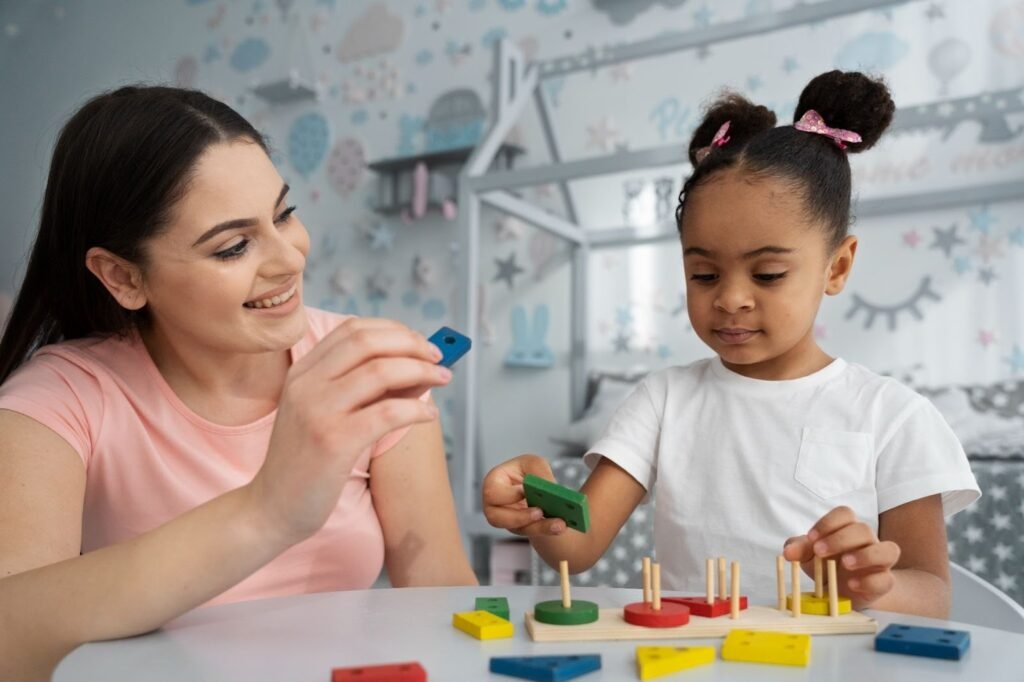
Early Childhood Education (ECE) is a structured approach to learning designed for children from birth to age eight, emphasizing cognitive, social, and emotional development. A common myth is that ECE merely involves play; in reality, play-based learning supports critical growth, enhancing problem-solving and social skills. Another misconception is that ECE is only for young children, but its benefits extend well beyond these early years. ECE lays a foundation for lifelong learning and nurtures essential emotional intelligence. Understanding these truths about ECE can greatly impact a child’s future development and success. Discover more about the myths and facts surrounding this crucial educational stage.
KEY TAKEAWAYS
- Early Childhood Education (ECE) includes structured experiences fostering cognitive, social, and emotional growth for children from birth to age eight.
- A common myth is that ECE is just play; in reality, guided play promotes significant learning outcomes and skill development.
- ECE impacts children beyond age eight, as foundational skills developed during these years influence future academic and social success.
- Effective ECE programs engage families, enhancing children’s learning experiences and overall development through collaboration and support.
- Evidence-based practices in ECE utilize research to improve educational outcomes and ensure inclusive, effective teaching strategies.
DEFINITION OF EARLY CHILDHOOD EDUCATION
Early childhood education (ECE) encompasses a range of structured learning experiences designed for children from birth to age eight, a crucial period for cognitive, social, and emotional development. ECE aims to provide a nurturing environment where young learners can explore, discover, and develop essential skills that lay the foundation for lifelong learning.
At the heart of effective ECE is thoughtful curriculum design, which incorporates age-appropriate activities that foster curiosity and creativity. This curriculum often blends play with academic concepts, allowing children to engage in hands-on experiences that promote critical thinking and problem-solving.
Quality ECE programs recognize the diverse needs of children and employ various teaching strategies to accommodate different learning styles, ensuring inclusivity and engagement.
Equally important is teacher training,as skilled educators, such as the engineering teacher, are instrumental in facilitating positive learning experiences. Proper training equips teachers with knowledge about child development, effective communication, and innovative teaching methodologies. It empowers them to create stimulating learning environments that encourage exploration and social interaction among children.
Additionally, ongoing professional development is essential in keeping educators informed about the latest research and practices in the field.
Common Myths About ECE
One prevalent myth about early childhood education (ECE) is that it primarily involves play and is only applicable to very young children. Early childhood education (ECE) involves the formal education and care of young children by non-family members in specialized settings before those children start primary school. An early childhood education program typically involves children up to 8 years of age. This type of education is grounded in the understanding that early childhood is a critical period of development, where children learn foundational skills, attitudes, and learning patterns.
In reality, ECE encompasses a range of structured activities designed to foster cognitive, social, and emotional development, extending beyond mere play.
Understanding the true scope of ECE is essential for recognizing its value in preparing children for future learning and success.
ECE Is Just Play
The notion that early childhood education (ECE) is merely playtime reflects a common misconception that undermines the profound impact of structured learning in a child’s formative years. While play is indeed a crucial component of ECE, it serves as a vehicle for achieving significant learning outcomes. Through guided play, children develop essential skills such as problem-solving, social interaction, and emotional regulation.
The following table highlights the play benefits that contribute to meaningful learning outcomes:
| Play Benefits | Learning Outcomes |
| Enhances creativity | Fosters innovative thinking |
| Develops social skills | Promotes teamwork and collaboration |
| Encourages physical activity | Supports motor skill development |
| Stimulates cognitive growth | Improves critical thinking abilities |
Only For Young Children
Misunderstandings about the age range served by early childhood education (ECE) often lead to the erroneous belief that this vital learning framework is exclusively for young children. While ECE primarily focuses on children from birth to age eight, its impact and relevance extend well beyond this age group. ECE lays a foundation for lifelong learning, emphasizing the development of critical social skills and cognitive abilities that are fundamental in later stages of education.
The preschool benefits associated with ECE are well-documented, as children engage in structured play that fosters creativity, problem-solving, and cooperation. However, the skills cultivated during these formative years continue to influence children’s social interactions and academic achievements as they grow older.
Moreover, ECE programs can serve as a support system for families, providing resources and guidance that extend into the elementary years. By dispelling the myth that ECE is solely for the very young, we can better appreciate its extensive role in nurturing a child’s development and preparing them for future educational endeavors.
Acknowledging this broader scope is essential for maximizing the potential impact of early childhood education on society as a whole.
The Importance of ECE
Early Childhood Education (ECE) serves as an important foundation for a child’s lifelong learning journey, shaping not only academic skills but also social and emotional development. ECE fosters critical social emotional skills that enable children to navigate relationships and build resilience.
By engaging in diverse learning environments, children experience a variety of teaching methods that cater to different learning styles, promoting cognitive development and a love for learning. Early childhood is defined as the period of a child’s development from birth to eight years. This period of a child’s life is important to their holistic development. During the early childhood years the developing brain of a child is responsive to change and requires a stimulating environment with attentive caregivers. Early childhood development focuses on children’s holistic development and the primary development task is ‘skill development: physical (gross and fine motor), language, social/emotional and cognitive’. Children progress from being dependent on their caregivers to being independent and being able to attend to their basic needs.
Effective teacher training is crucial to guarantee educators can implement inclusive practices and create culturally relevant curricula that reflect the diversity of their students. A focus on curriculum diversity allows children to connect with their own backgrounds and those of their peers, fostering a sense of belonging and acceptance.
This cultural relevance enriches the learning experience and prepares children to thrive in a multicultural society.
Family engagement plays a key role in ECE; when families are actively involved, they can access additional learning resources, including materials from the engineering teacher shop, to support their children at home. Shared assessment methods between educators and families help track progress and identify areas where additional support may be needed.
Community support further enhances ECE by providing resources, mentorship, and opportunities for collaboration.
Evidence-Based Practices In Ece
While various approaches to Early Childhood Education exist, evidence-based practices stand out for their proven effectiveness in enhancing children’s learning outcomes. Utilizing evidence-based strategies grounded in research findings guarantees that educators can create ideal classroom environments that support developmental milestones. These practices not only focus on instructional practices but also incorporate robust assessment tools to monitor and evaluate children’s progress. While various approaches to early childhood education exist, evidence-based practices stand out for their proven effectiveness in enhancing children’s learning outcomes.
A cornerstone of evidence-based practices is thorough teacher training. Educators equipped with knowledge about effective strategies can foster family engagement and collaboration, which is crucial for reinforcing learning outside the classroom. In addition, program evaluation is essential to guarantee that these practices are yielding the desired outcomes.
The table below outlines key aspects of evidence-based practices in ECE:
| Aspect | Description | Importance |
| Evidence-Based Strategies | Methods backed by research to improve learning | Enhances educational effectiveness |
| Assessment Tools | Instruments for measuring student progress | Supports targeted interventions |
| Teacher Training | Professional development for educators | Guarantees knowledgeable instruction |
Incorporating these elements not only enriches the educational experience but also contributes to achieving significant learning outcomes for children. By focusing on evidence-based practices, educators can make informed decisions that positively impact the future of young learners and their families. Engaging with this approach ultimately leads to a more equitable and effective educational landscape, fostering growth and development for all children.

ECE AND CHILD DEVELOPMENT
Child development is a multifaceted process that encompasses physical, cognitive, emotional, and social growth during the formative years. Early Childhood Education (ECE) plays a pivotal role in shaping these developmental areas, providing a structured environment where children can thrive and reach their full potential.
One of the essential components of ECE is fostering social emotional development. This aspect of growth involves helping children manage emotions, develop empathy, and build positive relationships with peers and adults. Through play-based learning and guided interactions, educators are able to create opportunities for children to navigate their feelings and understand the perspectives of others. Such experiences are foundational for healthy social interactions and emotional well-being throughout life.
Cognitive growth is another critical focus within ECE. Young children are naturally curious and enthusiastic to learn, and a well-designed curriculum stimulates their thinking skills. Activities that promote problem-solving, creativity, and critical thinking foster a love for learning that extends beyond the classroom.
Educators who harness this curiosity can greatly enhance a child’s cognitive abilities, preparing them for future academic success.
Parental Involvement in ECE
Parental involvement in Early Childhood Education (ECE) greatly enhances the learning experience and developmental outcomes for children. When parents actively engage in their child’s education, it fosters a strong partnership between families and educational institutions. This collaboration creates a supportive environment that promotes children’s social, emotional, and cognitive growth.
Research consistently demonstrates that parent engagement greatly boosts children’s academic performance and self-esteem. Parents who participate in school activities, communicate with teachers, and reinforce learning at home provide essential family support that reinforces what children learn in the classroom. This involvement not only helps children feel more secure and valued but also instills a sense of responsibility and motivation to learn.
Furthermore, parental involvement can take many forms, from attending parent-teacher meetings to volunteering in the classroom or simply reading together at home. Each of these actions sends a powerful message to children about the importance of education and their ability to succeed. It nurtures an atmosphere of encouragement and curiosity, which are critical elements for effective learning during these formative years.
Moreover, engaging parents in ECE programs often leads to stronger family connections and community ties. When families collaborate with educators, they create a network of support that benefits the entire community.
Ultimately, fostering active parental involvement in early childhood education is essential for cultivating not only successful learners but also confident, well-rounded individuals ready to thrive in their future endeavors.
Future of Early Childhood Education
The future of early childhood education is poised for transformation through innovative teaching methods and dynamic policy changes. To understand the meaning of early childhood education, one must first know what early childhood encompasses. This period generally refers to the time from birth to around eight years old. It’s a critical stage in human development where rapid physical, cognitive, emotional, and social growth occurs. Early childhood is when children begin to develop foundational skills and build the framework for future learning. Early childhood education (ECE) is a field of study focused on the care, development, and learning of young children during the early childhood period. The aim is to prepare children for formal schooling and support their overall development in terms of their cognitive, social, and motor skills through play-based and experiential learning.
As educators embrace new technologies and research-backed strategies, they can enhance learning experiences for young children.
Concurrently, evolving policies will play an essential role in shaping access and quality, ensuring that every child receives the foundational support necessary for lifelong success.
Advancements in Teaching Methods
Recent advancements in teaching methods are reshaping the landscape of early childhood education, promising more effective ways to engage young learners. By incorporating innovative strategies and technology integration, educators are better equipped to cater to diverse learning styles and needs. These developments not only enhance educational outcomes but also foster a love for learning in children.
| Teaching Method | Description | Benefits |
| Play-Based Learning | Learning through play and exploration | Encourages creativity and social skills |
| Blended Learning | Combination of traditional and digital methods | Personalizes learning experiences |
| Project-Based Learning | Focuses on hands-on projects | Develops critical thinking and problem-solving skills |
| Mindfulness Techniques | Incorporates mindfulness practices | Promotes emotional regulation and focus |
As we embrace these advancements, it is essential to support early childhood educators in their professional development, empowering them to implement these innovative strategies effectively. The future of early childhood education lies in our commitment to creating engaging, inclusive environments that prioritize the unique needs of every child. Through collaboration and adaptation, we can guarantee that our youngest learners thrive in a rapidly evolving educational landscape.
Policy Changes Impacting Education
Significant policy changes are reshaping the framework of early childhood education, influencing how programs are designed, funded, and implemented across various regions. As communities increasingly recognize the importance of quality early education, legislative reforms are emerging to address the barriers many families face in accessing these fundamental services.
Funding initiatives aimed at supporting early childhood programs are essential for fostering equitable opportunities for all children. These initiatives often provide resources for underfunded areas, ensuring that high-quality education is not limited by socioeconomic status.
Additionally, a shift towards universal pre-K policies highlights the growing commitment to early childhood education as a public good, rather than a privilege.
Furthermore, recent reforms are focusing on enhancing teacher qualifications and professional development, which are critical for delivering effective learning experiences. By prioritizing policies that support educators, communities can cultivate a workforce that is not only skilled but also motivated to inspire the next generation.
As we move forward, it is imperative that stakeholders actively participate in these discussions, advocating for policies that will truly benefit children and families. The future of early childhood education hinges on our collective commitment to these significant changes.
RELATED STUDIES ABOUT WHAT IS EARLY CHILDHOOD EDUCATION
To conclude, early childhood education stands as an essential foundation for lifelong learning, countering myths with evidence-based practices that foster child development. While misconceptions may suggest that play is mere leisure, research highlights its role as a profound learning tool. As parental involvement intertwines with educational strategies, a collaborative approach emerges, enriching the child’s experience. The future of early childhood education promises continued evolution, blending innovation with tradition to nurture future generations in a supportive environment.
The Ramon Space Race Program: Empowering Teachers For Early Childhood Space Education
- Overview and Purpose
Preschool and kindergarten children are an often-underrepresented age group in science and space education initiatives, despite their natural curiosity about the universe. This study presents the Ramon Space Race program, a large-scale, nationwide initiative in Israel designed to integrate space and science education into early childhood curricula. The program’s core innovation is its teacher-centered model, which shifts away from external expert-led sessions to empowering kindergarten teachers as the primary drivers of learning.
The study evaluates the program’s effectiveness in achieving two primary objectives: (1) fostering foundational scientific understanding and curiosity in young learners, and (2) empowering teachers by providing them with the knowledge, tools, and confidence to integrate space and science concepts into their daily teaching practice.
- Key Research Questions
The research assesses the program’s impact on:
- Teacher self-efficacy, confidence, and engagement in teaching science and space topics.
- Children’s curiosity, questioning behaviors, and engagement in inquiry-based activities.
- Overall satisfaction with the program and its implementation in diverse kindergarten settings.
- Methodology
- Program Overview: The Ramon Space Race program operates across over 500 kindergartens in Israel, engaging approximately 15,000 children. It provides a structured, hands-on curriculum delivered through physical “space kits” and a multi-tiered teacher support system.
- Program Components:
- Three Sequential Kits: Tailored for ages 3-4 (“Dreaming of Space”), 4-5 (“Young Astronauts”), and 5-6 (“To Space and Back”), each containing detailed lesson plans, activities, experiments, and props like astronaut costumes.
- Teacher Guidance Model: A four-tier system including the physical kit, one-on-one mentorship from experienced teachers, professional training sessions with space experts, and immersive “peak events” (e.g., webinars with astronauts, national contests).
- Evaluation Design: A mixed-methods approach was used during the 2023-2024 academic year.
- Quantitative: Pre- and post-program surveys were administered to kindergarten teachers (N=103 pre, N=85 post), measuring five key areas: engagement in science, children’s questions, inquiry activities, teacher confidence, and children’s curiosity. A Mann-Whitney U test was used to assess statistical significance.
- Qualitative: Follow-up interviews with teachers were analyzed using thematic analysis to capture in-depth experiences, challenges, and recommendations.
- Major Findings
The results demonstrate that the program was highly effective in empowering teachers and positively impacting the classroom environment.
- High Overall Satisfaction: 90% of teachers rated their overall satisfaction with the program as 4 or 5 out of 5.
- Significant Teacher Empowerment: Statistically significant improvements were found in two key areas directly related to teacher empowerment:
- Engagement in Science (Q1): The largest increase was observed here (mean score from 2.2 to 3.8), indicating a major shift in how frequently teachers integrated science and space topics into their classrooms.
- Confidence in Teaching (Q4): Teacher confidence also showed a strong, statistically significant increase (from 3.9 to 4.6). Qualitative data reinforced this, with teachers frequently mentioning how training and mentorship made them feel prepared and self-assured in teaching complex topics.
- Positive Impact on Children: Teachers reported a statistically significant increase in children’s spontaneous science-related questions (Q2) (from 3.1 to 3.7). While children’s curiosity (Q5) and engagement in inquiry activities (Q3) showed positive trends, the changes were not statistically significant, suggesting a need for longer-term reinforcement.
- Thematic Analysis Insights: Qualitative analysis revealed several key themes:
- Teaching Approach: Teachers appreciated the program’s flexibility, adapting materials to fit their students’ needs.
- Challenges: The main challenges were limited time for integration and the difficulty of explaining abstract concepts (e.g., gravity) to young children.
- Parental Involvement: Engaged parents significantly boosted children’s enthusiasm, but involvement was inconsistent, highlighting an area for program improvement.
- Community of Practice: Teachers highly valued being part of a peer community where they could share ideas and support each other.
- Implications for Practice
The study offers a validated, scalable framework for early childhood STEAM education with implications for educators and policymakers worldwide.
- Shift to a Teacher-Centered Model: The program’s success demonstrates that empowering teachers as central figures is more sustainable and effective than relying on external experts. This requires investing in high-quality professional development and ongoing mentorship.
- Provide Structured, Yet Flexible, Resources: The physical kits provided a clear structure, while the flexibility allowed teachers to adapt content to their unique classroom contexts. This balance is key to successful adoption.
- Invest in a Multi-Tiered Support System: The combination of professional training, individualized mentorship, and a supportive peer community was identified as the most critical component for success, even more so than the physical kit itself.
- Address Challenges Proactively: Programs must provide teachers with strategies to simplify abstract concepts (e.g., using more physical models) and to better integrate space themes with other mandatory subjects.
- Develop a Structured Parental Involvement Component: To maximize impact, programs should include formal strategies for engaging families, such as take-home activities or family science nights.
- Conclusion
The Ramon Space Race program provides compelling evidence that a well-structured, teacher-led space education initiative can be implemented successfully on a national scale. It significantly enhances teacher confidence and engagement with science, creating a ripple effect that fosters children’s curiosity and lays a strong foundation for lifelong scientific literacy. By shifting from a mentor-led to a teacher-driven model and providing robust, multi-layered support, the program offers a powerful and replicable framework for integrating STEAM into early childhood education globally. The study underscores that when teachers are empowered, they become the most effective agents for inspiring the next generation of explorers and scientists.
| REFERENCE: Danielle Oryan, Efrat Menahem, Lior Ron, Gil Doron, Shimrit Maman, The Ramon Space Race program: Empowering teachers for early childhood space education, Acta Astronautica, Volume 240, 2026, Pages 408-416, ISSN 0094-5765, https://doi.org/10.1016/j.actaastro.2025.11.083. (https://www.sciencedirect.com/science/article/pii/S0094576525008550) |
How are Difficulty Types Related to the Allocation of Special Needs Assistance in Early Childhood Education and Care
- Overview and Purpose
Early intervention for children with difficulties is crucial for their long-term academic and life outcomes, with early childhood education and care (ECEC) being a primary setting for providing this support. However, little is known about how special needs assistance (SNA) is actually allocated to young children. This study addresses this gap by investigating how different types of child difficulties predict both the likelihood of receiving SNA and the intensity (weekly hours) of that assistance in Norwegian ECEC.
The research examines a large, population-based sample of 5-year-old children to understand which difficulties—language, behavioral, developmental, or their combinations—most frequently lead to support, and what role ECEC quality and demographic factors play in this allocation process.
- Key Research Questions
The study investigates:
- What is the composition of children receiving SNA by different difficulty types and their comorbidities?
- What percentages of children with different difficulties actually receive SNA, and do those who receive it have more severe difficulties than those who do not?
- How does the quantity (hours per week) of SNA vary by difficulty type?
- How do ECEC factors (e.g., staff-child ratio, parental satisfaction) and demographic factors (child sex, age, parental education) influence SNA allocation?
- Methodology
- Data Source: The Norwegian Mother, Father and Child Cohort Study (MoBa), a large prospective population study. This analysis uses maternal questionnaire data from when the children were 5 years old.
- Sample: 41,452 children, of whom 2,340 (5.6%) were reported to be receiving SNA.
- Measures:
- SNA Allocation: Mothers reported whether their child received extra resources in ECEC and the number of hours per week.
- Difficulty Types: A rigorous, multi-method approach identified children with difficulties based on both maternal reports and scores on validated screening instruments falling below the 20th percentile. Categories included:
- Language Difficulties
- Behavioral Difficulties (attention, internalizing, externalizing)
- Developmental Difficulties (epilepsy, autism, motor skills, learning problems)
- Comorbidities (combinations of the above)
- ECEC Factors: Parental satisfaction with ECEC (5-item scale) and the caretaker-child ratio.
- Demographics: Child sex, age, and parental education level.
- Analysis: A zero-inflated Poisson regression model was used. This advanced model is ideal for analyzing SNA hours, which has many zero values, by distinguishing between children who are “not at risk” (structural zeros) and those who are “at-risk” but may still receive zero hours (sampling zeros).
- Major Findings
The study reveals significant disparities in how SNA is allocated, with a strong focus on language and developmental difficulties and a relative neglect of behavioral problems.
- Language Difficulties are the Largest Group, but Get the Least Support:
- Children with language difficulties only were the largest group receiving SNA (21.5% of all SNA recipients). However, they were the least likely to receive intensive support, with 30.5% of this group receiving only 1-5 hours per week.
- Only 35% of all children identified with language difficulties actually received SNA, and those who did had significantly more severe language problems than those who did not.
- Comorbidities Drastically Increase Likelihood of Support:
- Children with comorbid language and developmental difficulties had an 89% probability of receiving SNA and received the highest number of hours.
- This highlights that severity and complexity, rather than a single difficulty type, are the strongest drivers of resource allocation.
- Behavioral Difficulties are Largely Overlooked:
- Children with behavioral difficulties were the least likely to receive SNA. This is striking given that behavioral problems are highly prevalent and impactful.
- Furthermore, children with SNA did not have more severe behavioral problems than those without SNA, suggesting a lack of systematic identification and intervention for this group.
- ECEC Quality Matters:
- A higher caretaker-child ratio significantly predicted both a greater likelihood of receiving SNA and a higher number of hours. More staff capacity means more resources for identifying and supporting children with needs.
- Higher parental satisfaction with ECEC also predicted more SNA hours, potentially indicating that higher-quality centers are better at securing and implementing support.
- Demographic Factors:
- Boys were almost twice as likely to receive SNA as girls (7.4% vs. 3.8%).
- Lower maternal education and older child age also increased the likelihood of receiving SNA, reflecting both biological and systemic factors.
- Implications for Practice and Policy
The findings have significant implications for improving equity and effectiveness in early childhood special education.
- Strengthen Assessment for Behavioral Difficulties: The under-allocation of SNA to children with behavioral problems is a major concern. ECEC teachers need better training and more systematic tools to identify, assess, and intervene with children exhibiting attentional, internalizing, and externalizing difficulties, as these issues have well-documented long-term consequences.
- Increase Resources for Language Support: While language difficulties are the most common reason for SNA, the support provided is minimal. Given the large number of children in this group and the critical role of early language for later academic success, more resources—particularly in the form of speech and language therapy—are urgently needed.
- Invest in ECEC Staffing and Quality: The strong link between a higher caretaker-child ratio and better SNA allocation underscores the need for policies that ensure adequate staffing levels in ECEC. A well-staffed center has the capacity to notice, support, and advocate for children with special needs.
- Enhance Teacher Training: The current early childhood teacher curriculum in Norway has limited content on special needs education. This must be addressed. Teachers need deeper knowledge of developmental psychopathology, assessment methodologies, and intervention strategies to effectively support all children.
- Improve National Guidance and Resources: National regulations could help reduce inequality by standardizing staff qualifications, organizational structures, and collaboration procedures with special education support centers. This would ensure that a child’s access to SNA is not dependent on the specific municipality or ECEC center they attend.
- Conclusion
This large-scale study provides a crucial, data-driven overview of how special needs assistance is allocated in Norwegian ECEC. It reveals a system that is responsive to severe, complex difficulties (especially those involving developmental problems) but is failing to adequately serve children with the most common challenges—language and, most strikingly, behavioral difficulties. The findings highlight that the quantity of support is minimal for many and is strongly tied to the resources and quality of the ECEC setting itself. The study makes a compelling case for policy reforms focused on broader, more systematic assessment, increased staffing, and enhanced teacher training to ensure that all young children, regardless of their difficulty type, receive the timely and effective intervention they need and deserve.
| REFERENCE: Louie Lei Wang, Monica Melby-Lervåg, Ratib Lekhal, Mari Vaage Wang, How are Difficulty Types Related to the Allocation of Special Needs Assistance in Early Childhood Education and Care, Early Childhood Research Quarterly, Volume 74, 2026, Pages 211-220, ISSN 0885-2006, https://doi.org/10.1016/j.ecresq.2025.10.002. (https://www.sciencedirect.com/science/article/pii/S0885200625001000) |
Cultivating Resilience And Self-Regulation In Malaysian Early Childhood Education: Bridging Cultural Insights And Educational Practices
- Overview and Purpose
Resilience and self-regulation are foundational competencies that influence children’s long-term academic success, social well-being, and ability to navigate challenges. In Malaysia’s uniquely diverse, multicultural, and multi-religious society, the development of these skills in early childhood is profoundly shaped by cultural values and practices. This study investigates how Malaysian early childhood educators nurture resilience, self-regulation, and socio-emotional skills (SES) in children aged 4 to 6 years. It explores the pedagogical strategies teachers use, how they integrate local cultural and religious values, and the challenges they face in fostering these competencies within a diverse educational landscape.
- Key Research Questions
The study is guided by a central aim: to explore the practices of early childhood educators in nurturing resilience, self-regulation, and socio-emotional skills among 4- to 6-year-old children while addressing cultural diversity. This involves understanding the “what” and “how” of their pedagogical approaches in the Malaysian context.
- Methodology
- Theoretical Framework: The study is grounded in Vygotsky’s Sociocultural Theory, which posits that learning is a social process mediated by cultural tools and interactions, and Bronfenbrenner’s Ecological Systems Theory, which emphasizes the interconnected environmental systems (from family to societal values) that influence a child’s development.
- Design: A qualitative, multiple-case study design was employed to gain an in-depth understanding of practices across different educational settings.
- Participants: Seven senior early childhood educators were purposively selected from a range of preschool types in Malaysia, including two government institutions, four private kindergartens, and one private religious-based kindergarten. All participants were female, reflecting the demographics of the sector, with 11 to 22 years of teaching experience.
- Data Collection: Data were collected through in-depth, semi-structured interviews with each participant.
- Analysis: Thematic analysis was used to identify, analyze, and report patterns within the data, allowing themes to emerge organically from the educators’ perspectives.
- Major Findings
The analysis revealed four key themes illustrating how Malaysian educators integrate cultural and religious practices into their work of fostering children’s socio-emotional development.
- Self-Regulation and Resilience: The Interplay of Religious and Cultural Practices: Educators skillfully weave Islamic teachings into daily classroom life to build emotional competencies. Concepts like “sabar” (patience) are used as a cognitive and emotional tool for children to calm down. Collective rituals such as doa (prayer) and zikir create a sense of calm and readiness to learn. Situational events, like children fasting during Ramadan, are used as “teachable moments” to foster self-compassion and empathy for others. These practices act as culturally ingrained “scripts” that help children understand and manage their emotions.
- Educators as Cultural and Emotional Mediators: Teachers act as crucial bridges between the home and school environments. They adapt routines to accommodate religious observances (e.g., adjusting expectations during Ramadan) and use shared rituals (like group prayer) to foster unity. They also engage families directly, inviting them to “feelings days” to share strategies and ensure continuity between home and school. Furthermore, they use linguistic strategies—switching between Bahasa Malaysia and English—to ensure all children feel included and can access emotional vocabulary, demonstrating a spectrum of mediation from religious-specific to culturally pluralistic.
- Identity, Belonging, and Socio-Emotional Skills: A strong sense of identity and belonging is foundational to socio-emotional health. Religious and cultural celebrations, such as Eid (Raya) , singing religious songs (nasheed), and participating in group prayers, powerfully affirm identity and foster group cohesion for Muslim children. Simultaneously, inclusive practices like a “house special corner” where children share family artifacts ensure that children from all backgrounds feel valued and recognized, creating a “hybrid identity space” where cultural pride and pluralism coexist.
- Culturally Responsive Assessment and Communication: Educators employ flexible, relational, and culturally sensitive approaches to assessment. They use observation notes on children’s behavior (e.g., handling waiting, sharing), engage in open dialogue with parents to understand a child’s context, and use creative methods like asking children to draw their feelings after an event. Teachers may also use shared religious language to help parents understand the importance of socio-emotional learning. This contrasts with standardized testing and reflects an “interpretive understanding” of each child’s unique emotional landscape.
- Implications for Practice
The findings offer significant insights for policy, teacher training, and classroom practice in Malaysia and other culturally diverse contexts.
- Value and Integrate Cultural Assets: Teacher education programs should explicitly train educators to recognize and leverage the cultural and religious “funds of knowledge” that children bring from home. Practices like using “sabar” or collective prayer are not just religious acts but powerful pedagogical tools for emotional regulation.
- Foster Critical Cultural Competence: While religious frameworks are valuable, educators must develop the critical competence to ensure their practices are inclusive of all children, regardless of background. This requires ongoing, reflective professional development that helps teachers navigate diversity and avoid essentialism.
- Develop Culturally Tailored Assessment Tools: There is a need for assessment frameworks that move beyond Western-centric, standardized metrics. Culturally responsive tools that value observation, parent dialogue, and creative expression are essential for gaining a holistic and accurate understanding of a child’s development.
- Strengthen Home-School Partnerships: The study highlights the power of engaging families as partners. Schools should create structured opportunities for dialogue and collaboration, ensuring that the values and strategies used to support children’s socio-emotional growth are consistent and mutually reinforced at home and school.
- Adopt a Flexible, Layered Approach: Effective practice requires adaptability. Educators need to be able to draw from a “toolkit” that includes both culturally specific (e.g., Islamic teachings) and universally inclusive (e.g., multilingual communication) strategies to meet the diverse needs of all children.
- Conclusion
This study illuminates the sophisticated and culturally embedded ways Malaysian early childhood educators nurture resilience, self-regulation, and socio-emotional skills. It demonstrates that fostering these competencies is not a value-neutral, one-size-fits-all process but is deeply intertwined with religious values, cultural traditions, and community contexts. By acting as cultural and emotional mediators, these teachers create classrooms where children’s identities are affirmed, their emotions are understood, and their capacity to navigate challenges is built on a foundation of cultural coherence. The findings underscore the critical importance of developing culturally responsive pedagogies, assessments, and teacher training to effectively support the holistic development of all children in a diverse society.
| REFERENCE: Mazlina Che Mustafa, Cultivating resilience and self-regulation in Malaysian early childhood education: Bridging cultural insights and educational practices, Acta Psychologica, Volume 261, 2025, 105941, ISSN 0001-6918, https://doi.org/10.1016/j.actpsy.2025.105941. (https://www.sciencedirect.com/science/article/pii/S0001691825012545) |
