
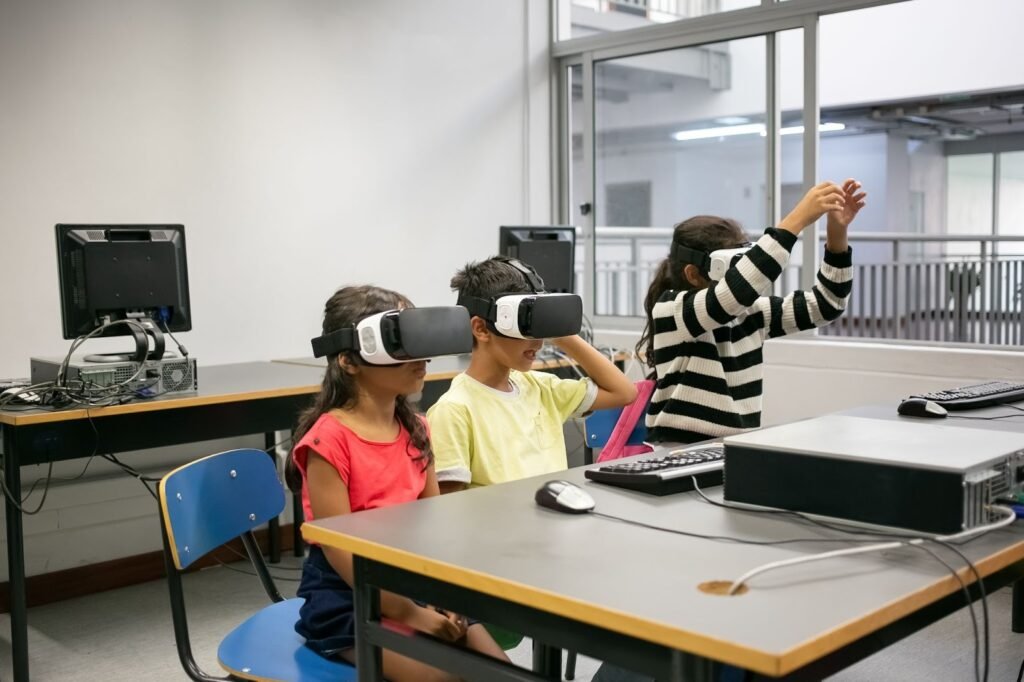
Educational technology encompasses the use of digital tools and innovative methodologies to improve teaching and learning experiences. It integrates various approaches, such as personalized learning and gamification, to support different learning styles and needs. Key components include learning management systems, interactive tools, and collaborative platforms that foster engagement and communication. This evolution has transformed traditional classrooms into dynamic environments, enhancing accessibility and inclusivity. Both educators and students benefit through improved collaboration, tailored content, and immediate feedback. Exploring this topic further will reveal additional insights into tools, trends, and the future of education technology.
KEY TAKEAWAYS
- Educational technology integrates technology to enhance teaching and learning experiences through effective instructional design and diverse learning approaches.
- Key components include Learning Management Systems (LMS), personalized learning, interactive tools, and digital content creation to improve engagement.
- The rise of digital learning enables virtual classrooms, flexible assessments, and mobile access to educational resources anytime.
- Current trends like gamification, personalized learning, and virtual reality create interactive and immersive educational experiences for students.
- Benefits include enhanced collaboration for educators, personalized learning paths for students, and improved access to resources and feedback mechanisms.
DEFINITION OF EDUCATIONAL TECHNOLOGY
Educational technology, often defined as the integration of technology into the educational process, encompasses a wide range of tools and methodologies that enhance teaching and learning experiences. This integration is not merely about the use of devices; it also involves applying pedagogical theories to create effective instructional design. By leveraging technology, educators can develop innovative approaches that cater to diverse learning styles and needs, enabling the engineering teacher to design more interactive and practical learning experiences for students.
At the core of educational technology are various pedagogical theories that inform teaching practices. Constructivism, for example, encourages active engagement and collaborative learning, which can be effectively supported through digital platforms. Similarly, behaviorism emphasizes reinforcement, which can be enhanced through gamification and adaptive learning technologies. These theories guide educators in selecting appropriate technological tools that align with their instructional goals.
Instructional design, a systematic approach to creating educational experiences, plays an essential role in the successful implementation of educational technology. By carefully planning and structuring content, educators can guarantee that technology serves as a facilitator rather than a distraction. This involves understanding learners’ needs, defining clear objectives, and evaluating outcomes.
Ultimately, educational technology is a powerful means to enrich the learning environment, making education more accessible and engaging for all learners. As educators continue to explore new tools and methodologies, the focus should remain on fostering an inclusive and supportive atmosphere that prioritizes student success and lifelong learning.
Therefore, the effective integration of technology, grounded in sound pedagogical theories and instructional design, holds the potential to transform education.
History and Evolution
The history of educational technology reveals a remarkable journey from early tools and methods, such as chalkboards and printed materials, to the rise of digital learning platforms Gamification combines playing and learning by utilizing gaming as an instructional tool.
This evolution has been marked by significant advancements in technology, shaping how educators and students interact with content.
Currently, emerging trends and innovations continue to redefine educational practices, enhancing accessibility and engagement in the learning process.
Early Tools and Methods
Innovation has always played an essential role in the development of educational tools and methods throughout history. The evolution of the chalkboard, for instance, transformed classroom engagement by providing a dynamic surface for real-time interaction.
As teaching practices advanced, projectors emerged, notably impacting how educators presented information, allowing for a more visual and engaging learning experience.
The shift from traditional textbooks to a more integrated multimedia approach has further enriched instructional design. This change fosters collaborative learning, enabling students to work together on hands-on activities that deepen understanding.
Additionally, the incorporation of various assessment techniques promotes a more holistic view of student progress, moving beyond rote memorization.
Despite these advancements, technological barriers have occasionally hindered the effective implementation of these early tools. Educators have had to adapt, finding innovative ways to integrate new technologies into their teaching strategies while ensuring that all learners can benefit.
Ultimately, the journey from basic tools to advanced methods reflects a continuous effort to enhance educational experiences, making learning more accessible and engaging for all students.
Rise of Digital Learning
As traditional teaching methods evolved, the emergence of digital learning marked a significant shift in educational practices. This transformation has been characterized by the adoption of virtual classrooms, enabling educators and students to interact in real-time, regardless of location.
Online assessments have become commonplace, providing immediate feedback and streamlining evaluation processes. Educational technology is based on theoretical knowledge from various disciplines such as communication, education, psychology, sociology, artificial intelligence, and computer science.
Blended learning approaches combine face-to-face instruction with online components, offering a flexible and adaptive framework that caters to diverse learning styles. Mobile learning further enhances accessibility, allowing learners to engage with educational content anytime and anywhere.
Gamified education has introduced elements of gaming into the learning experience, increasing motivation and engagement among students.
The rise of collaborative tools has fostered teamwork and communication, essential skills for the modern workforce. Personalized learning, supported by adaptive technology, tailors educational experiences to meet individual needs, promoting deeper understanding and retention.
Finally, digital literacy has become a prerequisite for success in a technology-driven world, empowering learners to navigate and utilize digital resources effectively.
Together, these elements of digital learning have not only expanded educational access but have also redefined the ways in which knowledge is imparted and acquired.
Current Trends and Innovations
Throughout the years, the landscape of educational technology has undergone remarkable transformations, reflecting the dynamic needs of learners and educators alike. Today, innovative trends such as gamification strategies and mobile learning are at the forefront of this evolution, enhancing engagement and accessibility in educational environments.
Gamification strategies leverage game design elements to motivate learners, making the educational process more interactive and enjoyable. Meanwhile, mobile learning allows students to access resources anytime and anywhere, fostering a more flexible learning model. These innovations not only improve knowledge retention but also cater to diverse learning preferences.
The following table illustrates some key trends and their impacts on educational technology:
| Trend | Description | Impact on Learning |
| Gamification | Incorporating game mechanics into learning | Increases motivation and engagement |
| Mobile Learning | Learning through mobile devices | Enhances accessibility and flexibility |
| Personalized Learning | Tailoring education to individual needs | Improves learning outcomes |
| Collaborative Tools | Platforms for teamwork and communication | Fosters peer-to-peer learning |
| Virtual Reality | Immersive experiences for enhanced understanding | Provides practical skill application |
As these trends continue to evolve, they promise to reshape the educational experience profoundly.
Key Components
In the domain of educational technology, several key components play an essential role in enhancing learning experiences. Massive Online Open Online Courses (MOOCs) use technology to reach a vast number of online students around the world.
Learning Management Systems facilitate the organization and delivery of educational content, while interactive learning tools engage students and foster collaboration.
Additionally, digital content creation empowers educators and learners to produce diverse resources that cater to various learning styles.
Learning Management Systems
A learning management system (LMS) serves as an essential platform for educational institutions and organizations, streamlining the delivery and management of online courses and training programs. Key components of an LMS include course management, user management, and assessment tools, all of which contribute to a cohesive learning experience.
Course management enables educators to create, manage, and organize course materials, fostering an environment conducive to personalized learning. By tailoring content to individual needs, instructors can enhance student engagement, ensuring learners are actively involved in their educational journey.
User management features facilitate tracking of student progress, allowing for timely interventions and support.
Assessment tools within the LMS provide a robust framework for evaluating student performance through quizzes, assignments, and feedback mechanisms. These tools not only measure understanding but also promote continuous learning and improvement.
Ultimately, an effective LMS empowers educators and learners alike, creating a dynamic and interactive educational experience. By focusing on student engagement and personalized learning, institutions can leverage technology to foster a more effective and inclusive learning environment.

INTERACTIVE LEARNING TOOLS
Interactive learning tools play a pivotal role in enhancing the educational experience by engaging students in a more immersive and participatory manner. These tools encompass a variety of methods and technologies designed to foster deeper understanding and retention of knowledge.
Gamified experiences, for instance, transform traditional learning into engaging challenges, motivating students to achieve their educational goals.
Collaborative platforms promote teamwork and social learning, allowing students to engage with peers and share ideas effectively. Meanwhile, adaptive assessments provide personalized feedback, ensuring that learners can progress at their own pace while addressing their unique needs.
Virtual simulations offer realistic scenarios for students to apply theoretical knowledge, bridging the gap between classroom learning and real-world application.
Mobile learning enhances accessibility, enabling students to engage with educational content anytime and anywhere. Augmented reality enriches lessons by overlaying digital information onto the physical world, creating dynamic learning environments.
Additionally, interactive quizzes not only assess knowledge but also provide instant feedback, reinforcing learning outcomes.
Collectively, these interactive learning tools serve to create a more engaging, effective, and inclusive educational experience, ultimately empowering educators to better serve their students.
Digital Content Creation
Digital content creation encompasses essential components that are fundamental to producing effective educational materials. At its core, it involves the integration of digital storytelling and multimedia production, both of which play pivotal roles in engaging learners.
Digital storytelling allows educators to convey information through narrative, utilizing elements such as text, images, audio, and video. This method not only captures attention but also fosters emotional connections with the content, enhancing retention and understanding. By weaving personal or relatable stories into educational materials, instructors can create a more meaningful learning experience.
Multimedia production complements digital storytelling by enabling the combination of various formats to deliver information dynamically. This includes the use of videos, podcasts, infographics, and interactive elements that cater to different learning styles. Effectively produced multimedia content can cater to visual, auditory, and kinesthetic learners, making education more inclusive.
Incorporating these key components into digital content creation not only enriches the educational landscape but also empowers educators to serve their students better. By leveraging the strengths of digital storytelling and multimedia production, educators can create impactful and lasting learning experiences that resonate with their audience.
Benefits for Educators
Numerous advantages arise for educators who integrate educational technology into their teaching practices. One significant benefit is the enhancement of collaborative platforms, which facilitate communication and cooperation among educators. These platforms allow teachers to share resources, strategies, and best practices, fostering a supportive professional community. This collaboration can lead to improved instructional approaches, ultimately benefiting the entire educational ecosystem.
Additionally, educational technology opens up avenues for professional development that were previously limited. Online courses, webinars, and virtual conferences provide educators with the flexibility to pursue learning opportunities that fit their schedules. This accessibility empowers educators to stay current with the latest teaching trends and technological advancements, enabling them to refine their skills and enhance their effectiveness in the classroom.
Moreover, the use of educational technology allows for the collection and analysis of data on student performance, enabling educators to refine their strategies—an approach that benefits the engineering teacher shop when evaluating project-based tasks and technical competencies. Educators can utilize these insights to tailor their teaching strategies, leading to more personalized learning experiences. By leveraging technology, teachers can also automate administrative tasks, such as grading and attendance tracking, allowing them to dedicate more time to instruction and student engagement.
Ultimately, the integration of educational technology equips educators with the tools necessary to innovate and improve their teaching practices. By embracing these advancements, educators can not only enrich their own professional growth but also contribute positively to the learning experiences of their students and fellow educators. In this way, technology serves as a powerful ally in the mission to foster a vibrant and effective educational environment.
Benefits for Students
The integration of educational technology offers a multitude of benefits that greatly enhance students’ learning experiences. By leveraging digital tools, students can engage more deeply with the material, fostering an environment conducive to personalized learning. This approach allows educators to tailor educational experiences to meet individual needs, enabling students to progress at their own pace and focus on areas where they require additional support.
Additionally, educational technology promotes the use of collaborative platforms, encouraging teamwork and communication among students. These platforms facilitate group projects, discussions, and peer feedback, which are essential components of the modern learning landscape.
To illustrate the benefits of educational technology for students, consider the following table:
| Benefit | Description |
| Personalized Learning | Tailors education to individual student needs, allowing for customized learning paths. |
| Enhanced Engagement | Interactive tools and multimedia resources increase student interest and motivation. |
| Improved Collaboration | Collaborative platforms foster teamwork and communication, essential skills for the future. |
| Real-time Feedback | Instant feedback mechanisms help students identify areas for improvement and track progress. |
These transformative benefits not only support academic growth but also prepare students for future challenges. By embracing educational technology, educators can provide enriching environments that nurture curiosity and foster lifelong learning. Ultimately, these advancements serve to empower students and equip them with the skills necessary for success in an increasingly digital world.
Popular Tools and Resources
A variety of tools and resources have emerged as essential components in the domain of educational technology, each designed to enhance learning experiences and facilitate teaching.
Virtual classrooms, such as Zoom and Google Classroom, allow educators and students to interact in real-time, breaking geographical barriers and fostering a sense of community. These platforms support diverse teaching methods, enabling educators to deliver engaging content effectively.
Gamified learning tools, like Kahoot! and Quizizz, incorporate game elements to motivate students and increase participation, making complex topics more engaging and effective for delivering engineering lessons in both virtual and blended classrooms. By turning lessons into interactive challenges, these platforms make learning enjoyable while reinforcing essential concepts.
In addition, mobile apps such as Duolingo and Khan Academy provide learners with access to educational resources anytime and anywhere, promoting self-directed learning.
Collaborative platforms, including Microsoft Teams and Slack, encourage teamwork and communication among students and educators. These tools facilitate group projects, discussions, and peer feedback, nurturing a collaborative learning environment.
Assessment tools, such as Google Forms and Socrative, streamline the evaluation process, allowing teachers to gather insights into student understanding efficiently.
Educational podcasts and video tutorials serve as supplemental resources, providing diverse perspectives and in-depth explanations on various topics.
Finally, online communities, such as Edutopia and Reddit’s r/education, offer a space for educators to share ideas, challenges, and best practices, fostering professional growth.
Together, these popular tools and resources shape the educational landscape, empowering both learners and educators to thrive in a dynamic learning environment.
Future Trends in Education
Embracing technological advancements, the future of education is poised for transformative changes driven by innovation and evolving pedagogical approaches. As educational institutions adapt to this new landscape, we can expect a rise in personalized learning experiences, leveraging artificial intelligence and data analytics to tailor content to individual student needs. This shift will guarantee that learners progress at their own pace within a competency-based education framework.
Moreover, immersive experiences through virtual reality (VR) will revolutionize how knowledge is acquired, allowing students to engage with content in ways previously unimaginable. Gamified learning will further enhance motivation, turning complex subjects into interactive challenges that promote deeper understanding.
Remote collaboration will become standard practice, breaking geographical barriers and enabling social learning among diverse groups. Mobile education will also play an essential role, providing access to resources and learning opportunities anytime, anywhere, thereby catering to the dynamic lifestyles of modern learners.
To illustrate these trends, the following table summarizes key elements shaping the future of education:
| Trend | Description |
| Personalized Learning | Customizing education to suit individual student needs |
| Immersive Experiences | Utilizing VR for engaging learning environments |
| Gamified Learning | Incorporating game mechanics to enhance motivation |
| Remote Collaboration | Facilitating learning through diverse, global networks |

RELATED STUDIES ABOUT EDUCATIONAL TECHNOLOGY
In an era where knowledge is at the fingertips of learners, educational technology stands as a beacon of innovation, guiding the future of teaching and learning. This dynamic field, rooted in historical evolution and enriched by key components, offers myriad benefits for educators and students alike. As tools and resources continue to evolve, staying abreast of future trends will be essential in harnessing the full potential of educational technology, ultimately transforming the landscape of education for generations to come.
The Business of Development: The Institutional Rationales of Technology Corporations in Educational Development
- Objective and Background
As the 2030 Agenda for Sustainable Development explicitly calls for multi-stakeholder partnerships to achieve its goals, transnational technology corporations have become increasingly powerful and influential actors in international educational development. Their engagement, however, has not been subjected to the same rigorous analysis of motivations as traditional donors like bilateral and multilateral aid organizations. This paper addresses this gap by investigating the institutional rationales of three major US-based technology corporations—Cisco, Intel, and Microsoft—to understand why they engage in educational development and what drives their actions.
The central premise is that understanding these motivations is crucial for forming effective, transparent, and accountable partnerships. While the development community often assumes private sector involvement is essential for filling funding gaps and driving innovation, the underlying corporate logics can create tensions with public goals and the right to education.
- Methodology
The study employed a qualitative, inductive approach grounded in grounded theory. This method was chosen for its effectiveness in uncovering complex contextual factors and developing a theoretical framework from the ground up.
- Data Collection: Data was collected over three rounds (2012-2015, with additional analysis in 2020) and included:
- 30 in-depth interviews with key stakeholders, including corporate executives and employees from Cisco, Intel, and Microsoft, as well as representatives from multilateral organizations, NGOs, research institutions, academia, and government.
- Participant observation by the author, who was an employee of Intel Corporation during the primary data collection phase, providing unique access and insight.
- Document analysis of corporate social responsibility (CSR) reports, programmatic brochures, and other artifacts.
- Data Analysis: The analysis followed a systematic process of open, axial, and selective coding to identify themes, develop categories, and ultimately construct a framework of institutional logics.
- Key Findings
The research revealed that the institutional rationale of technology corporations is not a single, monolithic logic but operates on three distinct, nested layers.
- Layer 1: Logic of the Technology Industry (Shared Motivations): Across the sector, engagement is driven by three primary business motivations:
- Market Development: Expanding into new, often developing, markets.
- Workforce Development: Cultivating a future pipeline of skilled employees and fostering a culture of innovation.
- Brand Recognition: Enhancing corporate reputation, employee morale, and securing a “social license to operate.”
- Layer 2: Logic of the Individual Corporation’s Core Business (Company-Specific): Each company’s unique business model shapes its specific approach:
- Cisco (Networking): Focuses on network infrastructure and initiatives like the Cisco Networking Academy.
- Intel (Computing): Leverages its hardware and silicon expertise, supporting science and engineering fairs.
- Microsoft (Software): Concentrates on software, cloud solutions, and digital skills training.
- Layer 3: Logic of Organizational Divisions (Intra-Company Variation): Even within a single company, different units operate with distinct goals and time horizons.
- Corporate Foundations: Focus on long-term, traditional philanthropy and social impact.
- CSR/Citizenship Groups: Aim to improve reputation through strategic initiatives aligned with business goals, typically with medium-term horizons.
- Business Units: Seek short-term (e.g., 18-month) returns, proofs of concept, and sustainable business models.
- Individual Champions: Projects are often driven by passionate individuals, adding an element of opportunism and personal interest.
The analysis concludes that while bilateral donors tie aid to foreign policy and multilaterals to specific conditions, transnational technology corporations engage in educational development fundamentally for financial gain, whether direct (market development) or indirect (brand recognition, workforce pipeline).
- Conclusions and Implications
The paper argues that the increasing influence of technology corporations, amplified during the COVID-19 pandemic, presents both opportunities and significant risks. Their for-profit philanthropic models (e.g., Chan Zuckerberg Initiative’s LLC structure) can blur lines between social good and corporate data strategies, raising concerns about privacy, accountability, and the privatization of public education.
- Need for Greater Scrutiny: The “bi-fractured” aid architecture, with rule-bound traditional donors on one side and “unruly” but powerful private funders on the other, demands new tools for evaluation and transparency.
- Implications for Partnerships: The development community must move beyond treating “the private sector” as a monolith. Understanding where an initiative originates within a company (foundation vs. business unit) and what logic drives it is essential for predicting its scale, duration, and true intent.
- Call for Action: The findings underscore the need for stronger education sector planning tools to evaluate the opportunities and risks of public-private partnerships. Greater transparency and a nuanced understanding of corporate motivations are critical to ensuring that the pursuit of SDG 4 is not co-opted by commercial interests, and that the right to education is protected.
| REFERENCE: Lara Patil, The business of development: The institutional rationales of technology corporations in educational development, International Journal of Educational Development, Volume 97, 2023, 102712, ISSN 0738-0593, https://doi.org/10.1016/j.ijedudev.2022.102712. (https://www.sciencedirect.com/science/article/pii/S0738059322001626) |
Toward a Holistic Approach to EdTech Effectiveness: Lessons from Covid-19 Research in Bangladesh, Ghana, Kenya, Pakistan, and Sierra Leone
- Objective and Background
The COVID-19 pandemic prompted an unprecedented global experiment in remote learning, thrusting educational technology (EdTech) into a central role as a “lifeline” for learners. As in-person schooling has largely resumed, there is a critical opportunity to evaluate what worked, for whom, and under what conditions. This paper addresses the question of EdTech effectiveness by synthesizing findings from 10 primary research studies conducted in five low- and middle-income countries (LMICs): Bangladesh, Ghana, Kenya, Pakistan, and Sierra Leone.
The study applies a holistic framework to move beyond a narrow focus on learning outcomes and consider the multifaceted nature of effectiveness. The framework is built on five key lenses:
- Learning Outcomes: Impact on what students learn.
- Enhancing Equity: Effects on the most marginalized learners.
- Cost and Affordability: Financial feasibility and value for money.
- Implementation Context: The role of local conditions and human factors.
- Alignment and Scale: Fit with national systems and potential for expansion.
- Methodology
This paper is a synthesis of a portfolio of 10 research projects commissioned by the EdTech Hub during 2021. The studies were selected from over 175 proposals and represent a diverse range of interventions and research designs across the five focus countries.
- Data Source: The analysis is based on the final, comprehensive research reports from each of the 10 projects, which ranged from 59 to 100 pages in length.
- Analysis: The authors used content and thematic analysis to categorize the research designs and, crucially, to code findings deductively according to the five lenses of the holistic effectiveness framework. This allowed for a cross-cutting synthesis of lessons learned and persistent knowledge gaps.
- Key Findings
The synthesis reveals that EdTech effectiveness is a complex equation where technology is a necessary but insufficient condition for success.
- Impact on Learning Outcomes: Results were mixed. While some interventions (e.g., Interactive Voice Response (IVR) in Bangladesh) showed positive effects on literacy and numeracy, others (e.g., IVR in Ghana, online TaRL in Pakistan) had limited or variable impacts. A key finding was that learners consistently preferred interactive, social, and group-based learning (e.g., via WhatsApp, reading camps) over one-way broadcasts like radio or TV, which were often perceived as too fast or passive.
- Enhancing Equity: EdTech interventions risked exacerbating existing inequalities. The studies highlighted significant gender biases (e.g., girls being denied access to devices), the critical role of parents and caregivers as facilitators, and the importance of accessible design for learners with disabilities. Crucially, the research underscores that access to technology does not guarantee equitable benefit; targeted support is essential.
- Cost and Affordability: Only one study (Islam et al., 2022) provided a full cost-effectiveness analysis, calculating learning gains in Learning-Adjusted Years of Schooling (LAYS). This gap represents a major missed opportunity. Other studies pointed to significant but often overlooked costs, such as household expenses for data or device access, which could create barriers and even increase caregiver stress.
- Implementation Context: Context was paramount. Barriers like lack of electricity, poor connectivity, and high data costs were foundational. However, the most powerful insights related to human factors: EdTech worked best when combined with human support, such as teachers, parents, or peer groups. The importance of co-designing interventions with end-users (teachers, parents, and students) to ensure cultural and linguistic appropriateness was a recurring theme.
- Alignment and Scale: For EdTech to scale effectively, it must be embedded within existing national systems. Interventions that were aligned with the national curriculum gained greater acceptance and had more potential for sustainability. The studies also pointed to a clear desire from teachers and learners for a future of blended learning, combining the best of in-person and technology-enhanced instruction.
- Conclusions and Implications
The paper concludes that a holistic approach is essential for understanding and improving EdTech effectiveness. The pandemic-era experience offers vital lessons for the future of education.
- Technology is Not a Silver Bullet: Access to devices and content is just the starting point. True effectiveness depends on pedagogy, equity considerations, supportive human relationships, and systemic alignment.
- Learners Want Interaction: One-way, broadcast-style EdTech is less effective than interactive, social, and group-based learning models that foster engagement.
- Equity Must Be Intentional: To avoid widening the digital divide, EdTech initiatives must be designed from the outset with the most marginalized learners in mind, addressing barriers related to gender, disability, and poverty.
- Need for Better Cost Data: The field urgently needs more consistent and comparable cost-effectiveness analysis to guide investment decisions in resource-constrained settings.
- Blended Learning is the Future: As schools reopen, the goal should not be to abandon EdTech but to strategically integrate it into a blended approach that leverages its strengths—personalization, interactivity, and access to diverse resources—alongside the irreplaceable value of in-person schooling and human connection.
| REFERENCE: Susan Nicolai, Katy Jordan, Taskeen Adam, Tom Kaye, Christina Myers, Toward a holistic approach to EdTech effectiveness: Lessons from Covid-19 research in Bangladesh, Ghana, Kenya, Pakistan, and Sierra Leone, International Journal of Educational Development, Volume 102, 2023, 102841, ISSN 0738-0593, https://doi.org/10.1016/j.ijedudev.2023.102841. (https://www.sciencedirect.com/science/article/pii/S0738059323001177) |
Does Technology Improve Reading Outcomes? Comparing the Effectiveness and Cost-Effectiveness of ICT Interventions for Early Grade Reading in Kenya
- Objective and Background
As information and communications technology (ICT) becomes more accessible and affordable, policymakers in low-resource settings are increasingly investing in it as a solution to poor learning outcomes. However, rigorous evidence on the effectiveness of different types of ICT interventions—and their cost relative to their impact—is scarce. This study addresses this gap by comparing the impact and cost-effectiveness of three distinct ICT-enhanced interventions against a base, non-ICT literacy program in Kenya.
The study was built on the existing Primary Math and Reading (PRIMR) initiative, a successful instructional improvement program. The key question was not whether technology works, but whether adding technology to a program that already works provides enough additional value to justify its significant cost.
- Methodology
The study employed a randomized controlled trial (RCT) design in 80 schools across Kisumu County, Kenya, with schools randomly assigned to one of four groups.
- Participants: 1,580 Grade 2 students at baseline and 1,560 at endline, assessed in English and Kiswahili literacy.
- The Four Study Arms:
- Control Group: Received no PRIMR intervention.
- PRIMR+ TAC Tutor Tablet (Base + Coach Tech): The base PRIMR program (teacher training, 1:1 pupil books, coaching) plus tablets for instructional supervisors (TAC tutors) to support classroom observations and feedback.
- PRIMR+ Teacher Tablet (Base + Teacher Tech): The base PRIMR program plus tablets for teachers, containing multimedia lesson plans, audio files, and a classroom feedback application (Tangerine:Class).
- PRIMR+ Pupil E-readers (Base + Student Tech): The base PRIMR program plus individual e-readers for each student, loaded with over 160 grade-appropriate readers in English, Kiswahili, and the local language (Dholuo).
- Data Collection: Student literacy was measured using the Early Grade Reading Assessment (EGRA) at baseline (January 2013) and endline (October 2013). Data was collected digitally using the Tangerine software.
- Analysis: A difference-in-differences (DID) approach was used to estimate the causal impact of each treatment compared to the control group. Cost-effectiveness was calculated by dividing the learning gains (correct words per minute) by the per-pupil cost of each intervention.
- Key Findings
All three PRIMR interventions significantly improved literacy outcomes compared to the control group. However, the technology add-ons did not produce significantly better results than the base program, and their cost-effectiveness varied dramatically.
- Effectiveness (Learning Outcomes):
- All three treatment groups showed statistically significant gains in English and Kiswahili oral reading fluency compared to the control group.
- The PRIMR+ TAC Tutor Tablet group (the base program with minimal tech) had the largest effect (e.g., +9.9 correct words per minute in English).
- The PRIMR+ Pupil E-readers group, despite being the most technologically intensive, had the smallest effect (e.g., +6.1 correct words per minute in English).
- Cost-Effectiveness:
- The cost of the interventions varied enormously: TAC Tutor Tablet added just $0.10 per pupil; Teacher Tablet added $3.00 per pupil; and Pupil E-readers added a substantial $40.00 per pupil.
- As a result, the TAC Tutor Tablet intervention was by far the most cost-effective. For every dollar spent, it yielded over 11 additional correct words per minute in English.
- The Pupil E-reader intervention was the least cost-effective. It was significantly more expensive to achieve the same (or slightly lower) learning gains than even the non-ICT control condition.
- Comparison to Base PRIMR: The learning gains from all three ICT-enhanced programs in Kisumu were within the same range as the gains from the base, non-ICT PRIMR program implemented in other parts of Kenya. This suggests the technology itself did not provide a “value-add.”
- Conclusions and Implications
The study delivers a powerful and cautionary message for education policymakers: investing in expensive, student-facing technology is not a shortcut to improving learning outcomes. The effectiveness of an intervention depends more on the quality of the underlying instructional program than on the presence of fancy hardware.
- Technology as a Tool, Not a Solution: The e-readers provided access to hundreds of books, but this did not translate into superior learning gains, likely because students lacked the foundational skills to benefit from unstructured reading time. Technology works best when it supports and enhances good teaching, not when it replaces or distracts from it.
- The Importance of Cost-Effectiveness Analysis: Judging an intervention solely by its impact can be misleading. A program that shows a positive effect might be a poor investment if a cheaper alternative (like the base PRIMR program or TAC tutor tablets) can achieve the same or better results for a fraction of the cost.
- Practical Implications: Policymakers should prioritize investments in strengthening the core instructional system—teacher training, coaching, and learning materials—over expensive, one-off hardware procurements. Low-cost, targeted tech for instructional coaches (like TAC tutor tablets) can be a highly cost-effective way to improve system-wide support for teachers. The findings directly challenge the rationale behind large-scale, 1:1 student device programs in contexts where basic literacy instruction is still a challenge.
| REFERENCE: Benjamin Piper, Stephanie Simmons Zuilkowski, Dunston Kwayumba, Carmen Strigel, Does technology improve reading outcomes? Comparing the effectiveness and cost-effectiveness of ICT interventions for early grade reading in Kenya, International Journal of Educational Development, Volume 49, 2016, Pages 204-214, ISSN 0738-0593, https://doi.org/10.1016/j.ijedudev.2016.03.006. (https://www.sciencedirect.com/science/article/pii/S0738059316300293) |
