
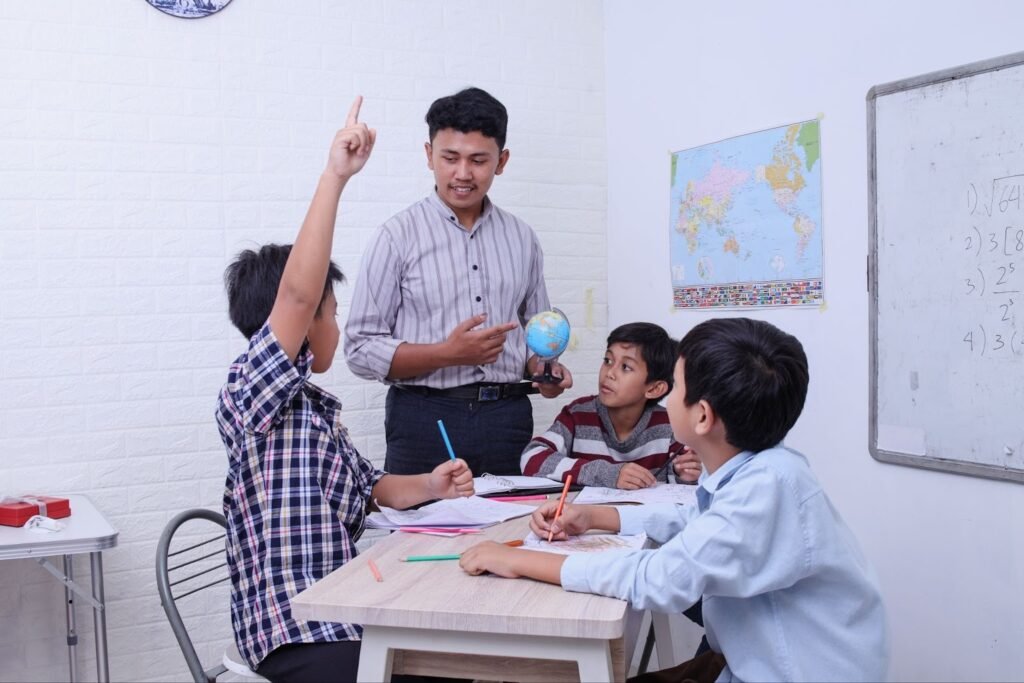
Parental involvement in education is a transformative factor that greatly impacts student achievement. Research consistently demonstrates a strong correlation between parental engagement and higher grades, improved test scores, and reduced dropout rates. In addition, active participation fosters emotional intelligence and resilience in students, enhancing their social skills. Establishing effective communication and trust between educators and families strengthens home-school relationships, promoting a collaborative educational environment. Despite barriers like time constraints and cultural differences, strategies can be implemented to encourage participation. The long-term benefits of engaged families extend beyond academics, influencing community development and societal growth. Exploring further reveals the nuanced role of involvement in education.
KEY TAKEAWAYS
- Parental involvement significantly boosts student achievement, leading to higher grades, better test scores, and lower dropout rates.
- Active engagement fosters emotional intelligence and social skills, enhancing students’ resilience and interpersonal abilities.
- Strong home-school relationships built on trust and communication improve student outcomes through collaborative dialogue and shared goals.
- Transparent curriculum engagement helps parents support their children’s learning at home, creating a cohesive educational environment.
- Overcoming barriers to participation, such as time and language constraints, enhances parental involvement and strengthens school communities.
DEFINITION OF PARENTAL INVOLVEMENT
Parental involvement in education refers to the active engagement of parents in their children’s academic journey, encompassing a wide range of activities and interactions. This involvement is not limited to attending parent-teacher conferences or volunteering at school events; it also includes supporting learning at home, communicating with educators, and fostering a positive attitude towards education.
Research indicates that parental involvement can take various forms, commonly categorized as academic, behavioral, and social involvement. Each type plays a vital role in shaping a child’s educational experience and outcomes. Parents are a key constituency when it comes to holding schools accountable for their child’s learning.
Several factors influence the extent and nature of parental involvement. Socioeconomic status, cultural background, and parents’ own educational experiences greatly impact their engagement levels. For instance, parents with higher educational attainment are often more equipped to assist with homework and advocate for their children’s needs within the school system.
Additionally, the school environment itself can either promote or hinder parental participation. Schools that actively encourage involvement through workshops, clear communication, and an inclusive atmosphere tend to see higher rates of engagement.
Furthermore, the child’s age and developmental stage also affect parental involvement. Younger children typically require more direct supervision and support, while adolescents may benefit from guidance that fosters independence.
Understanding these dynamics is essential for educators and policymakers aiming to enhance parental involvement, as a tailored approach can better meet the diverse needs of families and ultimately contribute to improved student outcomes.
Academic Benefits for Students
Engagement from parents in their children’s education greatly enhances academic performance, as numerous studies have established a strong correlation between parental involvement and student achievement. Research consistently illustrates that students whose parents actively participate in their education tend to exhibit higher levels of academic achievement. This phenomenon can be attributed to a variety of factors, including increased student motivation and improved attitudes toward learning.
Parental involvement manifests in several forms, such as monitoring homework, attending school meetings, and encouraging educational pursuits. These activities serve to create an environment that prioritizes education, thereby fostering a culture of academic excellence.
For instance, a study conducted by the National Center for Family & Community Connections with Schools found that students with engaged parents are more likely to earn higher grades, achieve better test scores, and have lower dropout rates.
Moreover, the presence of parental support positively influences student motivation. When parents express interest in their child’s educational journey, it reinforces the value of academic success. This reinforcement often translates into a greater commitment to learning and a stronger desire to excel in school.
Consequently, students are more likely to set higher academic goals and pursue them with determination. Students whose parents are involved in school are also less likely to suffer from low self-esteem or develop behavioral issues, researchers say.
Emotional and Social Development
Involvement from caregivers in educational settings plays a pivotal role in fostering emotional and social development among students. Research indicates that when caregivers are actively engaged, children exhibit enhanced emotional intelligence, leading to improved social skills and stronger peer relationships. This involvement not only supports academic achievement but also contributes greatly to resilience building, equipping students to navigate life’s challenges.
The dynamics within a family can profoundly influence a child’s emotional health. Caregivers who model effective interpersonal communication and empathy development create environments where children feel safe to express emotions and resolve conflicts. Such nurturing atmospheres promote self-regulation, enabling students to manage their emotions and behaviors effectively.
Additionally, parental engagement often extends into community involvement, further enriching the social fabric that children interact with daily. Strong emotional and social foundations are critical for success in both school and life. By fostering peer relationships through active participation, caregivers can help children develop essential skills that facilitate collaboration and conflict resolution.
Furthermore, children exposed to supportive family dynamics are more likely to engage positively within their communities, enhancing their overall social networks.
Strengthening Home-School Relationships
Strengthening home-school relationships is essential for fostering an environment conducive to student success.
Building trust and effective communication between educators and families can enhance collaborative learning opportunities and actively engage families in the curriculum. Strong parent and teacher collaboration creates a unified support system that aligns expectations, reinforces learning goals, and promotes consistent guidance for students both at home and in school.
Research indicates that such partnerships contribute to improved academic outcomes and a more supportive school community.
Building Trust and Communication
Effective home-school relationships hinge on the establishment of trust and open communication between parents and educators. Research indicates that when parents and teachers engage in collaborative dialogue, student outcomes greatly improve. Trust building activities, such as regular parent-teacher conferences, workshops, and community events, foster a sense of partnership. These initiatives create a platform for parents to voice concerns and share insights, reinforcing mutual respect and understanding.
Moreover, employing effective communication techniques is vital in this process. Educators can utilize various methods, including newsletters, emails, and social media, to provide parents with timely updates on their children’s progress and school activities. Consistent and transparent communication helps demystify the educational process and encourages parental involvement.
Furthermore, training for educators in culturally responsive communication can enhance engagement with diverse families, ensuring that all voices are heard. By prioritizing trust and communication, schools can create an inclusive environment that values parental contributions, thereby enhancing student success.
Ultimately, building strong home-school relationships through these strategies cultivates a community of support that is essential for fostering educational excellence and student well-being.
Collaborative Learning Opportunities
Collaborative learning opportunities serve as a vital mechanism for enhancing home-school relationships, fostering a sense of community and shared responsibility for student success.
By engaging parents and educators in collaborative efforts, schools can create an environment where students thrive academically and socially. Research indicates that when parents participate in their children’s education through peer partnerships and shared resources, they contribute considerably to improved student outcomes.
Key components of effective collaborative learning opportunities include:
- Interactive Workshops: Facilitate skill-building sessions for parents and students.
- Community Projects: Involve families in school-wide initiatives that promote teamwork and collaboration.
- Peer Mentoring Programs: Establish partnerships between families to share insights, resources, and support.
- Resource Sharing Platforms: Create systems where parents can access educational materials and tools collectively. Schools that provide families with access to helpful instructional materials and recommended resources—such as those available through the engineering teacher shop—can further strengthen at-home academic support.
These strategies not only strengthen home-school relationships but also empower families to take active roles in their children’s education.

ENGAGING FAMILIES IN CURRICULUM
Engaging families in the curriculum is a significant aspect of building strong home-school relationships that support student learning. Research indicates that when parents are involved in their children’s education, students demonstrate improved academic performance and emotional well-being.
One effective strategy for fostering this involvement is through curriculum transparency, which allows parents to understand the educational goals and content being taught in the classroom. By clearly communicating curriculum objectives, schools can empower families to reinforce learning at home, creating a cohesive educational experience.
Family workshops serve as a practical avenue for increasing engagement. These workshops can provide parents with tools and resources to support their children’s learning, while also facilitating open dialogue between educators and families.
Such initiatives not only enhance parents’ understanding of the curriculum but also invite them to share their insights and cultural perspectives, enriching the educational environment for all students.
Ultimately, prioritizing family engagement in the curriculum fosters a collaborative community that values education as a shared responsibility. By investing in these relationships, schools can create a supportive framework that enhances student success and nurtures lifelong learners.
Strategies for Effective Involvement
Effective parental involvement in education relies heavily on robust communication with teachers and the availability of volunteer opportunities at school. The stronger the relationship between parental involvement and children’s education, the more likely children are to achieve better grades and score higher on tests.
Research indicates that regular interaction between parents and educators fosters a collaborative environment that enhances student success.
Additionally, engaging parents through volunteer roles strengthens their connection to the school community, promoting a shared commitment to educational outcomes.
Communication With Teachers
Establishing clear and consistent communication with teachers is essential for fostering parental involvement in education. Effective communication serves as a foundation for relationship building, ensuring that parents are engaged and informed about their child’s academic progress.
Utilizing various communication tools and digital platforms, parents can facilitate open dialogue with educators, leading to impactful engagement strategies.
To enhance communication with teachers, consider the following strategies:
- Participate in Parent-Teacher Conferences: These meetings provide invaluable opportunities for parents to discuss their child’s progress updates and receive teacher feedback. When parents actively communicate with educators, including specialists such as the engineering teacher, they gain deeper insight into subject-specific expectations and can better support learning at home.
- Utilize Digital Platforms: Platforms such as school portals or apps can streamline communication, allowing for personalized communication that addresses specific concerns or achievements.
- Practice Active Listening: During interactions, whether in-person or virtual, active listening helps clarify misunderstandings and demonstrates commitment to collaborative problem-solving.
- Establish Regular Check-ins: Consistent communication fosters a sense of partnership, encouraging parents to stay informed and involved in their child’s education.
Volunteer Opportunities at School
Volunteer opportunities at school serve as an essential conduit for parental involvement, enhancing both the educational environment and the academic success of students. Engaging parents in school activities not only fosters a sense of community but also strengthens the support system for learners. Research indicates that when parents participate in classroom activities and workshops, student achievement tends to improve considerably.
The following table highlights various volunteer opportunities that schools can offer to encourage parental involvement:
| Volunteer Activity | Description |
| Classroom Activities | Assist teachers with lessons and projects |
| Parent Workshops | Provide educational sessions for parents |
| Fundraising Events | Help organize and run school fundraisers |
| After-School Programs | Supervise and engage with students |
| School Committees | Participate in decision-making processes |
These avenues not only allow parents to contribute their skills but also create an inclusive atmosphere where family engagement is celebrated. By participating in these initiatives, parents can directly impact their children’s educational experience, fostering a collaborative environment conducive to learning. This symbiotic relationship is vital for cultivating a thriving school community.
Overcoming Barriers to Participation
Many parents face significant barriers that hinder their active participation in their children’s education, ultimately impacting student outcomes. Effective barrier identification is essential for addressing these challenges and creating an inclusive environment.
Research indicates that barriers to parental involvement often stem from socioeconomic factors, cultural differences, and systemic issues within educational institutions.
To facilitate greater participation, stakeholders must engage in solution brainstorming that addresses these barriers directly. Here are some common obstacles and potential strategies to overcome them:
- Time Constraints: Many parents juggle work and family responsibilities, limiting their availability for school events. Schools can offer flexible meeting times and online engagement opportunities to accommodate varying schedules.
- Language Barriers: Non-native speakers may feel excluded from school communications. Providing multilingual resources and interpreters can foster inclusivity and enhance understanding.
- Cultural Differences: Diverse cultural practices regarding education may lead to misunderstandings. Schools should actively promote cultural competency training for staff to better engage with all families.
- Lack of Awareness: Some parents may not recognize the importance of their involvement. Schools can create informative workshops that emphasize the positive effects of parental engagement on student achievement.
Long-Term Impact on Success
Parental involvement in education notably influences long-term student success, shaping academic achievement, social skills, and future opportunities. Research consistently indicates that students with engaged parents demonstrate higher levels of academic performance and better school attendance. This correlation is not merely coincidental; involved parents help establish a robust foundation for lifelong learning by fostering an environment that values education and encourages curiosity.
The impact of parental engagement extends beyond immediate academic results. Students whose parents actively participate in their educational journey are more likely to develop critical social skills, such as effective communication and teamwork, which are essential in both higher education and the workforce. These social competencies notably enhance future aspirations, enabling students to pursue advanced degrees and career opportunities that may otherwise seem unattainable.
Moreover, the influence of parental involvement is particularly pronounced in underserved communities, where access to resources and support may be limited. When parents engage with educators and advocate for their children, they not only improve educational outcomes but also inspire a culture of resilience and aspiration.
This dynamic creates a ripple effect, where engaged families contribute to community development and long-term societal benefits.
RELATED STUDIES ABOUT PARENTAL INVOLVEMENT IN EDUCATION
In conclusion, parental involvement proves pivotal in promoting academic achievement, emotional enrichment, and robust relationships between home and school. By fostering fruitful partnerships and addressing participation barriers, families can create a supportive environment conducive to learning. The long-term legacy of engaged parents manifests in student success, shaping not only scholars but also socially skilled individuals. Ultimately, the synergy of support and scholarship underscores the transformative power of parental participation in education.
“Try to Balance the Baseline”: A Comment on “Parent-Teacher Meetings and Student Outcomes: Evidence from a Developing Country” by Islam (2019)
- Objective and Background
This paper is a rigorous reproduction and replication study conducted under the auspices of the Institute for Replication (I4R). It critically re-examines a highly influential study by Islam (2019), which claimed that a randomized controlled trial (RCT) of structured parent-teacher meetings in rural Bangladesh led to large, significant improvements in student test scores (e.g., a 0.42 SD increase in math). The original study’s findings have important implications for education policy in developing countries.
The primary objective of this comment is to assess the validity of the original study’s findings by independently reproducing its analyses and scrutinizing its data and methodology. The authors’ investigation uncovered a series of critical data irregularities and methodological flaws that fundamentally undermine the credibility of the original research.
- Methodology
The authors conducted a detailed forensic analysis of the replication package publicly provided by Islam (2019). Their methodology involved:
- Computational Reproduction: Successfully running the original Stata code to reproduce the main results.
- Data Auditing: Systematically examining the provided datasets for consistency, patterns, and anomalies.
- Geospatial Analysis: Mapping the location of treatment and control schools to assess the validity of the randomization.
- Permutation Tests: Statistically testing the likelihood of the observed treatment allocation occurring by chance.
- Comparative Analysis: Comparing student-level data across different datasets provided by the author and identifying discrepancies.
- Robustness Checks: Re-estimating the main results using alternative, previously unreported baseline data and panel data models.
- Key Findings
The reproduction effort revealed that the original study is invalid due to multiple, severe flaws.
- The Intervention Was Not Randomized: The study claims to be an RCT, but the authors demonstrate this is false. Geospatial analysis shows a perfect separation of treatment and control schools by union (administrative unit). All treatment schools are in five unions, and all control schools are in four other unions. A permutation test shows the probability of this allocation occurring by chance is essentially zero. This constitutes a fatal flaw, invalidating any causal claims.
- Systematic Data Irregularities in Baseline Scores: The authors uncovered multiple versions of baseline test scores for the same students. The baseline scores used in the main analysis show systematic discrepancies compared to alternative baseline scores found in other data files. These discrepancies are correlated with treatment status. For example, in the 2012 data, the control group’s baseline scores appear to have been “shifted” in a way that the treatment group’s were not, directly contradicting the principles of a fair comparison.
- Unreported Pre-Treatment Data Exists: The replication package contains data from 2010, a full year before the study began. When this pre-treatment data is used in a difference-in-differences analysis, the results contradict the original findings, showing negative effects for the treatment group in multiple subjects.
- Selection Bias in Follow-up Survey: The follow-up survey, designed to be a random sample, exhibits strong selection bias. Treated students were far more likely to be included in the survey than control students (e.g., 79% vs. 53% for one cohort), indicating the survey results are not representative.
- Contradictory Evidence on the Treatment: A survey of parents about the treatment’s usefulness found that parents in the control schools were more positive about the parent-teacher meetings than parents in the schools that actually received them. This paradoxical finding adds to the evidence of data manipulation or contamination.
- Interconnection with Other Studies: The authors discovered that the same flawed “randomization” was used in two other papers by the same author (Begum et al., 2018, 2022), which are not cross-referenced, further compounding concerns about the integrity of the underlying research.
- Conclusions and Implications
The comment concludes that the original study by Islam (2019) is not credible. The evidence of non-randomization and systematic data irregularities is overwhelming.
- Implications for the Original Study: The findings of positive, large-scale effects from parent-teacher meetings should be disregarded. The study cannot be used to inform policy or theory.
- Implications for Research Integrity: This case highlights the critical importance of replication and data auditing. It serves as a stark warning about the potential for data manipulation in empirical research, even in high-profile publications. The authors’ note that the original author’s analysis code included the comment “try to balance the baseline,” which now appears to be a disturbing admission of intent rather than a benign instruction.
- Call for Transparency: The case underscores the need for journals and researchers to enforce strict data and code availability policies, and for the scientific community to actively engage in post-publication replication efforts to safeguard the integrity of the scientific record.
| REFERENCE: Carl Bonander, Olle Hammar, Niklas Jakobsson, Gunther Bensch, Felix Holzmeister, Abel Brodeur, “Try to Balance the Baseline”: A comment on “Parent–teacher meetings and student outcomes: Evidence from a developing country” by Islam (2019), European Economic Review, Volume 175, 2025, 105021, ISSN 0014-2921, https://doi.org/10.1016/j.euroecorev.2025.105021. (https://www.sciencedirect.com/science/article/pii/S0014292125000716) |
Parent-Teacher Trust as a Relational Pathway to the Child: Teachers’ Perceptions About Child-Teacher-Parent Relationship-Building During the Child’s Transition to Preschool
Study Background and Purpose
The transition from home to preschool represents a critically sensitive period for young children, involving both separation from primary caregivers and the need to establish relationships with new teachers. While attachment research confirms that sensitive interactions during this transition can buffer children’s stress, no evidence-based guidelines exist for organizing the introduction process to support relationship-building.
This longitudinal study investigated whether teachers’ perceptions of trust in their relationship with parents—developed during the preschool introduction process—influences the quality of the child-teacher relationship approximately two months later. The researchers also examined the roles of teacher mentalizing capacity (the ability to understand mental states) and different approaches to organizing parents’ involvement during introduction activities.
Key Findings
- Parent-Teacher Trust as a Predictor of Child-Teacher Relationship Quality
- Teachers who perceived their relationship with parents as trusting at the end of the introduction process reported significantly warmer and closer relationships with children two months later (β = .476, p < .001).
- Parent-teacher trust explained nearly 23% of the variance in child-teacher relational quality.
- Notably, teachers’ perceptions of whether the child trusted them immediately after introduction were not related to later child-teacher relationship quality, suggesting that the pathway to the child operates through the parent.
- The Role of Teacher Mentalizing Capacity
- Teachers with higher self-reported mentalizing abilities (understanding their own and others’ mental states) developed more trusting relationships with parents (β = .247, p = .005).
- Through this enhanced parent-teacher trust, teacher mentalizing indirectly contributed to better child-teacher relationships (β = .113, p = .020).
- Mentalizing showed no direct effect on child-teacher relationships, indicating its primary influence operates through successful engagement with parents.
- Structural and Organizational Factors
Several structural characteristics significantly influenced parent-teacher trust:
- Child-adult ratio: Lower ratios were associated with higher parent-teacher trust (β = -.273, p = .003)
- Teacher work experience: More experienced teachers reported higher trust with parents (β = .270, p = .003)
- Parent-teacher interaction: Higher levels of direct interaction during introduction activities predicted greater parent-teacher trust (β = .258, p = .006)
- The Role of Parent Involvement
While direct parent-teacher interaction during introduction activities positively contributed to trust-building, this factor also correlated with lower teacher well-being at the two-month follow-up. This suggests a potential trade-off between relationship-building benefits and teacher resource depletion—particularly when introducing multiple families simultaneously.
Theoretical Implications
The findings support a systemic perspective on preschool transitions: the teacher’s relationship with the child cannot be understood in isolation from the teacher-parent relationship. Parents appear to function as “relational gatekeepers”—teachers who feel trusted by parents experience greater access to forming warm connections with children. This aligns with attachment theory’s concept of parents providing “approval” for children to form secondary attachment relationships with caregivers.
Practical Recommendations
- For Preschool Practitioners:
- Prioritize parent-teacher trust-building during the introduction process, recognizing this as a pathway to the child rather than a separate administrative task
- Create ample opportunities for direct parent-teacher interaction during introduction activities, regardless of whether parents take active or passive roles with their children
- Designate one teacher as primarily responsible for each new child (key person approach) to enable focused attention on both child and family
- Balance relationship-building efforts with teacher well-being, as extensive parent interaction may deplete resources
- For Policymakers and Preschool Leaders:
- Maintain low child-adult ratios—this structural factor is essential for enabling teachers to engage sensitively with both children and parents during transitions
- Ensure adequate experienced staff in each preschool, as teacher work experience significantly supports trust-building with families
- Support teacher training focused on mentalizing capacities—specifically the ability to understand and respond to parents’ emotional states during the vulnerable transition period
- Recognize the introduction process as a family-level intervention, not merely child-focused orientation
Conclusion
This study provides the first empirical evidence that teacher-parent trust established during preschool introduction directly influences later child-teacher relationship quality. The findings underscore that effective transitions require teachers to engage with the whole family system, not only the child. By organizing introduction processes that facilitate parent-teacher connection, maintaining favorable structural conditions, and supporting teachers’ relational capacities, preschools can optimize the critical window of opportunity that the transition period represents for children’s long-term socioemotional development.
| REFERENCE: Martina Andersson Søe, Elia Psouni, Parent-teacher trust as a relational pathway to the child: Teachers’ perceptions about child-teacher-parent relationship-building during the child’s transition to preschool, International Journal of Educational Research, Volume 132, 2025, 102618, ISSN 0883-0355, https://doi.org/10.1016/j.ijer.2025.102618. (https://www.sciencedirect.com/science/article/pii/S0883035525000928) |
Development of the Difficulties in Communicating with Teachers Scale Among Parents of Children with ADHD
- Objective and Background
Parents of children with Attention-Deficit/Hyperactivity Disorder (ADHD) face unique challenges in communicating with teachers about their child’s needs, which span academic, behavioral, social, and emotional domains. While effective parent-teacher collaboration is crucial for supporting these children, no standardized tool existed to specifically measure the difficulties parents experience in this communication. This study aimed to develop and validate a new scale: the Difficulties in Communicating with Teachers Scale Among Parents of Children with ADHD (DCT-P-CADHD) .
The primary objectives were to create a reliable and valid instrument and to analyze its psychometric properties, including its factor structure, internal consistency, test-retest reliability, and concurrent validity (by correlating it with measures of parental depression and child ADHD/ODD symptoms).
- Methodology
The study employed a rigorous, multi-phase scale development and validation process.
- Item Generation (Qualitative Phase): Focus group interviews were conducted with 24 parents of children with ADHD to explore their communication difficulties with teachers. The discussions were transcribed and analyzed using open, axial, and selective coding, resulting in an initial pool of 23 items.
- Participants: The scale was then administered to a new sample of 230 parents of children (aged 6-18) with a confirmed ADHD diagnosis, recruited from outpatient psychiatric clinics in Taiwan. Parents of children with comorbid intellectual disability or autism were excluded.
- Validation Measures: To assess concurrent validity, participants also completed:
- The Center for Epidemiologic Studies Depression Scale (CESD) to measure parental depressive symptoms.
- The Swanson, Nolan, and Pelham Rating Scale-IV (SNAP-IV) to measure the severity of their child’s ADHD and ODD symptoms.
- Psychometric Analysis:
- Exploratory Factor Analysis (EFA): Used to determine the underlying factor structure of the 23 items.
- Internal Consistency: Assessed using Cronbach’s α and McDonald’s ω.
- Item Analysis: Item-rest correlations were calculated.
- Test-Retest Reliability: A subset of parents completed the scale again after one month, and the correlation between the two scores was analyzed using Pearson correlation and Bland-Altman plots.
- Key Findings
The analysis revealed that the DCT-P-CADHD is a robust, one-dimensional scale with excellent psychometric properties.
- Factor Structure: Parallel analysis and EFA clearly indicated a single-factor structure for the 23-item scale, explaining 45.9% of the variance. All items loaded strongly on this single factor (loadings ranged from 0.606 to 0.915), suggesting the scale measures a unified construct of overall communication difficulty.
- Reliability:
- Internal Consistency: The scale demonstrated excellent internal consistency (Cronbach’s α = 0.973; McDonald’s ω = 0.981), indicating that all items are highly coherent and measure the same underlying concept.
- Item Analysis: All items showed strong item-rest correlations (ranging from 0.602 to 0.899), confirming each item’s contribution to the overall scale.
- Test-Retest Reliability: The scale showed good stability over a one-month period, with a high correlation between test and retest scores (r = 0.809). Bland-Altman plots confirmed no systematic bias between the two time points.
- Concurrent Validity: As hypothesized, higher scores on the DCT-P-CADHD were significantly and moderately correlated with higher levels of parental depression (r = 0.385) and more severe child ADHD/ODD symptoms (inattention, hyperactivity/impulsivity, and ODD; r ranged from 0.294 to 0.322). This confirms that greater communication difficulties are associated with these related, but distinct, clinical factors.
- Conclusions and Implications
The study concludes that the DCT-P-CADHD is a psychometrically sound instrument that can reliably and validly assess the difficulties parents of children with ADHD face when communicating with teachers.
- Practical Implications:
- Clinical Assessment: This new scale provides clinicians and educators with a practical tool (taking ~10 minutes to complete) to systematically identify parents who are struggling with teacher communication and may need additional support.
- Early Intervention: Routine screening with the DCT-P-CADHD can enable early identification of at-risk parents, allowing for timely intervention to prevent communication breakdowns and reduce parental stress.
- Guiding Program Development: The scale can be used to evaluate the effectiveness of intervention programs designed to improve parent-teacher collaboration and parental communication skills. The single-factor structure suggests that these difficulties are interrelated, meaning support programs should address the full spectrum of communication challenges (academic, behavioral, emotional) holistically.
- Future Research: The authors recommend future studies to perform confirmatory factor analysis (CFA) with a larger sample to further validate the scale’s structure, and to test its applicability in other populations, such as parents of children not receiving clinical services.
| REFERENCE: Chung-Ying Lin, Wen-Jiun Chou, Ching-Shu Tsai, Tai-Ling Liu, Ray C. Hsiao, Yu-Min Chen, Cheng-Fang Yen, Development of the Difficulties in Communicating with Teachers Scale Among Parents of Children with ADHD, Research in Developmental Disabilities, Volume 161, 2025, 104990, ISSN 0891-4222, https://doi.org/10.1016/j.ridd.2025.104990. (https://www.sciencedirect.com/science/article/pii/S0891422225000745) |
