

Supporting mental health as a special education teacher is crucial for the well-being of students. Understanding their unique emotional needs, including challenges like anxiety and depression, is key. Implementing mindfulness techniques and consistent routines can enhance emotional regulation. Fostering empathy in the classroom helps build social skills, while effective communication guarantees students feel heard and validated. Collaborating closely with families creates a robust support system that empowers both students and parents. Creating a safe environment with sensory spaces allows students to manage stress effectively. Exploring these strategies will lead to deeper insights into fostering an enriching educational experience.
KEY TAKEAWAYS
- Implement mindfulness techniques like mindful breathing and body awareness to help students manage stress and enhance emotional regulation.
- Foster open communication with families to build trust and ensure collaborative support for students’ mental health needs.
- Create a safe environment with sensory spaces and structured routines to provide predictability and security for students.
- Use active listening and clear language to validate students’ feelings and encourage deeper conversations about their emotions and experiences.
- Promote empathy in the classroom through role modeling and compassion initiatives to enhance social skills and emotional awareness among students.
UNDERSTANDING MENTAL HEALTH NEEDS
Understanding the intricacies of mental health needs is essential for fostering an inclusive and supportive learning environment for students with special needs. Students often face unique challenges that can affect their emotional well-being and overall development. As educators, it is crucial to cultivate mental health awareness to recognize these challenges and respond effectively.
Mental health issues can manifest in various ways, including anxiety, depression, and behavioral difficulties. For students with special needs, these challenges may be compounded by difficulties in emotional regulation, making it imperative for teachers to adopt a proactive approach. Building an understanding of each student’s individual needs is critical; this includes recognizing triggers that may lead to emotional outbursts or withdrawal.
Implementing strategies for emotional regulation can greatly enhance students’ ability to cope with stressors in the classroom. Techniques such as mindfulness exercises, structured routines, and personalized support plans can help students develop essential coping skills.
Providing a safe and nurturing environment allows students to express their feelings and learn how to manage them effectively.
Furthermore, fostering open lines of communication with students and their families can strengthen support systems. Engaging parents and caregivers in discussions about mental health awareness not only helps in addressing concerns but also promotes a collaborative approach to emotional well-being.
Ultimately, by prioritizing mental health needs and emotional regulation, special education teachers can empower their students, equipping them with the tools necessary for success both inside and outside the classroom.
Building Empathy in the Classroom
Creating a culture of empathy in the classroom is essential for the social and emotional growth of all students, particularly those with special needs. Empathy fosters emotional awareness and enhances social skills, which are vital for building meaningful relationships among peers.
Special education teachers play a pivotal role in shaping an inclusive environment where every student feels valued and supported.
To effectively cultivate empathy, educators can implement various strategies within their classroom activities:
- Role Modeling: Demonstrate compassionate behavior and active listening in interactions with students and colleagues.
- Group Discussions: Facilitate open dialogues about feelings, experiences, and the importance of empathy in everyday life.
- Compassion Initiatives: Organize projects that encourage students to practice empathy, such as community service or peer support activities.
- Positive Reinforcement: Acknowledge and celebrate acts of kindness and understanding among students to reinforce empathetic behavior.
Effective Communication Strategies
Effective communication is essential in fostering a supportive environment for students with diverse needs. As a teacher, it will be beneficial to establish a collaborative relationship with school counselors, psychologists, and other support staff to ensure a comprehensive approach to student well-being.
Utilizing active listening techniques allows us to truly understand their feelings and concerns, while employing clear and simple language guarantees that our messages are accessible and comprehensible.
Together, these strategies can greatly enhance our ability to support students’ mental health and well-being.
Active Listening Techniques
Active listening techniques are essential tools for special education teachers aiming to foster meaningful communication with their students. By employing these techniques, educators can create a supportive environment that promotes emotional well-being and understanding.
Key active listening strategies include:
- Reflective Listening: Echoing back what the student has expressed to validate their feelings and guarantee comprehension.
- Nonverbal Cues: Utilizing body language, eye contact, and facial expressions to convey empathy and attentiveness.
- Open-Ended Questions: Encouraging students to elaborate on their thoughts and feelings, fostering deeper conversation.
- Paraphrasing: Summarizing what the student has said to confirm clarity and show that their message has been received.
These techniques not only enhance communication but also build trust and rapport between teachers and students.
Clear, Simple Language
Building on the foundation established through active listening techniques, the use of clear, simple language is crucial for effective communication in special education settings. Educators must endeavor to create an environment where students feel understood and supported. This can be achieved by using straightforward vocabulary and short sentences that convey messages without ambiguity.
When discussing emotional regulation, for instance, it is essential to break down complex concepts into relatable terms. Instead of saying, “You need to manage your emotions,” consider saying, “Let’s find ways to calm down when we feel upset.” This approach fosters understanding and encourages students to engage in their self-care practices.
Additionally, clarity in communication helps build trust between educators and students. By ensuring that instructions and expectations are communicated simply, students are more likely to feel confident in their abilities to follow through. This, in turn, promotes a sense of autonomy and self-worth.
Ultimately, clear, simple language not only enhances communication but also reinforces the significance of mental health in special education. By prioritizing these effective strategies, educators can empower students on their journey toward emotional well-being and personal growth.
Collaborating With Families
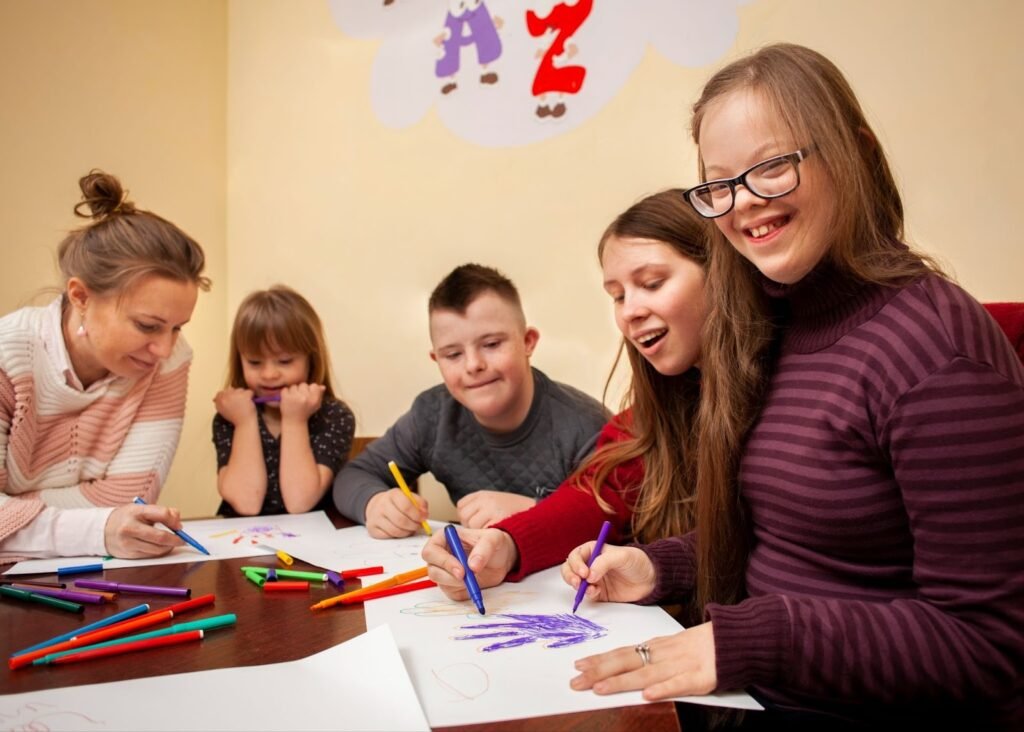
Collaborating with families is essential for fostering a supportive environment for students with special needs. A key contributing factor is the idealization of special education teachers by schools, often portraying them as extraordinary individuals who are characterized as nurturing and self-sacrificing, willing to prioritize their students’ well-being over their own.
By building trusting relationships and employing effective communication strategies, educators can guarantee that families feel valued and engaged in their child’s mental health journey.
Involving families in support initiatives not only enhances student outcomes but also strengthens the overall school community.
BUILDING TRUSTING RELATIONSHIPS
Establishing a foundation of trust with families is essential for special education teachers aiming to support their students’ mental health effectively. Taking the time to learn about the student’s disability and figuring out ways for that student to cope can help the student get control over their behavior.
Building trusting relationships fosters an environment where families feel valued, understood, and engaged in their child’s education. Trust not only enhances rapport development but also allows for open communication about the specific needs of students.
To cultivate these relationships, consider implementing the following trust building activities:
- Regular Check-ins: Schedule consistent meetings or phone calls to discuss student progress and address concerns.
- Active Listening: Demonstrate empathy by genuinely listening to families’ experiences and feelings regarding their child’s education.
- Collaborative Goal Setting: Involve families in setting achievable goals for their children, ensuring they feel included in the educational journey.
- Transparent Communication: Share resources and updates proactively, fostering a sense of partnership and trust.
Effective Communication Strategies
Effective communication with families is a cornerstone of successful special education. By employing effective strategies, teachers can foster a collaborative environment that promotes student mental health and well-being. One key approach is the use of visual aids, which can help convey complex information in an accessible manner. These aids, such as charts or diagrams, facilitate understanding and encourage meaningful dialogue.
Additionally, being mindful of body language is essential during interactions with families. Nonverbal cues, such as eye contact and open posture, can convey empathy and support, reinforcing the message that families are valued partners in their child’s education.
Active listening is also vital; it demonstrates respect for families’ perspectives and encourages them to share their insights and concerns openly.
Regular communication through various channels—such as emails, phone calls, and in-person meetings—ensures that families remain informed and engaged. This consistent outreach not only builds trust but also empowers families to participate actively in their child’s educational journey.
Involving Families in Support
Building a strong partnership with families is crucial for creating a holistic support system for students with special needs. By actively involving families in the educational process, we can enhance family engagement, fostering robust support networks that benefit students’ mental health.
It is essential to reflect on cultural considerations and individual family dynamics in this collaboration.
To effectively involve families, educators can adopt several strategies:
- Resource sharing: Provide families with access to relevant resources that can aid in their child’s development.
- Feedback loops: Establish regular communication channels, allowing families to share insights and concerns while informing them of their child’s progress.
- Involvement strategies: Encourage families to participate in school activities, fostering a sense of belonging and community.
- Educational workshops: Host workshops that empower families with knowledge about mental health and effective support techniques.
Community partnerships can also enhance these efforts, creating a network of support that extends beyond the classroom.
Implementing Mindfulness Techniques
Many educators are discovering the transformative power of mindfulness techniques in supporting the mental health of their students, particularly in special education settings. By integrating practices such as mindful breathing and guided imagery, teachers can create a calming atmosphere that encourages self-regulation and emotional awareness.
These techniques can foster body awareness, allowing students to connect with their physical sensations and emotions, ultimately enhancing their ability to manage stress. Incorporating gratitude practices helps students cultivate a positive mindset, while sensory activities, like nature walks, immerse them in their surroundings, promoting relaxation and focus.
These experiences can greatly enrich their learning and emotional well-being. Journaling prompts can also serve as a powerful tool for reflection, while educators may supplement classroom activities with supportive materials or visual resources from the engineering teacher shop to help structure engaging learning experiences.
Movement breaks are essential, as they allow students to release pent-up energy and refocus their thoughts. Visualization exercises can guide students in imagining positive outcomes or comforting scenarios, further nurturing a sense of safety and optimism.
Additionally, self-compassion techniques encourage students to treat themselves with kindness, helping them navigate challenges with resilience. Incorporating these mindfulness techniques into daily routines not only supports students’ mental health but also cultivates a nurturing environment where they can thrive academically and emotionally.
Creating a Safe Environment
A safe environment is essential for fostering the mental health and overall well-being of students in special education settings. Creating such an environment involves both physical and emotional components that allow students to feel secure and supported. This can be achieved through various strategies that promote safety, trust, and positive interactions among students.
To establish a safe environment, consider implementing the following strategies:
- Sensory Spaces: Designate areas where students can retreat to engage in calming activities, helping them manage anxiety and stress.
- Emotional Check-Ins: Regularly assess students’ emotional states through brief discussions or visual aids, enabling them to express their feelings and fostering open communication.
- Structured Routines: Maintain consistency in daily activities, which can provide students with a sense of predictability and security. Structured routines can also extend to different classroom activities, including creative projects or engineering lessons that encourage problem-solving while helping students build confidence and focus.
- Peer Support: Encourage collaborative activities that allow students to build relationships and develop social skills, creating a supportive network among peers.
In addition to these strategies, incorporating positive reinforcement can motivate students to engage in appropriate behaviors and enhance their self-esteem.
Providing creative outlets can also promote self-expression and emotional regulation.
Accessing Professional Resources
Accessing professional resources is essential for special education teachers aiming to support their students’ mental health effectively. By leveraging various tools and networks, teachers—including specialists such as the engineering teacher—can enhance their understanding and capabilities in fostering a nurturing environment that prioritizes mental well-being.
One valuable approach is to engage with professional networks, which can provide a platform for sharing experiences and strategies. These networks often host mental health workshops, offering practical techniques and insights into the latest research. Participating in these workshops can empower educators to implement effective interventions tailored to their students’ unique needs.
Resource directories are another vital asset, containing information on local and national mental health services. By familiarizing themselves with these directories, teachers can provide families with guidance on seeking additional support outside the classroom.
Establishing community partnerships is equally important, as collaboration with local mental health organizations can facilitate access to specialized resources and services.
In addition to in-person opportunities, online trainings are increasingly available, allowing educators to learn at their own pace. These trainings can cover various topics, from understanding mental health disorders to developing coping strategies for students.
Lastly, fostering peer support among colleagues can create a strong support system. Sharing challenges and successes with fellow teachers can lead to valuable insights and a sense of camaraderie, reinforcing the collective commitment to student well-being.
RELATED STUDIES ABOUT SPECIAL EDUCATION TEACHER
To summarize, supporting mental health as a special education teacher requires a multifaceted approach, where understanding and empathy intertwine like threads in a fabric. Effective communication fosters trust, while collaboration with families strengthens the support network for students. Implementing mindfulness techniques and creating a safe environment serve as foundational pillars, allowing each student to flourish. By accessing professional resources, educators can weave together a thorough strategy that nurtures mental well-being, ultimately guiding students toward success and resilience.
Education Outside The Classroom For Children With Neurodevelopmental Disorders In Special Needs Education Settings—A Scoping Review
- Overview and Purpose
Children with neurodevelopmental disorders (NDD)—such as autism spectrum disorder (ASD), attention-deficit/hyperactivity disorder (ADHD), and intellectual disabilities (ID)—face significant challenges, including higher rates of chronic health conditions, low physical activity, poor academic outcomes, and limited participation in school and social activities. “Education outside the classroom” (EotC), a pedagogical approach that moves teaching into natural and cultural settings outside school buildings, has shown benefits for general education students in social, academic, and physical domains. However, its application in special needs education settings has not been systematically reviewed.
This scoping review aims to identify and map the characteristics, outcomes, enablers, and barriers of EotC in special needs education for children with NDD aged 5-21 years. By providing an overview of current practices and evidence, the review seeks to guide practitioners and inform future research.
- Methodology
- Design: A scoping review following the established Arksey and O’Malley framework and JBI guidelines.
- Search Strategy: Systematic searches were conducted in 10 scientific databases and two grey literature databases. Additionally, members of the international Play, Learn, and Teach Outdoors Network (PlaTO-Net) were consulted.
- Inclusion Criteria: Studies focusing on children with NDD (5-21 years) in special needs education settings (special schools, special classes, or inclusive environments) that examined EotC—defined as curricular educational activities outside school buildings during school hours.
- Final Sample: 50 studies were included, comprising peer-reviewed articles, dissertations, and grey literature (practice descriptions, reports, book chapters, etc.).
- Analysis: Data were extracted on study characteristics, EotC types, outcomes, enablers, and barriers. Findings were synthesized narratively, and EotC approaches were categorized thematically through an iterative process with an international advisory group.
- Major Findings
The review reveals an emerging field with a predominance of qualitative and practice-based literature, indicating a low overall level of rigorous evidence but rich practical insights.
- Study Characteristics: The 50 included studies were published predominantly after 2014, with most conducted in the USA, UK, and Denmark. Half were grey literature (practice descriptions, magazine articles, reports), while the other half were peer-reviewed (qualitative studies, case studies, and a few quasi-experimental studies). Sample sizes were typically small (median 10 students). Studies targeted students across various NDD diagnoses and settings (special schools, special classes, inclusive classrooms).
- Suggested Impacts of EotC: While rigorous outcome data were limited, studies described positive impacts across multiple domains:
- Cognitive and Academic: Gains in practical skills (e.g., tool use), knowledge acquisition (e.g., nature, animals), literacy and numeracy applied in real-world contexts, life skills, and increased engagement and participation.
- Social, Behavioral, and Emotional: Improvements in collaborative teamwork, communication, prosocial skills, conflict resolution, self-regulation, reduced anxiety and aggression, increased self-esteem, confidence, sense of mastery, and motivation. Students also demonstrated taking responsibility and initiative.
- Physical: Increased physical activity, endurance, fine and gross motor skills, and body awareness.
- Teachers and Families: Teachers reported feeling calmer and more inspired; families adopted new outdoor activities.
- Enablers and Barriers: Key factors influencing successful EotC were identified across four levels:
- Enablers: Student sense of safety and mastery; supportive physical environment (access to green space); confident, collaborative staff; and organizational support (clear leadership, planning time, structured routines, small groups, high staff-student ratios).
- Barriers: Student challenging behaviors and motor limitations; inaccessible environments and lack of aids; staff inexperience and lack of disability-specific knowledge; organizational constraints (costs, transportation, inflexible timetables, curriculum pressure, safety concerns).
- Recommendations for Practice: The included studies provided extensive practical recommendations for implementing EotC in special needs settings, focusing on:
- Class Management: Thorough preparation, predictability, consistent routines, clear communication.
- Structuring Activities: Hands-on, tangible learning; simple, clear goals; flexibility; active teacher participation.
- Student Encouragement: Allowing opt-out and partial participation; involving students in decision-making; focusing on strengths.
- Collaboration: Clear communication among staff; building trust; partnering with external educators and parents.
- Adaptations: Tailoring activities to mental and chronological age; using visual supports; frequent breaks; smaller groups; repeated reviews.
- Nine Types of EotC: The review identified nine categories of EotC in special needs education, often overlapping in practice:
- Nature-based education (e.g., forest schools)
- Animal-assisted education (e.g., interactions with trained animals)
- Horticultural education (e.g., school gardens)
- Service learning (e.g., community service projects)
- Urban place-based learning (e.g., museum visits, city walks)
- Outdoor classroom (regular curriculum taken outdoors)
- Environmental education (e.g., sustainability projects)
- Adventure-based education (e.g., rock climbing, canoeing)
- Indigenous place-based learning (e.g., traditional practices)
- Implications for Practice and Research
The findings offer valuable guidance for educators, policymakers, and researchers.
- For Practitioners: The review provides an overview of diverse EotC approaches and a rich set of practical recommendations for planning, structuring, and adapting outdoor learning activities to meet the individual needs of students with NDD. The identified enablers and barriers can help schools and teachers proactively address challenges and create more inclusive and effective outdoor learning environments.
- For Researchers: The review highlights the nascent state of the evidence base. There is an urgent need for:
- Rigorous Study Designs: Quasi-experimental and randomized controlled trials to evaluate the effectiveness of specific EotC approaches.
- Validated Outcome Measures: Development and use of standardized, validated tools appropriate for children with NDD to assess cognitive, social-emotional, and physical outcomes.
- Clearer Conceptual Frameworks: Greater consensus on terminology and intervention protocols to improve reproducibility and cross-study comparability.
- Collaborative Research: Partnerships between researchers and practitioners to co-develop and test interventions grounded in real-world practice.
- Conclusion
This scoping review provides the first comprehensive overview of EotC in special needs education settings for children with NDD. It maps a diverse and promising field, identifying nine distinct types of EotC and synthesizing practical knowledge on potential benefits, enablers, barriers, and implementation recommendations. While the current evidence base is limited, dominated by qualitative and practice-based literature, the findings suggest that EotC holds significant potential to enhance cognitive, social, emotional, and physical outcomes for this vulnerable population. The review serves as a foundational resource for practitioners seeking to implement inclusive outdoor learning and for researchers aiming to advance the field through more rigorous and systematic inquiry.
| REFERENCE: Michelle Stahlhut, Thea Toft Amholt, Karen Barfod, Silje Mikkelsen, Christoph Mall, Peter Elsborg, Mette Aadahl, Mads Bølling, Education outside the classroom for children with neurodevelopmental disorders in special needs education settings—A scoping review, International Journal of Educational Research, Volume 132, 2025, 102649, ISSN 0883-0355, https://doi.org/10.1016/j.ijer.2025.102649. (https://www.sciencedirect.com/science/article/pii/S0883035525001235) |
Can Separate Special Education Settings Still Be Perceived As Inclusive? A Critical Examination Of Finnish Primary Teachers’ Attitudes
- Overview and Purpose
Inclusive education, as a global principle, aims to provide quality education for all students, including those with special educational needs (SEN), within mainstream settings. However, its implementation varies significantly across cultural and policy contexts. Finland presents a unique case: while its education policy and National Core Curriculum reference the principle of inclusion, the country maintains a three-tiered support system that includes separate special education settings (e.g., part-time special education, special classes, and special schools). Recent quantitative research has indicated that Finnish primary teachers hold reserved or negative attitudes toward full inclusion.
This qualitative study seeks to understand this phenomenon in depth. It examines how Finnish primary school teachers—both mainstream classroom teachers and special education classroom teachers—perceive inclusive education and whether they consider separate special education settings to be compatible with inclusion.
- Key Research Questions
The study addresses three main questions:
- What are Finnish mainstream and special education classroom teachers’ perceptions of inclusive education?
- Do perceptions of inclusion differ between these two groups of teachers?
- Do Finnish teachers consider separate special education settings as inclusive?
- Methodology
- Design: A qualitative study using semi-structured interviews.
- Participants: Ten primary school teachers (grades 1-6) from one municipality in Finland, comprising:
- Five mainstream classroom teachers from regular schools.
- Five special education classroom teachers (four working in regular schools with separate special classes/groups, and one working in a separate special school).
- Data Collection: Interviews were conducted online in 2022, lasting 45 minutes to 2 hours. The interview protocol covered professional identity, conceptions of inclusion, inclusive practices, and continuous professional development.
- Analysis: Data were transcribed and analyzed using thematic analysis (Braun & Clarke, 2006), following a six-phase process to identify, review, and define themes.
- Major Findings
The analysis revealed a significant divergence between teachers’ idealistic views of inclusion and their perceptions of its practical implementation, with distinct perspectives from mainstream and special education teachers.
- Inclusive Education as an Ideal (Shared Value): All teacher participants, regardless of their role, shared a common value: “education for all” in the same classroom. They agreed on the ideal of including all children and viewed diversity as a norm in contemporary society. This commitment to equal placement was a fundamental, shared principle.
- Inclusive Education in Practice (Divergent Perceptions): Despite the shared ideal, teachers’ views on implementing inclusion differed sharply based on their professional role.
- Mainstream Classroom Teachers: Prioritizing Academic Learning for the Whole Class
- Antagonizing Interests: Mainstream teachers experienced significant tension, feeling forced to choose between the needs of SEN pupils and the “26 others.” They expressed guilt and anxiety that SEN pupils’ challenging behaviors or need for attention detracted from the learning of the majority, leading to a belief that the rights of one group were prioritized at the expense of another.
- Justifying Separation: They viewed separate settings (pull-out sessions, small groups) as necessary and beneficial, arguing these environments better meet the individual academic needs of SEN pupils, allowing them to learn in a calmer, more focused setting.
- Pupil Willingness and Stigma: Mainstream teachers acknowledged the potential stigma of separation (“you are retarded because you are there in the small group”) and hoped pupils were willing to attend. Some worked to prevent bullying, but the separation itself was often seen as a necessary shelter from the pressures of the mainstream class.
- Special Education Classroom Teachers: Rescuing Pupils from Exclusion
- Focus on Differentiation: Special education teachers’ pedagogy centered on the individual pupil, focusing on learning pace, basic skills, and using specialized materials and methods not available in mainstream classrooms. They saw their role as providing the tailored support that the mainstream environment could not.
- Creating Inclusive, Stigma-Free Environments: They actively worked to create a positive, accepting atmosphere where pupils felt good about themselves and were not stigmatized. Strategies included mixing groups so that all pupils visited the special education teacher, making it “not a big deal.”
- Preparing for (Re)inclusion: A core goal for special education teachers was to prepare pupils for eventual inclusion in regular classes and schools. They emphasized following the same curriculum, enabling participation in mainstream activities (e.g., breaks), and working toward reintegration.
- Critique of Mainstream Colleagues: Special education teachers perceived some mainstream colleagues as unwilling to differentiate instruction or accept SEN pupils into their classes, a stance they saw as a major barrier to genuine inclusion.
- Mainstream Classroom Teachers: Prioritizing Academic Learning for the Whole Class
- Implications for Practice and Policy
The findings have significant implications for the development of a truly inclusive education system in Finland and beyond.
- Bridging the “Ideal vs. Practice” Gap: The study reveals that while Finnish teachers value inclusion philosophically, mainstream teachers lack the practical capacity, support, or perhaps the pedagogical skills to enact it successfully without compromising what they see as their primary duty to the whole class. This is not merely an attitude problem, but a systemic and pedagogical one.
- Rethinking Teacher Preparation: The results point to a critical need to reform teacher education. Mainstream classroom teachers require much deeper training in inclusive pedagogies, specifically in differentiation—the ability to teach a diverse group of learners at different levels simultaneously. Without these skills, inclusion will continue to be perceived as an impossible task.
- Fostering Collaboration: The conflicting views between mainstream and special education teachers highlight a lack of shared understanding and collaborative practice. Schools need to create structures and cultures where these two groups of professionals can work together, share expertise, and develop a unified approach to supporting all learners, rather than operating in parallel.
- Re-evaluating Separate Settings: The study challenges a binary view of inclusion vs. segregation. Special education teachers framed their work in separate settings as a form of inclusion—rescuing pupils from exclusion in the mainstream and preparing them for fuller participation. This suggests that the quality of practice and the goal of (re)inclusion may be more important than the physical setting alone. A pupil in a mainstream class who is stigmatized and unsupported is not “included”; a pupil in a separate class who is being prepared for and connected to the mainstream may be on a path toward inclusion.
- Conclusion
This qualitative study provides a nuanced understanding of Finnish primary teachers’ attitudes toward inclusive education. It reveals a fundamental conflict: while “education for all” in the same classroom is a universally held ideal, mainstream teachers’ prioritization of whole-class academic learning leads them to view separate settings as a necessary, if imperfect, solution. In contrast, special education teachers see their work in these separate settings as an essential form of support and a pathway to eventual inclusion. The study concludes that for education to become truly inclusive, the focus must shift from placement alone to the development of inclusive pedagogies and collaborative practices that equip mainstream teachers with the expertise to meet diverse needs within the common classroom.
| REFERENCE: Lijuan Wang, Leah Luedtke, Régis Malet, Olli-Pekka Malinen, Can separate special education settings still be perceived as inclusive? A critical examination of finnish primary teachers’ attitudes, Teaching and Teacher Education, Volume 155, 2025, 104914, ISSN 0742-051X, https://doi.org/10.1016/j.tate.2024.104914. (https://www.sciencedirect.com/science/article/pii/S0742051X24004475) |
Special Education Teacher Candidates’ Beliefs, Perceived Knowledge, And Perceptions While Delivering Math Interventions In A Structured Field Experience
- Overview and Purpose
Teacher preparation programs (TPPs) widely recognize the importance of field experiences for developing effective educators. However, minimal research has examined how special education teacher candidates specifically experience fieldwork focused on mathematics instruction. This is a critical gap, given that students with disabilities persistently underperform in math and that special education candidates often lack confidence and content knowledge in this area.
This study investigates the experiences of special education teacher candidates as they designed and implemented a math intervention for K-12 students during a structured field experience. Using a case study design, the research explores how candidates’ perceived pedagogical content knowledge (PCK) and beliefs about math instruction changed over the semester, and what their perceptions were of the field experience itself.
- Key Research Questions
The study addresses two main questions:
- How do teacher candidates’ perceived knowledge and beliefs change as part of a course focused on implementing a math intervention with students who need additional support?
- What are teacher candidates’ perceptions of their experience implementing such an intervention?
- Methodology
- Design: A case study of one special education math methods course with an integrated fieldwork component.
- Participants: 22 female teacher candidates from a large northwestern U.S. university, all pursuing licensure in special education (most in dual programs with general or early childhood education). All were one or two semesters away from student teaching.
- Context: Candidates completed 35 hours of fieldwork (3 hours/week for 16 weeks) in a classroom of their choice, with the requirement that the block include daily math instruction. As a final project, they designed and implemented an 8-lesson math intervention for at least two students needing additional support.
- Data Collection: Multiple data sources were used:
- Pre- and post-semester surveys: The “Beliefs About Mathematics Teaching” survey (Stipek et al., 2001) measured changes in beliefs about math.
- Pre- and post-semester self-evaluations: Candidates rated their own pedagogical content knowledge (PCK) using frameworks from Grossman (1990), Ball et al. (2008), and Callahan et al. (2009).
- Written reflections: Candidates completed six reflections throughout the intervention process, documenting their perceptions, challenges, and learning.
- Analysis: Quantitative survey data were analyzed using descriptive statistics and paired t-tests. Qualitative reflections were analyzed using thematic analysis with a priori categories (challenges, rewards, learning).
- Major Findings
The study revealed significant positive shifts in candidates’ perceived knowledge and beliefs, along with rich insights into their field experience perceptions.
- Changes in Perceived Knowledge (PCK):
- Candidates’ self-ratings on all five types of teacher knowledge (contextual, common content, specialized content, general pedagogical, and pedagogical content knowledge) increased from pre- to post-semester.
- The largest increase was in specialized content knowledge (knowledge unique to teaching math), followed by pedagogical content knowledge. This suggests the course and fieldwork effectively built candidates’ understanding of how to teach math, not just the math itself.
- Candidates moved away from the lowest level of teacher knowledge (“Declarative”) and clustered in the mid-range (“Situated Procedural” and “Stable Procedural”) by the end, indicating a more realistic and grounded understanding of their own knowledge.
- Changes in Beliefs about Math:
- Candidates showed statistically significant increases in enjoyment of math and confidence in teaching math.
- They also showed desirable (though not always statistically significant) trends away from fixed-ability beliefs and toward viewing math as a tool for thought, prioritizing understanding over correct answers.
- A surprising finding was a significant increase in belief in extrinsic motivation. The authors suggest this may reflect the candidates’ special education training, which often emphasizes behavioral strategies and reward systems.
- Perceptions of the Field Experience (Qualitative Themes):
- Experiencing the Impacts of Behavior and Time Management: Candidates realized that managing student behavior and time effectively is not just a theoretical concept but a fundamental prerequisite for effective instruction. They struggled with the “balancing act” of supporting individual students while managing the whole group, and saw how time constraints and student absences directly impacted learning.
- Seeing the Value of Differentiated, Explicit, and Systematic Instruction: The field experience bridged the theory-practice gap. Candidates witnessed firsthand how explicit instruction and differentiation benefited their students, and they recognized the complexity of executing these approaches well. They learned to plan for differentiation proactively, not just reactively.
- Learning Led to a Desire to Keep Learning: The experience made candidates acutely aware of how much more there is to learn. While they gained confidence, their reflections were primarily focused on areas for future growth—improving their own math knowledge, becoming more adaptable in the moment, and embracing lifelong learning.
- Implications for Practice
The findings have significant implications for teacher preparation programs, particularly those preparing special educators.
- Prioritize Early and Frequent Field Experiences: The positive shifts in knowledge, beliefs, and confidence underscore the value of embedding structured, content-focused fieldwork early in TPPs. This allows candidates to practice in low-stakes environments and build a foundation before student teaching.
- Integrate Content and Pedagogy: The growth in specialized content knowledge highlights the importance of methods courses that explicitly connect math content with evidence-based practices for teaching it (e.g., explicit, systematic instruction).
- Address Math Anxiety and Build Confidence: Given the link between teacher confidence and student outcomes, TPPs should actively work to increase candidates’ enjoyment and confidence in math, particularly for special educators who will work with students already at risk for math anxiety.
- Support General Pedagogical Skill Development: Candidates’ reflections focused heavily on general pedagogy (behavior management, time management). This suggests these foundational skills are a prerequisite for effective content instruction and must be deliberately practiced and supported during fieldwork.
- Foster a Lifelong Learning Mindset: The experience of confronting the complexities of teaching in a real classroom is invaluable for cultivating a disposition toward continuous improvement and professional growth.
- Conclusion
This study provides compelling evidence that a structured field experience focused on math intervention can significantly benefit special education teacher candidates. It not only increases their perceived knowledge and shifts their beliefs in positive directions—boosting confidence and enjoyment—but also grounds them in the practical realities of teaching. Candidates leave such experiences with a more realistic understanding of their own skills, a deeper appreciation for evidence-based practices, and a strengthened commitment to lifelong learning. The findings strongly advocate for the integration of early, content-specific, and carefully structured fieldwork as a cornerstone of effective special education teacher preparation.
| REFERENCE: Hannah Carter, Gena Nelson, Jordyn Kotowski, Jadelyn Thompson Abbott, HsingJung Chen, Special education teacher candidates’ beliefs, perceived knowledge, and perceptions while delivering math interventions in a structured field experience, Teaching and Teacher Education, Volume 162, 2025, 105043, ISSN 0742-051X, https://doi.org/10.1016/j.tate.2025.105043. (https://www.sciencedirect.com/science/article/pii/S0742051X25001192) |
