

Whenever educators ask me about gamification in technical fields, I find myself thinking back to how I fell in love with engineering in the first place. It was never through a digital leaderboard or an arbitrary badge system; it happened on the living room rug, taking apart a mechanical alarm clock with a set of small screwdrivers just to see how the escapement gear worked. That instinct—the irresistible urge to tinker, test a hypothesis, hit a snag, and try again—is the very core of genuine learning.
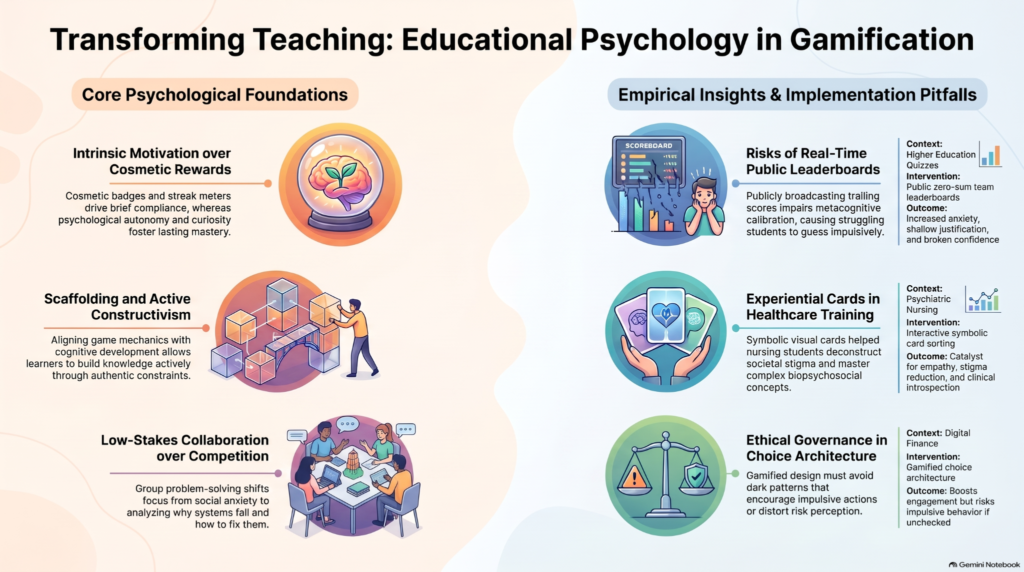
Yet in modern education, we have often reduced “gamification” to superficial cosmetic layers: digital gold stars, streak meters, and animated countdowns. While these mechanisms can easily generate a brief burst of compliance, they often fail to cultivate deep conceptual mastery. From an educational psychology lens, genuine engagement is not about dressing up a routine worksheet as a game show. Real learning occurs when students feel a profound sense of agency, psychological safety, and authentic intellectual curiosity.
If a gamified system only motivates learners to complete a task for a temporary dopamine spike, the moment that digital token disappears, so does their drive to learn. We must design gamified environments that serve as cognitive sandboxes—places where students are encouraged to wrestle with authentic constraints, make meaningful errors without fear, and experience the quiet satisfaction of cracking an intricate problem.
Gamification incorporates game mechanics into educational settings, markedly transforming modern teaching strategies. It leverages principles from educational psychology, enhancing student engagement, collaboration, and critical thinking. Gamification fosters active learning and motivation, bridging gaps in understanding for struggling learners. It promotes teamwork, accountability, and constructive feedback, nurturing social-emotional development. By addressing challenges in implementation, educators can create inclusive environments that support all students. Exploring these concepts further reveals the profound impact of gamification on contemporary education.
KEY TAKEAWAYS
- Gamification enhances student engagement by integrating game mechanics, fostering motivation, and transforming traditional learning into interactive experiences.
- Educational psychology principles support personalized learning, utilizing gamification to build on prior knowledge and stimulate intrinsic motivation for active participation.
- Collaborative game-based learning promotes social-emotional development, enhancing communication and problem-solving skills while nurturing empathy and teamwork among students.
- Critical thinking is developed through gamified challenges, encouraging strategic analysis and resilience while fostering a sense of community through shared goals.
- Effective gamification implementation requires addressing technical barriers, providing teacher training, and ensuring equitable access to resources for all students.
WHAT IS GAMIFICATION AND WHY SHOULD YOU CARE?
Gamification in learning involves integrating game design elements into educational contexts to enhance student engagement and motivation. These strategies leverage the enjoyment found in games to create more interactive and effective learning experiences.
Gamification, a concept that integrates game mechanics into non-game contexts, has emerged as a significant trend in educational settings. This innovative approach leverages principles of game design to enhance engagement and motivation among students. By incorporating elements such as points, badges, and leaderboards, educational technology transforms traditional learning environments into interactive experiences that promote active participation.
Research has consistently shown that gamification can improve learning outcomes, particularly for learners who may struggle with conventional teaching methods. It fosters a sense of achievement and encourages perseverance, which can be particularly beneficial in diverse classrooms.
Additionally, educators who utilize gamification can create a more inclusive atmosphere that accommodates various learning styles. As the educational landscape evolves, understanding and implementing gamification becomes vital for those dedicated to serving others through effective teaching strategies.
Essential Educational Psychology Principles for Effective Learning
Understanding how students learn is fundamental to creating effective educational environments. Essential educational psychology principles center on cognitive development and various learning theories that inform teaching strategies.
Cognitive development, as posited by theorists like Piaget and Vygotsky, emphasizes the importance of scaffolding learning experiences to align with the student’s current cognitive stage. This approach encourages educators to build on prior knowledge, fostering deeper understanding and retention.
Moreover, learning theories such as constructivism advocate for active engagement, where students construct knowledge through experiences and interactions. Teachers can apply these principles by incorporating collaborative projects and inquiry-based tasks, facilitating a more personalized learning experience.
How Gamification Boosts Student Engagement
Research indicates that gamification notably enhances student engagement by elevating motivation levels and creating a more immersive learning experience.
By integrating game-like elements, educators can stimulate intrinsic motivation, encouraging students to take an active role in their learning journey. By applying autonomous learning psychology, educators can design gamified activities that encourage students to take responsibility for their learning, make independent decisions, and stay motivated as they work toward their educational goals.
This approach not only makes the educational process more enjoyable but also fosters deeper understanding and retention of material.
Increased Motivation Levels
A significant number of studies indicate that incorporating gamification into educational settings can markedly enhance student motivation. By integrating game-like elements, educators effectively provide student incentives that resonate deeply with learners.
This approach not only fosters a sense of achievement but also nurtures intrinsic motivation, encouraging students to engage with learning materials more actively. Research reveals that when students encounter challenges framed as games, they are more likely to persist and tackle these obstacles, fostering resilience and a growth mindset.
Additionally, gamification creates a supportive atmosphere where students feel empowered to take ownership of their learning journey. Ultimately, this method aligns educational strategies with a compassionate understanding of students’ psychological needs, promoting sustained engagement and a passion for learning.
Enhanced Learning Experience
Gamification considerably transforms the learning experience by actively engaging students in the educational process. It fosters a sense of ownership and motivation, leading to deeper learning outcomes.
Key components that enhance this experience include:
- Interactive simulations that allow students to apply concepts in real-world scenarios.
- Immersive storytelling that captures learners’ imaginations, making information more relatable and memorable.
- Immediate feedback mechanisms that guide learners, helping them understand their progress and areas for improvement.
- Collaborative challenges that cultivate teamwork and communication skills while fostering a supportive learning community.

HOW GAME-BASED LEARNING BUILDS COLLABORATION
In my own university classrooms and curriculum design work, I have seen gamification backfire just as often as I have seen it succeed, and the culprit is almost always how competition is framed. There is a common pedagogical trap where instructors assume that slapping a live, public leaderboard onto a classroom activity will automatically energize the room. What often happens instead is a textbook demonstration of cognitive overload and demotivation. When an engineering student is trailing on a public screen, their working memory shifts away from analyzing beam deflections or fluid dynamics and locks squarely onto social comparison anxiety.
The research is clear: competitive rankings frequently shatter metacognitive calibration, causing struggling students to guess impulsively rather than think through a problem systematically. Instead of fostering a high-stakes arena, gamification should be treated like iterative engineering design or collaborative debugging. When students work in small groups using low-stakes simulations, scenario-based constraints, or tactile metaphors, the dynamic completely transforms.
The focus pivots from “Who has the highest score?” to “Why did our system fail, and how do we stabilize it?” In that space, failure stops feeling like a public embarrassment and becomes valuable empirical feedback. Gamification succeeds when it scaffolds the learning process, giving students room to reflect, debate with their peers, and trace their own reasoning from initial misconception to conceptual clarity.
Gamification is built to encourage intrinsic motivation, which is the desire to do something because you have an interest in the task. This type of motivation will leave learners genuinely enjoying the topics they are studying.
Game-based learning serves as a catalyst for collaboration by enhancing team dynamics among students.
As participants engage in shared challenges, they are encouraged to communicate effectively and develop essential problem-solving skills collectively.
This collaborative environment not only strengthens interpersonal relationships but also fosters a deeper understanding of the learning material.
Enhancing Team Dynamics
Collaboration thrives in environments where individuals engage in structured challenges that promote teamwork and communication. Game-based learning fosters this dynamic by establishing clear team roles and effective communication strategies.
This approach not only enhances collaboration but also nurtures a sense of belonging among participants.
- Defined Team Roles: Each member takes on specific responsibilities, ensuring accountability and clarity.
- Effective Communication Strategies: Participants learn to convey ideas and feedback constructively, fostering mutual respect.
- Problem-Solving Skills: Collaborative challenges require innovative thinking and adaptability, strengthening group cohesion.
- Conflict Resolution: Maneuvering disagreements within games teaches essential negotiation tactics, promoting harmony.
Encouraging Peer Communication
When individuals engage in structured gameplay, they naturally develop essential communication skills that enhance peer interactions.
Game-based learning environments foster opportunities for students to practice giving and receiving peer feedback, a critical component of effective collaboration. Through collaborative projects, learners are encouraged to articulate their ideas, negotiate roles, and resolve conflicts, thereby strengthening their interpersonal skills.
Research indicates that such engagement not only promotes a sense of community but also enhances academic outcomes. Additionally, the interactive nature of games helps to break down social barriers, enabling students to feel more comfortable expressing themselves.
Fostering Problem-Solving Skills
Through the lens of structured gameplay, students encounter complex challenges that require innovative solutions, thereby fostering essential problem-solving skills. Game-based learning effectively develops analytical reasoning and equips students with various problem-solving techniques.
This interactive environment encourages collaboration, enhancing critical thinking and adaptability.
Key benefits of fostering problem-solving skills through gamification include:
- Enhanced collaboration: Team-based tasks promote group dynamics and shared responsibility.
- Real-world application: Challenges mimic authentic scenarios, preparing students for future obstacles.
- Increased motivation: Engaging gameplay encourages persistence and resilience in overcoming difficulties.
- Diverse strategies: Exposure to multiple approaches fosters creativity in problem-solving.
Ultimately, this method not only cultivates individual capabilities but also nurtures a sense of community and support among learners.
Developing Critical Thinking Skills With Gamification
How can gamification transform the educational landscape by fostering critical thinking skills? Through immersive game-based experiences, students are encouraged to engage in critical analysis and strategic thinking, essential components of effective problem-solving.
By presenting challenges that require thoughtful evaluation and decision-making, gamification promotes an environment where learners assess scenarios from multiple perspectives, enhancing their cognitive flexibility. Recognizing the multitasking effects on learning can help educators design gamified challenges that encourage students to concentrate on one task at a time, strengthening critical thinking and improving information retention.
Research indicates that gamified learning not only motivates students but also cultivates a deeper understanding of complex concepts. This approach enables learners to navigate ambiguous situations, encouraging risk-taking within a structured framework.
As students confront obstacles, they develop resilience and the ability to think critically under pressure, skills that are crucial in both academic and real-world contexts.
Ultimately, gamification serves as a catalyst for nurturing critical thinking, equipping learners with the tools necessary to analyze information rigorously and make informed decisions, thereby facilitating their growth as compassionate, thoughtful individuals.
How Feedback and Rewards Foster Collaboration in Gamification
Gamification involves integrating game elements into non-game contexts and is distinct from traditional gameplay (Deterding et al., 2011, 2013). Its purpose is to transform real-world scenarios such as classrooms or workplaces into game-like environments (Landers et al., 2018). Known for its adaptability, gamification is widely applied in fields like education (Oliveira et al., 2023).
Gamification not only enhances critical thinking but also plays a significant role in fostering collaboration among learners. Through structured feedback and reward systems, gamification encourages teamwork and builds a supportive learning environment.
By integrating peer feedback, students can learn from each other’s perspectives, enhancing their understanding and encouraging dialogue.
- Peer Review: Engages learners in constructive criticism, reinforcing their knowledge.
- Shared Goals: Creates a sense of community, motivating students to work together.
- Recognition: Acknowledges individual and group achievements, bolstering morale and commitment.
- Incentives: Encourages participation and collaboration by offering rewards for collective efforts.
These elements combine to create a holistic approach that not only promotes academic success but also emphasizes the importance of interpersonal relationships.
Ultimately, this collaborative framework nurtures empathy and social responsibility among students, equipping them to contribute positively to society.
Overcoming Challenges in Implementing Gamification
Implementing gamification in educational settings presents several challenges that educators must navigate to harness its full potential.
Technical barriers, such as insufficient technology access, can hinder effective integration. Furthermore, teacher training is essential; without proper understanding, educators may struggle with curriculum integration, leading to ineffective implementation. Educators looking for practical classroom materials and teaching resources can explore the engineering teacher shop to find tools that support engaging activities and make gamified learning experiences more effective. Resource allocation also plays a critical role; schools must prioritize funding for gamified tools and training.
Student resistance may arise due to unfamiliarity with gamified approaches, while motivational disparities among learners can complicate engagement.
Additionally, assessment challenges emerge as traditional evaluation methods may not align with gamified experiences. Time constraints further exacerbate these issues, as educators often juggle multiple responsibilities.
Finally, equity issues must be addressed to guarantee all students benefit from gamification, regardless of their background or access to technology. By acknowledging these challenges, educators can develop strategies to create an inclusive and engaging learning environment.

RELATED STUDIES ABOUT GAMIFICATION EDUCATIONAL PSYCHOLOGY
In summary, the integration of gamification into modern teaching strategies represents a transformative shift in educational psychology, akin to a key opening a door to deeper student engagement and collaboration. By harnessing essential principles of learning, gamification not only fosters critical thinking and teamwork but also cultivates an environment where feedback and rewards propel motivation. As educators navigate the challenges of implementation, the potential benefits of gamification signal a promising frontier for enhancing educational outcomes.
Gamification as a Tool for Understanding Mental Disorders in Nursing Students: Qualitative Study
Conceptual Framework and Research Rationale
- The Educational Dilemma in Psychiatric Nursing: Teaching mental health disorders to undergraduate nursing students presents significant pedagogical challenges. Novice learners must move beyond memorizing diagnostic criteria to cultivate empathetic understanding and recognize the subjective, lived realities of psychological distress. Traditional didactic lectures frequently leave students focused on surface-level symptoms while failing to dismantle societal stigma and personal prejudices.
- Gamification as an Experiential Scaffolding Strategy: Gamification introduces game elements and active mechanics into non-game learning environments to stimulate intrinsic motivation, critical thinking, and engagement. Grounded in experiential learning and transformative learning theories, gamified strategies can provide safe, structured environments for students to engage with complex psychiatric scenarios, question prior assumptions, and reshape their mental models.
- Interactive Cards as Emotional Metaphors: Using symbolic visual cards—specifically differentiating between conflict cards (depicting internal obstacles, distress, and psychological struggle) and reframing cards (symbolizing alternative perspectives, coping pathways, and therapeutic resolution)—allows students to explore conditions such as eating disorders, personality disorders, anxiety, and depression through visual and narrative analogies.
- Core Research Objective: To describe first-year nursing students’ perceptions, emotional processing, and understandings of mental health disorders through an interactive card-based gamification intervention.
Methodology and Qualitative Design
- Design and Epistemological Framework: An interpretive qualitative study designed to examine how nursing students construct meaning and clinical knowledge from a gamified educational experience. The study adhered to the Consolidated Criteria for Reporting Qualitative Research (COREQ) guidelines.
- Setting and Participant Cohort:
- Conducted at the School of Nursing of a university in the Community of Madrid, Spain.
- Sample: 50 first-year undergraduate nursing students enrolled in the 6 ECTS credit course General and Developmental Psychology (participation rate of 94.3% [50/53]).
- Demographics: 88% female (n=44), 12% male (n=6); mean age of 18.51.28 years (range 17–23). This intervention represented the cohort’s initial academic exposure to mental health education and their first structured encounter with gamification in higher education.
- The Gamified Intervention Protocol:
- Utilized illustrated interactive cards developed by psychologist Alejandro Vera Casas.
- Working in collaborative small groups, students analyzed cards representing eating disorders, personality disorders, anxiety, and depression.
- Two-Phase Structured Deliverable:
- Diagnostic Association and Justification: Students identified which card symbolically represented which specific disorder and debated their rationales.
- Introspective and Metaphorical Abstraction: Students analyzed emotional meanings, reflected on personal vulnerabilities or fears, examined how individuals with lived experience might feel, and conceptualized therapeutic coping strategies.
- Data Collection and Triangulation:
- Focus Groups (FGs): 5 focus groups consisting of 9 to 11 participants each (average duration: 79 minutes), led by trained moderators using a semi-structured interview guide until thematic saturation was achieved.
- Written Reflective Narratives: 32 individual written personal reflections completed by participants exploring their emotional reactions.
- Secondary Data: Detailed field notes recorded by observers during sessions.
- Data Analysis and Trustworthiness:
- Data were organized using ATLAS.ti (version 24) and evaluated via inductive thematic analysis.
- Four qualitative researchers independently coded transcripts to consensus, resolving divergences through team discussions.
- Trustworthiness was established through researcher triangulation with three external auditors, participant transcript reviews, and audit trails.
Key Qualitative Findings
Three core themes and multiple subcategories emerged from the thematic analysis:
- Theme 1: Perception and Stigma of Mental Disorders
- Deconstructing Myths and Stereotypes: Students recognized that societal expectations and unconscious biases heavily distort public perceptions of psychiatric conditions. The visual format helped them realize that common disorders (e.g., eating disorders, anxiety) carry disproportionate stigma, creating barriers that prevent individuals from seeking timely care.
- Deepening Levels of Clinical Understanding: The cards helped students progress beyond superficial checklist-style symptom recall toward an appreciation of symptom chronicity, emotional severity, and the daily psychological struggles associated with conditions like rigid eating rituals or chronic depression.
- Value of Interpretive Ambiguity: While several students initially struggled with the abstract nature of the illustrations, they noted that navigating this interpretive ambiguity mirrored the diagnostic complexities encountered in real-world psychiatric nursing.
- Theme 2: Emotional Connection and Personal Reflection
- Impact of Social Environments: Discussions revealed a growing awareness of how interpersonal judgments, family pressures, and societal standards of achievement exacerbate internal distress, acting as psychological “labyrinths” for vulnerable individuals.
- Importance of Support Networks: Students recognized that psychiatric recovery is non-linear and prone to relapses. They identified family and social support networks as vital protective buffers, noting that patients facing isolation or socio-economic deprivation experience poorer clinical outcomes.
- Forming a Professional Holistic Identity: The activity motivated students to envision their future clinical roles not merely as administrators of technical care, but as empathetic practitioners who establish strong therapeutic alliances, utilize evidence-based interventions, and approach mental health through an integrated biopsychosocial lens.
- Theme 3: Gamification Tools and Their Impact on Learning
- Catalyzing Empathy and Compassion: Immersing themselves in the imagery prompted students to emotionally connect with patients’ subjective realities, shifting their perspective from clinical detachment to active compassion and a desire to provide meaningful help.
- Introspection and Self-Knowledge: Confronting symbolic imagery triggered personal vulnerability, leading participants to reflect on their own emotional well-being, past insecurities, and latent biases.
- Knowledge Integration and Clinical Utility: Students highlighted that visual, group-based gamification made complex psychological concepts more accessible and memorable than traditional lectures. Furthermore, they identified interactive cards as potential clinical tools to facilitate communication with patients who struggle to articulate their feelings verbally.
Theoretical and Pedagogical Implications
- Operationalizing Transformative and Experiential Learning: The study illustrates that gamification can foster transformative learning in healthcare education. By prompting students to resolve cognitive dissonance between their initial assumptions and the cards’ symbolic representations, the intervention encouraged critical self-reflection and helped reshape stigmatizing beliefs into empathetic perspectives.
- Developing Non-Technical Nursing Competencies: Nursing curricula often prioritize procedural and technical skills over emotional competence. Using symbolic cards provides a structured, low-risk setting for students to develop essential interpersonal skills—such as active listening, emotional regulation, and therapeutic communication—prior to clinical ward rotations.
- Biopsychosocial Integration: Collaborative group discussions helped students synthesize pharmacological, psychological, and environmental determinants of mental illness, encouraging a shift away from purely biomedical models toward holistic, person-centered care.
Study Strengths, Limitations, and Future Directions
- Methodological Strengths: Rigorous qualitative design utilizing multi-source triangulation (focus groups, reflective narratives, researcher observations), independent coding by multiple investigators, external auditing, and adherence to COREQ guidelines.
- Methodological Limitations:
- Sample and Context: Conducted with a cohort from a single nursing school in Madrid, Spain, with a predominantly female demographic (88%), limiting external transferability to other cultural contexts or academic disciplines.
- Lack of Longitudinal Follow-Up: Evaluated student perceptions immediately following the intervention, leaving it unverified whether these empathetic shifts endure into clinical rotations or reduce stigma over the course of the four-year degree.
- Qualitative Exclusivity: Relied exclusively on qualitative self-reports without quantitative instruments measuring objective knowledge retention, diagnostic accuracy, or validated stigma reduction scales.
- Future Research: Subsequent studies should employ mixed-methods longitudinal designs with larger, multi-center cohorts, compare card-based gamification directly against traditional case-study seminars, and explore emerging extended-reality (XR) modalities for psychiatric nursing education.
| REFERENCE: Pablo Del Pozo-Herce, Alberto Tovar-Reinoso, Eva García Carpintero-Blas, Ana Casaux Huertas, Regina Ruiz de Viñaspre-Hernández, Antonio Martínez-Sabater, Elena Chover-Sierra, Marta Rodríguez-García, Raul Juarez-Vela, Gamification as a Tool for Understanding Mental Disorders in Nursing Students: Qualitative Study, JMIR Nursing, Volume 8, 2025,, ISSN 2562-7600, https://doi.org/10.2196/71921. (https://www.sciencedirect.com/science/article/pii/S256276002500016X) |
From play to pay: A systematic review of gamification in modern financial ecosystems
Conceptual Framework and Research Rationale
- The Transformation of Everyday Financial Ecosystems: Over the past three decades, banking has shifted from relationship-based brick-and-mortar branches and passbook accounts to platform-mediated mobile apps, algorithmic personalization, and continuous connectivity. This shift has redefined individuals’ psychological relationship with money, moving from the identity of a cautious saver to an entrepreneurial investor expected to manage financial risk independently.
- Gamification as Choice Architecture: Gamification in digital finance involves integrating game mechanics (points, badges, leaderboards, streaks, progress bars, and feedback loops) into non-game financial tools. Beyond serving as a superficial design tool to boost engagement, gamification functions as an influential choice architecture that guides financial decision-making and shapes user behavior while maintaining an appearance of individual autonomy.
- The High-Stakes Nature of Financial Gamification: Unlike fitness or educational apps, where broken streaks carry no financial penalty and mistakes support learning, financial gamified cues interact directly with real monetary stakes, loss aversion, present bias, and emotional strain. Gamified elements can encourage positive habits like consistent savings, but they can also encourage impulsive trading, obscure the consequences of debt, or introduce behavioral distortions.
- Core Research Objectives:
- Synthesize existing multidisciplinary literature on gamified digital finance using the SPAR-4-SLR protocol.
- Map the domain across the TCCM framework (Theories, Contexts, Characteristics, and Methodologies) to evaluate key drivers, mediators, and outcomes.
- Propose an integrated conceptual agenda identifying theoretical gaps, contextual limitations, and methodological priorities for future research.
Review Methodology and Search Architecture
- Systematic Review Protocol: Executed in accordance with the Scientific Procedures and Rationales for Systematic Literature Reviews (SPAR-4-SLR) protocol, structured across three core stages: Assembling, Arranging, and Assessing.
- Database Search and Corpus Refinement:
- Peer-reviewed journal articles published between 2012 and 2024 were retrieved from Scopus (n=127) and Web of Science (n=152) using combinations of keywords covering gamification, finance, banking, fintech, and financial literacy.
- Books, conference proceedings, dissertations, and editorials were excluded to maintain peer-reviewed quality standards.
- Deduplication and title/abstract/full-text relevance screening reduced the initial set to 67 core articles.
- Backward and forward snowballing (citation tracking via Google Scholar) identified 14 additional relevant publications, yielding a final analytical corpus of 81 articles.
TCCM Synthesis of Gamified Finance
- Theories (T):
- Extant scholarship relies heavily on technology adoption and motivational theories:
- Technology Acceptance Model (TAM; 15 studies): Evaluates perceived usefulness and perceived ease of use as drivers of app adoption.
- Unified Theory of Acceptance and Use of Technology (UTAUT / UTAUT2; 10 studies): Assesses performance expectancy, effort expectancy, social influence, facilitating conditions, hedonic motivation, and habit formation.
- Self-Determination Theory (SDT; 5 studies): Explains how game mechanics fulfill basic psychological needs for autonomy, competence, and relatedness to build intrinsic motivation in personal financial management.
- Additional Frameworks: Theories of Planned Behavior (TPB), Perceived Value Theory, Stimulus-Organism-Response (S-O-R), Expectation Confirmation Model (ECM/MECM), Uses and Gratifications Theory (UGT), and Behavioral Reasoning Theory (BRT).
- Behavioral Economics Connections: The review identifies links between specific game mechanics and behavioral biases:
- Streak freezes and loss-framed alerts interact with loss aversion.
- Micro-rewards, badges, and progress milestones counter present bias by providing immediate gratification for long-term saving behaviors.
- Category-specific challenges reinforce mental accounting.
- Visual feedback loops, confetti animations, and leaderboards alter risk perception, occasionally encouraging overconfidence or excess trading frequency.
- Contexts (C):
- Sectoral Distribution: Heavily concentrated in mobile banking, digital payment wallets, microfinance apps, and personal financial management (PFM) tools. Emerging research examines gamified retail trading apps, neo-brokers, Buy-Now-Pay-Later (BNPL) credit platforms, and green sustainable banking.
- Geographic Concentration: Geographically skewed toward Asia (47 studies; prominently China, Vietnam, India, Indonesia, Pakistan, and Malaysia), driven by rapid fintech and mobile wallet adoption. Europe accounts for 19 studies, North America for 7, Australia for 4, Africa for 3, and South America for 1.
- Target Demographics: Predominantly university students, young tech-savvy retail investors, and general mobile wallet consumers; vulnerable populations, older adults, and low-income earners remain underrepresented.
- Characteristics (C):
- Drivers (Independent Variables): Game elements (points, badges, leaderboards, challenges), interface design aesthetics, navigability, perceived ease of use, perceived usefulness, system transparency, and social connectivity.
- Mediators: Psychological mechanisms bridging game mechanics to user action, including self-efficacy, user engagement, customer-perceived value, satisfaction, trust, cognitive absorption, and risk perception.
- Moderators: Financial literacy levels, prior app expertise, generational cohorts, risk tolerance, and cultural dimensions.
- Outcomes (Dependent Variables): Behavioral intention to adopt or continue app usage, customer loyalty, customer citizenship behaviors, budgeting consistency, savings accumulation, financial literacy gains, or unintended consequences like excessive trading and debt accumulation.
- Methodologies (M):
- Empirical research is dominated by cross-sectional quantitative surveys analyzed via Partial Least Squares Structural Equation Modeling (PLS-SEM) or covariance-based SEM.
- A modest subset of studies utilizes randomized online experiments, scenario-based tasks, and quasi-experimental designs.
- Qualitative methods (interviews, interface walkthroughs, discourse analysis) and advanced data-driven approaches (Fuzzy-Set Qualitative Comparative Analysis [fsQCA], Vector Autoregression) remain underutilized.
Research Agenda and Future Directions
- Theoretical Integration:
- Apply underutilized behavioral theories, including the Capability-Opportunity-Motivation-Behavior (COM-B) model, Nudge Theory, and Behavioral Reasoning Theory (BRT), to evaluate both drivers and psychological barriers to gamified finance adoption.
- Combine adoption models with behavioral economics (e.g., integrating TAM with Affordance Theory, or UTAUT2 with Social Exchange Theory) to examine how monetary stakes moderate technology acceptance.
- Contextual Expansion:
- Conduct cross-cultural comparative studies comparing collectivist markets (which favor cooperative, community-oriented achievements) with individualist markets (which respond to competitive leaderboards).
- Investigate emerging financial technologies, such as decentralized finance (DeFi), Central Bank Digital Currencies (CBDCs), and AI-driven automated robo-advisors.
- Focus on underrepresented groups, including gig-economy workers managing irregular income streams, older adults navigating digital banking, and children learning early financial literacy.
- Methodological Diversification:
- Shift from cross-sectional surveys to longitudinal panel tracking and field experiments in live fintech environments to separate temporary novelty effects from sustained behavioral change.
- Incorporate objective transaction logs, eye-tracking, and big-data sentiment analysis rather than relying solely on self-reported usage intentions.
Practical Implications and Ethical Governance
- Platform Design Calibration: Developers should tailor gamification intensity to user expertise. Novices benefit from guided challenges, clear explanations, and financial literacy feedback, whereas experienced users respond more to performance tracking. Competitive social leaderboards should be implemented cautiously, as aggressive benchmarks can demotivate lower-income or irregular savers.
- Mitigating Exploitative Design and Risk Distortions: Financial regulators and app creators must audit gamified interfaces to prevent “dark patterns” and exploitative mechanics. Gamified rewards in investment apps should not mask high volatility, and cheerful visual feedback in short-term credit or BNPL apps should not obscure debt accumulation or repayment terms.
- Fostering Financial Inclusion: Thoughtfully structured gamification can lower cognitive barriers for unbanked and underserved populations, translating complex financial terms into intuitive, rewarding habits that support long-term financial health.
| REFERENCE: Rajshree Misara, Swati Sharma, Saurabh Mittal, Saurabh Mishra, From play to pay: A systematic review of gamification in modern financial ecosystems, Acta Psychologica, Volume 266, 2026, 106780, ISSN 0001-6918, https://doi.org/10.1016/j.actpsy.2026.106780. (https://www.sciencedirect.com/science/article/pii/S0001691826005810) |
As it unfolds: Exploring the impact of team-based gamification on performance, confidence, and engagement
Conceptual Framework and Research Rationale
- The Educational Promise and Controversies of Gamification: Gamification involves introducing game design mechanics (e.g., points, badges, leaderboards) into instructional contexts to enhance learner engagement, academic performance, and motivation. While positive meta-analytic trends exist, empirical literature frequently reports conflicting, null, or counterproductive effects on student achievement and intrinsic motivation.
- Audience Response Systems and the Peer Instruction Paradigm: In active-learning classrooms, audience response systems often utilize Eric Mazur’s voting/revoting Peer Instruction framework. Students first answer a conceptual question individually (voting), review aggregated class feedback and discuss with peers, and then answer again (revoting). While providing written justifications for answers enhances conceptual understanding through externalization and elaboration, students in competitive or individualistic settings often provide minimal explanations.
- Team-Based Leaderboards and Self-Determination Theory (SDT): Individual leaderboards frequently trigger social comparison anxiety, friction, and demotivation among lower-performing learners. Grounded in Self-Determination Theory, team-based leaderboards are intended to foster social relatedness and group cohesion without intra-team competition. However, prior research suggests a structural trade-off: team competition can boost relatedness while simultaneously threatening competence and personal autonomy, particularly when a team falls behind.
- Core Research Objectives:
- Investigate the impact of a real-time, team-based leaderboard on university students’ academic performance, metacognitive confidence, and justification elaboration across two quiz phases (voting and revoting).
- Compare two competing gamified teams (which naturally diverge into a winning team and a losing team) against a non-gamified, neutral control group.
- Determine whether individual characteristics related to gamification (competitiveness, experience, preference) moderate learning and metacognitive outcomes.
Methodology and Experimental Design
- Participants and Educational Context:
- The sample comprised 103 first-year undergraduate Psychology students (69 female, 34 male; mean age 19.741.63 years) enrolled in an Introduction to Psychology course at the University of Twente in the Netherlands.
- The experiment was conducted immediately following a regular two-hour lecture on Social Psychology.
- Team Grouping and Experimental Conditions:
- Participants were assigned to conditions based on natural lecture-hall seating zones across three sections:
- Control Team (White, Center; n=35): Completed the two-phase quiz without access to gamified leaderboards or public ranking displays.
- Gamification Teams (Yellow, Left, n=33; Blue, Right, n=35): Competed directly against each other, with their collective team scores displayed publicly on an auditorium screen leaderboard.
- Participants were assigned to conditions based on natural lecture-hall seating zones across three sections:
- Instructional Quiz and Gamification Infrastructure:
- An 8-item multiple-choice quiz covering social psychology concepts (e.g., obedience, conformity, cognitive dissonance, fundamental attribution error) was administered via a custom web-based response system.
- Voting Phase (10 minutes): Students independently answered each question, rated their confidence on a 5-point Likert scale (1 = Not at all to 5 = Very much), and wrote an optional textual justification (up to 140 characters) explaining their reasoning.
- Revoting Phase (10 minutes): Students reviewed the same questions supplemented by intra-team “collective feedback” (percentage distribution of teammates’ choices, average confidence per choice, and peer justifications sorted by length).
- Leaderboard Mechanism: A podium-style visualization on the main screen updated team accuracy scores every 5 seconds. Scores were reset to zero at the start of the revoting phase to restore parity.
- Measures and Data Analysis:
- Quiz Performance: Percentage of correct responses in voting and revoting phases.
- Metacognitive Confidence: Mean self-reported confidence ratings converted to percentages.
- Justification Metrics: Total number of written justifications (0–8) and level of cognitive elaboration (coded 1–3 by two independent raters; Cohen’s =0.890).
- Individual Gamification Traits: Single-item Likert scales assessing self-reported competitiveness, gamification experience, and gamification preference.
- Evaluated using one-way ANOVA, one-way ANCOVA (controlling for voting performance/confidence), paired-samples t-tests, Pearson correlations, and longitudinal timeline analyses.
Key Empirical Findings
- Academic Performance (Detrimental Impact on the Losing Team):
- Voting Phase: A statistically significant difference in performance emerged across teams (F(2,100)=5.89,p=.004,p2=0.105, medium effect). Post-hoc Tukey tests confirmed that the losing Blue team (62.86 pm 16.74%) scored significantly lower than both the control White team (76.79 pm 19.44%, p = .004) and the winning Yellow team (73.48 pm 16.76%, p = .040).
- Revoting Phase: All teams significantly improved their accuracy from voting to revoting (p<.001, Cohen’s d=0.45–0.67). However, ANCOVA controlling for initial voting scores indicated no significant difference between conditions in revoting gains (F(2,99)=1.44,p=.242). Voting score was the dominant predictor of revoting success (F(1,99)=78.27,p<.001,p2=0.442). Without controlling for voting scores, unadjusted revoting performance remained significantly depressed in the Blue team (72.86%) compared to White (84.29%, p = .002) and Yellow (80.30%, p = .066).
- Absence of Gain for the Winning Team: The winning Yellow team merely matched the performance of the non-gamified control team across both phases; competitive gamification provided no measurable academic advantage.
- Metacognitive Confidence and Calibration:
- While overall confidence increased significantly for all groups in the revoting phase (p<.001,d=0.30–0.36), the Blue team maintained lower overall confidence across both phases (55.27% voting, 61.61% revoting) compared to White (64.56% and 70.54%) and Yellow (64.77% and 71.21%).
- Impairment of Metacognitive Calibration: In the control and winning teams, confidence correlated moderately with actual quiz accuracy (White: r=0.57,p<.001; Yellow: r=0.59,p<.001). In the losing Blue team, this calibration broke down entirely (r=0.23,p=.195), demonstrating an increase in miscalibrated judgments (false positives and false negatives).
- Engagement in Knowledge Elaboration (Written Justifications):
- While the total number of justifications written did not differ significantly across teams (M3.74–4.29,p=.785), the depth of elaboration differed significantly (F(2,100)=4.61,p=.013,p2=0.111).
- The non-gamified White team wrote significantly more elaborate explanations (65.13 pm 19.23%) than the competing Blue team (49.02 pm 16.46%, p = .011, d = 0.91) and numerically higher than the Yellow team (53.96 pm 21.84%).
- Confidence was positively correlated with both the quantity and elaboration of justifications in the White (r=0.46–0.47) and Yellow (r=0.54–0.64) teams, but showed zero association in the Blue team (r=0.07–0.18,p>.29).
- Temporal Unfolding of the Competition (Timeline Dynamics):
- Continuous 5-second tracking showed that the two competing teams were neck-and-neck for only the first 60 seconds of the voting phase. By minute 2, Blue’s collective score dropped 18.38% below Yellow’s, locking Blue into a visible losing position for the remainder of the session.
- A strong negative correlation emerged between the score deficit and Blue’s confidence (r=-0.69,p<.001), whereas Yellow’s confidence rose as their lead expanded (r=0.41,p<.001). Even after scores were reset for revoting, Blue quickly fell behind again within two minutes.
- Individual gamification profiles (competitiveness, past experience, preference) did not correlate significantly with performance, confidence, or justification quality across any team (p>.05).
Theoretical and Metacognitive Interpretations
- Diminished Competence and the Perils of Public Failure: Broadcasting a team’s losing status on a public auditorium screen undermines psychological need satisfaction under Self-Determination Theory. Continual exposure to negative feedback damages perceived competence, producing cognitive disengagement, heightened anxiety, and compromised self-efficacy.
- Complacency in the Winning Cohort: Winning the competition did not enhance Yellow’s academic performance beyond the control baseline. The prominent leaderboard shifted students’ goal orientation from mastering conceptual material to maintaining a relative lead over their peers, fostering complacency once a comfortable gap was established.
- Cognitive Distraction and Shallow Processing: Rather than motivating students to explain their reasoning to help teammates, the leaderboard introduced extraneous cognitive load. Monitoring team standings consumed working memory and time that non-gamified students spent composing coherent, elaborate rationales.
- Distortion of Metacognitive Monitoring: Publicly trailing behind peers disrupted the losing students’ internal calibration cues, decoupling subjective confidence from actual knowledge and impairing their capacity to accurately evaluate their own understanding.
Instructional Recommendations and Study Limitations
- Implications for Educational Technology and Gamification Design:
- Avoid Zero-Sum Public Leaderboards: Real-time, public broadcasting of performance rankings risks stigmatizing underperforming cohorts and distorting metacognitive monitoring.
- Implement Balanced, Adaptive Competition: Instructional systems should avoid static, uncalibrated team assignments. Instead, designers should implement adaptive gamification—such as dynamic competence matching, individualized progression baselines, or fictitious benchmarks—to keep competitions balanced and prevent early, irreversible score deficits.
- Prioritize Formative Feedback Over Relative Rank: Instructors using audience response systems should emphasize peer-elaborated conceptual feedback rather than competitive scores to foster deeper cognitive processing.
- Methodological Limitations:
- Absence of a Baseline Pre-Test: Due to time restrictions following the lecture and the desire to prevent pre-activation testing effects, baseline domain knowledge was assumed equal but not directly verified through a pre-test.
- Quasi-Random Seating Allocation: Teams were assigned by physical classroom seating zones to preserve natural group cohesion, precluding pure individual-level randomization.
- Single-Session Naturalistic Scope: The intervention evaluated a brief, single-session quiz, limiting insight into how team-based gamification dynamics evolve across multi-week curricula.
| REFERENCE: Pantelis M. Papadopoulos, Johannes Steinrücke, Ton de Jong, As it unfolds: Exploring the impact of team-based gamification on performance, confidence, and engagement, Learning and Individual Differences, Volume 116, 2024, 102565, ISSN 1041-6080, https://doi.org/10.1016/j.lindif.2024.102565. (https://www.sciencedirect.com/science/article/pii/S1041608024001584) |
CONCLUSION
Ultimately, integrating gamification into modern teaching strategies is not about turning the classroom into an amusement arcade; it is about building intentional learning environments that honor how the human mind naturally explores. When we look past the superficial trends of points and animated badges, the true value of educational psychology in game design lies in cultivating intrinsic motivation and metacognitive awareness. Our objective as educators should never be to produce students who merely know how to follow a path of least resistance to earn an extrinsic reward, but rather to mentor independent thinkers who know how to ask probing questions when an unexpected result appears.
No software platform or reward mechanism can replace the value of hands-on observation, structured peer dialogue, and authentic problem-solving. Whether students are examining complex physical models, collaborating on diagnostic simulations, or analyzing abstract conceptual cards, the magic happens in the space where curiosity overcomes the hesitation to fail.
If we design our gamified learning experiences thoughtfully—grounding them in psychological needs for autonomy, competence, and connection—we move far beyond mechanical rote memorization. We create an instructional culture where students build lasting, transferable mental models, and where the process of figuring out the solution is the greatest reward of all.
