

Early in my teaching career, I remember sitting in ARD meetings where well-meaning colleagues would describe an ADHD student with phrases like “he just needs to apply himself” or “she chooses when to pay attention.” Having spent the last decade in middle and high school special education classrooms, I can tell you firsthand that nothing could be further from the truth. In my daily work adapting science and robotics labs, I see that attention is not a light switch a student simply chooses to flip. It is an intricate, fluctuating neurobiological process.
When a student with ADHD tunes out during a 20-minute verbal lecture or suddenly starts tapping their pencil against their desk, they aren’t trying to derail the class. Their prefrontal cortex is actively signaling cognitive fatigue and seeking a spark of stimulation to stay alert. Shifting our lens from behavior modification to educational neuroscience completely changes how we design instruction.
Instead of demanding rigid stillness and sustained passive listening—which directly works against an ADHD brain’s wiring—we start asking better questions: How can we offload their working memory? How can we embed purposeful sensory input into this task? Recognizing the neurological foundation of learning differences allows us to stop treating these students as problems to be managed and start treating their environments as spaces to be thoughtfully engineered.
ADHD educational neuroscience strategies greatly enhance classroom instruction by addressing the cognitive and emotional challenges faced by students with ADHD. These strategies include flexible seating, personalized learning, and interactive technology, which help improve focus and engagement. Breaks for movement and structured routines foster an inclusive environment that accommodates diverse needs. By tailoring teaching methods to leverage neuroscience insights, educators can effectively support ADHD learners. Continued exploration of these practices reveals even more innovative approaches to enhancing educational outcomes.
KEY TAKEAWAYS
- Neuroscience insights inform the design of interactive learning tools that align with the unique cognitive profiles of ADHD students.
- Incorporating sensory breaks into lesson plans helps regulate attention and emotional responses, enhancing learning experiences.
- Gamified learning platforms engage ADHD students by promoting active participation and motivation in classroom activities.
- Mindfulness practices integrated into instruction reduce anxiety and improve attention, fostering a more conducive learning environment.
- Personalized learning approaches, supported by neuroscience, adapt educational strategies to meet the diverse needs of ADHD students effectively.
UNDERSTANDING ADHD: HOW IT AFFECTS LEARNING
Although ADHD, or Attention-Deficit/Hyperactivity Disorder, is often perceived solely through the lens of behavioral challenges, its impact on learning extends far beyond surface-level symptoms. Individuals with ADHD frequently experience cognitive challenges, characterized by attention variability that affects their ability to focus during instructional pacing. This inconsistency can hinder their academic performance, as they struggle with executive functioning skills, including organization and planning.
Additionally, emotional regulation becomes a significant hurdle; difficulties in managing emotions can lead to impulsive behaviors and affect social interactions with peers. Sensory processing issues may further complicate the learning environment, as distractions can overwhelm their senses, leading to behavioral triggers.
Understanding these multifaceted challenges is essential for educators and support staff, allowing them to create a more inclusive atmosphere that addresses the unique needs of students with ADHD, ultimately fostering a more effective learning experience.
Implications of ADHD for Teaching Practices
Effective teaching practices must adapt to the unique challenges presented by ADHD, as these students often require tailored approaches to maximize their learning potential. ADHD awareness among educators is vital, as it enables them to implement teaching adaptations that foster a supportive learning environment.
| Teaching Adaptations | Benefits |
| Flexible seating arrangements | Reduces distractions |
| Use of visual aids | Enhances understanding |
| Breaks for movement | Improves focus and retention |
Research indicates that these adaptations can greatly improve engagement and academic performance for students with ADHD. By understanding the implications of ADHD, teachers can cultivate an inclusive classroom atmosphere that values diversity in learning styles. Empathy and awareness are essential for educators working to meet the unique needs of these students, ultimately leading to more effective teaching and better educational outcomes.
Evidence-Based Strategies for Supporting Students With ADHD
Research has identified several evidence-based strategies that can considerably enhance the educational experience for students with ADHD.
Active learning techniques, structured routines, and personalized instruction approaches have been shown to improve engagement and academic performance.
Active Learning Techniques
Active learning techniques play an essential role in engaging students with ADHD, transforming traditional educational environments into dynamic spaces that cater to diverse learning needs. These strategies emphasize kinesthetic learning and collaborative projects, providing opportunities for hands-on experiences that enhance retention and understanding. Research indicates that active participation can notably improve focus and motivation among students with ADHD. Teachers can also explore the engineering teacher shop for practical classroom materials and hands-on learning resources that support active participation, encourage creativity, and make lessons more engaging for students with ADHD. By integrating these methods, educators can foster a sense of community and belonging, essential for academic success.
| Active Learning Techniques | Benefits for Students with ADHD |
| Kinesthetic Learning | Enhances engagement and focus |
| Collaborative Projects | Builds social skills and teamwork |
| Interactive Discussions | Encourages critical thinking |
| Problem-Based Learning | Promotes real-world application |
Structured Routines Implementation
While many students thrive in predictable environments, those with ADHD often benefit greatly from structured routines that provide clear expectations and consistency.
Implementing structured routines in the classroom fosters an atmosphere where students with ADHD can focus better and engage more fully in learning activities. Research indicates that consistent schedules help reduce anxiety and improve self-regulation among these learners.
By establishing daily routines that outline specific times for tasks and shifts, educators can enhance classroom consistency, allowing students to anticipate what comes next. This predictability not only supports attention but also promotes a sense of security, enabling students with ADHD to navigate their educational environment more effectively.
Ultimately, structured routines serve as an essential framework for fostering positive learning outcomes.
Personalized Instruction Approaches
Structured routines lay a strong foundation for learning, yet personalized instruction approaches are equally essential in addressing the unique needs of students with ADHD.
Differentiated assessments play a significant role in tailoring educational experiences, allowing educators to identify individual strengths and areas for improvement. Addressing special education needs through individualized teaching methods allows educators to provide targeted support, adapt learning activities, and help students with ADHD overcome barriers to academic progress.
By implementing adaptive technologies, teachers can provide customized learning materials and interactive platforms that engage students more effectively.
Such strategies not only accommodate varying learning styles but also foster a sense of ownership and motivation among students.
Evidence suggests that personalized instruction helps enhance focus and retention, ultimately facilitating a more inclusive classroom environment.

EVALUATING ADHD STRATEGIES’ IMPACT
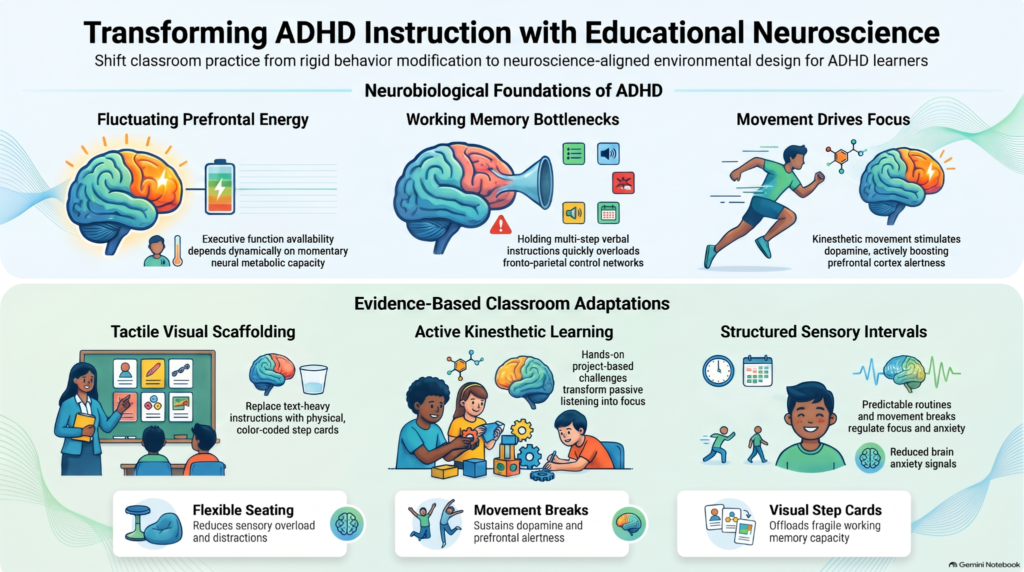
When I design engineering design challenges or physical science investigations, the difference between total executive dysfunction and genuine breakthrough often comes down to tactile, external scaffolding. The clinical research confirms what special education teachers see every day on the ground: asking a student with ADHD to hold complex, multi-step directions in their head while managing sensory distractions is like overloading a computer’s RAM until it crashes.
In my classroom, we solve this by making thought processes physical. When we build mechanical linkages or wire basic microcontrollers, I don’t hand out walls of text or deliver lengthy verbal briefings. We break tasks down into color-coded, tangible step cards, visual checklists, and physical prototyping phases where doing precedes explaining. If a student needs to stand up at a workbench, rock on a balance stool, or manipulate a spare gear while listening to instructions, they have full permission.
That movement isn’t a distraction; it is an active self-regulation tool that provides the dopamine and noradrenergic boost their prefrontal cortex requires to focus. When we replace abstract, passive worksheets with active, project-based engineering, the narrative flips. Students who were once labeled disruptive or unmotivated suddenly emerge as the most creative, persistent problem-solvers in the room.
Evaluating the impact of ADHD educational strategies involves an extensive analysis of academic performance metrics, behavioral observations, and longitudinal study findings.
By systematically evaluating these factors, educators can gain insights into the effectiveness of various interventions tailored for students with ADHD.
This evidence-based approach not only fosters a deeper understanding of student needs but also informs future educational practices.
Academic Performance Metrics
Many educators and researchers recognize the importance of establishing clear academic performance metrics to accurately assess the effectiveness of strategies designed for students with ADHD.
Such metrics provide a framework for performance analysis, allowing educators to measure academic growth in specific areas, such as standardized test scores and classroom engagement.
By employing evidence-based assessment tools, schools can identify strengths and weaknesses in educational approaches tailored for ADHD learners.
This data-driven analysis fosters empathy and understanding among educators, highlighting the need for continuous adaptation of instructional methods.
Ultimately, well-defined performance metrics not only enhance the educational experience for students with ADHD but also empower educators to refine their strategies, ensuring that all learners achieve their full potential.
Behavioral Observations and Changes
Observations of student behavior serve as an essential tool in evaluating the impact of ADHD strategies within the classroom environment. By closely monitoring behavioral patterns, educators can identify shifts in engagement, participation, and social interactions.
These observations reveal how tailored strategies influence classroom dynamics, fostering an inclusive atmosphere for all students. For instance, the introduction of structured routines and sensory breaks often leads to improved focus and reduced impulsivity among students with ADHD.
Additionally, educators can assess the effectiveness of collaborative activities, noting increased peer interactions and a sense of belonging. Such evidence-based insights empower educators to refine their approaches, ultimately enhancing the educational experience for students with ADHD and promoting a supportive learning environment.
Longitudinal Study Findings
How effectively do long-term interventions shape the educational outcomes for students with ADHD? Recent longitudinal studies reveal significant insights into the enduring impact of tailored strategies on student retention and overall academic success.
These findings emphasize the importance of sustained support for students with ADHD, demonstrating that early and consistent educational interventions can lead to improved outcomes over time.
Key elements of this research include:
- Increased Engagement: Students exhibit heightened interest in learning activities.
- Improved Academic Performance: Long-term strategies correlate with higher grades and test scores.
- Enhanced Social Skills: Ongoing support fosters better relationships and teamwork among peers.
Such evidence underscores the necessity for educators to implement and maintain effective ADHD strategies, thereby promoting lasting benefits for students.
How Neuroscience Improves Classroom Engagement for ADHD Students
While traditional teaching methods often overlook the unique neurological profiles of students with ADHD, recent advancements in neuroscience provide valuable insights that can enhance classroom engagement. Understanding the brain’s response mechanisms allows educators to implement interactive tools tailored to these students’ needs.
For instance, using gamified learning platforms can increase motivation and participation, as they align with the ADHD brain’s affinity for novelty and immediate rewards.
Moreover, incorporating sensory breaks into the daily schedule aids in regulating attention and emotional responses. Neuroscience research indicates that brief, structured breaks can considerably improve focus and retention, allowing students to recharge and return to learning tasks more effectively.
Strategies for Building Inclusion in ADHD-Friendly Classrooms
Creating an ADHD-friendly classroom environment necessitates a focus on inclusion strategies that recognize and respect the diverse needs of all students. Effective implementation of inclusive practices can greatly enhance the learning experience for individuals with ADHD.
Educators can employ collaboration techniques that foster an environment of support and understanding.
- Flexible Seating Arrangements: Allowing students to choose their seating can reduce distractions and promote comfort, fostering engagement.
- Structured Routines: Establishing predictable schedules helps students with ADHD better manage their time and shifts, reducing anxiety.
- Peer Support Systems: Implementing buddy systems encourages collaboration, enabling students to help one another while building social skills.
Emerging Trends in ADHD Education and Neuroscience Application
As educators seek to enhance the learning experience for students with ADHD, emerging trends in ADHD education increasingly emphasize the integration of neuroscience findings into classroom practices. Recent neuroscience advancements reveal critical insights into how students with ADHD process information, prompting the adoption of innovative educational technology tools. Insights from special education curriculum development studies can further guide educators in designing evidence-based learning materials and instructional approaches that accommodate the cognitive needs of students with ADHD.
| Trend | Description | Impact |
| Personalized Learning | Tailoring educational approaches to individual needs | Enhances engagement and retention |
| Interactive Technology | Use of apps and software for active learning | Improves focus and motivation |
| Mindfulness Practices | Incorporating mindfulness techniques in lessons | Reduces anxiety and enhances attention |
These trends not only reflect a deepening understanding of ADHD but also underscore the commitment to creating inclusive environments. By aligning educational strategies with neuroscientific insights, educators can foster a more supportive atmosphere for all learners.

RELATED STUDIES ABOUT ADHD EDUCATIONAL NEUROSCIENCE STRATEGIES
In summary, the integration of ADHD-informed educational neuroscience strategies holds the potential to revolutionize classroom instruction, transforming challenges into opportunities for growth. As educators embrace these evidence-based practices, they illuminate the path toward inclusive learning environments where every student can thrive. Just as a well-tuned orchestra harmonizes diverse instruments to create a symphony, so too can tailored teaching strategies orchestrate success for students with ADHD, fostering engagement and releasing their unique potential.
The interplay between executive function and learning disabilities: Developmental cognitive neuroscience perspectives on reading, math, and ADHD
Conceptual Framework and Research Rationale
- The Academic and Societal Significance of Foundational Skills: Reading and mathematical competencies form the cornerstone of scholastic achievement, lifelong earning capacity, and population-level health and well-being. Despite their importance, widespread academic underperformance persists—with approximately two-thirds of fourth graders in the United States failing to achieve reading proficiency and more than one-third performing below basic math levels.
- Executive Function (EF) as an Underlying Engine: Executive function encompasses domain-general cognitive processes required for goal-directed, control-demanding behavior. EF abilities are slow to mature (plateauing around age 18) and correlate with scholastic success. Consequently, EF is hypothesized to be a key mechanism underlying specific learning disabilities (LDs)—including dyslexia and dyscalculia—as well as attention-deficit/hyperactivity disorder (ADHD).
- The Conceptual and Measurement Impasse: Substantial ambiguity persists regarding whether EF operates as a collection of separable components (e.g., the canonical Miyake framework of updating, shifting, and inhibition) or as an overarching managerial problem-solving process. This conceptual divergence has complicated efforts to map EF onto academic sub-skills and design interventions with reliable transfer.
- Symposium Scope and Review Objectives: Emerging from an international expert workshop at the 2024 Flux Congress in Baltimore, this review synthesizes behavioral, neurobiological, and clinical evidence across five core domains:
- Psychological conceptualizations of EF (component vs. process models).
- Neural control networks and their recruitment during reading sub-processes.
- Audiovisual integration (AVI) and temporal synchrony in reading fluency and dyslexia.
- EF mechanisms, task-demand interactions, and heterogeneity in mathematical cognition and dyscalculia.
- EF as a moderator and mediator in math interventions, and as a transdiagnostic risk factor in ADHD and LD comorbidity.
Psychological Conceptualizations: Component vs. Process Models (Cirino)
- The Componential Approach (Miyake et al.): The predominant framework decomposes EF into three correlated but separable sub-constructs: working memory updating, set-shifting/cognitive flexibility, and inhibitory control. While robustly tied to fronto-parietal brain networks, this model faces critical limitations: it fails to clarify how these pieces dynamically interact to produce unified executive control, excludes other essential cognitive dimensions (such as processing speed and sustained attention), and struggles to explain individual variations across differing task contexts.
- The Process Alternative: The RPM Model: Cirino posits an alternative view defining EF as a singular managerial process responsible for orchestrating domain-general and domain-specific resources during novel, goal-directed tasks. This process operates across three sequential, iterative phases:
- Representation: Identifying the problem, establishing task characteristics, and situating goals within contextual demands.
- Planning: Devising a strategic, step-by-step approach tailored to personal cognitive strengths and weaknesses.
- Monitoring: Tracking task execution in real time, detecting errors, and dynamically adjusting strategies when performance falters.
- Measurement Refinement: To address the limitation that existing rating scales conflate EF with ADHD-related inattention symptoms, Cirino and colleagues introduced the parent-reported Executive Function RPM Scale, demonstrating enhanced discriminant validity between executive regulation and behavioral inattention.
Neurobiology of EF and Reading Architecture (Church, Cutting, & Hughes-Berheim)
- Core Control Brain Networks: Neuroimaging consistently identifies two large-scale, intrinsically organized control networks engaged during demanding tasks:
- Fronto-Parietal Network (FPN): Anchored in the bilateral dorsolateral prefrontal cortex (dlPFC) and intraparietal sulcus (IPS), orchestrating active task engagement, working memory manipulation, and top-down cognitive control.
- Cingulo-Opercular Network (CON; “Action Mode”): Anchored in the anterior cingulate cortex (ACC) and bilateral frontal operculum/anterior insula, supporting sustained task maintenance, alertness, and performance monitoring.
- Reading as a Multi-Network Integration Challenge: Skilled reading requires the left-hemisphere reading network (ventral occipitotemporal cortex/fusiform gyrus for orthography; middle temporal, supramarginal, and inferior frontal gyri for phonology and semantics) to dynamically interface with the FPN, the CON, and the visual/attention streams. Successful reading reduces network segregation, demanding high cross-network functional integration.
- Word-Level vs. Text-Level Mechanics:
- Word-Level Decoding: Structural equation modeling (SEM) demonstrates that EF plays an indirect, “behind-the-scenes” facilitatory role: working memory and cognitive flexibility support foundational phonological decoding and oral language, which in turn drive higher-order text comprehension. fMRI evidence indicates that elevated functional connectivity between the right dlPFC (FPN) and left ventral occipitotemporal cortex (vOTC) in kindergarten pre-readers directly predicts reading comprehension growth one year later, serving as a prospective neural biomarker.
- Discourse Comprehension and the Default Mode Network (DMN): Connected text processing recruits both the FPN and the DMN (dorsomedial PFC, angular gyrus, precuneus, anterior temporal lobes). While DMN activation was historically attributed to narrative Theory of Mind processing, recent conjunction analyses confirm that core DMN nodes are identically recruited during complex expository text reading. The DMN integrates background knowledge with text propositions to construct and update a mental “situation model”.
Audiovisual Integration and Temporal Binding in Dyslexia (Horowitz-Kraus)
- The Temporal Asynchrony Hypothesis: Reading fluency demands precise temporal synchronization across distinct sensory systems. Raw sensory inputs arrive at disparate latencies: auditory inputs reach the auditory cortex within ~30 ms, whereas visual inputs reach the visual cortex at ~70 ms. Furthermore, phonological decoding is intrinsically sequential, whereas orthographic word recognition is holistic and rapid. In developmental dyslexia, this temporal alignment falters. Dyslexic readers exhibit prolonged P300 latencies and delayed sensory binding, resulting in a widened, unstable Time Binding Window (TBW).
- Neural Substrates of Dysfluent Reading: Contextual reading tasks reveal significant functional under-connectivity between the auditory and visual networks in children with dyslexia relative to typical peers, alongside altered gray matter morphometry within the cingulo-opercular network.
- Remediation via Rhythmic Sensory-EF Training:
- Visual Rhythmic Reading Training (VRRT): An intervention that forces forward-reading velocity by deleting letters from a digital screen at adaptive, accelerating rates based on real-time comprehension accuracy. Mechanistically, this rapid letter erasure suppresses regression saccades (inhibitory control), expands visual character spans (working memory), and bypasses working memory bottlenecks to shift readers from labored phonological decoding toward rapid orthographic recognition.
- Neurobiological Remediation: Clinical trials demonstrate that an 8-week VRRT protocol significantly enhances reading fluency and comprehension while increasing functional connectivity between the sensory cortices and both the cingulo-opercular and fronto-parietal control networks.
Executive Function in Mathematical Cognition and Dyscalculia (Wilkey & Barnes)
- Neurobiology and Methodological Challenges in Dyscalculia:
- Neuroimaging meta-analyses consistently identify atypical recruitment of the right inferior frontal gyrus (IFG/anterior insula) and right intraparietal sulcus (IPS) in individuals with mathematical learning difficulties.
- The Kwok et al. (2023) Null-Result Paradox: The largest preregistered fMRI study of developmental dyscalculia to date found that univariate fMRI contrasts across basic magnitude processing, arithmetic fluency, and visuospatial working memory failed to reveal significant group-level neural activation differences, despite sharp behavioral deficits.
- Task-Demand Resolution: This paradox stems from clinical heterogeneity and the failure to account for EF task load. Wilkey demonstrated that basic non-symbolic magnitude comparison does not predict math performance; rather, neural recruitment during high-interference conditions (where dot surface area conflicts with numerical count, taxing inhibitory control) strongly predicts math achievement, even after controlling for non-numerical Flanker inhibition. Domain-general EF interacts dynamically with domain-specific numerical substrates.
- Working Memory Dynamics in Math Interventions (Barnes):
- Aptitude-by-Treatment Interactions (Moderation): Systematic reviews show that working memory consistently moderates children’s response to math word-problem interventions. Most interventions display synergistic moderation—children entering with higher working memory gain significantly more from standard instruction. This confirms that complex math curricula impose substantial “hidden cognitive load,” causing instructional materials to exceed the cognitive capacity of severely impaired learners.
- Bidirectional Causality (Mediation): Randomized trials evaluating schema-based word-problem interventions with embedded working memory training reveal a bidirectional developmental loop: working memory training produces small improvements in math problem-solving, while schema-based math instruction significantly improves working memory. Improvements in math are partially mediated through induced gains in working memory capacity.
ADHD and Learning Disability Comorbidity: Transdiagnostic Mechanisms (Rosch)
- Epidemiology and Clinical Burden: ADHD co-occurs with reading and math learning disabilities in up to 50% of pediatric cases, producing compounded academic underachievement, higher grade retention, and increased school dropout rates.
- The Multiple Deficit Model (MDM): Grounded in Pennington’s framework, ADHD and LD comorbidity is explained not by a single common lesion, but by shared, probabilistic neurocognitive vulnerabilities. Longitudinal behavioral genetics and twin analyses demonstrate that shared deficits in executive functioning (specifically working memory and response inhibition) along with processing speed account for most of the transdiagnostic risk linking ADHD to dyslexia and dyscalculia.
- Performance Deficits vs. Skill Deficits:
- ADHD Drives Performance Deficits: Symptoms of inattention and aversion to delayed rewards undermine academic consistency, trial-by-trial sustained effort, and execution accuracy.
- LD Drives Skill Deficits: Rooted in fundamental representational weaknesses (e.g., phonological decoding deficits or symbolic numerical mapping gaps).
- Direct Academic Impact: Recent twin modeling indicates that ADHD inattention exerts a direct, independent negative effect on advanced academic performance (written expression and reading comprehension), above and beyond foundational decoding and arithmetic fluency.
- Intervention Synergy: Isolated computerized working memory “brain training” programs fail to produce far-transfer to clinical symptoms or academic achievement. Conversely, embedding EF cognitive demands directly into academic drills (e.g., rhythmic reading acceleration) yields the largest reading comprehension gains among children with comorbid ADHD and reading disability, concurrently normalizing functional connectivity across the fronto-parietal and dorsal attention networks.
Integrated Synthesis and Translational Implications
- Domain-Specific Embedding of Executive Functions: Pure domain-general cognitive training produces limited educational transfer. Effective instructional designs embed executive control exercises directly into domain-specific content (e.g., using “reading-specific EF” or “math-specific EF” tasks).
- Curricular Engineering to Eliminate Extraneous Cognitive Load: Because standard intervention programs preferentially benefit children with intact working memory, instructional developers must systematically reduce hidden cognitive loads (e.g., utilizing visual representations, procedural checklists, and step-by-step scaffolding) to prevent cognitive overload in vulnerable learners.
- Dual-Track Clinical and Diagnostic Assessment:
- Pediatric evaluations for reading or math failure must routinely screen for subclinical ADHD symptoms, working memory deficits, and sensory integration latencies.
- Clinical management should combine behavioral/pharmacological treatments to resolve ADHD performance barriers with explicit, structured skill instruction to remediate foundational LD gaps.
Limitations and Future Scientific Horizons
- Lack of Longitudinal and Ecologically Valid Data: Extant cognitive neuroscience literature relies heavily on small, cross-sectional cohorts tested within artificial laboratory fMRI environments, limiting generalizability to classroom settings.
- Technological Frontiers in Mobile Neuroimaging: Future research should leverage emerging portable, cap-based neuroimaging technologies—specifically functional near-infrared spectroscopy (fNIRS), wearable high-density EEG, and point-of-care low-field MRI. These tools enable non-invasive tracking of real-time multi-student neural synchronization, attentional fluctuations, and brain network reconfiguration in authentic classroom environments.
- Subclinical and Dimensional Modeling: Investigations must move beyond rigid categorical diagnostic cutoffs to evaluate continuous, dimensional cognitive gradients, clarifying the neural and behavioral mechanisms that support academic resilience across developmental transitions.
| REFERENCE: Tzipi Horowitz-Kraus, Paul T. Cirino, Laurie E. Cutting, Sarah S. Hughes-Berheim, Eric D. Wilkey, Marcia A. Barnes, Keri S. Rosch, Jessica A. Church, The interplay between executive function and learning disabilities: Developmental cognitive neuroscience perspectives on reading, math, and ADHD, Developmental Cognitive Neuroscience, Volume 79, 2026, 101722, ISSN 1878-9293, https://doi.org/10.1016/j.dcn.2026.101722. (https://www.sciencedirect.com/science/article/pii/S1878929326000575) |
Energy deficit hyperactivity disorder (EDHD): A neurobiological energy dysregulation model for ADHD
Conceptual Framework and Research Rationale
- The Explanatory Crisis in ADHD Research: Attention-Deficit/Hyperactivity Disorder (ADHD) remains defined operationally through behavioral symptom clusters (inattention, hyperactivity, impulsivity). While traditional neuropsychological paradigms interpret these behaviors as fixed, trait-level deficits in top-down inhibitory control or fronto-striatal circuits, these models struggle to account for the core clinical realities of ADHD: marked intra-individual performance variability, pronounced context sensitivity, fatigue dependence, and periods of intact or even superior short-term focus.
- The “Cost-Recovery” Explanatory Void: Standard cognitive accounts abstract executive function from the underlying metabolic realities required to sustain neural computation over time. Prefrontal and fronto-parietal control circuits carry some of the highest baseline glucose and ATP demands in the human brain. Prevailing theories treat energetic availability as an assumed, static background condition rather than an active, fluctuating constraint.
- Introducing the Energy Deficit Hyperactivity Disorder (EDHD) Model: The author introduces EDHD as a deliberately bounded, hypothesis-generating systems framework that reframes ADHD-related phenomena as expressions of constrained neural energy allocation and recovery kinetics rather than primary structural deficits.
- The Core Premise of Conditional Executive Availability: Within EDHD, executive control is neither categorically absent nor permanently broken; it is conditionally available. Executive stability emerges or collapses depending dynamically on whether momentary neural metabolic capacity aligns with environmental and cognitive load.
- Crucial Epistemic Boundaries and Ethical Governance:
- Theoretical Scaffold, Not a Clinical Diagnosis: EDHD is explicitly presented as a heuristic research framework to guide empirical investigation, not as a diagnostic category, clinical manual, nosological tool, or prescriptive treatment regimen.
- Rejection of Biological Reductionism: Energetic constraint is modeled as a probabilistic modulatory layer interacting with genetic, developmental, neural, and environmental ecologies—not as a monocausal or universally sufficient etiology.
- Correlational Humility and Falsifiability: Physiological indicators are non-specific probes rather than diagnostic biomarkers; failure to observe predicted time-on-task declines or recovery-dependent performance stabilization serves as direct empirical disconfirmation.
The Two-Process Mechanistic Spine
The theoretical architecture of EDHD is organized around the dynamic interplay of two continuous physiological mechanisms:
- The Energetic Cost of Sustained Prefrontal Control:
- Sustaining synaptic transmission, ion-gradient restoration, vesicle recycling, and long-range oscillatory network synchronization across prefrontal cortices imposes massive metabolic overhead.
- Because prefrontal networks exhibit dense recurrent connectivity and delayed developmental maturation, they operate near their energetic margins. Under sustained cognitive load, available ATP pools deplete, cellular oxidative stress rises, and signal-to-noise ratios degrade.
- Recovery Kinetics and System-Level Restoration:
- Neural circuits require adequate time, sleep-dependent synaptic recalibration, glymphatic clearance, and mitochondrial repair to reconstitute functional metabolic reserves.
- When task demands persistently outpace recovery capacity, cumulative energetic debt accrues. Performance does not fail immediately; rather, the regulatory margin narrows, predisposing the individual to abrupt, non-linear lapses in attention and inhibitory control.
Upstream Biological Modulators of Energetic Sustainability
EDHD conceptualizes biological subsystems traditionally studied in isolation as interacting modulators that influence either metabolic expenditure or restoration efficiency:
- Mitochondrial Efficiency and ATP Dynamics: Variations in mitochondrial enzyme activity, biogenesis, and mitophagy set the baseline ceiling for continuous ATP synthesis, dictating how rapidly neural networks fatigue under continuous load.
- Oxidative Stress and Redox Homeostasis: Prolonged neural firing elevates reactive oxygen species (ROS). In individuals with lower antioxidant buffering, oxidative stress impairs synaptic plasticity, increases neural noise, and interferes with mitochondrial respiration, selectively degrading endurance rather than baseline task ability.
- Neuroimmune and Inflammatory Signaling: Low-grade systemic inflammation (e.g., elevated IL-6, TNF-) impairs blood-brain barrier transport, alters glucose metabolism, and directly suppresses mitochondrial output, producing neuro-metabolic fatigue and cognitive slowing.
- Circadian Misalignment and Sleep Disruption: Delayed sleep phase, fragmented REM/slow-wave cycles, and circadian desynchrony impair sleep-dependent mitochondrial recovery and synaptic downscaling, leaving prefrontal systems with depleted energy reserves at the start of each waking day.
- Dopaminergic Gain Modulation: Rather than viewing dopamine purely through reward-deficit models, EDHD models phasic dopaminergic bursts as reactive, high-gain adjustments. When energy reserves flag, dopamine spikes temporarily increase cortical signal gain and motivation, stabilizing short-term focus at the cost of accelerating cumulative metabolic exhaustion.
- Large-Scale Oscillatory Desynchronization: At the network level, energetic depletion destabilizes large-scale phase-locking, manifesting electrophysiologically as theta-beta ratio volatility, prolonged alpha desynchronization, and degraded segregation between the Default Mode Network (DMN) and Task-Positive Networks.
Behavioral Manifestations as State-Dependent Compensation, Not Pathology
A foundational contribution of the EDHD model is the non-teleological, non-pathologizing reinterpretation of overt ADHD behaviors:
- Hyperactivity as Arousal Regulation: Motor restlessness, fidgeting, and physical movement stimulate ascending noradrenergic and dopaminergic pathways (locus coeruleus activation), temporarily increasing cortical alertness and delaying attentional collapse when prefrontal metabolic resources are low.
- Task Switching as Load Redistribution: Shifting between tasks, distractibility, and novelty seeking are viewed as state-dependent efforts to disengage exhausted, focal prefrontal sub-circuits and recruit alternate neural pathways or sensory streams, briefly preserving overall cognitive engagement.
- The Cost-Benefit Trade-Off: Crucially, EDHD does not romanticize these behaviors as optimal evolutionary adaptations. While they function as effective short-term stabilizers, they carry heavy trade-offs—accelerating overall physical exhaustion, increasing behavioral fragmentation, and creating social friction in rigid educational or workplace environments.
- The Performance-Capacity Decoupling: Surface-level accuracy frequently masks latent physiological strain. An individual with ADHD may sustain normal performance on brief or novel tasks by deploying costly compensatory over-activation, followed by sudden, catastrophic fatigue once energetic thresholds are breached.
Computational Simulation and Developmental Vignettes
- Computational Dynamic Modeling (Figure 1):
- Using a system of dimensionless differential proxies across 1,000 recursive iterations, the simulation formalizes the temporal dynamics of executive breakdown.
- Modeled Parameters: ATP availability (blue), reactive dopaminergic fluctuations (red; oscillating between 10% and 100%), cognitive/oscillatory synchronization (green), inflammatory cytokine load (purple), and structural mitochondrial efficiency (orange; baseline 3%).
- Emergent Phenomena: The model demonstrates clear threshold effects—ATP availability remains superficially elevated (~90–100%) during early iterations due to compensatory dopaminergic spikes, but persistent mitochondrial inefficiency prevents true recovery, leading to abrupt non-linear drops in cognitive synchronization and episodic inflammatory surges around iteration 400–700 before delayed recovery.
- Life-Stage Conceptual Probes (Hypothetical Trajectories):
- Childhood (Emma, age 8): Rapid ATP depletion within metabolically immature prefrontal circuits; motor hyperactivity and fidgeting emerge as reactive dopaminergic stabilizers to maintain alertness during prolonged, passive classroom lecturing.
- Adolescence (Liam, age 15): Energetic fragility amplified by adolescent circadian phase delays, synaptic pruning, and heightened social-emotional stress, producing severe intra-day performance volatility and affective reactivity.
- Adulthood (Alex, age 32): Chronic executive load in professional settings leading to prolonged beta-band dominance, structural exhaustion, and cycles of hyper-focus followed by complete cognitive burnout.
- Dual-Load Adulthood (Sophia, age 28): Concurrent cognitive tasks and sensory hypersensitivities saturate finite metabolic capacity; task withdrawal and environmental isolation operate as energy-conserving protective mechanisms.
Comorbidity Mapping: Anxiety, Depression, and Circadian Disruption
EDHD avoids diagnostic expansion by modeling psychiatric comorbidities as shared neuro-energetic vulnerability states rather than distinct structural pathologies:
- Anxiety as Acute Compensatory Hyperarousal: Emerges during the acute phase of energy strain when prefrontal control becomes unstable. The nervous system upregulates autonomic and catecholaminergic tone (hyper-vigilance, perseverative checking) to artificially hold attention on the task, generating somatic anxiety symptoms.
- Depression as Chronic Metabolic Exhaustion: Characterizes prolonged, unresolvable energetic deficits. When sustained ATP depletion, unbuffered oxidative stress, and chronic neuroinflammation exhaust catecholaminergic reserves, the brain downregulates motivational salience and reward-seeking, manifesting as anhedonia, psychomotor slowing, and cognitive paralysis.
- Circadian Rhythm Disorders as Upstream Accelerators: Up to 80% of individuals with ADHD experience circadian delays or sleep-onset insomnia. Chronodisruption directly undermines the glymphatic clearance of metabolic waste and compromises overnight mitochondrial biogenesis, ensuring that patients begin daily cognitive tasks with depleted energetic reserves.
Empirical Research Agenda and Translational Restraint
- The Neuroenergetic Load-Inflammation-Modulation (NLIM) Architecture: To transition EDHD from theoretical conceptualization to rigorous empirical testing, the author outlines an integrated, four-phase experimental pipeline:
- Phase 1 (Neuroscience): Sustained-load cognitive paradigms with concurrent high-density EEG, tracking theta-beta volatility and alpha desynchronization breakdown thresholds rather than cross-sectional mean accuracy.
- Phase 2 (Immunology): Assaying peripheral inflammatory markers (IL-6, TNF-) and oxidative stress indices to quantify metabolic wear-and-tear across task duration.
- Phase 3 (Bioengineering): Testing individualized, closed-loop neuromodulation (e.g., personalized tDCS montages, transcutaneous vagus nerve stimulation [tVNS], and wearable heart-rate variability [HRV] biofeedback) to evaluate whether stabilizing autonomic tone alters cognitive recovery curves.
- Phase 4 (Computational Modeling): Multi-level resource-allocation models integrating metabolic, neural, and behavioral time-series data to simulate personal fatigue thresholds.
- Translational Guidelines for Practice and Policy:
- Energy-Aligned Task Structuring: Educational and workplace designs should shift from continuous, monotonous cognitive demands to structured intervals with built-in recovery windows, task fragmentation, and permissible movement (standing desks, sensory pacing).
- Prioritizing Circadian Alignment: Addressing sleep phase delays and chronotype matching represents an essential upstream strategy to improve cognitive endurance before escalating pharmacological stimulants.
- Ethical Governance: Rejects the use of neuro-metabolic profiling as a coercive corporate productivity metric or discriminatory diagnostic gatekeeper, emphasizing that accommodations should adapt environments to human neurophysiology rather than forcing biological normalization.
| REFERENCE: Mohammad Dawood Rahimi, Energy deficit hyperactivity disorder (EDHD): A neurobiological energy dysregulation model for ADHD, Neuroscience & Biobehavioral Reviews, Volume 184, 2026, 106616, ISSN 0149-7634, https://doi.org/10.1016/j.neubiorev.2026.106616. (https://www.sciencedirect.com/science/article/pii/S0149763426000710) |
Precision assessment and subtyping of attention-deficit/hyperactivity disorder (ADHD) under the RDoC framework: Methodological advances, integration pathways, and efficacious intervention practices
Conceptual Framework and Research Rationale
- The Practical Dilemmas in ADHD Diagnosis and Care: Attention-Deficit/Hyperactivity Disorder (ADHD) is a prevalent childhood neurodevelopmental disorder that imposes substantial long-term burdens on academic, emotional, and social development. However, traditional clinical workflows remain constrained by two interlocking problems: diagnostic assessment overrelies on subjective rating scales and simplistic categorical labels (inattentive, hyperactive-impulsive, combined), while intervention models apply standardized, “one-size-fits-all” pharmacotherapies or behavioral packages that yield inconsistent efficacy and high rates of non-response or side effects.
- The Root Cause: Multidimensional Heterogeneity: ADHD is not a uniform disease entity. Marked individual variations exist across biological mechanisms (prefrontal-striatal pathways, default mode network dynamics, dopamine/norepinephrine receptor profiles, autonomic tone), cognitive operations (working memory, response inhibition, attention allocation), clinical comorbidities, and environmental adaptability (family parenting stress, classroom structure). Categorical diagnosis groups patients with identical behavioral symptoms but divergent underlying neurobiological deficits together, creating an unbridgeable “biology-behavior disconnect”.
- The Research Domain Criteria (RDoC) Paradigm: Initiated by the U.S. National Institute of Mental Health (NIMH), the RDoC framework departs from symptom-based nosologies by mapping psychopathology across cross-cutting, translational dimensions from genes, molecules, and neural circuits to objective behavioral tasks and social functioning. Its structural architecture is defined by six core functional domains integrated with environmental interactions and lifespan developmental trajectories.
- Core Review Objectives:
- Scrutinize the necessity and feasibility of applying the RDoC framework to precision ADHD assessment and subtyping.
- Map objective diagnostic methods (neuroimaging, electrophysiology, cognitive paradigms, biomarkers, naturalistic sensors) onto RDoC’s six core functional domains.
- Propose a multimodal, artificial intelligence (AI)-driven assessment architecture integrating environmental and developmental factors.
- Formulate targeted, domain-specific intervention schemes embedded within an “assessment-subtyping-intervention-reassessment” closed-loop model.
Alignment of RDoC Core Domains with ADHD Pathological Phenotypes
The review establishes a direct, one-to-one mapping between RDoC’s dimensional domains and the core functional impairments observed in ADHD:
- Cognitive Systems (Inhibitory Control and Working Memory Deficits):
- Functional Scope: Governs goal maintenance, attentional selection, working memory updating, and response suppression mediated by the prefrontal-striatal circuit and frontoparietal control network.
- Objective Paradigms: Go/No-Go tasks, Stop-Signal tasks, Stroop conflict paradigms, and computerized N-back working memory batteries. Core metrics include commission error rates, reaction-time variability, and working memory span.
- Arousal and Regulatory Systems (Arousal Dysregulation):
- Functional Scope: Regulates baseline physiological alertness, sleep-wake cycles, and autonomic nervous system equilibrium. Explains clinical phenotypes characterized by “hypoarousal” (drowsy, sluggish cognitive tempo) or “hyperarousal” (restless agitation).
- Objective Tools: Resting-state EEG (quantifying frontal theta/beta power ratios) and autonomic monitoring via Heart Rate Variability (HRV).
- Positive Valence Systems (Altered Reward and Motivation Processing):
- Functional Scope: Evaluates ventral-striatal dopaminergic reward anticipation, delay discounting, and incentive responsiveness. Captures the “delay aversion” that drives impulsive, short-term decision-making.
- Objective Paradigms: Delay of Gratification paradigms and Monetary Incentive Delay (MID) tasks measuring reward sensitivity and temporal preference curves.
- Negative Valence Systems (Emotional Dysregulation and Irritability):
- Functional Scope: Processes threat appraisal, frustration tolerance, and emotional reactivity supported by fronto-limbic/amygdala circuitry. Addresses severe irritability and affective lability comorbid in ADHD.
- Objective Paradigms: Facial Emotion Recognition tasks, stress-challenge protocols, and salivary/plasma cortisol reactivity profiles.
- Sensorimotor Systems (Sensory Integration and Motor Coordination Deficits):
- Functional Scope: Encompasses gross and fine motor control, vestibular/proprioceptive processing, and parietal-cerebellar functional connectivity. Accounts for motor clumsiness, poor handwriting, and sensory defensiveness.
- Objective Paradigms: Computerized posturography, balance tests, fine-motor pegboard tasks, and standardized Sensory Integration matrices.
- Social Processes (Social Cognitive and Affiliation Impairments):
- Functional Scope: Assesses interpersonal cue interpretation, facial emotion decoding, Theory of Mind reasoning, and peer interaction dynamics. Explains social rejection and pragmatic communication failures.
- Objective Paradigms: Interactive peer-cooperation games, Virtual Reality (VR) social dilemma simulations, and Theory of Mind reasoning batteries.
- Cross-Domain Biological Substrates:
- High-resolution resting-state and task-based fMRI (evaluating prefrontal-striatal, dorsal/ventral attention, and default mode network connectivity), Diffusion Tensor Imaging (DTI; assessing white matter microstructural integrity), and genomic profiling (e.g., DRD4 and DAT1 dopaminergic risk alleles).
Technical Architecture: Multimodal Data Integration and AI Subtyping
- The Trinity Integrated Assessment System: Rather than relying on isolated metrics, the future clinical framework integrates three operational pillars: RDoC Core Domains + Environmental Moderation + Lifespan Developmental Trajectories.
- Multimodal Data Fusion:
- Integrates spatial precision (fMRI/DTI) with temporal precision (EEG/ERP), molecular markers (genetics, salivary hormones), and continuous behavioral telemetry collected via wearable sensors and digital tasks.
- Employs Canonical Correlation Analysis (CCA) and standardized data-cleaning pipelines (e.g., z-score normalization across testing platforms, motion artifact suppression) to resolve platform heterogeneity and eliminate measurement noise.
- AI-Driven Machine Learning Subtyping:
- Replaces manual, subjective symptom grouping with unsupervised clustering algorithms (e.g., latent class analysis, deep neural autoencoders) to identify data-driven, biological “mechanism-based subtypes”.
- Models delineate distinct functional profiles, such as the Cognitive-Arousal Dual Defect Type, the Positive Valence/Reward-Driven Defect Type, or the Sensorimotor/Social Defect Type.
- Supervised classification models (e.g., Random Forests) assign predictive weights to core features, generating reproducible subtyping with validation studies demonstrating up to 89% classification consistency and a 32% diagnostic accuracy gain over traditional symptom ratings.
- Child-Appropriate and Naturalistic Digital Tools:
- Transforms tedious psychometric tests into engaging, gamified mobile applications calibrated to pediatric attention spans (simplifying task length for ages 6–8; incorporating self-directed goal tracking for adolescents aged 12–14).
- Deploys portable wearable monitors into home and classroom settings to collect real-time ecological data, capturing naturalistic attention fluctuations without laboratory novelty bias.
Domain-Specific Targeted Interventions and the Closed-Loop Model
Interventions move beyond generic stimulant prescriptions to target verified biological and cognitive deficits directly:
- Mechanistic Alignment by RDoC Domain:
- Cognitive Systems Deficits: Structured, computerized executive function training, working memory task decomposition, visual tracking exercises, and metacognitive time-management scaffolding.
- Arousal/Regulatory Systems Abnormalities: EEG neurofeedback (normalizing frontal theta/beta ratios), HRV autonomic biofeedback, and circadian rhythm stabilization (enforcing sleep-wake consistency and bright-light exposure).
- Positive Valence Systems Deficits: Behavioral token economies utilizing immediate, high-density reward reinforcement schedules paired with gradual delay-of-gratification fading.
- Negative Valence Systems Deficits: Emotion recognition training, distress tolerance coaching, scenario role-playing, and mindfulness-based stress reduction.
- Sensorimotor Systems Deficits: Occupational therapy integrating sensory modulation (tactile, vestibular, proprioceptive stimuli) with fine- and gross-motor coordination training.
- Social Processes Deficits: Group-based peer interaction workshops, Theory of Mind social cognition coaching, and family-school communicative alignment.
- Biological Mechanism Deficits: Pharmacogenomic-guided psychopharmacology (precision stimulant vs. non-stimulant selection based on metabolic genotype) paired synergistically with non-invasive neuromodulation (repetitive transcranial magnetic stimulation [rTMS] or transcranial direct current stimulation [tDCS] targeting hypoactive prefrontal-striatal nodes).
- The “Assessment-Subtyping-Intervention-Reassessment” Closed-Loop:
- Step 1 (Multidimensional Assessment): Baseline RDoC profiling establishing the child’s neurobiological, cognitive, and contextual deficit matrix.
- Step 2 (AI Precision Subtyping): Algorithmic matching of the patient profile to a distinct mechanistically defined subtype.
- Step 3 (Targeted Multi-System Intervention): Coordinated delivery of primary deficit interventions paired with structured family rules and classroom Individualized Education Plans (IEPs).
- Step 4 (Dynamic Reassessment at 6–12 Months): Longitudinal tracking using objective digital markers to evaluate neural circuit plasticity and functional recovery, feeding results back to recalibrate subtype classification and modify ongoing therapies.
- Clinical Efficacy: Evidence-based trials indicate that this closed-loop model improves clinical symptom remission rates by 28% and lowers symptom recurrence rates by 41% compared to traditional linear treatment approaches.
Implementation Bottlenecks, Ethical Governance, and Future Directions
- Developmental Calibration Challenges: Most existing RDoC constructs were normed on adult populations. Assessment tools require extensive pediatric re-calibration to establish age- and gender-stratified developmental norms that account for ongoing brain maturation from early childhood through late adolescence.
- Technological and Dissemination Barriers: Advanced multimodal pipelines (fMRI, DTI, genomic sequencing) remain financially and computationally prohibitive for primary care clinics and community schools. Developing validated, low-cost digital proxies (e.g., eye-tracking and gamified tablet tasks) is essential to democratize precision care.
- Quantifying Environmental Interactions: Isolating the independent causal weights of family stress, parenting styles, and school disciplinary climates remains complex due to multidirectional gene-environment correlations. Advanced longitudinal growth curve modeling is required.
- Cross-Cultural Adaptation: Standardized behavioral paradigms must be adapted to account for cultural variations in social expectations, collectivist versus individualist classroom norms, and differing subjective parental thresholds for hyperactive behavior.
- Clinical Horizon: The translation of the RDoC framework provides an actionable blueprint to shift child psychiatry from reactive “symptom management” toward proactive “neural mechanism repair and developmental scaffolding”.
| REFERENCE: Xiang Li, Luhan Tang, Cheng Kang, Fangzhong Xu, Ning Ma, Precision assessment and subtyping of attention-deficit/hyperactivity disorder (ADHD) under the RDoC framework: Methodological advances, integration pathways, and efficacious intervention practices, Brain Science and Child Development, Volume 1, Issue 1, 2026, 100007, ISSN 3117-4388, https://doi.org/10.1016/j.bscd.2026.100007. (https://www.sciencedirect.com/science/article/pii/S3117438826000075) |
CONCLUSION
Whenever I work late in my garage shop with woodworking tools or tinker with robotics kits alongside my own kids at the kitchen table, I am reminded of a fundamental design truth: if a mechanism consistently fails under normal load, you don’t blame the material—you rethink the design. For far too long, our educational system has asked neurodivergent learners to conform to rigid, industrial-era classroom structures that run counter to how their brains actually process, sustain, and recover cognitive energy.
Integrating neuroscience into everyday teaching isn’t about slapping high-tech buzzwords onto old lesson plans or expecting teachers to become clinical neurologists. It’s about building classrooms with enough intentional flexibility that every student can access the material without exhausting their reserves just trying to sit still. When we provide structured routines, clear visual pathways, sensory recovery intervals, and meaningful hands-on applications, we aren’t “lowering standards” or giving unfair advantages.
We are removing artificial barriers. Over the past decade, the most rewarding moments of my teaching journey haven’t come from test score percentiles; they’ve come from watching a student who once felt broken realize that their mind possesses exceptional innovation, resourcefulness, and insight when given the right workshop in which to build.
