

Over my fourteen years standing at the front of undergraduate engineering lecture halls, I have watched the promise of higher education play out in real time across hundreds of different lives. Whenever I look at a fresh cohort of incoming freshmen, I do not just see test scores or transcripts; I see first-generation students carrying the collective hopes, financial sacrifices, and dreams of entire families on their shoulders.
While broad economic data consistently proves that earning a degree remains one of the single most effective mechanisms for upward social mobility, raw numbers often fail to capture the friction of the climb itself. In technical fields like mechanical engineering, the classroom should theoretically serve as an equalizer where analytical rigor, merit, and dedication pave an undeniable path forward. However, the lived reality is far more layered.
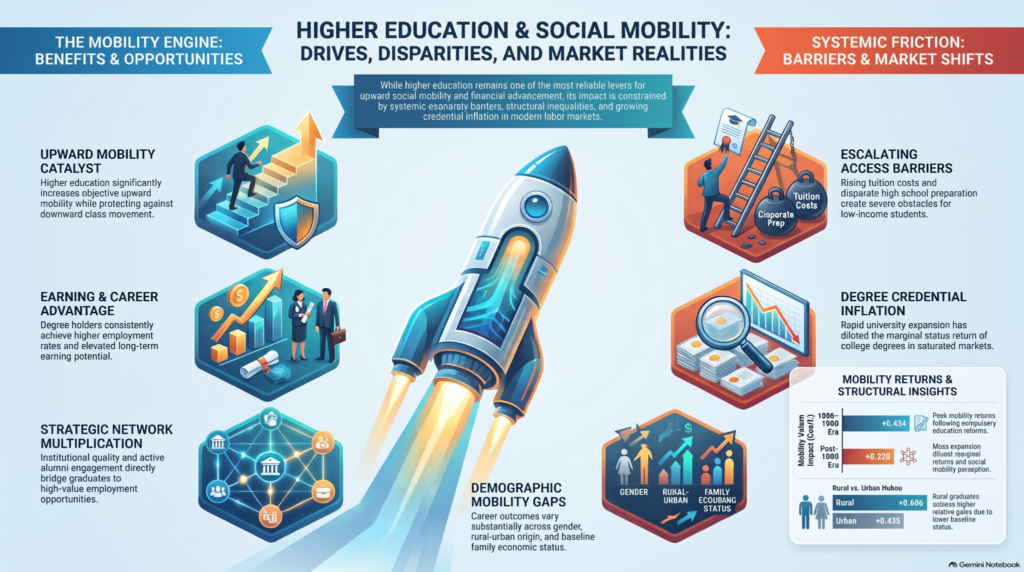
Getting through university is rarely just an intellectual endeavor; it is an endurance race that tests a student’s resourcefulness against systemic economic headwinds. A college diploma is fundamentally a transformative lever, but expecting it to act as an automatic magic wand ignores the very real disparities students face before they even set foot on campus. Acknowledging both the power and the friction of this path is where honest educational guidance truly begins.
College education plays an essential role in enhancing social mobility, greatly affecting career and income outcomes. Higher educational attainment typically leads to improved job prospects and higher earnings, especially for individuals from disadvantaged backgrounds. However, socioeconomic barriers can limit access to college, perpetuating inequalities. Institutions with higher quality and robust support systems further enhance career outcomes. As policies evolve to address these challenges, it is essential to explore effective strategies that facilitate equitable access and opportunities for all.
KEY TAKEAWAYS
- College education enhances skill sets and expands professional networks, leading to improved career prospects and higher income potential.
- Higher educational attainment is directly linked to increased social mobility, helping individuals rise above socioeconomic disparities.
- Access to quality college education reduces labor market disparities by providing equitable opportunities for underrepresented groups.
- The quality of college institutions influences career outcomes, with higher-ranked colleges often offering better alumni success and networking opportunities.
- Continuous learning and practical experiences, such as internships, are essential for enhancing employability and adapting to changing job markets.
THE ROLE OF COLLEGE EDUCATION IN SOCIAL MOBILITY
The evidence is clear that higher education remains a powerful tool for social mobility. Graduates reap the rewards of going to university for the rest of their lives with higher levels of employment and pay, better living standards, and more. Future workforce demands also mean that we need to draw on the talent and potential across the country, harnessing the increase in productivity that comes with a higher proportion of graduates to drive inclusive economic growth for the whole nation.
As socioeconomic disparities persist in contemporary society, the role of college education in fostering social mobility remains a fundamental area of analysis. Research indicates that higher educational attainment correlates strongly with improved career prospects and income levels, making college opportunities indispensable for individuals from disadvantaged backgrounds.
Attending college not only enhances skill sets but also expands professional networks, which are essential for career advancement.
Policies aimed at increasing access to higher education can considerably bridge the gap between socioeconomic classes. For instance, initiatives such as need-based financial aid and community college pathways provide significant support for underrepresented populations.
Additionally, investment in college readiness programs guarantees that students are better prepared to navigate the complexities of higher education.
Ultimately, fostering equitable access to college opportunities is imperative for empowering individuals and promoting a more just society, where educational attainment serves as a pathway to economic mobility.
How Socioeconomic Background Affects College Access
This is an important finding because a recurrent debate in the sociology of social stratification and mobility concerns the existence of contextual differences among high-income countries. On the one hand, some stratification scholars hold that social mobility patterns are highly similar across such countries, and have changed only little. On the other hand, other scholars question such similarities by showing that institutional context matters for patterns of stratification and mobility. Also in my mobility study I examined the role of educational policies. It appears that raising the minimum school leaving age has the consequence of improving educational opportunities and thereby reducing the intergenerational persistence of socioeconomic status.
Socioeconomic background notably influences college access, primarily through financial barriers that hinder enrollment for many students.
Additionally, disparities in high school preparation and variability in access to educational resources further exacerbate these challenges, creating a systemic inequality in higher education opportunities.
Addressing these factors is essential for policymakers aiming to enhance equitable access to college education.
Financial Barriers To Enrollment
While many students aspire to attend college, financial barriers often impede access for those from lower socioeconomic backgrounds. Tuition costs have escalated dramatically, outpacing inflation and leaving families struggling to afford higher education.
Research indicates that students from disadvantaged backgrounds are less likely to enroll, primarily due to financial constraints. Although financial aid programs exist, they frequently fail to cover the full cost of attendance, leaving a gap that can deter potential students.
Policymakers must address these disparities by enhancing financial aid accessibility and increasing funding for need-based scholarships. Understanding the college application process can help students identify admission requirements, explore available financial aid opportunities, and make informed decisions about pursuing higher education. By implementing extensive strategies to alleviate financial barriers, society can promote equitable college access, thereby supporting social mobility and fostering a more educated, inclusive workforce.
High School Preparation Disparities
Financial barriers are not the only obstacles affecting college access; disparities in high school preparation greatly influence students’ readiness for higher education. Students can strengthen their foundational knowledge through educational materials, worksheets, and learning resources available at the engineering teacher shop, helping them develop essential academic and technical skills before entering higher education.
Students from lower socioeconomic backgrounds often encounter significant gaps in their high school curriculum and academic support, which can hinder their college aspirations.
Key factors contributing to these disparities include:
- Limited access to advanced coursework: Students may not have opportunities to enroll in honors or Advanced Placement classes.
- Inadequate academic support: Schools in lower-income areas frequently lack resources for tutoring and mentoring programs.
- Variable quality of teaching: Teachers in underfunded schools may face challenges that impact their ability to provide effective instruction.
Addressing these disparities is essential for promoting equitable college access and enhancing social mobility outcomes for all students.
Access To Resources Variability
Access to college resources varies greatly based on students’ socioeconomic backgrounds, which can create uneven playing fields in the pursuit of higher education.
Resource distribution among colleges often favors affluent communities, limiting access for students from lower-income families. These disparities in financial aid, academic support, and extracurricular opportunities hinder educational equity, perpetuating cycles of poverty.
Research indicates that students from disadvantaged backgrounds are less likely to enroll in college, even when academically qualified.
Policies aimed at improving resource allocation, such as increased funding for under-resourced institutions and extensive support programs, are essential for leveling the playing field.
Addressing these inequities not only enhances individual outcomes but also fosters a more equitable society, ultimately benefiting everyone.
EVALUATING THE IMPACT OF COLLEGE QUALITY ON CAREER OUTCOMES
Supervising capstone design projects and advising upper-level engineering students has shown me the precise junction where theoretical knowledge collides with structural reality. Year after year, I mentor brilliant students who are fully capable of calculating complex heat transfer rates or modeling applied mechanics, yet they are constantly battling external survival pressures. Many of our most determined students are working late-night shifts, navigating public transit delays just to make morning labs, or balancing family financial obligations while attempting to master differential equations.
When discussions arise around the “value of a degree” versus rising tuition costs, I always emphasize that while technical credentials open initial doors into competitive industries, a diploma alone cannot compensate for a lack of foundational support. The most successful undergraduates are not necessarily the ones who breeze through thermodynamics on raw talent alone; they are the individuals who learn to strategically bridge the gap between textbook theory and practical workplace application.
They seek out mentorship, actively secure hands-on shop and lab experience, and deliberately build professional networks long before graduation. Navigating college successfully requires treating higher education not as a passive credentialing factory, but as an intentional training ground where you must actively seize resources, build practical competencies, and build resilience against institutional hurdles.
Although the quality of a college education is often measured by factors such as faculty credentials, institutional resources, and graduation rates, its impact on career outcomes remains a complex and multifaceted issue.
Research indicates that higher college rankings correlate with increased alumni success, yet this relationship is influenced by various elements:
- Reputation and Networking Opportunities: Higher-ranked colleges often provide better access to influential networks.
- Curriculum Relevance: Quality institutions tend to offer more relevant and adaptive curricula that align with industry demands.
- Career Services Support: Robust career services at reputable colleges facilitate internships and job placements for graduates.
Consequently, evaluating college quality requires an all-encompassing understanding of these factors, as they collectively shape individual career trajectories.
Policymakers and educators must focus on enhancing institutional quality to foster social mobility and improve long-term economic outcomes for graduates.
Networking Benefits of College Education
Education is widely seen as a key determinant of social mobility within a person’s lifetime and across generations. For the first time, we now have high-quality data available that allows us to study social mobility in developing countries more rigorously.
The role of networking in enhancing career prospects is a significant benefit of obtaining a college education. Colleges provide students with numerous networking opportunities, fostering relationships that can prove invaluable in the job market.
These connections often extend beyond graduation, as alumni networks frequently serve as a bridge to potential employers, mentorship, and collaborative projects. Research indicates that individuals who actively engage with their college’s alumni connections tend to experience higher employment rates and increased salary potential.
This phenomenon underscores the importance of institutional support in facilitating these relationships, as colleges can implement programs to encourage networking events and alumni engagement. By prioritizing these initiatives, educational institutions can not only enhance their graduates’ career outcomes but also contribute to broader social mobility.
Consequently, the strategic cultivation of networking opportunities within higher education emerges as a pivotal factor in shaping equitable access to career advancement.
How Valuable Are College Degrees Today?
How essential are college degrees in today’s rapidly evolving job market? The degree value remains significant as higher education credentials increasingly correlate with better employment opportunities and income potential. Examining the wage gap between college graduates and non graduates helps illustrate how educational attainment can influence earning potential and contribute to differences in long-term financial stability.
Despite a shifting labor market, degrees are often seen as a prerequisite for many professional roles, demonstrating a commitment to skill development and knowledge acquisition.
Key factors influencing the value of college degrees include:
- Employment Opportunities: Graduates are more likely to secure positions in competitive fields.
- Income Potential: Degree holders typically earn higher salaries compared to those without higher education.
- Career Advancement: Many organizations prioritize candidates with degrees for promotions and leadership roles.
As policymakers and educators assess the future of workforce development, understanding the nuanced role of college degrees in enhancing social mobility will be vital in shaping equitable access to quality education and reducing disparities in the labor market.
Identifying Systemic Barriers to College Access and Success
Barriers to college access and success are multifaceted, often rooted in systemic inequities that disproportionately affect marginalized communities.
Systemic inequality manifests in various forms, including insufficient college readiness programs that leave students unprepared for higher education challenges. Enrollment challenges, such as financial constraints and lack of information about available resources, further hinder opportunities for many.
Without robust support systems, students from underrepresented demographics face additional hurdles, exacerbating existing demographic disparities. Policy reforms are essential to address these issues; initiatives aimed at enhancing educational equity can improve access and retention rates.
Access initiatives, such as scholarships and mentorship programs, can alleviate some barriers, yet they must be accompanied by thorough strategies to dismantle systemic obstacles.
Effective Strategies for Career Success After College
While college education serves as a critical stepping stone toward professional success, the shift from academic life to the workforce often presents significant challenges for graduates.
Effective strategies for career development can enhance employability and adaptability in the evolving job market.
Key strategies include:
- Networking: Engaging with professionals and alumni can open doors to opportunities and valuable mentorship.
- Skill Enhancement: Continuous learning and acquiring relevant skills are essential for staying competitive in a rapidly changing job landscape.
- Internships and Volunteer Work: Gaining practical experience through internships or community service not only builds resumes but also fosters essential soft skills.

RELATED STUDIES ABOUT COLLEGE EDUCATION AND SOCIAL MOBILITY
In summary, the interplay between college education and social mobility greatly shapes career and income trajectories. While a degree can serve as a key opening doors to opportunity, disparities in access reveal a complex landscape where socioeconomic backgrounds often dictate success. Addressing systemic barriers and enhancing college quality are essential steps in promoting equitable outcomes. By fostering networking opportunities and focusing on career readiness, policymakers can guarantee that education becomes a bridge, not a barrier, to upward mobility.
How does education affect knowledge and intergenerational social class mobility in China?
Conceptual Framework and Research Rationale
- The Debate Over Educational Efficacy: Contemporary Chinese society experiences ongoing tension between the belief that knowledge changes one’s destiny and the growing anxiety that higher education no longer guarantees upward socioeconomic mobility. The rapid expansion of higher education—growing from 2.13 million college graduates in 2003 to 11.79 million in 2024—has raised critical questions regarding whether educational attainment genuinely disrupts social class solidification or merely induces credential inflation.
- Functionalist vs. Conflict Perspectives: Sociological theory offers competing views on educational mobility. Functionalist models posit that education builds cognitive capital and market skills, allowing meritocratic occupational attainment and upward mobility. Conversely, conflict and reproduction theories (e.g., Bourdieu) argue that formal schooling reinforces existing social stratification by converting family cultural and financial capital into elite credentials, leaving the underlying class hierarchy intact.
- Subjective vs. Objective Class Mobility: Prior research has frequently separated objective socioeconomic attainment (occupational status and income) from subjective class identity (perceived social standing). Due to social comparison, reference group shifts, and information asymmetries, an individual’s psychological perception of their intergenerational trajectory can diverge substantially from their measurable status change.
- Core Research Objectives:
- Empirically evaluate the impact of educational attainment on both objective and subjective intergenerational social class mobility in contemporary China.
- Trace temporal changes in educational returns across three landmark policy eras to account for credential inflation: prior to the 1986 Compulsory Education Law, the 1986–1999 consolidation phase, and the post-1999 higher education expansion era.
- Identify structural transmission channels by testing population migration (hukou status change) as an intermediary mechanism and household economic capital as a moderating factor.
- Examine demographic and geographic heterogeneity across gender, household registration (rural vs. non-rural hukou), and regional economic tiers.
Methodology and Empirical Design
- Dataset and Sample Architecture:
- Utilizes pooled cross-sectional microdata from the China General Social Survey (CGSS) across three survey waves: 2017, 2018, and 2021.
- Sampling Criteria: Restricted to employed respondents aged 16 to 65 with valid educational and occupational records, matched against paternal occupational and educational benchmarks.
- Final Analytical Sample: 8,014 matched parent-offspring pairs covering 31 provinces, autonomous regions, and municipalities.
- Dependent Variables (Intergenerational Mobility Modes):
- Objective Intergenerational Social Class Mobility: Paternal and offspring occupations were converted from International Standard Classification of Occupations (ISCO-08) codes into continuous International Socio-Economic Index (ISEI) scores and grouped into three classes: Lower Class (ISEI under 30), Middle Class (ISEI 31 to 60), and Upper Class (ISEI above 61). Comparing the offspring’s tier to the father’s tier establishes three discrete outcomes: Downward Mobility (-1), Intergenerational Transmission / Status Reproduction (0), and Upward Mobility (1).
- Subjective Intergenerational Social Class Mobility: Derived by subtracting the perceived paternal social rung when the respondent was 14 years old from the respondent’s current self-rated social rung on a 1-to-10 ladder scale, categorized into Downward Mobility (-1), Transmission (0), and Upward Mobility (1).
- Primary Explanatory and Mediating/Moderating Variables:
- Educational Attainment: Grouped into Primary Education (elementary school or less), Secondary Education (junior high, academic high school, technical secondary, and vocational high school; serving as the regression reference category), and Higher Education (vocational college, bachelor’s degree, and postgraduate degrees).
- Population Migration (Mediator): Binary indicator tracking whether an individual shifted from their birth hukou registration location/type to a new current hukou.
- Family Economic Capital (Moderator): Five-point Likert scale assessing the family’s historical local economic standing at age 14.
- Demographic Controls: Offspring age, gender, Communist Party of China (CPC) political affiliation, paternal educational attainment, and paternal political affiliation.
- Econometric Modeling:
- Multinomial Logistic Regression Models (MLRM) estimating the log-odds of upward or downward mobility relative to status reproduction.
- Karlson-Holm-Breen (KHB) decomposition to quantify the direct and indirect mediation shares of population migration.
- Robustness verification conducted via Ordered Logit Regression Models (OLRM) treating mobility rungs hierarchically.
Key Empirical Findings
- Baseline Mobility Distributions:
- Overall sample distributions indicate that upward intergenerational mobility represents the primary trajectory in contemporary China: 64.97% of respondents experienced mobility, with upward mobility rates reaching 49.8% objectively and 57.3% subjectively, while class transmission stood at 35.03%.
- Paternal social class was predominantly concentrated in lower tiers, whereas offspring distributions shifted toward middle strata, aligning with China’s transitioning structural pyramid.
- Subjective upward mobility exceeded objective upward mobility, indicating an optimism bias where individuals perceive greater class progress than objective occupational indices reflect.
- Baseline Educational Effects on Mobility:
- Higher education significantly promotes upward mobility while reducing downward mobility and status entrenchment.
- Objective Mobility Impact: Relative to secondary education, completing higher education increased the probability of objective upward mobility by 7.3 percentage points, while reducing the likelihood of downward mobility by 3.1 percentage points and status transmission by 4.2 percentage points.
- Subjective Mobility Impact: Higher education increased the probability of subjective upward mobility by 3.9 percentage points, while reducing subjective downward mobility by 2.8 percentage points.
- Net Differential: The objective upward mobility boost generated by higher education exceeded its subjective impact by 3.4 percentage points, confirming that credential gains translate into measurable occupational advancement faster than subjective social identity adapts.
- Penalties of Low Education: Primary education substantially hindered advancement, increasing objective class transmission by 6.3 percentage points, reducing objective upward mobility by 5.3 percentage points, and elevating subjective downward mobility by 8.0 percentage points.
- Historical Eras and the Dilution of College Credentials:
- Dividing the sample into three policy eras revealed non-linear historical returns to higher education:
- Stage I (Prior to 1986): Educational attainment had no statistically significant impact on upward mobility, reflecting pre-reform institutional constraints and limited educational access.
- Stage II (1986–1999): Following the Compulsory Education Law, higher education had its strongest transformative effect on upward mobility across both objective (coefficient = 0.434, p < 0.01) and subjective metrics (coefficient = 0.335, p < 0.01).
- Stage III (Post-1999): Following mass university expansion, the objective upward mobility coefficient of higher education declined to 0.328 (p < 0.001), while its subjective upward effect fell to 0.130 (becoming statistically non-significant). Mass credential expansion created labor market supply-demand mismatches, depressing the marginal advantage of college degrees and making intergenerational breakthroughs harder to perceive subjectively.
- Mediation of Population Migration:
- KHB decomposition confirmed that geographic and administrative migration (hukou transition) operates as a significant mediator.
- Population migration accounted for 10.89% of higher education’s total positive effect on objective upward mobility, and 10.96% of primary education’s negative effect.
- Higher education enables individuals to relocate to economically developed urban labor markets with higher-status employment opportunities, whereas low educational attainment restricts geographical mobility, reinforcing local status traps.
- Moderating Influence of Family Economic Background:
- Household economic capital demonstrated a significant negative interaction with higher education on subjective upward mobility (interaction coefficient = -0.167, p = 0.010), causing the standalone higher education coefficient to drop to 0.051.
- This demonstrates that higher education matters most for the perceived advancement of children from disadvantaged homes. For youth from affluent families, abundant parental economic and relational capital already ensures high status, muting the subjective psychological impact of educational credentials on perceived social mobility.
- Subgroup Heterogeneity:
- Gender Disparities: Higher education significantly boosted objective upward mobility for men (coefficient = 0.394, p < 0.001) but failed to achieve statistical significance for women (coefficient = 0.110, p = 0.212). Female graduates primarily experienced protection against downward mobility (coefficient = -0.510, p < 0.001) rather than upward advancement, documenting that women face a glass ceiling (“bottom persistence”) in converting credentials into occupational status.
- Rural vs. Non-Rural Hukou: The positive effect of higher education on objective upward mobility was substantially stronger for rural hukou holders (coefficient = 0.606, p < 0.001) than for urban hukou holders (coefficient = 0.435, p < 0.001). Because rural youth begin at a lower baseline, university credentials provide a wider margin for structural advancement.
- Regional Economic Tiers: The mobility return to higher education followed an ascending gradient from east to west: Eastern coastal provinces (coefficient = 0.293, p < 0.001), Central provinces (0.365, p < 0.01), and Western provinces (0.471, p < 0.01). In highly developed eastern metropolises, graduate labor markets are saturated, dampening the mobility premium of a degree, whereas in less developed western regions, skilled college graduates remain scarce and command higher status returns.
Theoretical and Sociological Interpretations
- Human Capital vs. Cultural Reproduction: The findings support functional human capital theory in the objective domain: higher education serves as an active vehicle for intergenerational upward mobility in China. However, the persistence of class ceilings for women and urban youth highlights ongoing reproduction dynamics.
- Credential Inflation and Diminishing Returns: The decline in mobility coefficients following the 1999 university expansion confirms that rapid educational enrollment growth without proportional high-skill job creation diminishes the signaling power of college diplomas.
- The Spatial Conduit of Status: Educational attainment in China functions largely through spatial sorting. Achieving upward mobility depends not merely on earning a diploma, but on leveraging that credential to navigate the hukou system and secure employment in higher-tier urban labor markets.
Policy Recommendations and Study Limitations
- Educational Resource Allocation: Expand investments in rural and western basic education infrastructure, raise teacher compensation in underserved areas, and dismantle administrative barriers to ensure rural youth access high-quality secondary and tertiary pipelines.
- Reforming Evaluation Systems: Transition from an over-reliance on formal academic credentials toward diversified competency frameworks that reward vocational, technical, and innovative problem-solving skills, mitigating credential inflation.
- Strengthening Targeted Financial Aid: Expand public subsidies and living stipends for lower-income students, preventing educational resource monopolization by elite private schooling.
- Methodological Boundaries:
- Relies on pooled cross-sectional survey waves rather than tracking panel cohorts across individual life cycles.
- Measures paternal characteristics at age 14, omitting maternal socioeconomic contributions.
- Future research should implement multi-period difference-in-differences designs and in-depth qualitative life-history interviews to examine how individual career strategies interact with macro-policy shifts.
| REFERENCE: Bingqiang Li, Wenjie Nie, Xuan Zuo, Heping Zuo, How does education affect knowledge and intergenerational social class mobility in China?, Journal of Innovation & Knowledge, Volume 10, Issue 3, 2025, 100678, ISSN 2444-569X, https://doi.org/10.1016/j.jik.2025.100678. (https://www.sciencedirect.com/science/article/pii/S2444569X25000289) |
When mobility becomes a compromise: intersectional social identities in mobility in Boston and Austin
Conceptual Framework and Research Rationale
- Critique of Conventional Transportation Planning: Traditional urban and transportation planning frameworks have historically centered on a default, normative user archetype: the able-bodied, cisgender, white, middle-class male commuter making direct suburb-to-work trips. This narrow perspective overlooks the lived realities, complex trip chains, and spatial barriers experienced by marginalized groups.
- Racial Planning and Binary Gender Structuring:
- Racialized Space: Planning practices in the United States have historically produced racialized spaces through highway construction through minoritized neighborhoods, residential segregation, disinvestment in transit infrastructure, and aggressive policing of public spaces.
- Binary Gender Constructs: Urban mobility designs have historically relegated women to domestic caretaking travel while ignoring safety concerns, chauffeuring burdens, and the distinct spatial vulnerabilities of sexual and gender minorities.
- The Need for an Intersectional Mobility Lens: Analyzing single demographic axes in isolation (e.g., race alone, gender alone, or income alone) obscures compounded vulnerabilities. An intersectional approach examines how overlapping social identities (race, gender identity, sexual orientation, disability, class, and early-life socialization) interact with institutional systems and physical infrastructure to shape daily mobility access, risk exposure, and travel behavior.
- Focus on College Students: College students represent a critical transitional cohort actively developing mobility habits that persist into adulthood. As higher education demographics increasingly include diverse racial, sexual, and gender minority populations, understanding their travel constraints provides foresight into future urban transportation demands.
- Core Research Objectives:
- Investigate how intersecting social identities shape the everyday mobility experiences of college students.
- Compare mobility barriers across two demographically similar U.S. metropolitan areas with sharply contrasting transportation environments: Austin, Texas (a sprawling, car-dependent Sunbelt metro) and Boston, Massachusetts (a dense, multimodal transit-oriented metro).
- Formulate an empirically grounded typology of mobility constraints and identify actionable, equity-oriented interventions for transit agencies, universities, and municipal authorities.
Methodology and Empirical Dataset
- Comparative Research Design: A qualitative, semi-structured interview study comparing university students across two distinct urban environments:
- Austin, Texas: Drive-alone commute rate exceeds 60%; characterized by limited transit coverage and auto-centric urban sprawl.
- Boston, Massachusetts: Drive-alone rate is below 40%; supported by an extensive multimodal transit network (MBTA / “the T”) and pedestrian-oriented infrastructure.
- Demographic Parity: Both cities possess roughly comparable minority and LGBTQ+ population shares (e.g., 5.9% LGBTQ+ in Austin vs. 8.2% in Boston; roughly half non-white/Hispanic populations).
- Sampling and Recruitment Protocol:
- Participants completed a preliminary screening survey hosted on Qualtrics to gather demographic attributes, identity affiliations, academic status, and geographic residency.
- Institutional partnerships were established with the University of Texas at Austin and Harvard University to distribute invitations across campus networks.
- Purposeful quota sampling was deployed to ensure balanced representation across racial/ethnic backgrounds and LGBTQ+ identities.
- Participant Cohort (N=28):
- Austin Cohort (n=16): 11 LGBTQ+ individuals and 5 non-LGBTQ+ individuals; racially composed of 6 White, 5 Asian, 4 Hispanic/Latino, 1 Black/African American, and 1 Iranian American student.
- Boston Cohort (n=12): 5 LGBTQ+ individuals and 7 non-LGBTQ+ individuals; racially composed of 5 Black/African American, 3 Asian, 3 White, and 1 Hispanic/Latino student (including mixed-race identities).
- Data Collection and Qualitative Coding:
- In-depth semi-structured interviews (conducted in-person or via Zoom) lasting 45 to 60 minutes exploring best/worst travel experiences, mode choice shifts, childhood travel habits, encounters with harassment, and security perceptions.
- Three-stage qualitative analysis in Dedoose: initial open coding, focused category consolidation, and axial coding to identify relationships between intersecting identities and mobility barriers.
Key Empirical Findings
- Intersectional Dynamics in Car-Dependent Austin:
- Disability, Gender Identity, and Household Vehicle Hierarchies: Physical vehicle ownership does not equate to independent mobility. For example, a white transgender woman with hypersomnia (a sleep disorder causing sudden sleep onset at the wheel) refrained from driving for personal and public safety. Because her household’s sole vehicle was prioritized for her husband’s commuting schedule, her travel radius was strictly circumscribed to public bus corridors during work hours, leaving her unable to independently access specialized medical clinics.
- Motion Sickness and Public Harassment: An Asian queer woman suffered from chronic motion sickness in automobiles but avoided public bus transit after experiencing invasive stalking and questioning at bus stops, leaving her trapped between physical somatic illness in cars and gendered safety threats on transit.
- Economic Rejection and Transgender Vulnerability: Transgender students who experienced familial estrangement or financial cutoff upon coming out faced extreme transit dependency. Unable to afford car maintenance, fuel, or ride-hailing, they relied exclusively on public buses where they regularly endured misgendering and social surveillance. To avoid escalation and physical danger in public spaces, they adopted strategies of forced silence and emotional suppression.
- Destabilized Automotive Privilege: White, middle-class students socialized in car-centric suburbs experienced disruption of their structural mobility privilege when confronted with visual impairments, driving phobias, or post-collision trauma. In Austin’s auto-centric built environment, the lack of viable public transit options transformed their inability to drive into severe spatial isolation.
- Intersectional Dynamics in Multimodal Boston:
- Medical Rotation Travel and Rigid Transit Subsidies: Despite Boston’s comprehensive transit grid, Black medical students traveling irregular hours to off-campus clinical sites faced acute financial burdens. University transit passes required large upfront semester commitments with minimal discounts (11%), while subsidized youth passes expired at age 25.
- Disability and First-/Last-Mile Gaps: A Black/Asian gay male medical student suffering from a congenital bone condition causing severe foot nerve pain could not walk more than 15 minutes to transit stops. Inflexible university reimbursement policies failed to recognize his walking impairment, forcing him to choose between agonizing physical pain on transit or expensive ride-hailing trips (30–40) that threatened his financial stability.
- Income as an Adaptive Cushion: Black female students reported alarming encounters with aggressive men on subway platforms. While high-income travelers can mitigate threatening encounters by taking an Uber or driving a private car, low-income students lacked the financial resources to avoid dangerous transit routes, forcing them to remain exposed to harassment to reach mandatory academic duties.
- The Role of Childhood Socialization and Urban Form:
- Formative childhood travel experiences strongly influenced transit receptivity. Students raised in cities like Memphis described deep racial and class stigmas associating public bus transit with poverty and marginalization. Moving to Boston diluted this stigma due to broad, cross-class ridership, enabling students of color to embrace public transit.
- Students who had positive prior transit exposure (e.g., studying abroad in Taiwan or growing up using bus systems in Montana) demonstrated high comfort with public transit and deliberately rejected car use in adulthood despite possessing car access.
- Public Transit Safety, Surveillance, and Harassment:
- Racialized and Religious Hostility: A Muslim woman wearing a hijab in Austin experienced overt collective coercion when transit riders ordered her into an unsanitary seat, berating her as a “bad girl” when she refused, which caused her to abandon public transit.
- Gender Presentation and Racial Buffers: An Iranian-American non-binary student wearing gender-fluid clothing at Austin bus stops faced overt hostility, erratic intimidation, and social avoidance, prompting them to alter their daily dress to avoid verbal attacks. In contrast, a white non-binary student in Boston experiencing street slurs expressed greater defiance, demonstrating that racial privilege can buffer the psychological impact of gender-based harassment.
- The Call for Supportive Security: Asian women in both cities expressed continuous fear of targeted racial and gender violence, advocating for visible protective infrastructure—specifically panic buttons, continuous camera surveillance, and uniformed transit ambassadors—rather than armed police enforcement.
Typology of Intersectional Mobility Constraints
The study synthesizes its empirical findings into four distinct structural configurations of mobility disadvantage:
- Health- and Household-Conditioned Car Access:
- Structural Drivers: Household vehicle allocation hierarchies, gendered divisions of labor, and physical or cognitive disabilities.
- Lived Experience: Inability to drive safely due to medical conditions (e.g., hypersomnia, sensory impairments); vehicle access is monopolized by primary earners, reducing travel radius and forcing dependency on others for essential medical and social trips.
- Experience-Based Driving Constraints:
- Structural Drivers: Built environments that mandate car ownership while lacking transit alternatives; car-centric cultural norms.
- Lived Experience: Severe driving anxiety, post-crash trauma, or chronic motion sickness that impairs driving ability. Affected individuals face a double bind: driving causes psychological or physical distress, yet public transit exposes them to identity-based harassment.
- Identity-Based Transit Safety Constraints:
- Structural Drivers: Public transit systems lacking non-police safety measures, passive transit station designs, and transit staff untrained in diversity and de-escalation.
- Lived Experience: Heightened exposure to microaggressions, verbal abuse, sexual harassment, misgendering, and racialized surveillance among women of color and LGBTQ+ riders. Riders respond by abandoning transit, restricting travel hours, or altering their attire.
- Resource-Constrained Modal Choice:
- Structural Drivers: Upfront bulk transit pricing, exclusionary student discount criteria, and wealth disparities rooted in racial capitalism.
- Lived Experience: Lack of personal financial resources to substitute safer or faster travel modes (e.g., ride-hailing) when transit becomes hazardous or inaccessible. Economic precarity directly governs an individual’s capacity to avoid threatening environments.
Practical Recommendations for Transportation Planning and Policy
The author translates the empirical findings into targeted interventions across institutional stakeholders:
- For Transit Agencies:
- Deploy Transit Ambassador Programs: Shift safety away from armed policing toward trained, uniformed civilian ambassadors equipped in gender inclusivity, anti-racism, and de-escalation.
- Infrastructure Enhancements: Install functional emergency panic buttons, emergency call boxes, continuous lighting, and security cameras at all isolated bus shelters and rail platforms.
- Targeted Clinic-Campus Routes: Partner with universities and regional healthcare systems to operate direct campus-to-clinic routes or flexible on-demand microtransit for students with chronic medical conditions.
- For Universities and Higher Education Institutions:
- Reform Student Transit Subsidies: Eliminate rigid multi-month upfront transit pass requirements. Implement flexible, pay-as-you-go micro-subsidies that accommodate irregular clinical, research, and internship schedules.
- Accessible Paratransit and Health Coordination: Expand campus accessibility van networks to include students with temporary or non-visible ambulatory disabilities who are disqualified from municipal paratransit.
- Psychological Trauma Services: Coordinate university health clinics to offer specialized cognitive behavioral support for students experiencing driving phobias and post-accident vehicular trauma.
- For Municipal and Regional Governments:
- Universal Fare Equity: Expand low-income fare-relief structures beyond age-based cutoffs (e.g., removing the 25-year-old cap on youth discounts for low-income students).
- Rethinking Disadvantage Metrics: Transition planning criteria beyond binary indicators (such as zero-car households or broad poverty categories) to evaluate whether existing transport is physically, economically, and psychosocially usable for multiply marginalized populations.
Study Limitations and Research Boundaries
- Sample-Specific Generalizability: The empirical sample consists exclusively of college students. While providing valuable insights into emerging generational habits, college students operate under distinct schedules, institutional resources (e.g., campus shuttles), and transitional financial dependencies that do not fully mirror older adults, low-income shift workers, or career caregivers.
- Qualitative Scope: The study was designed for analytical transferability and inductive depth across 28 interviewees rather than statistical generalizability across large urban populations.
- Future Research: Longitudinal travel diary studies, spatial tracking, and quantitative modeling should be deployed to measure how intersectional identity vectors alter trip duration, modal substitution rates, and spatial access across life-course transitions.
| REFERENCE: Minyu Situ, When mobility becomes a compromise: intersectional social identities in mobility in Boston and Austin, Transportation Research Interdisciplinary Perspectives, Volume 40, 2026, 102259, ISSN 2590-1982, https://doi.org/10.1016/j.trip.2026.102259. (https://www.sciencedirect.com/science/article/pii/S2590198226004240) |
Exploring public perceptions of college education on TikTok: A content analysis through the lens of the social determinants of health
Conceptual Framework and Research Rationale
- Education as a Primary Social Determinant of Health (SDH): The World Health Organization defines the social determinants of health as the non-medical conditions in which individuals are born, grow, live, work, and age. Within this framework, educational attainment is widely recognized as a foundational, modifiable upstream determinant. Higher education typically fosters economic security, which shapes housing stability, workplace environments, health literacy, health insurance coverage, and overall life expectancy.
- Growing Public Skepticism Over Higher Education: Escalating tuition costs, mounting student loan debt, and shifting labor market demands have fueled public debate regarding whether a college degree remains worth the financial investment. While public health research documents long-term physiological and psychological benefits tied to education, public discourse increasingly frames higher education primarily through a narrow return-on-investment lens.
- TikTok as an Information Hub and Echo Chamber: With over 1.5 billion active users, TikTok has increasingly become a search engine and primary discourse forum for Generation Z and young adults aged 18 to 24. Algorithmic curation and anecdotal experience-sharing can create echo chambers that amplify skepticism, shape career expectations, and influence young adults’ decisions regarding higher education.
- Core Research Objective: To analyze public perceptions of the value of higher education on TikTok through the lens of the SDH framework, evaluating whether online discourse reflects the broader health and social well-being benefits of education or remains confined to immediate financial and occupational returns.
Methodology and Analytical Design
- Study Design and Sampling Protocol:
- Cross-sectional content analysis conducted in November 2024 evaluating the top 100 English-language TikTok videos retrieved using the query “is college degree worth it”.
- Shorter keyword alternatives were evaluated but yielded fewer than the required 100 relevant videos. Duplicate, non-English, and irrelevant videos were removed.
- Dual-Level Content Analysis:
- Video-Level Coding: Evaluated overall sentiment (positive, negative, or neutral), creator characteristics, and engagement metadata (total counts of likes, comments, shares, and saves).
- Comment-Level Coding: Evaluated user comment threads beneath all 100 videos to analyze public reactions, shared experiences, and peer sentiment.
- Thematic Coding Based on the SDH Framework:
- Both videos and comment threads were coded dichotomously (presence = 1, absence = 0) across 16 established SDH-related themes: Employment Opportunities, Income Potential, Debt and Financial Stress, Economic Mobility, Education Access, Education Quality, Education Literacy, Alternatives (e.g., trade schools, certificates), Networks, Social Capital, Discrimination, Health Literacy, Insurance, Geographic Factors, Work Environment, and Community Resources.
- Inter-rater reliability was assessed across a randomly selected 10% sub-sample by two independent coders, achieving over 90% percentage agreement after codebook calibration.
- Statistical Analysis:
- Metadata variables were tested for normality using Shapiro-Wilk and Kolmogorov-Smirnov tests; all engagement metrics violated normality assumptions (p<0.001).
- Differences in engagement metrics (likes, comments, saves, and shares) across the presence or absence of specific themes were tested using non-parametric Mann-Whitney U tests, reported with mean ranks and effect sizes (r).
Key Empirical Findings
- Overall Engagement and Sentiment Distribution:
- Across the 100 analyzed videos, the corpus generated 1,786,567 likes, 25,055 comments, 190,557 saves, and 61,865 shares.
- Sentiment Breakdown: 51% of videos conveyed a positive sentiment regarding the value of college, 27% were explicitly negative, and 22% remained neutral.
- Prevalent Video Themes and Viewer Engagement:
- Most Frequent Themes: Videos most commonly focused on tangible career and financial outcomes:
- Employment Opportunities: Present in 76% of videos (generating over 1.11 million cumulative likes).
- Economic Mobility: Present in 68% of videos.
- Education Quality: Present in 65% of videos.
- Income Potential: Present in 64% of videos.
- Debt and Financial Stress: Present in 56% of videos.
- Engagement Significance:
- Videos highlighting “Debt and Financial Stress” received significantly higher likes (p=0.003), saves (p=0.033), and shares (p=0.049).
- Videos addressing “Education Quality” received significantly higher likes (p=0.003), comments (p<0.001), saves (p=0.023), and shares (p=0.028).
- Comment Thread Discourse and Audience Resonance:
- Prominent Discussion Points: In user comments, Education Quality (60%) and Employment Opportunities (58%) remained the dominant conversational topics.
- Themes Associated with Video Likes: Videos that generated discussion in comment threads around career, financial, and structural topics had significantly higher mean ranks of likes compared to videos without those themes:
- Employment Opportunities (mean rank 62.54 vs. 33.87, p<0.001,r=0.687).
- Income Potential (mean rank 67.39 vs. 39.24, p<0.001,r=0.586).
- Education Quality (mean rank 58.78 vs. 38.08, p<0.001,r=0.514).
- Work Environment (mean rank 75.34 vs. 44.67, p<0.001,r=0.515).
- Education Literacy (mean rank 65.20 vs. 39.41, p<0.001,r=0.668).
- Economic Mobility (mean rank 66.43 vs. 46.01, p=0.004,r=0.446).
- Social Capital (mean rank 68.36 vs. 46.58, p=0.004,r=0.345).
- Geographic location and Community Resources also exhibited significantly higher engagement ranks (p<0.05).
- The Absence of Health and Well-Being Themes:
- Despite education being a central determinant of long-term health, health-related themes were virtually absent from both video content and user comments:
- Within video content, Health Literacy appeared in only 4% of videos, Insurance in 5%, and Work Environment in 7%.
- Within comment threads, Health Literacy and Insurance were present in 0% of discussions.
- Mentions of Discrimination appeared in only 4% of comment threads and showed no statistically significant relationship with user engagement (p=0.390).
Public Health and Sociological Implications
- Disconnection Between Public Perception and the SDH Framework: The findings demonstrate a disconnect between epidemiological evidence and public perception. While public health science emphasizes education’s protective effects against chronic disease, premature mortality, and poor mental health, prospective students and creators conceptualize college almost exclusively through vocational, monetary, and debt-related lenses.
- Financial Precarity Eclipsing Holistic Value: High engagement with debt and financial stress indicates that the rising costs of higher education overshadow its broader life advantages. The psychological burden of tuition debt and uncertain returns can turn an educational experience into a source of acute chronic stress, counteracting some of its intended well-being benefits.
- Institutional Communication Strategies: Colleges and universities facing demographic enrollment declines often rely heavily on vocational marketing. The authors suggest higher education leaders and public health professionals should communicate the broader lifestyle, health literacy, and well-being advantages of college to present a more balanced case for higher learning.
Study Limitations and Future Research Directions
- Cross-Sectional Architecture: Data collection took place at a single point in time, preventing longitudinal tracking of how public sentiment evolves across economic shifts.
- Algorithmic Opacity and Personalization: While keyword searches are more standardized than the “For You” page, TikTok’s dynamic delivery algorithms may introduce unobserved geographic or interaction-based personalization.
- Absence of Demographic Context: TikTok does not provide verified demographic, racial, or socioeconomic data for video creators or commenters, limiting subgroup comparisons.
- Future Recommendations: Subsequent investigations should deploy longitudinal, multi-platform monitoring (e.g., across YouTube, Instagram, and TikTok) to examine whether prospective students evaluate health resources, mental health support, and broader SDH benefits when making enrollment decisions.
| REFERENCE: Erin Toussaint Jacques, Vincent Jones, Erela Datuowei, Arijit Chatterjee, Carlee Denholtz, Corey H. Basch, Exploring public perceptions of college education on TikTok: A content analysis through the lens of the social determinants of health, Dialogues in Health, Volume 6, 2025, 100213, ISSN 2772-6533, https://doi.org/10.1016/j.dialog.2025.100213. (https://www.sciencedirect.com/science/article/pii/S2772653325000103) |
CONCLUSION
Looking back across my career in academia, my conviction remains unchanged: higher education is still one of the most reliable and powerful ladders out of generational financial hardship, but we must stop treating it as a frictionless guarantee. When we examine academic research and observe global labor markets, it becomes glaringly obvious that degrees are suffering from credential inflation in saturated sectors, making intentional career preparation far more critical than simply holding a framed piece of paper.
For higher education to truly fulfill its democratic mission of upward mobility, institutions and educators must take responsibility for meeting students halfway. We cannot simply admit underprivileged students and expect them to swim against systemic currents without robust academic guidance, mental health balance, and accessible industry pathways.
To any student reading this who feels weighed down by the financial, academic, or social pressure of earning their degree: know that your perseverance through this rigorous process carries immense, permanent value. The technical problem-solving habits, grit, and critical perspective you cultivate while fighting for your seat at the table will serve as the true bedrock of your lifelong mobility and personal growth. Education builds the engine, but your purposeful, balanced persistence is what drives it across the finish line.
