Whenever I audit learning management system telemetry across institutions, I notice a recurring pattern that always sparks deep conversations with faculty. We invest heavily in sophisticated educational platforms, dynamic adaptive pathways, and digital dashboards brimming with real-time feedback loops. On paper, these systems promise unprecedented student personalization. Yet, when we dig into the raw behavioral metrics, a familiar paradox surfaces: simply presenting students with digital options does not automatically transform them into self-regulated learners.
In my work analyzing student engagement patterns, I often see students treat sleek educational software just as they treat their social feeds—clicking through prompts quickly, hunting for the immediate preview of an answer, or passively following automated recommendations rather than actively interrogating their own learning processes. Technology is an incredible amplifier, but it only amplifies the autonomy that already exists within the learner.
If an engineering student is given total freedom to navigate a complex online simulation without the underlying confidence or metacognitive habit to diagnose their own mistakes, they often experience cognitive overload rather than empowerment. Personalization cannot simply be an algorithmic feature delivered from the top down; it requires cultivating genuine student agency from the inside out. As we explore how digital environments shape learning, we have to recognize that real autonomy isn’t about leaving students alone with a laptop, but about designing intentional structures where technology invites them to take true intellectual ownership.
Student autonomy empowers learners by enhancing engagement and fostering critical thinking. When combined with technology, personalized learning experiences evolve considerably. Adaptive platforms utilize data analytics to tailor educational pathways, providing instant feedback that encourages ownership. Digital tools enable students to choose their learning paths, promoting intrinsic motivation and accountability. This innovative approach not only supports individualized learning but also cultivates collaborative environments. A closer look at these dynamics reveals even more transformative strategies in personalized education.
KEY TAKEAWAYS
- Student autonomy enhances engagement by allowing learners to explore topics that align with their interests and strengths.
- Technology provides adaptive learning platforms that tailor educational experiences based on individual progress and performance.
- Digital tools like interactive platforms and resource libraries empower students to choose learning paths that resonate with their personal goals.
- Real-time feedback from technology fosters reflection, enabling students to take ownership of their learning process and strategies.
- Collaborative learning environments, supported by technology, encourage knowledge sharing and diverse perspectives, enhancing personalized learning experiences.
WHY STUDENT AUTONOMY MATTERS: ADDRESSING COMMON LEARNING CHALLENGES
The advent of technological development has provided important support and enhancement in language learning, especially speaking skills (Nguyen et al., 2022). The utilization of different technological tools to practice speaking skills outside of class time can be a viable solution to help EFL students overcome the above-mentioned challenges in speaking classes (Di̇ncer, 2020). Ramadhan et al. (2023) noted a growing adoption of online task-based language learning, which not only improves students’ skills but also enables them to take initiatives in organizing, completing tasks, and tracking their learning progress independently. Teachers can also benefit from technology by adopting different tools in delivering speaking tasks and collecting students’ speaking performances, marking them, and providing feedback on students’ speaking performance. The use of learning management system (LMS) platforms, for example, can support teachers in implementing task-based learning activities (Cao et al., 2024).
Although traditional educational models often prioritize standardized approaches, the significance of student autonomy in learning is increasingly recognized as an essential factor in addressing common challenges. Empowering students to take charge of their educational journeys enhances student engagement, fostering a sense of ownership that can lead to improved learning outcomes.
When learners are given the freedom to explore topics that resonate with their interests and strengths, they are more likely to invest time and effort into their studies.
Moreover, student autonomy encourages critical thinking and problem-solving skills, as individuals navigate their learning paths. This shift from passive reception to active participation not only addresses issues like disengagement but also nurtures intrinsic motivation.
How Technology Enhances Personalized Learning
As technology continues to evolve, its role in enhancing personalized learning becomes increasingly significant. Advanced data analytics enables educators to assess individual student performance thoroughly, identifying strengths and weaknesses to tailor learning pathways. By using predictive analytics in education, schools can anticipate students’ learning needs, identify potential academic challenges, and provide timely support that helps improve individual learning outcomes. This targeted approach allows for the creation of customized educational experiences that cater to diverse learning styles and paces.
Moreover, technology facilitates real-time feedback, empowering students to take ownership of their learning. By leveraging adaptive learning platforms, educators can implement dynamic curricula that adjust based on student progress, ensuring that learners remain engaged and challenged.
Additionally, the integration of technology fosters collaboration and communication, allowing students to connect with peers and mentors beyond traditional classroom settings. As a result, personalized learning becomes not just an individualized experience but a community-driven journey, ultimately enriching the educational landscape and better preparing students for future challenges.
Digital Tools for Enhancing Student Choice in Learning
Teachers can focus on creating responsible and autonomous learners through the use of appropriate student choices. Providing opportunities to choose topics of interest stimulates students’ natural curiosity and eagerness to learn. However, providing choices is most effective in contexts where students are individually supported by others in caring and challenging learning communities. In these cultures and climates for learning, students are more likely to develop diverse competencies needed to be successful lifelong learners. Stimulating curiosity is fostered when students are encouraged to work collaboratively with their teachers and peers in finding answers to their questions in inquiry-based learning environments.
Digital tools such as interactive learning platforms and adaptive learning technologies are transforming the landscape of education by empowering students with greater choice in their learning journeys.
These tools facilitate personalized experiences, allowing learners to engage with content that aligns with their interests and pace.
As a result, educators can foster a more dynamic and responsive classroom environment that caters to diverse student needs.
Interactive Learning Platforms
Interactive learning platforms have emerged as transformative tools in education, enabling students to take greater control of their learning journeys.
These digital environments often incorporate gamified learning elements, which greatly enhance student engagement by making the educational process dynamic and enjoyable. Through interactive features such as quizzes, simulations, and collaborative projects, learners can make choices that align with their interests and strengths, fostering a deeper connection to the material.
Additionally, these platforms provide instant feedback, allowing students to reflect on their progress and adjust their strategies accordingly. By promoting autonomy and encouraging exploration, interactive learning platforms not only empower students but also cultivate a more inclusive and responsive educational ecosystem, serving the diverse needs of all learners.
Adaptive Learning Technologies
Adaptive learning technologies represent a significant advancement in educational practices, allowing for a tailored approach to student learning. These innovative tools enhance personalized assessments and leverage learner analytics to foster autonomy and engagement.
The effectiveness of adaptive learning can be highlighted through four key components:
- Individualized Pathways: Students receive customized learning experiences based on their unique needs.
- Real-Time Feedback: Immediate insights enable learners to understand their progress and adjust accordingly.
- Data-Driven Insights: Educators gain access to learner analytics, informing instruction and intervention strategies.
- Flexible Content Delivery: Resources adapt in complexity, ensuring students remain challenged yet supported.

STRATEGIES FOR INTEGRATING AUTONOMY AND TECHNOLOGY
Examining learner interactions within adaptive platforms and automated feedback modules reveals a critical distinction that educators often miss: the difference between passive consumption and active self-regulation. We frequently assume that because today’s students are digitally native—effortlessly navigating smartphones, messaging apps, and multimedia tools—they intuitively know how to steer their own academic growth. But the telemetry tells a very different story.
When looking at student logs across digital environments, learners regularly gravitate toward explicit, direct corrections rather than open-ended diagnostic clues. It makes practical sense; direct feedback provides immediate cognitive clarity and reduces the stress of ambiguity. However, when an LMS or AI-driven tutor continually provides the answers without requiring the student to hypothesize, cross-reference resources, and self-correct, we inadvertently engineer dependency.
The data shows that the students who thrive long-term are not necessarily the ones spending the most hours online or tapping through gamified badges. Instead, they are the ones who utilize digital tools to monitor their own learning trajectory, set measurable milestones, and actively evaluate their own work. For instructors, the goal should never be to automate the thinking process out of education. Adaptive tools should serve as transparent scaffolding—giving learners actionable insights into their progress, but ultimately passing the steering wheel back to them so they can build genuine problem-solving stamina.
Developing student autonomy is both a learning objective and a way to engage students. Autonomy can support a teacher’s time management and enhance students’ learning skills. Autonomy, however, is not always an innate skill. Here are some ways to encourage autonomy.
The integration of autonomy and technology in education presents a transformative opportunity to empower student choice.
By leveraging adaptive learning tools, educators can tailor experiences that align with individual learning preferences and paces.
This strategic approach not only fosters independence but also enhances engagement, creating a more dynamic learning environment.
Empowering Student Choice
While traditional educational models often prioritize standardized curricula, integrating autonomy and technology offers a transformative opportunity to empower student choice in learning.
This shift not only enhances student engagement but also fosters a sense of ownership in the learning process through effective choice architecture.
To successfully implement this approach, educators can consider the following strategies:
- Flexible Learning Paths: Allow students to select topics or projects that resonate with their interests.
- Digital Resource Libraries: Provide access to a variety of multimedia resources for students to explore at their own pace.
- Collaborative Platforms: Utilize technology to facilitate group discussions and peer feedback on chosen projects.
- Personal Learning Goals: Encourage students to set and pursue individual academic objectives, enhancing motivation and accountability.
Utilizing Adaptive Learning Tools
Numerous educators are beginning to recognize the potential of utilizing adaptive learning tools to foster personalized learning experiences.
These tools leverage adaptive assessments that adjust in real-time to student performance, providing a tailored educational journey. By analyzing individual learning patterns, educators can deliver personalized feedback that not only addresses knowledge gaps but also enhances student engagement.
Such responsiveness empowers learners to take charge of their educational paths, promoting autonomy and self-directed learning. In addition, the integration of technology into these adaptive systems allows for a more dynamic and interactive classroom environment, where students feel supported and motivated.
Ultimately, the strategic use of adaptive learning tools cultivates an inclusive atmosphere conducive to diverse learning needs, thereby enhancing the overall educational experience.
Fostering a Collaborative Learning Environment
Creating a collaborative learning environment serves as a catalyst for deeper engagement and enhanced educational outcomes. By emphasizing peer collaboration and team projects, educators can foster a sense of community that supports individualized learning journeys. Educators can also explore practical teaching materials and instructional resources from the engineering teacher shop to support collaborative activities, encourage hands-on learning, and create more engaging classroom experiences.
The following strategies can be utilized to cultivate this environment:
- Diverse Grouping: Create teams that represent varied skill sets and backgrounds, encouraging rich exchanges of ideas.
- Structured Roles: Assign specific roles within teams to promote accountability and guarantee every member contributes meaningfully.
- Reflective Practices: Incorporate frequent opportunities for students to reflect on their collaborative experiences, enhancing their understanding of teamwork dynamics.
- Technology Integration: Utilize digital tools that facilitate communication and project management, making collaboration seamless and accessible.
Through these methods, a nurturing atmosphere is developed, empowering students to take ownership of their learning while effectively working together toward common goals.
Examples of Successful Integration in Personalized Learning
The foundation of a collaborative learning environment lays the groundwork for implementing personalized learning strategies that cater to individual student needs.
Successful integration of project-based learning and competency-based education exemplifies this approach. Evaluating blended learning effectiveness can help educators determine how well combining digital instruction with face-to-face activities supports student engagement, individualized progress, and academic achievement. In one notable case, a high school adopted project-based learning to enable students to explore real-world issues, fostering both engagement and autonomy. Students collaborated in teams, tailoring projects to their interests and skill levels, which allowed for differentiated learning pathways.
Simultaneously, competency-based education was employed to guarantee that students progressed upon mastering specific skills rather than adhering to traditional timelines.
This dual approach not only facilitated personalized learning experiences but also empowered students to take ownership of their educational journeys. By aligning assessments with individual competencies, educators provided targeted feedback that supported each student’s unique learning trajectory.
Such successful integrations underscore the transformative potential of personalized learning in fostering student engagement and achievement.
Emerging Trends in Personalized Learning
As educators increasingly seek to tailor learning experiences to individual needs, emerging trends in personalized learning are reshaping the educational landscape.
These trends emphasize data-driven personalization and learner-centered approaches, fostering environments where students thrive.
Key developments include:
- Adaptive Learning Technologies: Tools that adjust content based on real-time student performance.
- Competency-Based Education: Allowing students to advance upon mastering skills, rather than adhering to traditional timelines.
- Collaborative Learning Platforms: Enabling peer-to-peer interactions that enhance engagement and accountability.
- Integration of Artificial Intelligence: Facilitating personalized feedback and support tailored to individual learning preferences.
These innovations not only empower educators to meet diverse learning needs but also cultivate an inclusive environment where every student can reach their potential.
Ultimately, this serves the greater goal of educational equity.

RELATED STUDIES ABOUT STUDENT AUTONOMY AND TECHNOLOGY
In the ever-evolving landscape of education, the fusion of student autonomy and technology acts as a lighthouse, guiding learners through the fog of conventional teaching methods. By harnessing digital tools and fostering choice, educators can cultivate a vibrant ecosystem where personalized learning flourishes. As trends continue to emerge, this dynamic interplay not only addresses individual challenges but also empowers students to chart their own educational journeys, transforming the classroom into a canvas of limitless possibilities.
Adolescent students’ perceived information and communication technology (ICT) competence and autonomy: Examining links to dispositions toward science in 42 countries
Conceptual Framework and Research Rationale
- The Educational and Economic Context of STEM: Technological innovation, research productivity, and national economic competitiveness depend heavily on a workforce skilled in science, technology, engineering, and mathematics (STEM). However, educational systems worldwide face declining student enrollment in STEM disciplines and career pipelines.
- Dispositions Toward Science as Critical Intermediaries: Adolescent attitudes toward science—such as enjoyment of science, interest in broad science topics, science self-efficacy, and constructive epistemological beliefs—strongly predict science achievement and future career aspirations. Identifying the proximal malleable factors that foster these affective and cognitive orientations is therefore a critical educational priority.
- The Unexplored Link to ICT Dispositions: While substantial research has explored the relationship between technology access/usage and academic test scores, prior literature yielded inconclusive findings and largely neglected the role of psychological dispositions toward information and communication technology (ICT). Specifically, the connections between students’ perceived digital competence, their sense of digital autonomy, and their scientific dispositions had not been examined systematically across nations.
- Self-Determination Theory (SDT) Grounding: Grounded in Basic Psychological Needs Theory (a mini-theory of SDT), the authors hypothesize that meeting the basic needs of competence (feeling effective in mastering tools) and autonomy (experiencing volition, agency, and self-endorsement without external constraint) in the digital domain supports intrinsic motivation and positive cognitive orientations in academic domains such as science.
- Core Research Questions:
- RQ1: To what extent does perceived competence in ICT usage predict enjoyment of science, interest in broad science topics, science self-efficacy, and epistemological beliefs about science, after adjusting for student-, school-, and country-level demographic variables?
- RQ2: To what extent does perceived autonomy related to ICT usage predict these four science dispositions under the same hierarchical controls?
Methodology and Empirical Data Architecture
- Large-Scale Multi-Level Dataset:
- Utilizes data from the 2015 cycle of the Program for International Student Assessment (PISA), administered by the Organisation for Economic Co-operation and Development (OECD), which centered on science literacy.
- Merged student questionnaires, school principal surveys, the optional student ICT familiarity questionnaire, and national macro-economic indicators from the World Bank and CIA World Factbook.
- Analytical Sample: 258,192 15-year-old adolescent students (49% male, 51% female; mean age 15.790.29 years) clustered within 10,767 secondary schools across 42 participating countries and economies.
- Measures and Operationalization:
- Perceived Competence in ICT Usage: 5 items rated on a 4-point Likert scale (1 = strongly disagree to 4 = strongly agree) measuring perceived confidence in operating digital devices, troubleshooting technical problems, and advising peers/family (=0.77–0.89 across countries).
- Perceived Autonomy Related to ICT Usage: 5 items on a 4-point Likert scale assessing independent, self-directed exploration, self-selected software/app installation, and autonomous digital problem-solving (=0.80–0.91).
- Science-Related Dependent Dispositions (all standard PISA Item Response Theory [IRT] scales with an OECD mean of 0 and standard deviation of 1):
- Enjoyment of Science: 5 items assessing intrinsic pleasure, fun, and satisfaction derived from learning science (=0.90–0.97).
- Interest in Broad Science Topics: 5 items assessing curiosity across diverse scientific areas such as the biosphere, motion/forces, and energy transformations (=0.71–0.89).
- Science Self-Efficacy: 8 items rating perceived capability to complete concrete scientific challenges, such as explaining earthquakes or interpreting food labels (=0.83–0.94).
- Epistemological Beliefs About Science: 6 items measuring sophisticated understandings of science as dynamic, empirical, and evidence-based (=0.80–0.94).
- Hierarchical Control Variables:
- Student Level (Level 1): Gender, immigrant status, and the PISA index of Economic, Social, and Cultural Status (ESCS).
- School Level (Level 2): School ownership type (public vs. private) and school-mean socioeconomic status (school-mean ESCS).
- Country Level (Level 3): Income inequality (national Gini coefficient) and gross domestic product per capita (GDP).
- Statistical Modeling Strategy:
- Three-level Multilevel Structural Equation Modeling (MSEM) executed in Mplus 8.1 to account for nested variance structures (students within schools within countries) and measurement error.
- Continuous predictors were grand-mean centered to minimize multicollinearity.
- Full Information Maximum Likelihood with robust standard errors (MLR) was applied alongside PISA student- and school-level sampling weights.
- Model fit was evaluated using standard criteria: RMSEA<0.08,SRMR0.08,CFI0.95,TLI0.95.
Key Empirical Findings
- Model Fit and Variance Decomposition:
- The hypothesized three-level MSEM demonstrated excellent fit to the cross-national data: CFI=1.000,TLI=1.000,RMSEA=0.000,SRMRwithin=0.000,SRMRbetween-school=0.001,SRMRbetween-country=0.000.
- Intraclass Correlation Coefficients (ICCs) indicated that 3% to 4% of the variance in science dispositions was located at the school level, and 3% to 9% was attributable to country-level differences, with the vast majority of variance residing at the individual student level.
- Predictors of Science Dispositions (RQ1 & RQ2):
- Both perceived competence in ICT usage and perceived autonomy in ICT usage were statistically significant and positive predictors across all four science dispositions (p<0.001) after adjusting for all student, school, and national controls.
- Perceived ICT Competence (Unstandardized b, SE):
- Enjoyment of Science: b=0.040.01,p<0.001(=0.04).
- Interest in Broad Science Topics: b=0.030.01,p<0.001(=0.03).
- Science Self-Efficacy: b=0.060.01,p<0.001(=0.05).
- Epistemological Beliefs: b=0.080.01,p<0.001(=0.08).
- Perceived Autonomy in ICT Use (Unstandardized b, SE):
- Enjoyment of Science: b=0.090.01,p<0.001(=0.08).
- Interest in Broad Science Topics: b=0.060.01,p<0.001(=0.07).
- Science Self-Efficacy: b=0.110.01,p<0.001(=0.09).
- Epistemological Beliefs: b=0.120.01,p<0.001(=0.13).
- The Dominance of Autonomy Over Competence:
- Comparison of standardized path coefficients () revealed that perceived autonomy in ICT usage consistently exerted a stronger positive association with every science disposition than perceived ICT competence:
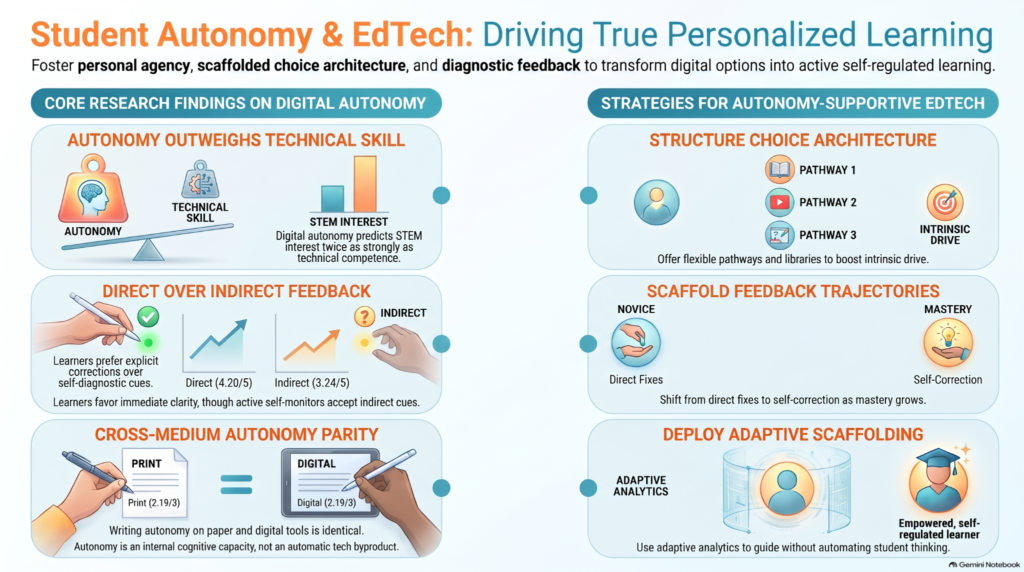
- Autonomy was roughly twice as strong as competence in predicting science enjoyment (=0.08 vs. 0.04) and broad science interest (=0.07 vs. 0.03).
- Autonomy was substantially stronger in predicting science self-efficacy (=0.09 vs. 0.05) and sophisticated epistemological views (=0.13 vs. 0.08).
- Bivariate latent correlations further confirmed that both digital dispositions were most strongly correlated with epistemological beliefs (r=0.16–0.18) and science self-efficacy (r=0.13–0.15), followed by enjoyment and interest (r=0.11–0.13).
Theoretical and Educational Interpretations
- Cross-Domain Transfer of Psychological Need Satisfaction: Grounded in Self-Determination Theory, the findings confirm that fulfilling basic psychological needs in digital environments transfers positively to academic mindsets. Adolescents who experience self-determination when navigating digital tools are more intrinsically oriented, curious, and confident when approaching scientific inquiry.
- Why Autonomy Outweighs Technical Competence: Merely feeling technically competent with digital devices is insufficient if usage is rigidly directed or controlled by adults. Experiencing personal agency—self-directing the choice of software, troubleshooting independently, and exploring digital media without constraint—fosters an exploratory, inquiring mindset that mirrors authentic scientific discovery and reinforces nuanced epistemological understanding.
- Digital Tools as Affordances for Science Learning: Digital media provide simulated environments, computational modeling, and immediate access to evidence. Students who possess both the autonomy and competence to leverage these digital tools feel better equipped to comprehend scientific concepts and view scientific knowledge as evolving rather than fixed.
Policy Recommendations and Practical Implications
- Cultivating Autonomy-Supportive Classroom Instruction:
- Science and technology teachers should avoid controlling, rigid instructional approaches. Instead, they should adopt autonomy-supportive teaching styles: providing clear explanatory rationales, using non-controlling and informational language, offering choices in digital tools, and allowing self-paced problem-solving.
- Professional development initiatives must train teachers in autonomy-supportive classroom management, helping them manage administrative curriculum pressures that otherwise encourage controlling instruction.
- Pre-Service Teacher Education Curriculum Reform: Policy reforms should embed autonomy-supportive pedagogical methods and educational technology integration directly into university teacher preparation programs.
- Autonomy-Supportive Parenting: Because digital usage originates and develops largely at home, parental support that encourages independent exploration and problem-solving—rather than restrictive or punitive digital micro-management—plays a critical role in supporting adolescents’ academic self-efficacy and scientific interest.
- National and School Infrastructure Strategies:
- Beyond physical device access, schools must integrate open-ended, problem-based ICT tasks into standard curricula to foster digital agency.
- National educational authorities should establish partnerships with technology organizations and execute targeted policies to narrow digital divide disparities in under-resourced regions.
Study Limitations and Future Directions
- Cross-Sectional Architecture: The PISA 2015 dataset is observational and cross-sectional, precluding causal inferences regarding whether digital autonomy directly generates scientific interest or whether scientifically curious students gravitate toward autonomous digital exploration. Longitudinal and experimental interventions are required to establish directionality.
- Self-Report Measurement Bias: Data relied on Likert-type student self-reports, which are susceptible to social desirability and positive endorsement tendencies. Subsequent research should incorporate objective digital telemetry (e.g., log files tracking independent software installation or problem-solving behavior).
- Cross-National Cultural and Contextual Variance: Although multi-level controls accounted for national GDP and Gini coefficients, broad cultural, curriculum, and institutional differences across the 42 countries warrant localized, qualitative investigations to examine context-specific nuances.
- Future Modeling Avenues: Researchers should investigate mediation and structural path models to determine whether science dispositions mediate the direct relationship between ICT autonomy/competence and standardized science test performance.
| REFERENCE: Shaljan Areepattamannil, Ieda M. Santos, Adolescent students’ perceived information and communication technology (ICT) competence and autonomy: Examining links to dispositions toward science in 42 countries, Computers in Human Behavior, Volume 98, 2019, Pages 50-58, ISSN 0747-5632, https://doi.org/10.1016/j.chb.2019.04.005. (https://www.sciencedirect.com/science/article/pii/S0747563219301451) |
The relationship between written corrective feedback preference in EFL writing skills and learner autonomy of Vietnamese students in higher education
Conceptual Framework and Research Rationale
- The Educational Imperative of Learner Autonomy: Learner autonomy (LA)—defined as the capacity to assume agency and control over learning objectives, procedures, monitoring, and evaluation—is a central objective in higher education English as a Foreign Language (EFL) instruction. In tertiary settings, autonomy enables students to sustain self-directed, lifelong learning beyond formal classroom boundaries.
- The Interactional Mechanism of Written Corrective Feedback (WCF): In second-language (L2) writing, teacher feedback directs attention to linguistic form and guides text revision. However, corrective feedback does not function in isolation; its developmental efficacy depends heavily on whether students possess the self-regulatory capacity and psychological willingness to interpret error signals and execute meaningful revisions.
- Direct vs. Indirect Feedback Trade-Offs:
- Direct WCF: Provides explicit corrections by crossing out errors and supplying correct target forms. While offering immediate clarity and reducing ambiguity during revision, continuous direct correction risks fostering student passivity and dependence on the instructor.
- Indirect WCF: Signals the location of errors (via underlining, circling, or error codes) without supplying target forms, placing the cognitive burden of diagnosis and self-correction onto the student. While theoretically recognized as an autonomy-supportive practice that stimulates guided problem-solving, it requires greater tolerance for ambiguity and sustained effort.
- Research Gap in Empirical Modeling: Prior studies have linked learner autonomy to revision accuracy or analyzed general student preferences for direct feedback. However, there is limited quantitative research examining how multidimensional learner autonomy relates to preferences for direct versus indirect WCF in higher education within the Global South, specifically in Vietnamese universities.
- Core Research Questions:
- RQ1: What patterns of preference emerge across scenario-based direct and indirect written corrective feedback in EFL writing?
- RQ2: To what extent are multidimensional learner autonomy capacities associated with learners’ preferences for direct and indirect WCF?
Methodology and Empirical Data Architecture
- Sample Composition and Context:
- Quantitative correlational survey design administered to 472 undergraduate students across two universities in Vietnam: Saigon University (SGU; n=241) and Ho Chi Minh City University of Technology and Engineering (UTE; n=231).
- Demographic Breakdown: 262 male students, 200 female students, and 10 students who did not declare gender (retained for general descriptives, correlational, and factor analyses; excluded solely from binary gender comparisons and dummy-coded regression models, leaving N=462).
- Language Background: 217 students reported over 9 years of English study, and 207 self-reported a CEFR B1 proficiency level.
- Instrumentation and Measurement:
- Scenario-Based WCF Preference Instrument:
- Designed around 24 contextualized authentic writing scenarios depicting eight recurring L2 grammatical and lexical error categories (subject-verb agreement, past tense forms, articles/determiners, prepositions, countability/plural marking, adjective/adverb word forms, lexical choice/collocations, and sentence boundary mechanics).
- Scenarios were calibrated across three linguistic complexity levels (A1, B1, B2) with balanced direct and indirect markings. Students rated their preference on a 5-point Likert scale (1 = least preferred to 5 = most preferred).
- Psychometric purification removed three direct items and one indirect item, retaining 9 direct scenarios (=.922) and 11 indirect scenarios (=.943).
- Learner Autonomy Questionnaire:
- Adopted Dang’s (2025b) four-dimension process model of EFL learner autonomy, operationalized with first-person statements on a 5-point Likert scale (1 = never to 5 = always):
- Initiating Learning Opportunities (6 items, =.896): Proactively seeking conversational practice, study resources, and English-speaking environments.
- Monitoring Learning Processes (6 items, =.904): Time management, self-reflection, selecting suitable methods, and using mistakes to guide study.
- Goal Setting and Evaluating Learning (6 items, =.881): Awareness of strengths/weaknesses, effort regulation, and tracking progress.
- Using Technology for Learning (6 items, =.842): Leveraging digital applications, mobile devices, and online communities for language development.
- Confirmatory Factor Analysis (CFA in AMOS) yielded marginal structural fit (2(246)=1116.945,p<.001,2/df=4.54,CFI=.880,TLI=.866,RMSEA=.087), indicating that while dimensions possess strong internal reliability, there is notable latent covariance among subscales (r=.487–.866).
- Adopted Dang’s (2025b) four-dimension process model of EFL learner autonomy, operationalized with first-person statements on a 5-point Likert scale (1 = never to 5 = always):
- Scenario-Based WCF Preference Instrument:
- Analytical Procedures:
- Paired-samples t-tests to evaluate direct versus indirect preference gaps, accompanied by independent t-tests and ANOVAs assessing gender and proficiency differences.
- Bivariate Pearson correlations with 5,000 bias-corrected and accelerated (BCa) bootstrap resamples.
- Two-block hierarchical linear regression models predicting (a) Direct WCF preference, (b) Indirect WCF preference, and (c) Relative Indirect WCF preference (IndirectScore-DirectScore), controlling for gender, institutional affiliation, academic major, and English proficiency in Block 1 before entering the four autonomy dimensions in Block 2. Collinearity diagnostics confirmed acceptable thresholds (VIF<3.0,Tolerance>0.33).
Key Empirical Findings
- General Feedback Preferences (Direct vs. Indirect):
- In alignment with Hypothesis 1 and international feedback literature, students expressed a marked, statistically significant preference for direct WCF over indirect WCF:
- Direct WCF Preference: M=4.040.82.
- Indirect WCF Preference: M=3.071.02.
- The difference was statistically significant with a large effect size ($t(471) = 17.76, p < .001, \text{Cohen’s } d = 0.82, 95\%\text{ CI } [0.86, 1.07]$).
- Learner Subgroup Variations:
- Gender: Preference for direct feedback did not differ between genders (t(460)=-1.58,p=.115,d=-0.15). However, male students reported a statistically significant, slightly higher preference for indirect feedback than female students (M=3.21 vs. 2.94;t(458.15)=-2.90,p=.004,Cohen’sd=-0.27, small effect).
- Proficiency: Self-reported English proficiency was not a statistically significant differentiator for either direct feedback preference (F(4,467)=1.64,p=.163) or indirect feedback preference (F(4,467)=1.60,p=.173).
- Bivariate Correlational Dynamics:
- Learner autonomy dimensions were more consistently and strongly correlated with indirect WCF preference than with direct WCF preference:
- Indirect WCF Correlations: All four autonomy dimensions exhibited statistically significant positive associations (p<.001): Monitoring Learning Processes (r=.251), Using Technology for Learning (r=.229), Initiating Learning Opportunities (r=.219), and Goal Setting/Evaluating (r=.178).
- Direct WCF Correlations: Initiating Learning Opportunities was not significantly associated with direct feedback preference (r=.062,p=.180). Modest positive correlations emerged for Using Technology for Learning (r=.203,p<.001), Goal Setting/Evaluating (r=.148,p<.01), and Monitoring (r=.104,p<.05).
- Hierarchical Regression Models (Unique Predictive Pathways):
- Direct WCF Preference Model:
- The demographic control block explained 3.6% of the variance (R2=.036). Adding learner autonomy explained an additional 4.8% (R2=.048,Fchange=5.958,p<.001; final R2=.084).
- Direct preference was positively predicted by Goal Setting and Evaluating Learning (=.166,B=.179,p=.033) and Using Technology for Learning (=.184,B=.175,p=.003).
- Initiating (=-.049,p=.452) and Monitoring (=-.083,p=.262) were non-significant.
- Indirect WCF Preference Model:
- Demographic controls explained 2.9% of the variance. Adding autonomy dimensions added 9.1% of unique variance (R2=.091,Fchange=11.718,p<.001; final R2=.121).
- Indirect preference was positively predicted by Monitoring Learning Processes (=.227,B=.257,p=.003) and Initiating Learning Opportunities (=.169,B=.208,p=.008).
- Goal Setting/Evaluating (=-.104,p=.172) and Technology Use (=.048,p=.432) were non-significant.
- Relative Indirect Preference Model (Indirect-Direct):
- Learner autonomy added 5.0% of unique variance (R2=.050,Fchange=5.953,p<.001; final R2=.061).
- Relative indirect preference was positively predicted by Monitoring Learning Processes (=.256,B=.168,p=.001) and Initiating Learning Opportunities (=.180,B=.128,p=.006).
- Conversely, Goal Setting and Evaluating Learning was a significant negative predictor (=-.205,B=-.159,p=.009).
Theoretical, Pedagogical, and Cultural Interpretations
- Product-Oriented vs. Process-Oriented Learning Orientations:
- Product-Oriented Profile: Students with strong goal setting, evaluative awareness, and general technology habits favor direct feedback. They perceive teacher-supplied corrections as clear, efficient benchmarks that allow them to confirm accuracy, verify progress, and complete revisions without interpretive ambiguity.
- Process-Oriented Profile: Students who actively initiate learning opportunities and monitor their ongoing study processes show significantly higher openness to indirect feedback. Because indirect feedback requires noticing, hypothesizing, and self-repairing, it resonates with learners accustomed to active problem-solving and self-regulation.
- Feedback Preference as Usability, Not Learning Efficacy: The strong preference for direct feedback (d=0.82) reflects perceived cognitive convenience and immediate clarity rather than proven developmental efficacy. In traditional Vietnamese classrooms where teacher authority is central and lecture-driven instruction is common, students gravitate toward explicit instructor corrections as the most reliable route to error-free writing.
- Autonomy as a Conditional, Non-Binary Interface: The findings challenge the assumption that indirect feedback is universally preferred by or appropriate for all autonomous learners. Rather, different dimensions of learner autonomy align with distinct pedagogical feedback functions.
Pedagogical Recommendations and Study Limitations
- Instructional Recommendations for Tertiary Educators:
- Avoid Abrupt Mandates for Indirect Feedback: Because students predominantly favor direct feedback, instructors should not enforce unassisted indirect feedback without preliminary training, as ambiguity may cause anxiety or task avoidance.
- Staged Feedback Design: Implement a scaffolded feedback trajectory: begin with explicit direct feedback on complex, unfamiliar grammatical structures (supporting comprehensibility and product quality), then gradually transition to coded indirect feedback as learners develop self-monitoring routines.
- Explicit Strategy Training for Self-Correction: Provide structured protocols showing students how to interpret indirect markings, consult reference tools, test revision hypotheses, and log recurring error patterns.
- Methodological Boundaries:
- Scenario-Based Perceptions vs. Live Uptake: The study measured self-reported preference ratings on hypothetical sentence-level prompts rather than observing actual revision behavior, feedback uptake, or longitudinal writing development in live coursework.
- Structural Fit of the Autonomy Construct: Confirmatory factor analysis indicated marginal discriminant validity and substantial latent covariance between monitoring and goal-setting subscales, requiring caution when interpreting isolated subscale coefficients.
- General Technology Framing: The technology subscale measured general digital habits for English learning rather than specific engagement with automated writing evaluation (AWE) or generative AI feedback tools.
- Cross-Sectional Architecture: The correlational design precludes causal claims regarding whether promoting autonomy alters feedback preferences or whether experiencing indirect feedback fosters autonomous habits over time.
| REFERENCE: Tin T. Dang, The relationship between written corrective feedback preference in EFL writing skills and learner autonomy of Vietnamese students in higher education, Ampersand, Volume 17, 2026, 100285, ISSN 2215-0390, https://doi.org/10.1016/j.amper.2026.100285. (https://www.sciencedirect.com/science/article/pii/S2215039026000329) |
Writing autonomy in digital environments: Comparison of middle school students’ writing autonomy perceptions in print and digital environments
Conceptual Framework and Research Rationale
- The Educational Value of Writing Autonomy: Writing autonomy is a fundamental objective in language and literacy education, defined as learners taking full ownership and active responsibility across all phases of the writing process (planning, drafting, monitoring, evaluating, and revising). Cultivating writing autonomy enhances academic engagement, fosters positive attitudes toward composition, nurtures intrinsic motivation, and reduces writing-related anxiety.
- The Transition from Print to Digital Composing: For centuries, writing occurred primarily through physical print media (pen and paper). In contemporary educational settings, digital tools, mobile messaging applications, collaborative platforms, and artificial intelligence technologies have introduced new multimodal writing environments. While digital environments offer affordances such as automated grammar checking, ease of revision, and immediate audience access, they may also introduce cognitive distractions, fragmented attention, and reliance on informal shorthand.
- Theoretical Foundation in Autonomy Theory: Grounded in autonomy theory and self-regulated learning frameworks (e.g., Benson, Little, Zimmerman), learning autonomy is conceptualized as an internalized, cyclical self-regulatory capacity. The authors hypothesize that autonomy is fundamentally a learner-internal, transferable attribute rather than an artifact of a specific medium. Consequently, students who exhibit autonomous self-regulation in print tasks should display comparable autonomous behaviors in digital writing contexts.
- Core Research Objectives:
- Identify middle school students’ daily writing habits, platforms, and time expenditures across print and digital media.
- Measure and compare students’ overall and sub-dimensional levels of writing autonomy in print versus digital environments.
- Examine whether writing autonomy in either environment differs significantly by demographic characteristics (gender and grade level) or writing frequency.
- Determine the correlation and cross-medium transferability between writing autonomy in print and digital environments.
Methodology and Analytical Architecture
- Research Design: A quantitative relational survey model designed to describe existing conditions, assess mean differences across subgroups, and identify linear relationships among variables without experimental manipulation.
- Participants and Sampling:
- Conducted at a public middle school located in Bayburt, Turkey, serving students from middle socioeconomic backgrounds.
- Sample consisted of 301 middle school students enrolled in grades 5 through 8 (53.2% female [n=160], 46.8% male [n=141]).
- Grade distribution was balanced: 74 fifth graders, 75 sixth graders, 75 seventh graders, and 77 eighth graders.
- A priori power analysis using G*Power 3.1 (f=0.25,r=0.30,=0.05,power=0.80) established minimum sample size thresholds of 85 participants for t-tests/correlations and 180 for one-way ANOVA, confirming the 301-student sample was adequately powered.
- Instrumentation and Measurement Tools:
- Writing Autonomy Scale (WAS): Developed by Tekşan & Süğümlü (2018), comprising 22 items rated on a 3-point Likert scale (“Yes” = 3, “Partially” = 2, “No” = 1) across three sub-dimensions:
- Motivation and Attitude (7 items).
- Planning and Process (8 items).
- Sharing and Evaluation (7 items).
- Administered in two distinct versions: one framed around traditional print media (pen and paper) and one framed around digital environments (computers, tablets, phones).
- Internal consistency reliability in the current sample was high: Cronbach’s =0.89 for print writing autonomy and =0.90 for digital writing autonomy.
- Personal Information Form: Collected demographic data (grade, gender) and detailed daily writing habits, writing purposes, daily digital writing duration, and platform usage.
- Writing Autonomy Scale (WAS): Developed by Tekşan & Süğümlü (2018), comprising 22 items rated on a 3-point Likert scale (“Yes” = 3, “Partially” = 2, “No” = 1) across three sub-dimensions:
- Evaluation Intervals and Scale Scoring:
- Scale range intervals were established using the formula (n-1)/n=(3-1)/3=0.66:
- Low Autonomy (“No”): 1.00-1.66.
- Moderate Autonomy (“Partially”): 1.67-2.33.
- High Autonomy (“Yes”): 2.34-3.00.
- Scale range intervals were established using the formula (n-1)/n=(3-1)/3=0.66:
- Statistical Analysis Protocol:
- Data screened for normality using Shapiro-Wilk tests, mean-median comparisons, and skewness/kurtosis coefficients (all values fell within 1.5, satisfying parametric assumptions). Homogeneity of variance was verified via Levene’s test (p>.05).
- Descriptive statistics (frequencies, percentages, means, standard deviations) profiled writing habits.
- Independent-samples t-tests evaluated gender differences and compared overall print versus digital autonomy.
- One-way Analysis of Variance (ANOVA) with Tukey’s HSD post-hoc tests examined differences across grade levels and daily writing durations.
- Pearson product-moment correlation analysis (r) determined the relationship between print and digital autonomy.
Key Empirical Findings
- Student Writing Habits Across Media:
- Digital Environment Duration and Platforms:
- 100% of participants engaged in digital writing daily: 28.24% wrote for 0–30 minutes, 31.23% for 1 hour, 24.92% for 1–3 hours, and 15.61% for 3 or more hours per day.
- Mobile messaging applications (e.g., WhatsApp, SMS) represented the primary digital writing medium (f=211), followed by social media posts (f=173), websites/blogs (f=127), office word-processing software (f=61), and email (f=6).
- Print Media Usage and Purpose:
- 65.8% (n=198) of students reported regular print writing outside of school hours, predominantly to record information and complete homework (f=133), calculate/plan schedules (f=57), compose creative prose/poetry (f=54), and communicate via handwritten letters (f=51).
- 34.2% (n=103) reported no habitual print writing outside of mandatory school tasks.
- Parity in Writing Autonomy Across Print and Digital Environments:
- Middle school students exhibited moderate overall levels of writing autonomy that did not differ significantly between print and digital environments (t=1.650,p=.099):
- Print Writing Autonomy: Overall Mean =2.08180.4617 (Moderate / “Partially”).
- Motivation and Attitude: M=2.03610.5314.
- Planning and Process: M=2.22510.5242.
- Sharing and Evaluation: M=1.96390.5956.
- Digital Writing Autonomy: Overall Mean =2.02070.4476 (Moderate / “Partially”).
- Motivation and Attitude: M=1.84530.5137.
- Planning and Process: M=2.20310.5356.
- Sharing and Evaluation: M=1.98770.5970.
- Print Writing Autonomy: Overall Mean =2.08180.4617 (Moderate / “Partially”).
- Across both formats, students scored highest in planning/process and lowest in sharing/evaluation, indicating that while students partially organize their writing tasks, they remain hesitant to independently edit, share, or self-evaluate their drafts.
- Impact of Writing Habits and Duration on Autonomy:
- Daily time spent writing in digital environments did not significantly affect digital writing autonomy (F=0.188,p=.905). Students writing for >3 hours daily displayed autonomy levels comparable to those writing <30 minutes.
- Similarly, habitual print writing outside class did not produce statistically significant differences in print writing autonomy (t=-2.086,p=.038; note: text narrative classifies this as non-significant in Table 9 interpretation, p>.05). Behavioral frequency alone does not build self-regulatory competence.
- Grade-Level and Developmental Disparities:
- Print Writing Autonomy by Grade: Exhibited a statistically significant difference across grade levels (F=4.248,p=.006). Post-hoc Tukey tests confirmed that 8th graders (M=2.2161) possessed significantly higher print writing autonomy than 5th graders (M=2.0074) and 6th graders (M=1.9824).
- Digital Writing Autonomy by Grade: Showed no statistically significant difference across grades (F=0.092,p=.964), with 5th through 8th graders demonstrating flat, equivalent mean scores (M2.00–2.04).
- Gender-Based Differences:
- Print Environment: Male students demonstrated statistically significant higher print writing autonomy than female students (M=2.1447 vs. 2.0264;t=-2.233,p=.026).
- Digital Environment: Writing autonomy did not differ significantly by gender (Mfemale=2.0582 vs. Mmale=1.9781;t=1.554,p=.121), indicating that digital writing tools foster gender parity.
- Cross-Medium Transferability:
- Pearson correlation analysis revealed a statistically significant, moderate positive relationship between writing autonomy in print and digital environments (r=0.387,p<.001).
- Students who demonstrate higher self-regulation, goal planning, and revision monitoring when writing on paper consistently transfer these autonomous behaviors when composing on digital keyboards and mobile devices.
Theoretical and Pedagogical Interpretations
- Autonomy as an Internal Cognitive Capacity, Not an Environmental Byproduct: The empirical equivalence between print (M=2.08) and digital (M=2.02) scores indicates that digital technology is not an automatic catalyst for learner independence. While digital platforms provide spell-checkers, editing ease, and cloud sharing, these affordances do not spontaneously enhance metacognitive self-regulation unless instructional scaffolding explicitly teaches learners how to self-direct their writing.
- Behavioral Frequency vs. Autonomous Regulation: The finding that heavy daily digital writing (>3 hours) failed to predict higher autonomy aligns with Bandura’s social cognitive theory. Digital text generation among adolescents is frequently mechanical, rapid, and conversational (e.g., instant messaging, social media reactions). These informal communicative exchanges lack the deliberate planning, sustained drafting, and critical revision required for academic writing autonomy.
- Divergence in Developmental Trajectories: Print writing autonomy grew across grade levels (peaking in Grade 8), reflecting years of cumulative, formal school-based writing instruction on paper. In contrast, digital writing autonomy remained stagnant from Grade 5 to Grade 8, revealing a curriculum gap: schools regularly teach pen-and-paper composition but rarely provide formal instruction in digital composing strategies, self-regulated digital drafting, or responsible use of AI feedback tools.
- Digital Tools as Equalizing Spaces: While boys scored higher in print autonomy, gender gaps dissolved entirely in digital spaces. The ubiquitous familiarity of mobile and keyboard interfaces provides an accessible, non-threatening writing medium that neutralizes traditional gender differences in literacy attitudes.
Practical Recommendations and Study Limitations
- Curriculum and Instructional Recommendations:
- Explicit Autonomy Objectives: National and regional language curricula must incorporate learning outcomes specifically targeting writing autonomy—teaching students how to independently plan, set writing goals, choose revision strategies, and evaluate drafts.
- Textbook and Worksheet Redesign: Educational materials should integrate self-assessment rubrics, goal-setting reflection prompts, and process-oriented checklists that apply to both handwritten and typed essays.
- Structured AI and Digital Tool Integration: Writing instruction should teach students how to actively engage with digital writing and automated feedback tools (e.g., Grammarly, QuillBot, ChatGPT) as self-correction assistants rather than passive text generators.
- Teacher Professional Development: Educators need targeted training on how to design autonomy-supportive writing lessons, manage peer-review workshops, and scaffold digital feedback in middle school classrooms.
- Methodological Limitations:
- Sample Scope: Restricted to 301 students from a single public middle school in Bayburt, Turkey, limiting generalizability to wider international or socioeconomically diverse student populations.
- Omission of Digital Literacy and AI Metrics: The study did not administer objective digital literacy performance tests or measure students’ active use of generative AI writing tools.
- Self-Report Instrumentation: Data were gathered through self-report questionnaires, which may be susceptible to social desirability and subjective perception bias.
- Absence of Affective Measures: The research did not concurrently measure writing self-efficacy, writing apprehension/anxiety, or intrinsic writing motivation.
| REFERENCE: Aslı Maden, Sedat Maden, Aydın Önal, Writing autonomy in digital environments: Comparison of middle school students’ writing autonomy perceptions in print and digital environments, Acta Psychologica, Volume 264, 2026, 106503, ISSN 0001-6918, https://doi.org/10.1016/j.actpsy.2026.106503. (https://www.sciencedirect.com/science/article/pii/S0001691826003045) |
CONCLUSION
Looking at where educational technology is heading, it is easy to become captivated by the sheer sophistication of predictive models and artificial intelligence. Yet, whenever I step away from the spreadsheets and dashboards to reflect on how real learning happens, the fundamental human element remains undeniable. Personalized education is not a technological luxury that software delivers to a passive recipient; it is an active, ongoing partnership between learner curiosity and an environment that respects their agency.
The research is clear that technical competence alone does not foster deep scientific inquiry or academic resilience. A student can be completely proficient with digital hardware, yet remain utterly disengaged if they feel that their digital journey is micro-managed and devoid of personal voice. True learning breakthroughs happen when we pair reliable digital tools with genuine pedagogical choice. As educators and curriculum designers, our challenge moving forward is not just to select better software or track more granular usage logs.
We need to intentionally construct learning spaces—both online and face-to-face—that teach students how to set their own goals, embrace productive struggle, and view digital tools as creative instruments rather than automated shortcuts. When we strike that balance, technology stops being a digital substitute for the lecture and becomes what it was always meant to be: an empowering catalyst for lifelong, self-directed discovery.
