Over my decade in engineering lecture halls and labs, I have watched educational technology transition from an experimental novelty into an everyday institutional mandate. Too often, administrative discussions treat blended learning as a magic bullet—a mere upload of slide decks, recorded lectures, or digital reading lists that supposedly modernizes a curriculum overnight.
From where I stand at the instructor’s podium, true blended learning requires a far more intentional engineering mindset. It is not about replacing human instruction with digital screens, nor is it about dumping raw files onto a learning management system and hoping students navigate them independently. Real efficacy begins when digital modules intentionally do what they do best—allowing students to review derivations, manipulate simulations, and pause complex explanations at their own speed—so that valuable contact hours in the physical room can be devoted entirely to active design, guided problem-solving, and deep diagnostic discussions.
Whenever institutions attempt to shortcut this transition without restructuring the actual classroom workflow, both students and educators end up feeling isolated rather than empowered. As we dive into what current research says across both secondary and higher education, we have to look past the marketing hype and examine whether these hybrid models genuinely deliver deeper comprehension and resilient practical competence where it counts most.
Research indicates that blended learning greatly enhances educational outcomes in both K–12 and higher education settings. Studies reveal that it fosters personalized learning experiences, boosts student engagement, and improves academic performance. The combination of in-person instruction and online components allows for adaptive pacing and collaborative projects, which are shown to enhance critical thinking skills. Evidence suggests these benefits contribute to higher test scores and overall grades, encouraging further exploration into its varied applications across educational contexts.
KEY TAKEAWAYS
- Blended learning enhances academic performance, leading to improved test scores and higher grades in both K–12 and higher education settings.
- Personalized learning experiences in blended environments cater to individual needs, promoting adaptive pacing and tailored instructional strategies.
- Enhanced engagement and retention rates are observed in blended learning, as diverse instructional methods keep students actively involved.
- Collaboration through online platforms fosters essential social skills and teamwork among students across educational levels.
- Ongoing teacher training is crucial for effective blended learning, ensuring educators can utilize technology and pedagogical techniques effectively.
THE BASICS OF BLENDED LEARNING: WHAT YOU NEED TO KNOW
According to the National Education Association, blended learning is an educational approach that thoughtfully combines traditional face-to-face classroom instruction with online or digital class activities. This model has gained significant momentum in recent years, accompanied by the increased integration of technology in K-12 schools. It combines digital and in-person instruction into one complete educational experience where each part improves the other. It also offers components that neither method can provide on its own.
Although blended learning has gained significant attention in educational settings, its fundamental principles remain important for understanding its effectiveness. Blended learning models combine traditional face-to-face instruction with online learning components, creating a dynamic educational approach. This integration of technology facilitates diverse learning experiences, accommodating various learning styles and preferences.
Research indicates that effective technology integration is critical for maximizing the benefits of blended learning, as it provides opportunities for personalized learning pathways and immediate feedback.
Furthermore, the successful implementation of blended learning depends on educators’ ability to design meaningful learning activities that seamlessly incorporate digital resources. By doing so, educators can foster an engaging environment that encourages student collaboration and self-directed learning.
Essentially, a solid grasp of blended learning models and the principles of technology integration is essential for educators seeking to enhance teaching effectiveness and ultimately serve the diverse needs of their students.
Key Benefits of Blended Learning for K–12 Students
Blended learning offers significant advantages for K–12 students, particularly through personalized learning experiences that cater to individual needs and learning styles. Teachers can also explore practical instructional resources and teaching materials from the engineering teacher shop to support curriculum integration, enrich classroom activities, and make blended learning experiences more engaging for students.
Research indicates that this approach can enhance student engagement by integrating diverse instructional methods and technologies.
As a result, blended learning has the potential to improve both academic outcomes and student satisfaction.
Personalized Learning Experiences
Personalized learning experiences have emerged as a significant advantage of blended learning models in K–12 education. This approach allows educators to implement adaptive assessments that cater to the unique learning needs of each student.
By utilizing data-driven insights, teachers can identify individual strengths and weaknesses, enabling them to tailor instruction accordingly. In addition, blended learning facilitates individualized pacing, allowing students to progress at their own speed rather than adhering to a fixed timeline.
This flexibility promotes mastery of concepts, fostering a deeper understanding of material. Research indicates that such personalized experiences can lead to improved academic outcomes and increased student satisfaction, highlighting the potential of blended learning to create a more responsive and effective educational environment.
Enhanced Engagement Opportunities
A significant advantage of blended learning in K–12 education is its ability to enhance student engagement through diverse instructional methods.
Research indicates that the integration of interactive platforms fosters active participation, allowing students to engage with content in meaningful ways. These platforms often include multimedia resources, simulations, and discussion forums that cater to various learning styles.
Additionally, blended learning promotes collaborative projects, which encourage teamwork and communication among peers. Such projects not only deepen understanding of subject matter but also build essential social skills.
Research Findings: What Studies Show About Blended Learning Effectiveness?
Research studies on blended learning have indicated notable effects on academic performance, with many students demonstrating improved outcomes compared to traditional learning environments.
Additionally, data suggests that blended learning approaches can enhance engagement and retention rates, fostering a more interactive and personalized educational experience. Combining blended learning data with predictive analytics in education can help institutions identify student performance patterns, anticipate learning challenges, and develop timely interventions to improve academic outcomes.
These findings contribute to the ongoing evaluation of blended learning as a viable instructional strategy in educational settings.
Academic Performance Impact
While blended learning has gained traction in educational settings, its impact on academic performance warrants careful examination.
Research indicates that blended learning can positively influence academic achievement and learning outcomes across various educational levels. For instance, studies have shown that students engaged in blended learning environments often demonstrate improved test scores and higher overall grades compared to those in traditional settings.
This improvement is attributed to the personalized nature of blended learning, which allows for adaptive pacing and diverse instructional strategies. Additionally, evidence suggests that blending online and face-to-face modalities can enhance critical thinking skills and foster deeper understanding of content.
Consequently, while the effectiveness of blended learning varies, it holds significant potential for enhancing academic performance in K–12 and higher education.

ENGAGEMENT AND RETENTION RATES
Looking at the research evidence—particularly studies examining practical domains like clinical nursing procedures and physical mechanics—mirrors the exact challenges I see every day in technical higher education. A recurrent trap with blended learning is the assumption that because a student can master an online multiple-choice quiz or visualize a process on a tablet screen, they can execute that skill under real-world pressure. In engineering, a student can watch a dozen micro-lectures on circuit diagnostics or structural analysis, but that digital exposure never replaces the tactile feedback of handling test equipment, debugging an oscillating waveform on an oscilloscope, or physically wiring a breadboard.
Digital components excel at front-loading cognitive schemas and safety protocols asynchronously. When students show up to the laboratory already possessing an accurate theoretical framework, their working memory is liberated from decoding basic steps, allowing them to engage in higher-order troubleshooting and collaborative iteration. However, this balance fails completely when institutions underinvest in faculty preparation.
Designing integrated flipped workflows requires substantial design time, authentic mentorship structures, and clear rubrics. Blended delivery cannot simply shift the logistical burden of instruction onto overloaded students and instructors; it must be deliberately calibrated to support hands-on mastery.
Engagement and retention rates in blended learning environments have emerged as critical factors in determining the overall effectiveness of this instructional approach.
Research indicates that blended learning models enhance student motivation by providing varied instructional methods and opportunities for interaction. This increased motivation often correlates with higher learning retention, as students feel more invested in their educational experience.
Studies demonstrate that when students engage with content through both online and face-to-face modalities, they are more likely to retain information and apply it in practical contexts. Consequently, institutions implementing blended learning strategies may see improved retention rates, fostering a more committed learning community.
Enhancing Higher Education Experiences With Blended Learning
Blended learning is an approach to training and education that combines face-to-face, classroom-based learning with distance learning, or eLearning.
A considerable number of higher education institutions are increasingly adopting blended learning models to enhance student experiences and outcomes. This approach integrates traditional face-to-face instruction with online coursework, facilitating greater flexibility and accessibility. Research indicates that such technology integration considerably improves student satisfaction by accommodating diverse learning preferences.
| Benefits of Blended Learning | Evidence-Based Findings | Implications for Institutions |
| Increased Flexibility | Students report higher satisfaction levels due to scheduling options. | Enhances enrollment and retention rates. |
| Personalized Learning | Tailored online resources cater to individual learning styles. | Promotes differentiated instruction. |
| Improved Collaboration | Online platforms facilitate peer interaction and support. | Fosters community and engagement. |
The effective implementation of blended learning models not only elevates the academic experience but also prepares students for a technology-driven workforce, ultimately benefiting educational institutions and their communities.
Challenges of Blended Learning Implementation
The blended learning model means that students can do much of their work and learning anywhere and anytime they have internet access. Students can take as long as they need on any particular subject, unhindered by the learning speeds of their fellow students.
Although blended learning offers numerous benefits, its implementation can present significant challenges for higher education institutions. One major hurdle is the effective integration of technology, which requires robust infrastructure and reliable access for both students and faculty. This process can be resource-intensive, necessitating substantial financial investments and ongoing maintenance.
Additionally, the success of blended learning heavily relies on thorough teacher training. Educators must not only be adept in utilizing technology but also in adapting pedagogical strategies to facilitate a seamless blend of in-person and online learning experiences. Research indicates that without adequate training, teachers may struggle to engage students effectively, leading to suboptimal outcomes.
Moreover, disparities in technological proficiency among students can exacerbate existing inequalities, complicating the implementation of blended learning. Addressing these challenges is essential for higher education institutions aiming to harness the full potential of blended learning environments.
Effective Strategies for Implementing Blended Learning in K–12 and Higher Education
Implementing effective blended learning strategies in K–12 and higher education requires a systematic approach that prioritizes curriculum alignment and learner-centered practices. Research indicates that successful curriculum integration is essential, allowing educators to seamlessly blend traditional and digital content. This approach guarantees that learning objectives are met while engaging students through diverse formats.
Moreover, robust teacher training is pivotal in fostering confidence and competence in utilizing blended learning tools. Professional development programs should emphasize pedagogical techniques that enhance both face-to-face and online instruction. Evidence suggests that when teachers feel equipped, they are more likely to innovate and tailor their teaching strategies to meet individual student needs.
Additionally, regular feedback mechanisms should be established to assess the effectiveness of blended learning initiatives. By continuously evaluating and refining these strategies, educational institutions can create an adaptive learning environment that promotes student success and achievement in both K–12 and higher education settings.
Future Trends in Blended Learning for Education
Emerging trends in blended learning for education are shaping the future landscape of teaching and learning across various educational levels.
Future technologies, such as artificial intelligence and machine learning, are playing a pivotal role in the evolution of blended learning environments. These technologies facilitate adaptive learning, allowing educational content to be customized to individual student needs, thereby enhancing engagement and comprehension.
Research indicates that adaptive learning platforms can considerably improve learning outcomes by providing tailored feedback and resources based on real-time data analysis of student performance. Evaluating adaptive learning systems effectiveness helps educators determine whether personalized content, real-time feedback, and data-driven adjustments are improving student engagement and academic performance.
Additionally, the integration of virtual and augmented reality into blended learning frameworks is expected to enrich educational experiences, providing immersive learning opportunities that traditional methods cannot offer.
As educators and institutions continue to embrace these innovations, a more personalized and effective learning ecosystem is anticipated, ultimately aiming to serve diverse learner populations more effectively.

RELATED STUDIES ABOUT BLENDED LEARNING EFFECTIVENESS
In the landscape of education, blended learning emerges as a bridge connecting traditional practices with modern technology, akin to a river merging with the sea. Research indicates that this approach can enhance student engagement and learning outcomes, yet challenges remain, like stones in the water’s path. As educators navigate these currents, adopting effective strategies will be essential to harness the full potential of blended learning. Ultimately, the journey promises growth and transformation for both students and institutions alike.
Blended learning in physical education: Examining the effectiveness of the “did you know?” model in gymnastics
Conceptual Framework and Research Rationale
- Pedagogical Complexities in Secondary Gymnastics: Gymnastics instruction in secondary school Physical Education (PE) is characterized by high technical difficulty, precise coordination demands, and acute safety risks. Students regularly experience high attentional and cognitive load, struggling to simultaneously process verbal safety instructions, spatial movement cues, and performance anxiety. Traditional direct-instruction models frequently fail to scaffold these demands within limited in-class practice time.
- Blended Learning in Skill-Based PE: While blended learning models have expanded across higher education, their integration into primary and secondary physical education remains limited. Prior interventions have shown that augmenting in-person sessions with digital resources can enhance tactical and technical execution in sports. However, empirical evaluations of social media-mediated micro-learning models in high-school gymnastics remain scarce.
- Theoretical Foundations:
- Dual Coding Theory: Postulates that information processing improves when verbal/textual channels and non-verbal visual channels are stimulated simultaneously. The “Did You Know?” (DYK) model presents technical movement cues by pairing concise text with visual diagrams and photographs.
- Social Presence Theory: Suggests that media richness and interactive online environments (e.g., social media profiles, comments, likes) foster perceived connectivity and community, enhancing learner engagement.
- Self-Determination Theory (SDT): Posits that autonomous motivation flourishes when instruction satisfies basic psychological needs for autonomy (self-paced review), competence (pre-practice technical clarity), and relatedness (interactive group discussions).
- Core Research Hypotheses:
- Hypothesis 1 (Motor Learning): Students receiving DYK blended instruction will show significantly greater gains in gymnastics floor routine performance than those receiving traditional in-person instruction.
- Hypothesis 2 (Knowledge Retention): DYK students will achieve significantly higher gains on gymnastics-specific written knowledge assessments.
- Hypothesis 3 (Situational Motivation): DYK instruction will induce a significant increase in autonomous motivation and a decrease in controlled motivation, whereas traditional instruction will maintain or worsen controlled motivational orientations.
Methodology and Experimental Design
- Sample and Setting:
- Conducted at “Monji Slim” secondary public school in Sfax, Tunisia, involving 44 second-year secondary students (Grade 10 equivalent; mean age 17.200.40 years; 21 boys, 23 girls).
- A quasi-experimental, two-group pre-post design was deployed across two pre-existing intact classes assigned via coin toss to either the experimental “Did You Know?” (DYK) group (n=21) or the active control Traditional Approach (TA) group (n=23).
- Both groups exhibited equivalent baseline motor ability in gymnastics prior to intervention (p>0.05).
- Intervention Protocol (6-Week Timeline):
- Both groups attended identical, weekly 2-hour practical gymnastics sessions in the school gymnasium led by the same certified PE teacher (16 years of experience), who was blinded to research hypotheses to prevent Pygmalion/expectancy bias.
- Traditional Approach (TA) Group: Followed official Tunisian curriculum guidelines using standard direct instruction (live teacher demonstrations, verbal cues, and in-person corrective feedback) without digital supplementation.
- Did You Know? (DYK) Group: Received identical in-person instruction supplemented by a private, dedicated Facebook group. Two bilingual (French and Arabic) DYK infographic images were posted each week (12 total across the intervention), published 48 hours and 24 hours prior to practical classes to prime upcoming movements (e.g., center of gravity in handstands, hand placement in cartwheels, neck safety in rolls). Posts remained accessible 24/7 for asynchronous review.
- Outcome Measures and Instrumentation:
- Motor Performance (Psychomotor Domain): A standardized floor routine evaluated by four certified, independent gymnastics judges using a 20-point technical rubric assessing execution, precision, and form deductions. Inter-rater reliability was high (Fleiss’ Kappa =0.84 at pre-test; =0.91 at post-test).
- Knowledge Retention (Cognitive Domain): A 10-item multiple-choice written assessment (20 points maximum) covering biomechanical principles, safety rules, execution phases, and judging criteria, validated by expert panels (Content Validity Index [CVI]=0.85) with guessing penalties to discourage random choices.
- Situational Motivation (Affective Domain): The 16-item Situational Motivation Scale (SIMS; 7-point Likert scale; translated and validated in French/Arabic, CVI=0.92,=0.81–0.86), deriving two composite indices:
- Autonomous Motivation Index (AMI): (Intrinsic Motivation + Identified Regulation) / 2.
- Controlled Motivation Index (CMI): (External Regulation + Amotivation) / 2.
- Statistical Analysis: Non-parametric methods were applied due to violations of normality (Shapiro-Wilk p<0.05) and homoscedasticity (Levene’s test p<0.05). The Aligned Rank Transform (ART) for non-parametric factorial repeated-measures ANOVA evaluated Group Time interaction effects, accompanied by post-hoc Wilcoxon signed-rank tests with effect size benchmarks (r and partial eta-squared p2).
Key Empirical Findings
- Motor Skill Acquisition (Floor Routine Performance):
- ART factorial ANOVA revealed a significant main effect of time (F(1,42)=123.46,p<0.001,p2=0.74) and a statistically significant Group Time interaction (F(1,42)=12.70,p<0.001,p2=0.23, large effect).
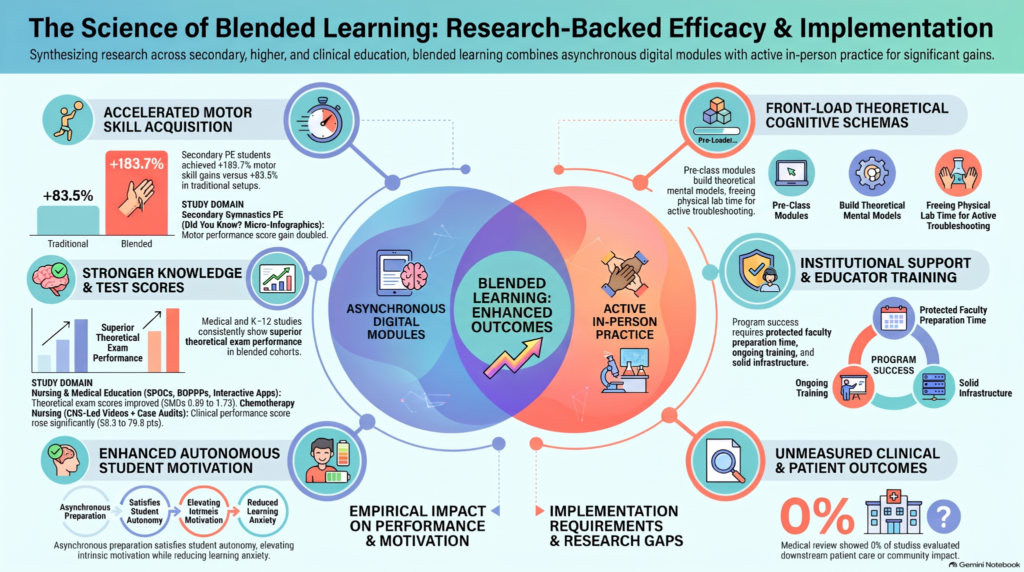
- DYK Group: Improved from a pre-test score of 3.382.55 to a post-test score of 9.593.23 points out of 20 (Mean Gain =+6.213.63 points; $+183.7\%$ increase, p<0.001,r=0.87).
- TA Group: Improved from a pre-test score of 3.822.65 to a post-test score of 7.023.51 points out of 20 (Mean Gain =+3.191.73 points; $+83.5\%$ increase, p<0.001,r=0.85).
- The blended DYK model nearly doubled the point gain achieved by traditional direct instruction alone.
- Gymnastics Knowledge Retention:
- ART analysis demonstrated a significant main effect of time (F(1,42)=37.98,p<0.001,p2=0.47) and a significant Group Time interaction (F(1,42)=4.57,p<0.05,p2=0.098, medium effect).
- DYK Group: Increased from a baseline of 9.192.38 to 13.043.35 points out of 20 (Mean Gain =+3.852.93 points; $+41.9\%$ increase, p<0.001,r=0.88).
- TA Group: Increased from a baseline of 9.132.86 to 11.002.40 points out of 20 (Mean Gain =+1.863.20 points; $+20.4\%$ increase, p<0.05,r=0.73).
- Motivational Trajectories (Divergent Affective Patterns):
- Autonomous Motivation Index (AMI):
- DYK Group experienced a statistically significant increase in autonomous motivation (3.421.594.331.47;z=3.35,p<0.001,r=0.73, large effect).
- TA Group experienced a statistically significant decline in autonomous motivation (3.981.582.941.47;z=3.33,p<0.001,r=0.69, large effect).
- Controlled Motivation Index (CMI):
- DYK Group exhibited a statistically significant reduction in controlled motivation (4.011.842.861.34;z=2.90,p<0.01,r=0.63).
- TA Group exhibited a statistically significant increase in controlled motivation (2.610.973.611.23;z=3.75,p<0.001,r=0.78).
Theoretical and Pedagogical Interpretations
- The Virtuous Cycle of Blended Physical Learning: The DYK model establishes a synergistic cycle across cognitive, affective, and motor domains. By front-loading biomechanical concepts and safety cues through dual-coded visual infographics prior to class, students enter the gymnasium with an accurate mental representation (cognitive blueprint) of the skill. This reduces in-class cognitive overload, freeing working memory to focus on physical execution and kinesthetic adjustments.
- Cognitive Preparation Over Mere Practice Duration: The DYK group did not receive additional physical practice time in the gymnasium. Rather, asynchronous preparation maximized the efficiency of in-person training, shifting students from “failing/novice” levels to demonstrated competency.
- Psychological Need Fulfillment in High-Stakes Sports: Gymnastics often generates performance anxiety and fear of failure among adolescents. In the traditional control group, increasing acrobatic complexity without external cognitive scaffolding elevated feelings of pressure and helplessness, driving down intrinsic interest. Conversely, the DYK format supported autonomy through self-paced learning, built competence through pre-practice mastery, and fostered relatedness via familiar peer-learning dynamics on social media.
Practical Recommendations and Study Limitations
- Implications for Physical Education Curricula:
- Low-Cost Asynchronous Scaffolding: Educators can leverage existing social media platforms (such as private groups) to deliver modular, micro-learning infographics, overcoming the logistical hurdles and low student adoption rates of formal institutional Learning Management Systems (LMS).
- High Return on Instructional Investment: Although creating initial digital visual assets requires upfront planning time, the materials are reusable across semesters, reducing the need for repetitive remedial instruction during live classes.
- Methodological Limitations:
- Quasi-Experimental Design: Administrative school constraints prevented individual-level randomization, leaving open the potential for unobserved cluster-level variance across intact classes.
- Time-on-Task Confounding: Because the control group did not receive an alternative digital reading assignment (“attention control”), observed gains reflect a combination of the blended format and additional total instructional exposure.
- Short Window and Novelty Effects: The 6-week intervention duration did not assess long-term motor skill retention, and initial gains may partly reflect novelty or Hawthorne effects from using social media for schoolwork.
- Analytics Granularity: Tracking was limited to binary “Seen by” indicators on Facebook, without objective logs of viewing duration or interaction depth.
| REFERENCE: Ahmed Ghorbel, Hiba Abdelkefi, Mohamed Yaakoubi, Omar Trabelsi, Liwa Masmoudi, Katja Weiss, Thomas Rosemann, Beat Knechtle, Adnene Gharbi, Blended learning in physical education: Examining the effectiveness of the “did you know?” model in gymnastics, Acta Psychologica, Volume 263, 2026, 106284, ISSN 0001-6918, https://doi.org/10.1016/j.actpsy.2026.106284. (https://www.sciencedirect.com/science/article/pii/S0001691826000831) |
The effectiveness of blended learning in nursing and medical education: An umbrella review
Conceptual Framework and Research Rationale
- The Evolution of Blended Learning in Health Professions: With the expansion of digital education in the post-COVID-19 era, traditional lecture-based instructional formats—dominated by unidirectional teacher-to-student knowledge transmission—are increasingly seen as insufficient for meeting clinical training needs. Purely online learning provides temporal flexibility but can introduce challenges related to student isolation, lack of self-regulation, and variable instructional quality. Blended learning (BL) integrates asynchronous online learning platforms (e.g., Small Private Online Courses [SPOC], Massive Open Online Courses [MOOC], Rain Classroom, and the Bridge-in/Objective/Pre-assessment/Participatory/Post-assessment/Summary [BOPPPS] model) with in-person clinical and laboratory sessions to leverage the advantages of both modalities.
- Controversies Surrounding Educational Efficacy: While prior primary studies report that blended instruction improves academic performance, knowledge retention, and student self-confidence, critics point out notable drawbacks. These include substantial initial preparation time, variable faculty digital literacy, and high demands on student self-directed learning, which can hinder progress among underprepared learners.
- The Need for an Umbrella Review: Although numerous systematic reviews and meta-analyses have evaluated blended learning across health professions, they exhibit marked heterogeneity in methodological rigor, reporting standards, and outcome metrics. No comprehensive umbrella review (a systematic review of existing systematic reviews) had synthesized this body of evidence.
- Core Research Objectives:
- Systematically synthesize evidence from existing systematic reviews and meta-analyses on the effectiveness of blended learning compared to traditional learning in nursing and medical education.
- Evaluate the methodological reporting quality of the included systematic reviews using the AMSTAR 2 critical appraisal tool.
- Map learning outcomes across short-term and long-term educational tiers using the modified Kirkpatrick Model.
- Identify differences between nursing and medical education research to provide evidence-based recommendations for curriculum design, particularly in the Asia-Pacific region.
Methodology and Analytical Framework
- Study Design and Reporting Guidelines: An umbrella review conducted in accordance with the Preferred Reporting Items for Systematic Reviews and Meta-Analyses (PRISMA) guidelines.
- Search Strategy and Information Sources:
- Five major biomedical and educational databases were searched from inception through October/December 2024: PubMed, Web of Science, Cochrane Library, China National Knowledge Infrastructure (CNKI), and the VIP Chinese Science and Technology Journal Database.
- Search terms combined controlled vocabulary and free-text keywords spanning blended learning, flipped classroom, medical education, nursing education, systematic review, and meta-analysis.
- Inclusion and Exclusion Criteria:
- Inclusion: Systematic reviews and meta-analyses evaluating undergraduate, graduate, or professional students in nursing, clinical medicine, Chinese medicine, or allied health programs; interventions using blended learning (combining online and face-to-face instruction); control groups receiving traditional offline instruction; and reporting outcomes such as exam performance, clinical skills, satisfaction, or self-directed learning.
- Exclusion: Protocols, conference abstracts, narrative literature reviews, network meta-analyses, non-medical training, studies lacking extractable quantitative data, and non-English or non-Chinese publications.
- Literature Screening and Data Extraction:
- An initial retrieval of 173 records yielded 117 unique citations after deduplication. Two independent reviewers screened titles, abstracts, and full texts, resolving discrepancies via consensus.
- A final sample of 17 systematic reviews was selected: 11 meta-analyses, 4 combined systematic reviews and meta-analyses, 1 qualitative systematic review, and 1 mixed-methods systematic review.
- Extracted data included author, publication year, number of included primary studies (which were mostly randomized controlled trials [RCTs]), pooled sample sizes, curriculum domains, digital platforms used, risk of bias tools, effect size metrics (Mean Difference [MD], Standardized Mean Difference [SMD], Relative Risk [RR]), and main findings.
- Quality Appraisal via AMSTAR 2:
- Methodological rigor was appraised using A Measurement Tool to Assess Systematic Reviews 2 (AMSTAR 2), which evaluates 16 items, including 7 critical domains (protocol registration, comprehensive search, exclusion lists, risk of bias assessment, appropriate meta-analytic methods, risk of bias consideration in interpretations, and publication bias assessment).
- Outcome Mapping via the Modified Kirkpatrick Model:
- Extracted outcomes were classified across the seven-tier modified Kirkpatrick evaluation hierarchy:
- Level 1 (Reaction): Learner satisfaction and course perceptions.
- Level 2a (Attitudes/Perceptions): Changes in learning interest and internal motivation.
- Level 2b (Knowledge/Skills): Theoretical examination scores, objective clinical skills performance, and knowledge acquisition.
- Level 3 (Behavioral Change): Transfer of learning to clinical decision-making, operationalized primarily as critical thinking ability.
- Level 4a (Organizational Practice): Teamwork and collaborative competencies within clinical/learning teams.
- Level 4b (Benefits to Students/Residents): Broader student developmental outcomes, specifically self-directed learning ability.
- Level 4c (Benefits to Patients/Community): Direct downstream improvements in patient clinical outcomes, healthcare quality, or community health.
- Extracted outcomes were classified across the seven-tier modified Kirkpatrick evaluation hierarchy:
Key Empirical Findings
- Characteristics of the Evidence Base:
- Sixteen of the 17 reviews were published between 2019 and 2024, reflecting an acceleration of blended learning research. Only one review was published earlier (McCutcheon et al., 2015).
- Disciplinary Coverage: Ten reviews focused specifically on nursing curricula (e.g., basic nursing, medical-surgical nursing, health assessment, CPR, and clinical pathology); five focused on clinical medicine specialties; one covered traditional Chinese medicine; and one examined basic medical sciences.
- Digital Delivery Formats: Primary studies evaluated blended platforms such as Rain Classroom, SPOCs, and the BOPPPS instructional framework integrated with in-person laboratory and seminar teaching.
- Methodological Quality of Existing Reviews (AMSTAR 2):
- The methodological quality of existing reviews was predominantly low or critically low:
- 0 reviews (0%) met criteria for High Quality.
- 4 reviews (23.5%) were rated Moderate Quality.
- 4 reviews (23.5%) were rated Low Quality.
- 9 reviews (52.9%) were rated Critically Low Quality.
- Primary Methodological Deficiencies:
- 100% of reviews failed to report funding sources for their included primary studies.
- 88.2% (15/17) failed to provide explicit rationales for their inclusion of specific study designs.
- 76.5% (13/17) failed to pre-register their review protocol or establish an a priori methodological plan.
- 58.8% (10/17) failed to provide a complete list of excluded studies with justifications or declare potential conflicts of interest.
- 35.3% (6/17) failed to account for primary study risk of bias when interpreting pooled effects or assessing publication bias.
- Short-Term Educational Outcomes (Kirkpatrick Levels 1 and 2):
- Level 1 (Learner Reaction / Satisfaction): Six reviews (5 nursing, 1 medical) examined student satisfaction. Nursing reviews reported significant positive associations with blended learning, with relative risks (RR) reaching up to 1.35 (95% CI [1.23, 1.49], p<0.05). The single medical education review reported an SMD of 0.32 (95% CI [0.05, 0.59], p=0.019).
- Level 2a (Attitudes / Motivation): Only one review (Yu et al., 2021) examined learning interest, identifying a significant improvement in nursing student motivation (MD = 1.48, 95% CI [0.93, 2.04], p<0.001).
- Level 2b (Knowledge and Skills Acquisition):
- Theoretical Exam Performance: Eleven reviews assessed theoretical test scores, consistently showing superior performance in blended cohorts. Pooled effect sizes ranged from moderate to very large, with SMDs spanning 0.59 to 1.73 (e.g., Huang et al., 2022: SMD = 1.73, 95% CI [1.32, 2.15], p<0.05) and raw score improvements of 4.00 to 6.18 points on 100-point scales.
- Clinical and Practical Skills: Nine reviews evaluated practical skills (e.g., cardiopulmonary resuscitation, physical assessment techniques). The majority found significant advantages for blended learning (SMDs ranging from 0.86 to 1.31). However, one review (Cheng et al., 2019) found that flipped blended classrooms did not achieve statistically significant improvements in nursing clinical skills over traditional practice (p=0.13).
- Long-Term Educational Outcomes (Kirkpatrick Levels 3 and 4):
- Disciplinary Imbalance: Research on higher-tier, long-term outcomes was identified exclusively within nursing education reviews; medical education reviews focused on short-term exam and skill scores.
- Level 3 (Behavioral Change / Critical Thinking): Two nursing reviews (Niu et al., 2023; Yi, 2023) evaluated critical thinking. Both found positive effects for blended learning, though effect sizes varied (Niu et al.: SMD = 0.73, 95% CI [0.37, 1.09], p<0.001; Yi: MD = 14.14 points, 95% CI [10.57, 17.72], p<0.00001).
- Level 4a (Organizational Practice / Teamwork): Only one review (Yu et al., 2021) examined student collaboration, finding that SPOC-based blended learning significantly enhanced teamwork ability (MD = 2.52, 95% CI [1.80, 3.24], p<0.001).
- Level 4b (Student Benefits / Self-Directed Learning): Five nursing reviews evaluated self-directed learning ability. All five demonstrated that blended learning enhanced independent learning competencies, with SMDs ranging from 0.58 to 1.21 (p<0.001).
- Level 4c (Patient and Community Impact): Zero reviews (0/17) reported outcomes assessing patient-level care or community health benefits.
Pedagogical, Clinical, and Methodological Interpretations
- The Educational Value of Dual-Track Learning: Across both nursing and medical domains, blended learning demonstrates consistent advantages for theoretical knowledge acquisition and student satisfaction. Providing self-paced online materials prior to in-person sessions enables students to construct mental schema asynchronously, freeing classroom and simulation lab hours for interactive problem-solving, clinical reasoning, and collaborative dialogue.
- The Clinical Skills Controversy: While theoretical gains are consistent, the mixed evidence regarding practical clinical skills indicates that digital preparatory modules cannot substitute for hands-on, deliberate tactile practice. Online modules may clarify the procedural steps of a clinical intervention, but mastering physical execution still requires supervised, repeated practice in simulation centers or hospital wards.
- The Disconnect in Higher-Tier Healthcare Outcomes: Despite the goal of healthcare education being improved patient safety and treatment efficacy, research evaluates educational interventions through short-term exam grades (Kirkpatrick Level 2b). The absence of Level 4c data leaves it unverified whether blended learning produces graduates who make fewer clinical errors, deliver higher-quality bedside care, or improve patient recovery trajectories.
Recommendations for Practice and Future Research
- Methodological Standards for Future Evidence Synthesis: Authors of future systematic reviews in health professions education must improve methodological transparency by publishing prospective protocols in registries (e.g., PROSPERO), providing comprehensive lists of excluded studies with justifications, reporting primary funding sources, and conducting sensitivity analyses based on study risk of bias.
- Standardizing Outcome Evaluation Frameworks: Academic institutions should adopt standardized, theory-driven evaluation systems (such as the modified Kirkpatrick Model) that combine objective cognitive tests, validated rubrics for clinical skill demonstration, and psychometrically sound instruments for self-directed learning and critical thinking.
- Bridging the Education-to-Clinic Gap: Research should transition beyond immediate post-tests to include longitudinal cohort designs that track students into clinical clerkships and residency. Studies must specifically examine whether blended curricula alter clinical behaviors (Level 3), interprofessional hospital practice (Level 4a), and direct patient outcomes (Level 4c).
- Institutional Support for Educators and Students: Successful blended delivery requires that health science faculties provide protected development time for educators, establish pedagogical training for online course design, and integrate early self-regulation scaffolds for students who struggle with independent online learning.
| REFERENCE: Minhui Li, Yanyan Hong, Aiping Wu, Wanyi Ou, Jianmei Yang, Guiru Lin, Yanfei Ruan, Zumin Chen, Chenli Lin, Yinji Liang, The effectiveness of blended learning in nursing and medical education: An umbrella review, Nurse Education in Practice, Volume 86, 2025, 104421, ISSN 1471-5953, https://doi.org/10.1016/j.nepr.2025.104421. (https://www.sciencedirect.com/science/article/pii/S1471595325001775) |
Effectiveness of a blended learning program on chemotherapy nursing education led by oncology clinical nurse specialists: A single-group pretest–posttest study
Conceptual Framework and Research Rationale
- Clinical Risks in Chemotherapy Administration: Chemotherapy regimens involve complex dosing schedules, narrow therapeutic windows, and severe drug toxicities. Medication errors—ranging from prescribing and labeling discrepancies to infusion rate miscalculations—pose immediate life-threatening hazards to cancer patients.
- Limitations of Traditional Continuing Education: Historically, tertiary oncology departments have relied on single-session annual group workshops to train nurses. This format offers limited capacity to verify individual knowledge acquisition, provides no structured mechanism to audit clinical reasoning, and lacks ongoing post-session feedback from educators. Furthermore, standard shift-work schedules impede consistent attendance.
- Blended Learning Led by Oncology Clinical Nurse Specialists (CNS): Integrating asynchronous web-based modules with individualized, case-based face-to-face mentorship addresses accessibility barriers while reinforcing hands-on procedural competencies. Oncology CNSs possess advanced domain expertise, positioning them to bridge theoretical pharmacological updates with unit-level safety practices.
- Core Research Objectives:
- Develop an evidence-based, CNS-led blended learning curriculum focused on chemotherapy protocols and safety management.
- Evaluate the empirical effects of the program on novice oncology nurses’ self-efficacy and job performance skills.
- Assess learner satisfaction with the instructional design.
Methodology and Program Architecture
- Study Design and Participant Cohort:
- A single-group pretest-posttest quasi-experimental study conducted at Asan Medical Center, a major tertiary hospital in Seoul, Republic of Korea.
- Sample: 26 inpatient oncology nurses possessing less than 3 years of clinical nursing experience (screened from 29 recruits following 3 resignations; 100% female; mean age 24.621.53 years; mean total clinical experience 20.4318.64 months; mean oncology unit experience 14.185.39 months).
- Blended Educational Intervention Protocol:
- Phase 1: Online Self-Paced Learning (2 Months):
- Deployed via a digital learning community (Google Classroom) developed by an expert panel of seven oncology CNSs.
- Included 12 micro-lecture videos (5–10 minutes each) covering 12 updated chemotherapy regimens across major cancer types (pancreatic, lymphoma, multiple myeloma, sarcoma, hepatocellular, colorectal, lung, and gastric cancers). Instruction addressed drug indications, mechanisms of action, infusion assessments, pre-medication verifications, dosage calculations, and toxicity interventions.
- Incorporated a dedicated 13-minute safety management video covering informed consent, personal protective equipment (PPE), safe handling, extravasation response, and spill kit procedures.
- Phase 2: Individualized Face-to-Face Clinical Reasoning (1 Month):
- Learners completed 10 structured self-case reports based on real patients receiving chemotherapy in their assigned ward. Reports documented patient diagnoses, protocol regimens, dosing adjustment criteria, laboratory parameters, and adverse event interventions.
- Participants were matched 1:1 with oncology CNSs, who audited uploaded case reports, reviewed reflective self-study journals, and conducted in-person mentoring sessions guided by an 8-item Chemotherapy Protocol Assessment Checklist.
- Phase 1: Online Self-Paced Learning (2 Months):
- Assessment Instrumentation:
- Chemotherapy Nursing Self-Efficacy: Adapted 14-item scale (4-point Likert; score range 14–56) measuring perceived confidence in drug administration, handling novel tasks, and managing ward routines (Cronbach’s =0.75).
- Performance Skills for Chemotherapy Nursing: A 25-item instrument (4-point Likert; score range 25–100) assessing procedural execution across intravenous catheter care, waste disposal, side-effect recognition, extravasation response, and spill management (Content Validity Index [CVI]=0.98, Cronbach’s =0.96).
- Educational Satisfaction: Adapted 8-item scale (5-point Likert) assessing instructional efficiency, perceived utility, pacing, practice opportunities, and layout (Cronbach’s =0.93–0.95).
- Data Collection Timeline and Statistical Analysis:
- Baseline pre-surveys gathered May 11–12, 2023; educational intervention conducted May 13 to September 20, 2023; post-surveys completed October 5–15, 2023 (administered 2 weeks post-training to assess sustained practice).
- Analyzed in SPSS 21.0 using paired t-tests with 95% confidence intervals and Cohen’s d effect sizes for normally distributed data, and Wilcoxon signed-rank tests with effect size r for non-normal distributions (evaluated via Shapiro-Wilk).
Key Empirical Findings
- Significant Enhancement in Chemotherapy Job Performance:
- Participants demonstrated a statistically significant improvement in chemotherapy nursing performance following the blended program.
- Total performance scores rose from a baseline of 74.4212.95 to a post-intervention score of 85.9611.84 points out of 100.
- The mean score difference was +11.54 points ($t(25) = -3.59, p = 0.001, 95\%\text{ CI } [-18.15, -4.93]$), representing a medium-to-large effect size (Cohen’s d=0.705).
- Item-level analysis revealed that the largest gains occurred in critical safety domains: managing chemotherapy breakages/spills, recognizing infusion side effects, initiating prompt clinical interventions, and differentiating and treating acute flare and extravasation reactions.
- Stability of Chemotherapy Self-Efficacy:
- Self-efficacy scores increased numerically from 38.923.72 at pre-test to 41.586.66 at post-test.
- Because the distribution violated normality assumptions (Shapiro-Wilk p=0.002), non-parametric evaluation was performed. The Wilcoxon signed-rank test confirmed that the gain was statistically non-significant (Z=1.50,p=0.134,r=0.29).
- Novice nurses’ self-perceived confidence remained stable despite objective skill gains, reflecting the ongoing psychological stress, heavy ward workloads, and acute responsibilities inherent in managing high-risk antineoplastic agents during the first three years of practice.
- High Overall Educational Satisfaction:
- Overall satisfaction across the 26 participants was high, averaging 4.170.78 out of 5.0.
- Highest-rated dimensions included instructional efficiency (“The module was an efficient way to learn about chemotherapy nursing”; 4.270.78), adequate practice/feedback (4.230.76), learning stimulation (4.190.80), and clinical applicability (4.190.75).
- The lowest-rated item was general enjoyment of the format (4.080.89), reflecting the substantial time investment and cognitive burden required to complete 10 detailed clinical case studies alongside full-time shift duties.
Clinical and Pedagogical Implications
- Bridging the Theory-to-Practice Gap Through 1:1 Mentorship: Pure e-learning or passive didactic workshops convey theoretical rules but do not guarantee clinical competence. Combining self-paced digital lectures with 10 actual patient case reports audited 1:1 by oncology CNSs enabled nurses to apply pharmacological principles directly to bedside decision-making.
- The Oncology CNS as an Adaptable Clinical Educator: Clinical Nurse Specialists are uniquely positioned within hospital hierarchies to serve as clinical mentors, curricula developers, and safety leaders. Utilizing existing hospital-validated checklists and standard operating procedures ensures that educational programs remain tightly aligned with institutional accreditation standards and patient safety benchmarks.
- Managing Educational Workload in Shift Work: Asynchronous video modules provide necessary flexibility for rotating shift workers. However, completing intensive written case audits during active clinical rotations generates workload strain. Hospital administrators must provide protected non-clinical time or formal continuing education credits to support deep participation.
Study Limitations and Future Directions
- Single-Arm Quasi-Experimental Design: The lack of a randomized control group receiving conventional instruction leaves the study vulnerable to history and maturation effects, precluding definitive causal attribution.
- Sample Size and Monocentric Scope: The cohort was restricted to 26 female nurses within a single tertiary medical center in South Korea, limiting external validity to community hospitals or diverse international healthcare settings.
- Instrumentation Constraints: Self-efficacy was measured through general self-reported scales that may lack sensitivity to acute changes in technical chemotherapy administration.
- Future Research: Subsequent investigations should employ multi-center randomized controlled trials, integrate objective structured clinical examinations (OSCEs), evaluate the durability of skills through delayed follow-up assessments, and track direct downstream clinical outcomes, such as institutional medication error rates and extravasation incidence.
| REFERENCES: Hyuna Kim, Laehee Kim, Suyeon Kim, Shin Kim, Eunhye Park, Kyoungmin Lee, Suyeon Lee, Jeounghee Kim, Effectiveness of a blended learning program on chemotherapy nursing education led by oncology clinical nurse specialists: A single-group pretest–posttest study, Asia-Pacific Journal of Oncology Nursing, Volume 12, 2025, 100695, ISSN 2347-5625, https://doi.org/10.1016/j.apjon.2025.100695. (https://www.sciencedirect.com/science/article/pii/S2347562525000435) |
CONCLUSION
If the empirical data and our day-to-day classroom realities demonstrate anything, it is that technology cannot compensate for fragmented instructional design. Blended learning only succeeds when it functions as an integrated educational circuit, where asynchronous online modules and face-to-face collaborative labs continuously feed and reinforce one another. As emerging tools like adaptive algorithms, automated assessments, and interactive simulations enter our course architectures, we must resist the temptation to automate the human core of education.
Our goal should never be to produce passive screen-watchers who can simply recite definitions or pass standardized checks; it must be to nurture analytical thinkers, creative builders, and collaborative professionals prepared for the messy demands of modern industry. For educational leaders, the path forward requires protecting development time, providing continuous faculty training rather than superficial workshops, and ensuring equitable device and network access for all learners.
When we take the time to build structured, empathetic, and purposeful blended environments, we do not just improve grade metrics—we give our students the self-directed learning skills, practical resilience, and confidence they need to thrive long after they leave our classrooms.
