
When I sit down with undergraduate engineering students—particularly first-generation college learners navigating their early foundational coursework—I am frequently struck by how profoundly high-stakes evaluation shapes their academic identity. For so many emerging adults, an assessment is not merely an inventory of technical skill; it feels like an existential verdict on whether they belong in the field at all. When grading is entirely terminal and punitive, young minds retreat into self-preservation, hyper-fixating on marks rather than genuine intellectual curiosity. This is precisely where formative assessment proves transformative.
By intentionally decoupling low-stakes classroom checkpoints from high-stakes judgment, we offer students the psychological safety required to take intellectual risks, reveal conceptual gaps, and engage in genuine discovery. In my research into motivation and persistence, I have seen that late adolescents do not develop deep problem-solving maturity through frictionless performance; they develop it by wrestling with complex problems within a supportive feedback loop.
Formative assessment reframes evaluation into an ongoing, collaborative dialogue between instructor and learner. It reassures students that struggling through an equation or misinterpreting a design model is not indicative of inadequacy, but rather the natural, necessary threshold of cognitive development and meaningful learning.
The science of formative assessment psychology reveals its significance in cultivating effective classroom instruction. It emphasizes creating supportive environments that enhance student engagement and motivation, leading to improved academic outcomes. Timely feedback addresses misconceptions, while self-reflection and peer interactions foster a growth mindset. Techniques such as collaborative assessments reduce anxiety and promote ownership of learning. Understanding these psychological foundations enables educators to transform instructional practices, ultimately contributing to a deeper understanding of effective teaching strategies in formative assessment.
KEY TAKEAWAYS
- Formative assessments provide growth opportunities, fostering emotional engagement and intrinsic motivation among students while reducing assessment anxiety.
- Timely feedback addresses misconceptions and enhances retention, empowering students to take ownership of their learning and promoting a growth mindset.
- Self-assessment techniques encourage critical thinking and intrinsic motivation, leading to deeper engagement and meaningful learning experiences.
- Collaborative assessment and peer review build communication skills and foster a supportive environment, enhancing accountability and critical thinking among students.
- Adapting instructional practices based on feedback nurtures a culture of learning, allowing exploration and resilience while minimizing the pressure of traditional assessments.
WHAT’S THE PSYCHOLOGY BEHIND FORMATIVE ASSESSMENT?
According to the Standards for Educational and Psychological Testing, formative assessment is defined as “an assessment process used by teachers and students during instruction that provides feedback to adjust ongoing teaching and learning with the goal of improving students’ achievement of intended instructional outcomes.” The key word in this definition is “process,” which highlights the defining feature of formative assessment as an activity, as opposed to a specific test.
While formative assessment is often perceived merely as a tool for measuring student understanding, its psychological underpinnings reveal a more complex interplay between learning, motivation, and feedback.
Central to this dynamic is the concept of a formative mindset, which encourages students to view assessments as opportunities for growth rather than mere evaluations of their worth. This shift in perspective fosters emotional engagement, making learners more likely to participate actively and embrace challenges.
Research indicates that when students perceive formative assessments as supportive rather than punitive, their intrinsic motivation increases. This emotional investment can lead to deeper learning and a greater willingness to seek feedback.
Additionally, a formative mindset cultivates resilience, enabling students to navigate setbacks with a constructive attitude.
Ultimately, understanding the psychology behind formative assessment allows educators to create a supportive environment that promotes both academic and emotional development, empowering students to take ownership of their learning journey.
How Feedback Enhances Student Learning
Assessment is an essential component of effective teaching and learning. It serves as means to measure student progress, inform the instructional process and support academic development. The two primary types of assessment are formative and summative. Summative assessment occurs at the end of a learning period to evaluate achievement, while formative assessment is ongoing and it is used to inform both teaching and student learning. The increasing focus on formative assessment reflects a shift toward pedagogies that prioritize engagement, feedback, and growth.
Timely feedback is essential in fostering student learning, as it allows learners to address misconceptions while the material is still fresh.
Specific comments provide clarity and direction, guiding students in their understanding and improvement efforts.
Additionally, integrating self-reflection techniques encourages students to actively engage with their learning process, promoting greater ownership of their educational journey.
Importance Of Timely Responses
Effective feedback serves as a critical component in the learning process, as it provides students with immediate insights into their understanding and performance.
Timely feedback is essential in fostering a responsive teaching environment, enabling educators to address misconceptions and reinforce learning promptly. Research indicates that when feedback is delivered shortly after an assessment, students are more likely to retain information and make necessary adjustments to their learning strategies.
This immediacy not only enhances academic achievement but also cultivates a growth mindset among learners. Additionally, timely responses empower students to take ownership of their educational journey, promoting self-regulation and motivation.
In this way, effective feedback serves as a catalyst for deeper learning and improved student outcomes in the classroom.
Specificity In Comments
The impact of feedback on student learning is greatly heightened when comments are specific and targeted. Research indicates that specific feedback fosters greater understanding and retention of concepts, as it directly addresses individual student needs.
By providing constructive criticism, educators can guide learners toward improvement, allowing them to grasp fundamental skills and knowledge. Specific feedback clarifies misconceptions and reinforces strengths, enhancing a student’s ability to apply learning in practical contexts.
Furthermore, it encourages a growth mindset, as students perceive feedback as a tool for development rather than mere evaluation. Consequently, the delivery of precise, actionable comments is vital in creating an environment where students feel supported and motivated to excel in their academic journey.
Encouraging Self-Reflection Techniques
How can self-reflection techniques be integrated into the feedback process to enhance student learning?
Research indicates that incorporating self-assessment practices and reflective journaling into feedback mechanisms can considerably foster student growth.
By encouraging learners to evaluate their own work, educators promote critical thinking and ownership of their learning journey.
Reflective journaling, in particular, allows students to articulate their thoughts, analyze their performance, and identify areas for improvement.
This process not only deepens understanding but also cultivates a growth mindset.
When feedback is aligned with these self-reflection techniques, students are more likely to internalize insights, leading to enhanced motivation and academic achievement.
Therefore, integrating self-reflection into feedback serves as a catalyst for meaningful learning experiences.

HOW STUDENT MOTIVATION AFFECTS FORMATIVE ASSESSMENT OUTCOMES
In our research tracking developmental transitions in STEM environments, one persistent reality emerges: cognitive skill alone does not ensure retention—metacognitive and self-regulatory development does. This insight comes alive when evaluating how students interact with iterative formative feedback, whether delivered by an instructor, evaluated among peers, or generated through digital learning tools. When a feedback system offers specific, timely, and actionable guidance rather than a sterile letter grade, it activates what developmental psychologists identify as reflective self-regulation.
In our studies of modular checkpoints, we observe students moving away from reactive, anxiety-driven cramming and toward systematic forethought, deliberate scheduling, and iterative revision. However, this psychological shift does not happen automatically. As emerging adults face increasingly demanding technical curricula, unguided feedback can sometimes trigger cognitive overload or passive compliance, where students simply seek quick answers rather than engaging in deep conceptual restructuring.
To cultivate authentic self-efficacy, formative interventions must be intentionally dialogic. When educators use classroom checkpoints—such as reflective journaling, guided peer critiques, and real-time diagnostic polling—as shared sites of inquiry, students gradually internalize disciplinary standards. They evolve from passive recipients of external correction into autonomous agents who actively monitor and evaluate their own intellectual trajectory.
Formative assessment involves a continuous way of checks and balances in the teaching learning processes. The method allows teachers to frequently check their learners’ progress and the effectiveness of their own practice, thus allowing for self assessment of the student. Practice in a classroom is formative to the extent that evidence about student achievement is elicited, interpreted, and used by teachers, learners, or their peers, to make decisions about the next steps in instruction that are likely to be better, or better founded, than the decisions they would have taken in the absence of the evidence that was elicited.
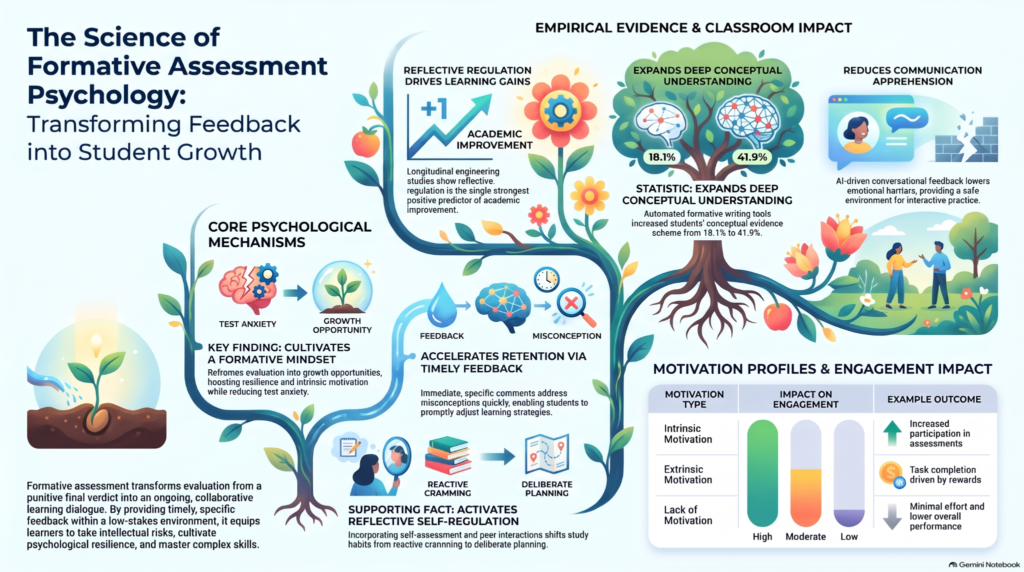
Although various factors influence the effectiveness of formative assessments, student motivation stands out as a critical determinant of their outcomes. Intrinsically motivated students exhibit higher levels of engagement, leading to more meaningful interactions with formative assessments. This engagement can greatly enhance the feedback loop, allowing educators to tailor instruction based on students’ needs.
| Motivation Type | Impact on Engagement | Example Outcome |
| Intrinsic Motivation | High engagement | Increased participation in assessments |
| Extrinsic Motivation | Moderate engagement | Completion of tasks for rewards |
| Lack of Motivation | Low engagement | Minimal effort and poor performance |
Understanding these dynamics enables educators to foster an environment where intrinsic motivation flourishes, thereby improving formative assessment outcomes and supporting student growth. Ultimately, recognizing the importance of student motivation can lead to a more effective, responsive classroom environment.
Building Self-Efficacy With Formative Assessment
Building self-efficacy in students can greatly enhance the impact of formative assessments. When educators employ effective self-efficacy strategies, they foster a learning environment where students feel empowered and confident in their abilities.
Research indicates that formative feedback plays a significant role in this process by guiding students toward improvement while reinforcing their capabilities.
To build self-efficacy, educators can implement the following strategies:
- Goal Setting: Encourage students to set achievable, specific goals, fostering a sense of ownership.
- Positive Reinforcement: Offer constructive feedback that highlights progress, rather than solely focusing on shortcomings.
- Modeling Success: Share examples of perseverance and success, illustrating that effort leads to achievement.
- Encouraging Reflection: Prompt students to reflect on their learning experiences, reinforcing their understanding of personal growth.
The Role of Peer Interaction in Formative Assessment
Peer interaction plays an essential role in the effectiveness of formative assessment, as it not only fosters collaborative learning but also enhances student understanding through shared insights. Research indicates that peer collaboration encourages students to articulate their thoughts, engage in constructive dialogue, and reflect on their learning processes.
This social learning environment allows learners to benefit from diverse perspectives, thereby deepening their comprehension of complex concepts.
Moreover, peer interaction facilitates a sense of community in the classroom, where students feel more comfortable taking risks and expressing uncertainties. When students work together in formative assessments, they develop critical thinking and problem-solving skills, as they navigate different viewpoints and collectively analyze their progress. Integrating gamification educational psychology into peer-based activities can further strengthen student engagement by introducing interactive challenges, meaningful rewards, and collaborative goals that encourage active participation and deeper learning.
Ultimately, integrating peer collaboration into formative assessment practices not only enriches individual learning experiences but also cultivates a supportive educational atmosphere, fostering a culture of mutual growth and accountability among students.
Practical Strategies for Implementing Formative Assessment in Classrooms
Effective implementation of formative assessment in classrooms requires strategic planning and the use of targeted techniques that engage students meaningfully in the learning process. Teachers seeking additional classroom materials and educational resources can explore the engineering teacher shop to find practical tools that support interactive assessments, student participation, and more engaging learning experiences. By employing collaborative assessment and adaptive feedback, educators can foster a supportive environment conducive to growth.
Key strategies include:
- Peer Review: Encourage students to provide constructive feedback on each other’s work, promoting collaboration and critical thinking.
- Exit Tickets: Utilize quick reflections at the end of lessons to gauge understanding and adjust instruction accordingly.
- Learning Journals: Have students document their learning experiences, allowing for self-reflection and personalized feedback from teachers.
- Real-Time Polling: Implement technology to gather immediate insights about student comprehension, facilitating instant adaptive feedback.
These strategies not only enhance student engagement but also empower learners to take ownership of their educational journey, ultimately leading to improved outcomes and a more dynamic classroom environment.
Transforming Instruction With Psychological Insights on Assessment
While traditional assessment methods often focus solely on quantifying knowledge, integrating psychological insights can greatly enhance instructional practices by aligning them with how students learn and process information.
Understanding cognitive load is essential; assessments should be designed to minimize extraneous demands, allowing students to focus on the fundamental content. This approach can lead to deeper learning and retention. Recognizing the multitasking effects on learning can help educators design formative assessments that minimize distractions, allowing students to concentrate on feedback, process information effectively, and improve their understanding of the lesson.
Additionally, awareness of assessment anxiety is significant, as high-stakes testing can impair performance and hinder student engagement. By creating a supportive environment that encourages formative assessment, educators can reduce anxiety and promote a growth mindset.
Implementing strategies such as frequent feedback, peer assessment, and self-reflection nurtures a culture of learning, where students feel safe to explore and make mistakes.
Ultimately, transforming instruction through psychological insights fosters a more effective and empathetic classroom, prioritizing student well-being and success.

RELATED STUDIES ABOUT FORMATIVE ASSESSMENT PSYCHOLOGY
In weaving the intricate tapestry of effective classroom instruction, formative assessment emerges as a guiding thread, illuminating pathways to deeper understanding. The psychological insights into feedback, motivation, and peer interaction coalesce to foster an environment where students bloom like flowers in spring. By embracing these principles, educators can cultivate self-efficacy and engagement, transforming assessment from a mere tool into a vibrant catalyst for learning. Ultimately, this dynamic interplay shapes not only academic success but also the very essence of student growth.
Formative assessment as a self-regulation engine in blended language learning: A case study with top-tier engineering talents
Conceptual Framework and Research Rationale
- The Educational Context of Top-Tier Engineering Education: Under China’s “Double First-Class” initiative and the Ministry of Education’s “Six Excellence and One Top-tier” Plan 2.0, university foreign language education has transformed from a perfunctory degree requirement into foundational training for global research communication, literature synthesis, and cross-cultural engineering collaboration.
- The Engineering Learner Profile: Elite engineering undergraduates (specifically cohorts within Qian Xuesen College at Xi’an Jiaotong University) demonstrate high logical reasoning, strong task-oriented discipline, and an instrumental valuation of language, yet they frequently encounter hurdles in spontaneous oral expression, cultural nuance, and communicative self-efficacy.
- Limitations of Conventional Summative Evaluation: University language instruction has historically prioritized high-stakes summative exams, resulting in test cramming, delayed feedback loops, heightened performance anxiety, and extrinsically driven motivation.
- Formative Assessment as a Self-Regulated Learning (SRL) Engine: Grounded in Self-Regulated Learning theory (Pintrich, Zimmerman) and sustainable assessment principles (Boud, Black & Wiliam), formative assessment operates as a cyclical self-regulation mechanism. It activates the three classical phases of SRL: forethought (goal-setting, planning), performance control (monitoring via learning analytics and peer dialogue), and self-reflection (evaluating outcomes, managing emotion, and adapting future learning strategies).
- Core Research Objective: To investigate how a learning-centered, multi-agent formative assessment framework embedded within a Small Private Online Course (SPOC) blended Japanese curriculum influences self-regulatory behaviors, motivational profiles, and sustainable learning gains among elite engineering students.
Methodological Architecture and Course Design
- Educational Setting and Curriculum Reform:
- Deployed in the “Basic Japanese” course (16 weeks, 32 contact hours, 2 credits) at Xi’an Jiaotong University across five iterative optimization rounds.
- Radical Structural Reform: Eliminated the traditional single, high-stakes final examination (previously 55% of the total course grade) and restructured grading into a continuous process evaluation:
- Online Platforms (35% total): China University MOOC (15% for video tracking, unit quizzes, final platform test) and Siyuan Academy / Blackboard (20% for homework assignments, voice recordings, learning logs, and thematic forums).
- Periodical Achievement Tests (45% total): Three evenly spaced checkpoints across the semester (Test 1 covering Lessons 1–3 at 10%; Test 2 covering Lessons 4–6 at 15%; Test 3 covering Lessons 7–9 at 20%).
- Classroom and Process Performance (20% total): Attendance (10%), active classroom participation (5%), and offline homework (5%).
- Multi-Agent Dialogic Feedback Network:
- Integrates automated system-generated feedback (instant grading on SPOC quizzes), instructor commentary (written notes on audio pronunciation, homework, and journals within one week), and peer evaluation (rubric-guided collaborative review during group presentations and forums) to deliver timely, actionable scaffolding.
- Mixed-Methods Data Triangulation:
- Quantitative Cohort: 40 first-year elite engineering undergraduates (33 male, 7 female; effective response rate = 85.11%).
- Survey Instrumentation: 66-item questionnaire measuring ten dimensions on a 5-point Likert scale, exhibiting high internal consistency (=0.84–0.91, KMO=0.87, Bartlett’s test p<.001) and extracting three SRL components: motivational regulation, behavioral regulation, and reflective regulation (explaining 71.2% of variance).
- Behavioral Learning Analytics: Continuous platform logs from China University MOOC and Blackboard tracking login frequency, video watch durations, task submission timeliness, and forum interactions.
- Qualitative Corpora: Two longitudinal rounds of reflective student journals (n=87 entries; 40 in Week 8, 47 in Week 16) and semi-structured interviews with four representative students, analyzed inductively through an SRL theoretical lens.
Key Empirical Findings
- Quantitative Performance and Psychometric Dynamics:
- Motivational Regulation: Students expressed strong intrinsic curiosity and course interest (M=4.30.8), recognized the instrumental relevance of Japanese for their prospective engineering careers (M=3.11.0), and reported high self-directed learning initiative (M=3.61.0).
- Anxiety Mitigation: Performance anxiety indicators dropped below the neutral threshold (M<3.0), confirming that replacing an all-or-nothing final exam with distributed checkpoints alleviates fear of making mistakes in class.
- Platform Engagement and Test Gains: Students logging into the SPOC platform more than 20 times per semester (n=22) achieved significantly higher final performance scores (M=85.6) than less active peers (M=78.2;t(38)=2.47,p<.05;r=0.41,p<.05).
- Behavioral Regulation and Systematic Habits: Students strongly affirmed that continuous assessment encouraged process-focused study habits (M=4.10.9), systematic study planning (M=3.90.9), and self-reflection (M=4.00.8). Perceptions of assessment fairness and transparency scored highest across all dimensions (M=4.50.6).
- Predictive Power of Reflective Regulation: Periodical achievement test scores improved significantly across the semester, rising from 68.424.43 on Test 2 to 75.923.56 on Test 3 (t(57)=-4.52,p<.001). In multiple linear regression modeling, reflective regulation emerged as the strongest positive predictor of learning gains (=0.41,p=.004), exceeding motivational regulation (=0.33,p=.018) and behavioral regulation (=0.29,p=.031).
- Qualitative and Behavioral SRL Trajectories:
- From Reactive Cramming to Strategic Forethought: Early journal entries showed last-minute submissions, unsystematic rote memorization, and high dependency on teacher instructions. By mid-to-late semester, students adopted deliberate, structured study routines—such as treating grammatical structures as algebraic formulas, decomposing sentence components, keeping error checklists, and setting daily self-testing schedules. SPOC server logs confirmed that platform review sessions shifted from spike clusters right before deadlines to balanced, weekly distributions.
- Internalization of Motivational Goals: Early student comments reflected controlled, extrinsic compliance (“I do the quiz because it counts for the grade”). As competence grew through successful formative checkpoints, reflections revealed internalized motivation driven by personal mastery, such as deciphering song lyrics independently or composing personal journal entries in Japanese.
- Acquisition of Feedback Literacy: Students transitioned from treating grades as a retrospective judgment (“a number and then move on”) to utilizing instructor notes and diagnostic test outputs as a prospective blueprint for subsequent weekly practice. Server logs confirmed that students regularly revisited specific grammatical units highlighted in instructor feedback.
- Emotional Regulation via Social Scaffolding: Small, predictable checkpoints and visible progress dashboards reduced exam panic, while collaborative group activities (paired reading, peer correction, and communicative simulations) built a safe community where mistakes were recognized as informative learning milestones.
Pedagogical and Theoretical Interpretations
- Closing the “Knowing-Doing” Assessment Gap: The study validates that formative assessment operates as a psychological engine that transforms external evaluation into internalized cognitive, affective, and behavioral self-regulation.
- Professional Alignment for Engineering Students: Decomposing language learning into sequential, measurable checkpoints, analytical grammar rules, and iterative feedback cycles aligns naturally with engineering students’ cognitive preference for modular problem-solving and systems thinking.
- Sustainable Educational Governance: Blending learning analytics dashboards with qualitative reflection logs provides instructors with real-time diagnostic visibility into student struggles, allowing for adaptive pedagogical adjustments mid-stream rather than retrospective failure analysis at the end of the term.
Implementation Challenges and Study Limitations
- Instructor Workload Intensification: Maintaining continuous multi-agent feedback across audio recordings, weekly forum posts, and multiple periodical tests substantially increases teaching burdens. To maintain sustainability, the authors recommend incorporating semi-automated rubrics, AI-assisted feedback modules, and calibrated peer-review frameworks.
- Sample Size and Context Specificity: Conducted as an exploratory case study involving 40 elite engineering undergraduates at a single top-tier Chinese institution, limiting direct statistical generalization to non-STEM students, open-enrollment universities, or different language targets.
- Absence of Long-Term Retention Follow-Up: Data collection was confined to a single 16-week semester. Longitudinal tracer studies tracking students 6 to 12 months post-coursework are necessary to determine whether feedback-induced self-regulatory habits and linguistic competencies endure into specialized research and professional practice.
| REFERENCE: Honghao Ren, Wenli Zhang, Hongquan Cao, Formative assessment as a self-regulation engine in blended language learning: A case study with top-tier engineering talents, Acta Psychologica, Volume 264, 2026, 106505, ISSN 0001-6918, https://doi.org/10.1016/j.actpsy.2026.106505. (https://www.sciencedirect.com/science/article/pii/S0001691826003069) |
Replicating and expanding a validity argument for eRevise as a formative assessment: Empirical support for theories of conceptual change
Conceptual Framework and Research Rationale
- The Educational Imperative of Argumentative Writing: Generating evidence-based arguments from source texts is foundational for college readiness, workforce success, and critical reasoning against digital misinformation. However, elementary and secondary students receive exceedingly few opportunities to practice text-based argument writing, and most writers struggle to integrate specific, credible textual evidence to substantiate claims.
- The “Black Box” of Automated Writing Evaluation (AWE): While AI-driven AWE systems demonstrate that student drafts improve from first to second submissions, research predominantly emphasizes cross-sectional, feature-level scoring gains. The field lacks systematic evidence regarding how and why student writing develops conceptually, particularly regarding the sociocultural and dialogic mechanisms through which automated feedback is internalized.
- Sociocultural Mechanisms and Boundary Objects: Grounded in Vygotskian learning theory, automated feedback functions as a “boundary object” or mediational tool. Effective revision requires students to develop adaptive expertise: moving beyond surface-level mechanical edits (e.g., spelling, single-word swaps) to substantive structural changes that coordinate evidence with central claims.
- Three Hypothesized Mediational Pathways:
- Mechanism 1 (Independent Dialogue / Inner Speech): Direct interaction between the learner and feedback targeted within the student’s Zone of Proximal Development (ZPD) stimulates metacognitive reflection and independent revision.
- Mechanism 2 (Whole-Class Teacher Scaffolding): Formative teachers interpret automated feedback as a shared site of inquiry, clarifying genre criteria and revision strategies for the entire classroom.
- Mechanism 3 (Targeted Teacher-Student Dyadic Interaction): Substantive one-on-one dialogic interactions between instructors and individual students seeking help around automated cues provide personalized scaffolding that maximizes revision quality.
- Core Research Objectives:
- Replicate and generalize an argument-based validity framework for the AWE system eRevise using a second text-based prompt (RTFASpace) across an expanded, adequately powered sample.
- Test whether observed mediational mechanisms generalize across three distinct writing outcomes (feature improvement factor scores, holistic revision quality, and count of successful revision sentences added).
- Examine whether baseline student writing ability moderates intervention benefits.
- Evaluate longitudinal conceptual change by tracking students’ evidence schema development over repeated administrations.
Methodology and Empirical Data Architecture
- The eRevise System and Curriculum Architecture:
- Implemented around the Response-to-Text Formative Assessment (RTFA) over a structured two-day instructional cycle.
- Day 1 (Drafting): The teacher leads a shared reading of an informational text (Space Exploration prompt; weighing pros and cons of federal funding), embeds guided comprehension questions, and gives students 30 minutes to compose an argumentative draft.
- Day 2 (Automated Feedback and Revision): Within five days, students log into eRevise, view their original draft alongside actionable, bulleted formative feedback (avoiding opaque numerical rubric scores), and revise their work over an average of 23 minutes.
- ZPD Feedback Tiers: Natural Language Processing (NLP) features automatically assign one of three targeted feedback levels:
- Level 1 (Completeness & Breadth): Prompts students to incorporate at least 3–4 distinct focal topic areas from the article and add details.
- Level 2 (Specificity & Elaboration): Guides students to provide specific textual details and explain reasons for evidence selection.
- Level 3 (Explanation & Coherence): Directs students to explicitly connect textual evidence to their central thesis and elaborate on their reasoning.
- Sample and Setting:
- 34 fifth- and sixth-grade English Language Arts teachers and 609 upper-elementary students across eight public school parishes in Louisiana.
- Student demographics: 47% White, 42% African American, 4% Latinx, 2% Asian, and 5% other; ~70% eligible for free/reduced-price lunch.
- 240 of the students had previously used eRevise earlier in the academic year on an alternative prompt (RTFAMVP), enabling longitudinal cross-task comparisons.
- Outcome Measures:
- Feature Improvement Factor Score: A standardized composite factor score capturing pre-to-post changes across three NLP metrics: Number of Pieces of Evidence (NPEchange), Specificity of Focal Evidence (SPCfocal-change), and Word Count (WOCchange).
- Quality of Revision: Human-coded holistic score (scale 0–3) assessing the substantive degree to which added revisions successfully implemented the assigned feedback (83% exact agreement, Cohen’s =0.75).
- Successful Revision Sentences Added: An automated NLP model counting newly inserted sentences that introduced relevant source evidence or linked claims to evidence (transformed to a 0–6 scale).
- Evidence Schema Score: Evaluated through an open-ended post-revision survey question (“What is one thing you learned about using evidence in your writing that you could use again?”), scored from 1 (procedural/rote) to 4 (conceptual/argument coherence).
- Teacher Covariates and Statistical Modeling:
- Substantive Teacher Responses (1–4 scale): Extracted from daily implementation logs, classifying teacher interactions from surface procedural help (score 1) to dialogic, concept-aligned writing coaching (score 4).
- Hierarchical Linear Modeling (HLM): Two-level random-intercept, random-slope models nested students within classrooms, controlling for initial essay rubric scores, self-reported feedback usage, article re-reading, writing attitudes, and prior RTFAMVP experience.
Key Empirical Findings
- Successful Replication of Sociocultural Mediational Mechanisms (RQ1):
- Mechanism 1 (Direct Feedback Interaction): Independent student interaction with automated feedback produced significant within-group gains across all primary evidence features on RTFASpace, replicating prior MVP findings (NPE gain dz=0.46; SPCfocal gain dz=0.67; WOC gain dz=0.57; all p<.001).
- Mechanism 2 (Classroom-Level Formative Teaching): In HLM models, the level of substantive teacher interaction significantly predicted classroom mean improvement for Feature Improvement (01=.24,p<.001) and Number of Successful Sentences Added (01=.26,p=.014). Classrooms where teachers engaged in dialogic writing talk achieved higher average gains.
- Mechanism 3 (Individual Help Substantive Teaching): For individual students who asked for help, being in a classroom with a substantive teacher yielded a significant additive boost for Feature Improvement (61=.19,p=.021) and Revision Quality (61=.19,p=.094), confirming that teacher-student dialogue around AWE feedback acts as a powerful catalyst.
- Differential Benefits Across Student Ability and Feedback Levels (RQ2 & RQ4):
- Baseline Ability Moderation: On the Feature Improvement scale, lower-achieving initial writers made the largest numerical gains (10=-.26,p<.001). For Revision Quality and Successful Sentences, higher teacher substantiveness moderated initial ability gaps (11=-.11,p=.039 and 11=-.18,p=.094), indicating that active teacher scaffolding allows struggling baseline writers to achieve revision gains comparable to their higher-scoring peers.
- Feedback Tier Sensitivity: Disaggregating models across feedback tiers revealed that students receiving Level 1 feedback (breadth) and Level 3 feedback (coherence/explanation) benefited most from substantive teacher help:
- For Level 3 recipients, individual teacher help in substantive classrooms strongly predicted higher Feature Improvement (131=.52,p<.001), Revision Quality (131=.42,p=.017), and Added Sentences (131=.84,p=.038).
- Conversely, Level 2 recipients (details/specificity) showed less sensitivity to teacher variation, suggesting that adding descriptive details is a more self-evident task for upper elementary students.
- Evidence Schema Consolidation and Conceptual Growth (RQ3 & RQ5):
- Cross-Task Predictive Transfer: Students who formulated a feedback-aligned metacognitive reflection on the fall assessment (RTFAMVP) achieved significantly higher feature improvement scores when revising on the spring assessment (RTFASpace) four months later (110=.24,p=.016), independent of baseline writing ability.
- Longitudinal Conceptual Change:
- The proportion of students demonstrating a conceptual understanding of evidence use (recognizing that evidence must prove a claim and build argument coherence, rather than merely counting facts) rose from 18.1% in the fall to 41.9% in the spring.
- Among students completing both assessments, paired t-tests confirmed significant conceptual growth for learners who initially scored 0 (t=7.55,p<.001), 1 (t=3.77,p<.001), and 2 (t=3.14,p<.01).
- Students with two rounds of eRevise experience exhibited a higher percentage of advanced conceptual schema (45.0%) than first-time spring users (41.1%), supporting a “knowledge-in-pieces” framework where recursive writing, revision, and reflection restructure cognitive schema.
Theoretical, Practical, and System Design Implications
- Grounding AWE in Sociocultural Learning Theory: Automated writing tools must not be conceived as autonomous, teacher-replacing grading machines. Instead, they function most effectively as classroom “boundary objects” that identify instructional problem spaces, anchoring dialogic inquiry between teachers and students around discipline-specific writing goals.
- The Role of Metacognitive Consolidation: Simply prompting students to make text edits is insufficient for durable learning. Providing structured, interim metacognitive reflection prompts immediately after revision encourages students to encode procedural changes into generalized conceptual schema (p-prims and coordination classes) for future retrieval.
- Designing Actionable, Formative Scaffolding: To make AWE feedback developmentally appropriate (within the ZPD), automated diagnostic outputs should present clear, concise bullet points led by action verbs (e.g., “Choose”, “Add”, “Explain”) rather than complex rubric grids that place high interpretive burdens on young writers.
Study Limitations and Future Directions
- Quasi-Experimental, Natural Variation Design: While the study utilized natural classroom variation and within-subjects controls (dz), the absence of a pure non-AWE control group means that general student maturation and cumulative classroom writing instruction over the four-month window remain potential confounding influences.
- Algorithmic and Demographic Fairness: While the student population was racially and socioeconomically diverse, individual-level reading achievement and racial demographic markers were not incorporated directly into bias-audit models. Given emerging equity concerns regarding demographic inference and feedback bias in modern Large Language Models (LLMs), future AWE iterations must formally validate algorithmic fairness across student subgroups.
- Expansion to Multi-Round Revision Feedback: The evaluated version provided a single round of automated feedback. The research team is expanding the system into eRevise+RF (Revision Feedback), a multi-day protocol providing a second cycle of automated feedback to guide iterative, multi-draft revision.
| REFERENCE: Richard Correnti, Lindsay Clare Matsumura, Elaine Lin Wang, Diane Litman, Zhexiong Liu, Haoran Zhang, Tianwen Li, Replicating and expanding a validity argument for eRevise as a formative assessment: Empirical support for theories of conceptual change, Assessing Writing, Volume 70, 2026, 101095, ISSN 1075-2935, https://doi.org/10.1016/j.asw.2026.101095. (https://www.sciencedirect.com/science/article/pii/S1075293526000838) |
GenAI-driven formative assessment for enhancing strategic competence and oral proficiency
Conceptual Framework and Research Rationale
- The Educational Imperative of Spoken EAP: Spoken communication in English for Academic Purposes (EAP) is recognized as a complex skill and a critical determinant of academic achievement in English-medium higher education. However, in Asian tertiary contexts such as China, large class cohorts and instructional time limits constrain opportunities for regular speaking practice and continuous, individualized formative feedback.
- The Strategic Competence Model of L2 Speaking (SCMLS): Strategic competence serves as a foundational component of communicative language ability and self-regulated learning (SRL). Grounded in bilingual speech production and communicative competence theories, the SCMLS framework operationalizes strategic competence as four interrelated metacognitive strategies:
- Planning: Analyzing tasks, setting goals, directing attention, and activating background knowledge.
- Problem-Solving: Formulating inferences and compensating for linguistic deficiencies through substitution and paraphrasing.
- Monitoring: Maintaining real-time attentional control, applying linguistic rules, checking comprehensibility, taking notes, and engaging in self-repair.
- Self-Evaluating: Verifying goal attainment and assessing performance quality through reflective post-task review.
- Generative AI (GenAI) as a Formative Assessment Engine: Traditional teacher-led formative assessment (FA) is difficult to sustain at scale outside the classroom. Conversational GenAI platforms, such as ChatGPT, offer scalable, accessible, and adaptive formative feedback across three distinct instructional tiers: explicit corrective feedback, implicit recasts, and metacognitive self-regulation advice.
- Dynamic Systems Theory (DST) Grounding: Grounded in DST, language development is conceptualized as an emergent, adaptive, and nonlinear dynamic system where internal cognitive-affective factors (strategic competence, anxiety, oral proficiency) continuously co-adapt with external affordances (GenAI-driven feedback).
- Core Research Objectives:
- Investigate the longitudinal developmental trajectories of strategic competence and oral proficiency among Chinese EAP learners practicing with ChatGPT-driven formative assessment.
- Examine the dynamic, evolving relationships among the four metacognitive components of strategic competence and oral proficiency over time.
- Explore learners’ qualitative perceptions regarding the affordances, self-regulatory contributions, and potential drawbacks of ChatGPT-mediated speaking evaluation.
Methodology and Empirical Data Architecture
- Study Design and Sample Profile:
- A 20-week longitudinal mixed-methods case study spanning June to November 2023, functioning as the pilot phase of a major project funded by the National Social Science Fund of China.
- Participants: Purposive convenience sample of two final-year undergraduate Business English majors at a university in eastern China:
- Participant 1 (P1): Male, aged 22–24, baseline IELTS Speaking band score of 6.0.
- Participant 2 (P2): Female, aged 22–24, baseline IELTS Speaking band score of 6.5.
- Both possessed approximately 10 years of formal English instruction but had no prior experience utilizing GenAI conversational tools.
- Intervention Protocol and Technology Setup:
- Deployed ChatGPT-3.5 paired with a free browser extension (“Voice Control for ChatGPT” / “Talk to ChatGPT”) enabling real-time voice input, transcribed text generation, and synthesized auditory playback.
- Learners engaged in self-directed speaking sessions 1 to 3 times per week, completing at least 1 hour of audio-recorded free practice weekly on self-selected authentic IELTS speaking examination tasks.
- Data Sources and Instrumentation:
- Strategic Competence Inventory (SCI): A validated 23-item instrument measuring the frequency of planning, problem-solving, monitoring, and self-evaluating on a 6-point Likert scale (0 = never to 5 = always; Cronbach’s =0.941), completed weekly (N=20 administration points per participant).
- Oral Proficiency Assessments: Spoken recordings were evaluated against official IELTS Speaking Band Descriptors by the lead researcher and two trained independent raters.
- Qualitative Data: 27 reflective learning journals (P1 = 14 entries, P2 = 13 entries; 200–350 words each) and post-intervention semi-structured interviews, coded using inductive thematic analysis with AI-assisted verification (Cohen’s =0.90–0.95).
- DST-Compatible Quantitative Modeling:
- LOESS smoothing (window size =0.2, 5 consecutive points) modeled overarching developmental curves.
- Moving Min-Max graphs mapped bandwidth fluctuations and developmental turning points.
- Monte Carlo permutation tests (10,000 shuffled resamples, p<0.05) determined whether observed fluctuations reflected statistically significant developmental shifts rather than random noise.
- Bivariate Spearman rank correlations and Moving Window correlation trajectories tracked dynamic inter-variable couplings across time.
Key Empirical Findings
- Nonlinear Trajectories of Strategic Competence Development:
- Both participants exhibited nonlinear upward trajectories across the 20-week period, accompanied by pronounced periodic fluctuations and individual variation in strategy prioritization:
- Participant 1 (P1): Relied most heavily on Planning (M=3.4–4.7), followed by Self-Evaluating (M=2.2–4.4), Problem-Solving (M=2.4–4.0), and Monitoring (M=2.6–3.7). Monte Carlo tests confirmed that developmental variability was statistically significant for Planning (p=0.048) and Monitoring (p=0.022).
- Participant 2 (P2): Relied most on Self-Evaluating (M=4.2–5.0), followed by Planning (M=3.8–5.0), Problem-Solving (M=3.8–5.0), and Monitoring (M=2.3–4.5). Her strategy fluctuations were not statistically significant under Monte Carlo testing (p>0.05), indicating a more continuous, stable strategy application.
- Consistent Underutilization of Monitoring: Both learners reported Monitoring as their least frequent strategy, reflecting the high real-time cognitive load required to self-correct during spontaneous speech.
- Development of EAP Oral Proficiency:
- Overall oral proficiency followed a gradual, nonlinear upward progression across the 20 weeks:
- P1 progressed from a baseline of 5.5 to a final band score of 6.0, peaking at 7.0 at several intervals.
- P2 advanced from a baseline of 5.5 to 6.5, reaching a peak of 7.5 between Weeks 15 and 18.
- Both participants experienced performance regressions toward the end of the term (after Week 17/18), linked to external academic pressures and examination stress. Monte Carlo analysis showed no significant departure from baseline stability (p=0.744 and 0.950), indicating that spoken proficiency shifts unfold gradually over extended timelines.
- Inter-Strategy Couplings and Links to Oral Proficiency:
- Internal Strategic Competence Synergy: Spearman correlation tests demonstrated strong inter-strategy relationships:
- For P1, Monitoring was significantly and positively correlated with all other strategies: Planning (r=0.529,p=0.016), Problem-Solving (r=0.665,p=0.001), and Self-Evaluating (r=0.548,p=0.012).
- For P2, Self-Evaluating showed strong positive correlations across Planning (r=0.713,p<0.001), Monitoring (r=0.749,p<0.001), and Problem-Solving (r=0.463,p=0.040).
- Correlation with Oral Gains: Strategic competence as a composite construct was significantly and positively correlated with EAP oral proficiency for both P1 (r=0.649,p=0.005) and P2 (r=0.551,p=0.020). Moving correlation analysis demonstrated that while overall coupling was positive, temporary negative correlations emerged during periods of acute cognitive re-organization or emotional distress (e.g., prior to Week 6 for P2; after Week 17 for P1).
- Qualitative Findings on GenAI Feedback Affordances:
- Feedback Typologies and Scaffolding: Qualitative journals and interview transcripts confirmed that ChatGPT delivered feedback matching the three theoretical levels: explicit corrections of grammatical/lexical errors, implicit conversational recasts, and structural self-regulation templates.
- Affective Filter and Speaking Anxiety: Both learners reported that conversing with ChatGPT significantly reduced communication apprehension compared to speaking with human interlocutors. The ability to control conversational pacing and pause without conversational penalty lowered cognitive stress and encouraged risk-taking.
- The Emergence of AI Over-Reliance: Problem-solving strategies exhibited the second-lowest frequency across both learners. Rather than attempting independent paraphrasing or self-repair when encountering lexical gaps, students developed a habit of requesting immediate answers and model response templates from ChatGPT, signaling a potential risk of cognitive passivity.
Theoretical, Pedagogical, and Methodological Interpretations
- Theoretical Contributions to DST and SCMLS: The findings provide empirical support for Dynamic Systems Theory in computer-assisted language learning. Metacognitive strategies and oral proficiency do not advance in lockstep; rather, they operate as an interconnected system characterized by co-adaptation, mutual trade-offs, and sensitivity to contextual disturbances. Furthermore, the study refines the SCMLS model by illustrating how automated formative feedback serves as an external catalyst that activates specific internal self-regulation mechanisms.
- The Interdependence of Digital Literacy and Metacognition: Initial fluctuations in strategic competence were tied to the cognitive load of learning how to effectively prompt and interface with the AI tool. Autonomous language learning with GenAI requires dual competencies: procedural digital literacy to manipulate prompts and metacognitive self-regulation to filter and implement AI feedback.
- The Crucial Role of Monitoring and Evaluation: Monitoring and self-evaluating emerged as the central regulatory nodes that linked strategic thinking to actual oral proficiency improvements. When students actively tracked AI feedback (e.g., via note-taking) and cross-checked their spoken outputs against AI-generated benchmarks, they were better able to internalize language forms.
Practical Implications and Study Limitations
- Pedagogical Recommendations for EAP Educators:
- Implement Explicit Metacognitive Instruction: Teachers cannot assume students will automatically use AI feedback constructively. Instruction should explicitly train learners in prompt engineering, real-time monitoring strategies, and self-evaluation rubrics.
- Counteract Cognitive Passivity: To prevent students from relying on AI as an automated answer generator, educators should design tasks requiring learners to evaluate, critique, and edit AI responses rather than copy them.
- Leverage AI for Low-Stakes Anxiety Reduction: Instructors can integrate voice-enabled GenAI as an out-of-class rehearsal partner, enabling anxious students to build communicative confidence prior to high-stakes seminar presentations or oral exams.
- Methodological Limitations:
- Sample Size: As an exploratory pilot study, the investigation tracked only two participants, restricting statistical generalization across broader student cohorts.
- Holistic Oral Scoring: Oral performance was measured through holistic IELTS rubrics rather than multidimensional Complexity, Accuracy, and Fluency (CAF) metrics.
- Technological Constraints: The study utilized ChatGPT-3.5 with a third-party browser plugin, which lacks the native multimodal prosody and conversational naturalness of newer, dedicated voice-to-voice models.
| REFERENCE: Weiwei Zhang, Lawrence Jun Zhang, Ye Zhu, GenAI-driven formative assessment for enhancing strategic competence and oral proficiency, English for Specific Purposes, Volume 84, 2026, Pages 354-372, ISSN 0889-4906, https://doi.org/10.1016/j.esp.2026.07.006. (https://www.sciencedirect.com/science/article/pii/S088949062600058X) |
CONCLUSION
Looking across the broader landscape of higher education, our fundamental goal must transcend producing graduates who merely test well; we must cultivate resilient, reflective practitioners capable of navigating complex, ambiguous problems. Traditional summative frameworks have long prioritized ranking over nurturing, often filtering out capable, diverse minds whose cognitive approaches require scaffolded cultivation rather than immediate sorting. Embracing the psychological principles of formative assessment offers a compassionate, evidence-based alternative that supports both academic excellence and emotional well-being.
When we structure educational environments around continuous checkpoints, mutual accountability, and transparent feedback, we fundamentally transform how young adults relate to failure. A mistake ceases to be an identity-threatening setback; instead, it becomes informative diagnostic evidence that guides future effort. This cognitive resilience is vital for sustaining motivation across demanding engineering pathways.
When students feel validated, heard, and systematically supported through iterative growth, their belief in their own capability solidifies. As educational researchers and teachers, embedding these empathetic practices into our daily instruction ensures that we are not only expanding cognitive capacity, but also fostering an inclusive, enduring sense of professional belonging for every aspiring learner.
