

When I traded my civil engineering hardhat for a classroom whiteboard, I assumed that solving educational bottlenecks would follow the same predictable rules as structural load calculations: identify the pressure point, reinforce the frame, and the structure holds. But teaching tech and engineering to high schoolers taught me an immediate, humbling lesson—students aren’t blueprints, and human stress doesn’t behave like concrete under compression.
I’ve sat across from countless parents during evening conferences who looked completely drained, caught between demanding careers, evolving school technologies, and the heartbreaking realization that their teenager was quietly unraveling under pressure. Just as often, I’ve watched dedicated teaching colleagues collapse into their chairs at the end of a Friday, carrying the invisible weight of thirty distinct emotional burdens home with them. What my dual perspective in engineering and education has made crystal clear is that we cannot isolate student mental health inside a vacuum.
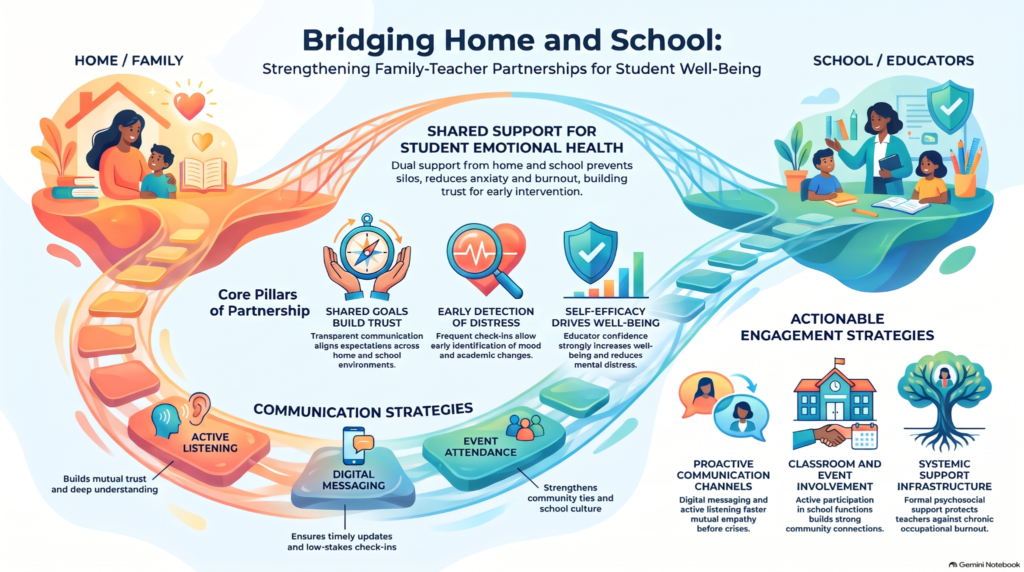
A student’s emotional well-being is anchored by two main pillars: the home and the school. If those two supports operate independently—or worse, work at cross-purposes—the bridge inevitably sags. We don’t need more bureaucratic paperwork or rigid checklists; we need open, empathetic collaboration that treats parents and teachers as co-designers in a child’s resilience.
Strong family-teacher partnerships play an essential role in promoting student well-being and mental health. These collaborations foster a supportive environment that addresses both academic challenges and emotional needs. Effective communication builds trust, allowing families and educators to work collaboratively for the child’s best interests. By recognizing signs of emotional distress and prioritizing student wellness, these relationships can greatly enhance resilience and reduce anxiety. Discover more ways to strengthen these partnerships and support holistic development.
KEY TAKEAWAYS
- Strong family-teacher collaboration creates a supportive environment, enhancing students’ emotional well-being and resilience.
- Open communication fosters trust, allowing families to share crucial insights about their child’s mental health.
- Regular check-ins between families and teachers help identify and address emotional distress early, promoting timely intervention.
- Engaging families in school activities strengthens community ties, reinforcing the importance of mental health support.
- Tailored strategies for communication and involvement ensure that diverse student needs are met, enhancing overall wellness.
THE IMPORTANCE OF FAMILY-TEACHER COLLABORATION FOR STUDENT SUCCESS
Although the educational journey of a student is often seen as a solitary path forged within the confines of the classroom, the collaboration between families and teachers plays a crucial role in shaping a child’s success.
When families and educators engage in collaborative learning, they create an environment where shared goals can flourish. Recognizing the connection between parental expectations academic achievement can help families and teachers establish realistic learning goals, reinforce positive study habits, and provide consistent support for students’ academic and emotional development. This partnership fosters a deeper understanding of each child’s unique needs, strengths, and challenges, enabling tailored support that enhances academic achievement.
Effective communication between parents and teachers cultivates trust and encourages active participation from both parties. As families become invested in the educational process, they reinforce the importance of learning at home, creating a seamless bridge between school and home life.
This synergy not only promotes student success but also instills a sense of community and belonging, essential for nurturing well-rounded individuals. Ultimately, the commitment to collaboration empowers students to thrive both academically and personally.
Why Family-Teacher Relationships Matter for Student Mental Health?
Family-teacher relationships extend beyond academic success, playing an essential role in the mental health of students. When families and teachers collaborate effectively, they create a robust support system that nurtures a child’s emotional well-being. Understanding how parent beliefs and student motivation influence a child’s confidence and emotional well-being can help families and teachers provide consistent encouragement, recognize individual needs, and create a more supportive learning environment. This partnership fosters an environment where students feel understood and valued, greatly reducing anxiety and promoting resilience.
Emotional support from both families and teachers can alleviate stressors that students face, enhancing their overall mental health.
However, communication barriers often hinder this important connection, preventing the exchange of critical information regarding a student’s feelings and struggles. By actively working to bridge these gaps, educators and families can cultivate a more inclusive atmosphere that prioritizes mental well-being.
A strong family-teacher relationship not only empowers students but also encourages them to seek help when needed, ultimately fostering a healthier, more supportive educational experience. This collaborative approach underscores the importance of nurturing these relationships for the benefit of student mental health.
How Families and Teachers Can Communicate Better
Your relationship with your child’s teacher can be an important factor in how well he or she gets along at school and at home. For many children, the most significant adults in their lives on a day-to-day basis are immediate family members and caregivers (primarily parents), and their teacher. These are the adults with whom they spend the most time, who make most of the decisions regarding how they spend their time and who provide guidance and direction, through their actions and their words, on most aspects of their lives.
How can families and teachers foster more effective communication? By embracing strategies that prioritize active listening and leverage digital communication, both parties can create a more collaborative environment. Active listening involves fully engaging with the speaker, guaranteeing that concerns and insights are genuinely understood. Digital communication tools, such as emails and messaging apps, can facilitate timely exchanges of information and updates.
| Communication Strategies | Benefits |
| Active Listening | Builds trust and understanding |
| Digital Communication | Guarantees timely updates and feedback |
| Regular Check-ins | Strengthens relationships |
Building Trust in Family-Teacher Partnerships
Effective communication lays a strong foundation for trust in partnerships between families and teachers. Trust building activities, such as regular check-ins and collaborative workshops, can enhance relationships and foster a sense of community.
By implementing effective communication strategies—like active listening, transparency, and empathy—educators and families can create an environment conducive to open dialogue. This collaborative approach not only reassures families that their voices are valued but also empowers teachers to understand students’ diverse needs more deeply.
Moreover, establishing consistent communication channels, whether through newsletters or parent-teacher conferences, reinforces the commitment to partnership. When families feel informed and involved, trust flourishes, leading to more meaningful interactions.
Both parties benefit from a shared responsibility for student well-being, ultimately contributing to a supportive atmosphere that nurtures mental health. By prioritizing trust in their relationships, families and teachers can work together to create a positive impact on students’ lives.
Spotting Emotional Distress in Students
Emotional distress in students can manifest in various forms, often leaving subtle yet significant indicators for teachers and families to observe. Recognizing emotional cues is essential for understanding student behavior and fostering a supportive environment. Changes in a student’s mood, such as increased irritability or withdrawal, can signal underlying issues that warrant attention.
Additionally, academic performance may decline or attendance might fluctuate, further indicating distress. Teachers and families should collaborate to create a safe space for open dialogue, encouraging students to express their feelings.
This partnership allows for the identification of emotional cues that might otherwise go unnoticed. By fostering awareness of these signs, educators and caregivers can work together to address concerns compassionately and proactively.
Ultimately, spotting emotional distress early enables timely intervention, reinforcing the well-being of students and promoting resilience in their educational journey.

TOP STRATEGIES FOR SUPPORTING STUDENT MENTAL HEALTH
In my classroom lab, the hardest thing to teach young people isn’t how to calibrate a 3D printer or write conditional logic; it’s learning how to sit with failure without feeling broken. When a bridge structure made of balsa wood snaps under testing or a circuit board shorts out, kids don’t just get frustrated—many modern students freeze in absolute panic. They fear that an imperfect test run defines their worth.
That emotional anxiety doesn’t stay confined to fifth period; it follows them right to the dinner table. At the same time, when a student experiences acute personal turmoil at home, it manifests in my shop as sudden apathy, missing assignments, or an uncharacteristic lack of focus. As an educator and a dad, I know how hard it is to reach out when things aren’t going well. Parents often worry that emailing a teacher about emotional struggles makes their child look difficult, while teachers worry that reaching out might be interpreted as criticism of parenting.
But the moment a parent sends a quick note saying, “Hey Mr. Reynolds, we had a rough week with family matters, and they might be a bit overwhelmed,” the entire dynamic shifts. It allows me to adjust my expectations, offer a little extra grace on a project deadline, and maintain a quiet, supportive watch over that student. Trust isn’t formed during formal annual conferences; it’s built through these low-stakes, proactive check-ins that validate a kid’s humanity before their grades.
Recognizing the signs of emotional distress in students sets the stage for implementing effective strategies that support their mental health. Educators and families can collaborate to introduce mindfulness practices, which have been shown to enhance students’ emotional regulation and overall well-being.
By integrating short mindfulness exercises into the school day, such as breathing techniques or guided imagery, students learn to manage stress better and foster resilience.
Moreover, establishing a supportive environment where students feel safe to express their feelings is vital. Regular check-ins and open dialogues can facilitate this, allowing educators to identify individual needs and tailor support accordingly.
In addition, providing resources for emotional regulation, such as workshops or access to mental health professionals, equips students with essential coping strategies.
Ways Families Can Engage to Support School Wellness
Effective classroom management creates safe and supportive learning environments for all students. This explainer is part of a suite of foundational resources for beginning teachers, teachers working in new environments, or experienced teachers who want to refine or refresh specific elements of their classroom management practice.
Families play an essential role in fostering school wellness through active engagement.
By attending school events, volunteering in classrooms, and maintaining regular communication with teachers, they can create a supportive environment that benefits both students and educators.
This collaborative approach not only enhances academic success but also nurtures the mental health of the entire school community.
Attend School Events
This research suggests that improving students’ relationships with teachers could have important, positive and long-lasting effects beyond just academic success,” said Jinho Kim, PhD, an assistant professor in the Department of Health Policy and Management at Korea University and author of the study. It was published in the journal School Psychology. “It could also have important health implications in the long run.
Engaging in school events serves as an essential bridge between home and the educational environment, fostering a sense of community and collaboration.
Attendance at school fairs and parent nights not only showcases parental involvement but also enhances student well-being by creating a supportive atmosphere. These gatherings offer families a chance to connect with teachers and other parents, fostering relationships that can lead to a more cohesive educational experience.
By participating in these events, families demonstrate their commitment to their children’s education and mental health, reinforcing the importance of a strong support network.
Ultimately, such engagement cultivates a positive school culture where students feel valued and understood, contributing to their overall success and emotional resilience.
Volunteer in Classrooms
Volunteering in classrooms offers a unique opportunity for families to contribute directly to the educational experience and well-being of students. By engaging in classroom support, families can foster a collaborative environment that promotes student success.
Volunteer opportunities can vary from assisting with lessons to organizing activities, enabling families to connect with teachers and students alike. Educators and families can explore the engineering teacher shop for practical classroom resources and educational materials that support engaging activities, encourage student participation, and strengthen the learning environment. This involvement not only enhances the educational atmosphere but also helps build strong relationships among families, educators, and the community.
When families actively participate, they demonstrate the importance of education, nurturing a sense of belonging and support for all students. Ultimately, such partnerships are pivotal in creating a holistic approach to student wellness, enriching both academic and emotional development in the classroom.
Communicate Regularly With Teachers
Although regular communication with teachers may seem like a simple task, it plays an essential role in fostering a supportive school environment that prioritizes student wellness.
Establishing consistent channels of communication allows families to engage meaningfully with educators, enhancing the educational experience for all. Effective communication fosters active listening and creates feedback loops that benefit students’ mental health.
Families can support this effort by:
- Scheduling regular check-ins with teachers.
- Sharing observations about their child’s progress and challenges.
- Participating in school events to strengthen community ties.
- Encouraging open dialogues about academic and emotional needs.
These actions not only empower families but also contribute to a collaborative approach that nurtures student well-being and strengthens family-teacher relationships.

RELATED STUDIES ABOUT FAMILY TEACHER RELATIONSHIPS AND MENTAL HEALTH
In the intricate tapestry of education, the threads of family-teacher relationships weave a powerful narrative for student mental health. As collaboration flourishes, the potential for resilience and well-being emerges, yet the journey is fraught with challenges. Will families and educators rise to the occasion, fostering trust and open communication? The unfolding story holds promise, but it hinges on a collective commitment to nurturing connections. Only then can the true impact on student wellness be fully realized.
Colombian teachers’ mental health and well-being: Stressors and coping mechanisms during the COVID-19 crisis
Conceptual Framework and Research Rationale
- The Educational and Psychosocial Shock of COVID-19: The pandemic abruptly restructured educational systems worldwide, shifting instruction to emergency remote modalities and exposing deep socio-economic inequalities. In Latin America, basic education educators faced prolonged school closures, severe technological deficits, and a sudden expansion of responsibilities that extended far beyond academic instruction to include family welfare monitoring and crisis relief.
- Historical Precarity of the Teaching Profession in Latin America: Prior to the pandemic, primary and secondary teachers in the region already endured precarious employment conditions marked by low compensation, societal undervaluation, heavy administrative loads, and limited institutional support. Because teaching in basic education is predominantly female, remote work intensified gendered domestic caregiving and eldercare burdens, significantly raising risks of chronic stress, emotional exhaustion, and burnout.
- Research Gap in Basic Education: While extensive literature has documented pandemic-related distress among university faculties or educators in the Global North, empirical research on basic education (primary grades 1–5 and secondary grades 6–9) teachers in Latin America—particularly within conflict-affected or structurally vulnerable contexts like Colombia—remains scarce.
- Theoretical Framework of Stress and Coping: Grounded in Lazarus and Folkman’s transactional model of stress and coping, stress arises from an appraisal of environmental demands that exceed perceived personal and material resources. Coping operates dynamically through problem-focused actions (direct intervention, boundary-setting) and emotion-focused mechanisms (social support seeking, cognitive reappraisal, mindfulness, spiritual grounding).
- Core Research Questions:
- What do Colombian basic education teachers’ experiences during the COVID-19 crisis reveal about the primary stressors affecting their mental health and well-being?
- What coping mechanisms spanning familial, institutional, and intrapersonal domains did educators deploy to navigate these challenges?
Methodology and Qualitative Design
- Research Design and Paradigmatic Approach:
- An interpretive qualitative design using maximum variation purposive sampling to explore teachers’ lived experiences, affective states, and meaning-making processes during the emergency.
- Participant Cohort and Setting:
- Sample Size: 36 Colombian in-service teachers (27 female, 9 male; mean age = 43 years, range 26–71; mean teaching experience = 18 years, range 5–40).
- Institutional Distribution: The vast majority worked in public schools (n=33), while three worked in private institutions. Geographical representation was predominantly urban (n=34), with two teachers stationed in remote rural Indigenous schools (e.g., Wayuu communities in La Guajira).
- Grade Level Representation: 19 taught primary school (grades 1–5), 15 taught lower secondary (grades 6–9), and 2 worked across both levels.
- Academic Qualifications: 28 held master’s degrees, 6 held postgraduate specializations, and 1 held a postdoctoral degree, reflecting national policies incentivizing postgraduate accreditation.
- Data Collection Protocol:
- Five focus groups (one in-person, four virtual; average duration = 60 minutes) conducted in the second half of 2024.
- Used a semi-structured interview protocol translated via forward- and back-translation by bilingual linguists, structured into three thematic modules: pandemic experiences, mental health stressors, and coping strategies.
- Data Analysis and Trustworthiness:
- Verbatim transcriptions were open-coded independently by three researchers, followed by iterative comparative categorization and code consolidation.
- Robustness was established through researcher triangulation to resolve interpretative differences, along with participant audit trails and anonymization.
Key Empirical Findings: Primary Stressors
Thematic analysis identified four interrelated categories of stressors that deteriorated teachers’ psychological and somatic well-being:
- Pre-Existing Structural and Social Inequalities:
- Severe Material Deprivation: Teachers witnessed extreme student poverty, domestic overcrowding (multiple family members confined to single-room dwellings), and malnutrition, shifting their focus from pedagogy to humanitarian triage.
- Food Security Distribution: In vulnerable and Indigenous areas, teachers physically distributed bi-weekly baskets for the government School Feeding Program (PAE) and taught community sanitation, placing themselves at direct risk of viral infection.
- The Digital Divide and Technostress: Unlike well-resourced private schools that transitioned smoothly to synchronous platforms (Zoom, Teams), public and rural educators struggled with zero internet connectivity and absent digital hardware, requiring them to teach themselves complex platforms overnight without institutional guidance.
- Complex Relational Dynamics:
- Family Vulnerability and Intrafamily Violence: Virtual classes exposed teachers to domestic abuse and neglect within students’ homes, inducing acute moral distress and feelings of helplessness because they were unable to intervene safely.
- Peer Friction and Collaboration Deficits: In some schools, efforts to innovate were stymied by colleagues’ resistance or defeatist attitudes (“my team always said ‘no’ to everything”), eroding collective motivation.
- Inconsistent Administrative Communication: Conflicting mandates, shifting municipal decrees, and unsupportive school leadership intensified anxiety, with administrators demanding high student retention without providing the necessary resources.
- Societal Role Idealization and Lack of Recognition:
- The “Omniscient Savior” Complex: Society, parents, and school administrations treated educators as all-knowing figures expected to resolve complex socioeconomic, psychological, and logistical emergencies.
- Symbolic and Material Devaluation: Teachers felt that despite working exhausting hours to distribute devices, food, and emotional counseling, their expanded social contributions were taken for granted and met with public critique rather than professional or economic recognition.
- Personal and Psychosomatic Strain:
- Fear of Infection and Bereavement: Constant fear of contracting COVID-19, transmitting it to elderly relatives, or facing sudden bereavement generated persistent anxiety.
- Work-Life Boundary Collapse for Female Teachers: Female educators with young children or dependent relatives experienced severe role strain trying to balance synchronous online teaching with intensive domestic caregiving.
- Somatic and Emotional Symptoms: Manifestations included chronic insomnia, muscle aches, uncontrollable trembling, hypersensitivity to noise, dietary disruptions, frequent crying, and cognitive rumination.
Key Empirical Findings: Coping Mechanisms and Support Gaps
Teachers navigated the crisis through emotion-focused, collaborative, and self-care coping strategies:
- Families as Emotional and Operational Allies:
- Internal Reorganization: Teachers established consensual domestic schedules with their spouses and children, sharing household chores and establishing quiet physical boundaries for teaching.
- Empathetic Partnerships with Students’ Families: Where parents recognized the extraordinary demands placed on teachers, mutual empathy blossomed. Collaborative recreational projects (such as “30 Minutes to Sing”) built solidarity and alleviated domestic stress for both households.
- Workplace Solidarity and Collective Efficacy:
- Peer Support Networks: Resilient teams engaged in regular, empathetic communication to de-escalate anxiety, share instructional materials, and solve technological bottlenecks collaboratively.
- Compassionate Leadership: Where school coordinators displayed emotional intelligence—checking in on teachers’ mental states and organizing peer-led digital workshops—educators demonstrated higher self-efficacy and job commitment.
- Pedagogical Vocation and Alterity: A deep sense of altruism and concern for students’ emotional well-being (alterity) served as a moral compass that sustained educators’ resilience through crisis conditions.
- Intrapersonal Self-Care and Spiritual Anchoring:
- Teachers engaged in intentional disengagement practices, using physical exercise, outdoor movement, and artistic hobbies to release bodily tension.
- Personal spirituality, prayer, and religious podcasts provided emotional comfort, purpose, and solace during periods of isolation.
- The Institutional Vacuum in Mental Health Support:
- Teachers overwhelmingly reported that government educational authorities and school administrations offered virtually zero psychological support for faculty. Policies focused exclusively on student academic tracking and administrative continuity, forcing teachers to handle secondary trauma and emotional exhaustion entirely through personal, informal means.
Pedagogical, Social, and Policy Implications
- Reframing Teacher Well-Being as a Systemic Priority: Teacher mental health cannot remain an individual burden managed solely through personal resilience. Educational ministries must institutionalize formal psychosocial counseling services, mental health leaves, and crisis management protocols into standard school operations.
- Integrating Trauma-Informed Pedagogy: In societies affected by systemic poverty, domestic violence, and socio-political unrest, teacher training curricula must incorporate trauma-informed practices and secondary trauma prevention to protect educators from compassion fatigue.
- Closing the Structural Infrastructure Gap: National authorities must treat technological infrastructure and reliable school connectivity in rural, public, and Indigenous communities as a fundamental prerequisite for educational equity, preventing severe pedagogical disparities between public and private sectors.
- Fostering Emotionally Intelligent School Leadership: School leadership preparation must move beyond bureaucratic enforcement toward relational management, empathetic communication, and participatory decision-making that reduces peer conflict and administrative stress.
Study Limitations and Future Directions
- Sample Composition and Transferability: The study relied on a qualitative sample of 36 teachers predominantly from urban public schools who were enrolled in postgraduate studies; findings should be generalized cautiously to broader national populations, rural regions, or purely private systems.
- Retrospective Nature: Focus groups conducted in 2024 required participants to retrospectively recall pandemic experiences, introducing potential recall bias regarding the intensity of past emotional states.
- Future Research: Longitudinal mixed-methods studies with larger, nationally representative cohorts are needed to investigate whether pandemic-induced stress and burnout have left lasting scars on teacher attrition, physical health, and classroom instructional quality across Latin America.
| REFERENCE: Johanna Choconta, Clelia Pineda-Báez, Jaime Castro, Colombian teachers’ mental health and well-being: Stressors and coping mechanisms during the COVID-19 crisis, International Journal of Educational Research Open, Volume 10, 2026, 100566, ISSN 2666-3740, https://doi.org/10.1016/j.ijedro.2025.100566. (https://www.sciencedirect.com/science/article/pii/S266637402500130X) |
Is motivation the key? Linking motivational orientations and mental health among novice special education teachers
Conceptual Framework and Research Rationale
- Occupational Demands and Early-Career “Reality Shock” in Special Education: Novice teachers entering the profession frequently experience an induction-phase “reality shock” marked by role ambiguity, heavy administrative requirements, and high emotional strain. For special education teachers, these challenges are compounded by highly heterogeneous classrooms, complex student behavioral/emotional needs, multi-agency coordination (liaising between parents, therapists, and general educators), and resource constraints. Consequently, up to 50% of novice teachers leave the profession within their initial years, with special educators exhibiting disproportionately high rates of burnout, emotional exhaustion, and depressive symptoms.
- Baumert and Kunter’s Professional Competence Model: Teacher professional competence comprises four core domains: professional knowledge, beliefs/values, self-regulatory skills, and motivational orientations. Within this framework, motivation is conceptualized across three distinct, interrelated facets:
- Subject-Related Motivation: Intrinsic enjoyment and affective interest derived from engaging with a specific subject domain.
- Teaching-Related Motivation: General pedagogical enthusiasm for working with children, fostering student growth, and guiding learning interactions regardless of content area.
- Teaching-Related Self-Efficacy: An educator’s confidence in their capability to successfully navigate classroom challenges, engage difficult learners, and manage instructional demands.
- Social-Cognitive Foundations of Mental Health: Grounded in Dweck and Leggett’s social-cognitive model, motivational orientations provide the interpretive schema through which individuals perceive and respond to vocational stress. Adaptive motivational profiles foster problem-focused coping, optimism, and resilience, whereas motivational deficits precipitate rumination, performance anxiety, and distress.
- The Literature Gap: Extant research linking motivational orientations to teacher mental health has almost exclusively examined general education teachers in regular schools. Whether these conventional motivational constructs function similarly as health-promoting resources for novice special education teachers remains unclarified.
- Core Research Hypotheses:
- Hypothesis 1 (H1): Stronger subject-related motivation is positively associated with well-being and negatively associated with symptom severity, above and beyond teaching-related motivation and self-efficacy.
- Hypothesis 2 (H2): Higher teaching-related motivation is positively associated with well-being and negatively associated with symptom severity, above and beyond subject-related motivation and self-efficacy.
- Hypothesis 3 (H3): Higher teaching-related self-efficacy is positively associated with well-being and negatively associated with symptom severity, above and beyond subject- and teaching-related motivations.
Methodology and Empirical Data Architecture
- Sampling and Participant Cohort:
- Cross-sectional survey administered online via SoSci Survey among newly employed special education teachers in Baden-Württemberg, Southern Germany. Participants were recruited during their formal induction phase through regional teacher training seminars (Seminare für Ausbildung und Fortbildung).
- Inclusion Criteria: First year of professional practice, employed at a special education school, and completion of a recognized special education university degree (Master of Education or equivalent).
- Final Analytic Sample: 695 novice special education teachers (following the removal of five multivariate outliers via Mahalanobis distance).
- Demographics: 84.7% female (n=589), 14.4% male (n=100), 0.3% diverse (n=2), and 0.6% unrecorded (n=4); mean age was 26.913.27 years (range 22–54). Gender comparisons revealed no differences across variables, except that female teachers reported slightly higher teaching-related motivation (t(687)=3.15,p=.002,d=.34).
- Measurement Instrumentation:
- Subject-Related Motivation: Assessed via the 5-item “Subject-Related Interest” subscale of the FEMOLA questionnaire (e.g., choosing the profession due to fascination with subject content; 5-point Likert scale; McDonald’s =.85).
- Teaching-Related Motivation: Assessed via the 6-item “Pedagogical Interest” subscale of the FEMOLA instrument (e.g., enjoying shaping child/adolescent development; 5-point Likert scale; =.79).
- Teaching-Related Self-Efficacy: Measured using the 10-item German Teacher Self-Efficacy Scale (LSWS; e.g., confidence in connecting with challenging students; 4-point Likert scale; =.74).
- Well-Being: Measured via the Brief Inventory of Thriving (BIT; 10 items assessing psychological flourishing and life satisfaction; 5-point Likert scale; =.80).
- Symptom Distress / Severity: Measured using the shortened Symptom Checklist (SCL-9; 9 items assessing psychological symptom burden, tension, and emotional distress over the preceding 7 days; 5-point Likert scale; =.80).
- Statistical Modeling Specifications:
- Handled minimal missing data (<1%) via Expectation-Maximization imputation.
- Analyzed using two-step Structural Equation Modeling (SEM) in Mplus: individual measurement models were validated via Confirmatory Factor Analysis (CFA), followed by simultaneous structural path estimation.
- Evaluated global fit via standard indices (2/df, CFI, RMSEA, SRMR) and derived 95% confidence intervals from 10,000 bias-corrected bootstrap resamples to ensure robustness against non-normality.
Key Empirical Findings
- Measurement and Structural Model Evaluation:
- All five individual measurement models demonstrated adequate to excellent construct fit in CFA validation:
- Subject-related motivation: 2(3)=3.05,p=.384,CFI=1.000,RMSEA=.005,SRMR=.007.
- Teaching-related motivation: 2(5)=8.84,p=.116,CFI=.997,RMSEA=.033,SRMR=.017.
- Teaching-related self-efficacy: 2(29)=41.14,p=.067,CFI=.989,RMSEA=.025,SRMR=.025.
- Well-being (BIT): 2(31)=93.01,p<.001,CFI=.968,RMSEA=.054,SRMR=.038.
- Symptom severity (SCL-9): 2(23)=35.26,p=.049,CFI=.992,RMSEA=.028,SRMR=.021.
- The full global structural equation model exhibited acceptable fit: 2(711,N=695)=1416.27,p<.001,CFI=.914,RMSEA=.038 (90% CI [.035, .041]), SRMR=.064.
- Inter-correlations among the three latent motivational constructs were modest (r=.18–.33), confirming they represent largely distinct dimensions of teacher motivation.
- Hypothesis Testing: The Specific Role of Teaching-Related Self-Efficacy:
- Rejection of H1 (Subject-Related Motivation): In the full SEM model, subject-related motivation had no statistically significant relationship with well-being ($\beta = .00, 95\%\text{ CI } [-.08, .08], p = .989$) or symptom severity ($\beta = -.02, 95\%\text{ CI } [-.10, .07], p = .729$).
- Rejection of H2 (Teaching-Related Motivation): Teaching-related pedagogical interest had no statistically significant direct association with well-being ($\beta = .10, 95\%\text{ CI } [.00, .19], p = .084$) or symptom severity ($\beta = .07, 95\%\text{ CI } [-.03, .16], p = .238$).
- Confirmation of H3 (Teaching-Related Self-Efficacy as a Key Resource):
- Teaching-related self-efficacy was strongly and positively associated with well-being ($\beta = .50, 95\%\text{ CI } [.40, .59], p < .001$), accounting for 29% of the variance in novice special educators’ well-being.
- Teaching-related self-efficacy was strongly and negatively associated with psychological symptom distress ($\beta = -.44, 95\%\text{ CI } [-.55, -.33], p < .001$), accounting for 19% of the variance in symptom severity.
- Self-efficacy emerged as the sole motivational orientation linked to mental health outcomes in the global model.
Theoretical and Occupational Interpretations
- Limits of General Education Motivational Frameworks in Special Education: In general education, subject enthusiasm and pedagogical enjoyment frequently buffer teacher burnout. However, the daily reality of special education is less centered on curriculum delivery and more on complex behavioral de-escalation, individualized education plan (IEP) diagnostics, multi-professional coordination, and relational regulation. In this environment, generic subject or teaching enthusiasm is insufficient to shield novice educators from emotional exhaustion.
- Intrinsic Values vs. Instructional Enjoyment: Novice special educators often enter the field driven by deep commitments to social justice, inclusion, and advocacy for vulnerable children. Because these foundational identity drivers transcend standard classroom instructional pleasure, traditional measures of pedagogical interest fail to capture the motivational resources that foster psychological resilience.
- Cross-Contextual Protective Power of Self-Efficacy: In alignment with Bandura’s social-cognitive theory, professional self-efficacy reflects an overarching sense of agency and perceived competence in managing ambiguous, high-stress environments. For novice special educators navigating the transition from university theory to school practice, believing in one’s personal capability to handle crises and connect with challenging students serves as a critical psychological buffer against mental health deterioration.
Practical Implications for Teacher Training and Professional Development
- Restructuring Teacher Preparation Beyond Theoretical Content: University teacher education and preparatory seminars must pivot from an exclusive focus on subject-specific pedagogy to the active, systematic cultivation of teaching-related self-efficacy.
- Integrating Bandura’s Sources of Efficacy in Induction:
- Enactive Mastery Experiences: Pre-service and induction curricula should provide structured, scaffolded clinical practice in complex special education classrooms with gradual increases in responsibility.
- Vicarious Modeling: Pair novice educators with expert mentor teachers to observe effective behavior-management and de-escalation strategies in real time.
- Targeted Feedback and Guided Reflection: Implement structured coaching and supervision sessions that help novice teachers debrief emotional incidents, reframe classroom setbacks constructively, and consolidate successful interventions.
- Formalizing Mental Health and Self-Regulation Support: Professional induction programs should embed explicit instruction in emotional regulation, stress management, and professional boundary-setting to support early-career retention.
Study Limitations and Future Directions
- Cross-Sectional Architecture: The cross-sectional design restricts causal claims regarding whether self-efficacy directly preserves mental health or whether psychological distress degrades perceived self-efficacy. Longitudinal panel studies tracking teachers across multi-year induction phases are required to examine reciprocal causality.
- Sample and Regional Specificity: The sample was drawn exclusively from novice teachers within the special school system of Baden-Württemberg, Germany. Findings cannot be generalized to experienced veteran educators or to inclusive/mainstream school settings across different international policy jurisdictions.
- Exclusively Self-Reported Metrics: The reliance on subjective self-report questionnaires introduces potential common-method variance; future research should incorporate objective indicators (e.g., physiological stress markers, sick-leave records) and third-party classroom observations.
- Unexamined Organizational Covariates: Institutional variables—such as administrative support, collegial climate, paraprofessional staffing, and actual student severity caseloads—were not modeled and warrant inclusion in future multilevel analyses.
| REFERENCE: Nicola-Hans Schwarzer, Tobias Dörfler, Steffi Sachse, Fabio Sticca, Lars Dietrich, Is motivation the key? Linking motivational orientations and mental health among novice special education teachers, Teaching and Teacher Education, Volume 172, 2026, 105373, ISSN 0742-051X, https://doi.org/10.1016/j.tate.2025.105373. (https://www.sciencedirect.com/science/article/pii/S0742051X25004512) |
Mental health indicators and job-related factors in primary, secondary and higher institution teachers in the Douala III municipality, Cameroon: a cross-sectional school-based study
Conceptual Framework and Research Rationale
- Occupational Stress and Vulnerability in Teaching: Globally, educators constitute an occupational group at high risk for work-related stress, which often results in severe psychological distress, burnout syndrome, and psychosomatic disorders. These stressors diminish instructional quality, provoke student demotivation, drive absenteeism and presenteeism, and accelerate early career departure.
- The Research Void in Sub-Saharan Africa: While occupational well-being has been widely examined in high-income contexts, empirical research regarding educators in low- and middle-income countries (LMICs)—specifically in Central and Western Africa—remains scarce. In Cameroon, thousands of educators have abandoned teaching posts in recent years due to precarious salaries, heavy workloads, and inadequate institutional support. Furthermore, existing regional studies have focused almost exclusively on higher education faculty, leaving primary and secondary teachers overlooked.
- Multilevel Job-Related Risk Architecture: Stress in educational organizations stems from poor physical working conditions, negative organizational climate, insufficient pedagogical resources, and unfavorable perceptions of the job, interpersonal relationships, and societal recognition. How these factors interact across different school tiers (primary vs. secondary vs. higher education) and between genders remains under-characterized.
- Core Research Objectives:
- Measure the prevalence of major mental health indicators—burnout syndrome (emotional exhaustion, depersonalization, reduced personal accomplishment), general psychological distress, generalized anxiety, and depressive symptoms—among teachers in the Douala III Municipality, Cameroon.
- Compare mental health indicators and job-related factor perceptions across school tiers (primary, secondary, higher education) and gender.
- Identify independent job-related predictors of burnout, distress, anxiety, and depression using multivariate regression modeling.
Methodology and Epidemiological Design
- Study Setting and Socio-Economic Context:
- Conducted in the Douala III Municipality within the Wouri Division of Cameroon’s Littoral Region. Douala serves as Cameroon’s primary economic hub, characterized by high living costs, industrial density, and widespread income insecurity (43.56% of families earn between 25,000 and 75,000 XAF monthly).
- The educational infrastructure across the municipality comprises approximately 912 primary schools, 289 secondary schools, and 14 higher education institutions across public, private, and confessional sectors.
- Sampling Architecture and Cohort Demographics:
- A school-based cross-sectional study conducted between November 2022 and June 2023.
- Multi-stage stratified random sampling was deployed across school levels (primary, secondary, higher institutions) and governance models (government, lay private, mission/faith-based).
- Sample Size: 367 in-service teachers with at least one year of professional experience (exceeding the a priori minimum statistical sample size of 334).
- Demographic Distribution: 57.5% male (n=211), 42.9% female (n=156); primary age brackets were 35–44 years (40.3%), 25–34 years (37.1%), and 20–24 years (4.4%).
- Socio-Professional Profile: 71.7% taught in lay private schools (n=263), 14.7% in public schools (n=54), and 13.6% in mission schools (n=50). 56.2% had 1–10 years of experience. 45.5% earned modest monthly salaries between 50,000 and 100,000 XAF (~80–160 USD), and 62.8% resided far from their school.
- Validated Screening Instruments:
- Burnout Syndrome: Assessed via the 22-item Maslach Burnout Inventory–Educators Survey (MBI-ES), evaluating Emotional Exhaustion (EE), Depersonalization (DP), and Personal Accomplishment (PA).
- Psychological Distress: Assessed using the 12-item General Health Questionnaire (GHQ-12; cutoffs classified as normal, high risk, and severe).
- Anxiety Symptoms: Measured via the Generalized Anxiety Disorder 7-item scale (GAD-7; categorized as minimal [0–4], mild [5–9], moderate [10–14], and severe [15–21]).
- Depressive Symptoms: Measured via the Patient Health Questionnaire 9-item scale (PHQ-9; categorized as minimal [0–4], mild [5–9], moderate [10–14], moderately severe [15–19], and severe [20–27]).
- Job-Related Factors Inventory: Categorized into six structured dimensions: working conditions, organizational climate, teaching materials, job perception, interpersonal perception, and social perception.
- Statistical Analysis:
- Non-parametric Kruskal-Wallis (H) and Mann-Whitney (W) tests evaluated distribution differences across school tiers and genders.
- Multivariate adjusted logistic regression models (Adjusted Odds Ratios [AOR] with 95% Confidence Intervals [CI]) identified independent job-related risk factors across mental health conditions, with significance set at p<0.05.
Key Empirical Findings
- High Burden of Burnout, Distress, and Affective Disorders:
- Burnout Syndrome (BS): 64.0% of teachers met the clinical criteria for burnout syndrome.
- Emotional Exhaustion: 34.9% reported high exhaustion (n=128), 30.5% moderate (n=112), and 34.6% low (n=127).
- Depersonalization (Cynicism): 9.0% reported high (n=33), 18.8% moderate (n=69), and 72.2% low (n=265).
- Reduced Personal Accomplishment: 39.2% experienced low professional accomplishment (n=144), indicating deep feelings of professional inefficacy.
- Psychological Distress: An overwhelming 93.5% of teachers displayed psychological distress (57.5% categorized as high-risk and 36.0% categorized as severe), with only 6.5% falling in the normal range.
- Generalized Anxiety: 28.4% exhibited moderate-to-severe anxiety symptoms (21.0% moderate, 7.4% severe), while 29.2% showed mild anxiety and 42.5% were minimal.
- Depressive Disorders: 28.8% exhibited moderate-to-severe depression (19.3% moderate, 6.0% moderately severe, 3.5% severe), while 34.3% had mild depression and 36.8% minimal.
- School-Level and Gender Stratification:
- Institutional Vulnerability: Teachers in primary and secondary schools experienced significantly worse mental health burdens than higher education faculty:
- Emotional Exhaustion differed significantly across tiers (H=19.271,p<0.001), with mean ranks highest in secondary (197.46) and primary schools (192.24) compared to universities (133.26).
- Anxiety symptoms differed significantly (H=13.691,p=0.001), with primary teachers experiencing the greatest anxiety (mean rank = 202.33), followed by secondary (188.02) and higher education (143.18).
- Depersonalization, reduced accomplishment, distress, and depression were numerically worse in basic education but did not reach standalone significance across tiers.
- Job-Related Factor Perceptions Across Tiers: Primary and secondary teachers reported significantly poorer perceptions across organizational climate (H=42.55,p<0.001), teaching materials availability (H=24.73,p<0.001), job perception (H=14.12,p<0.001), interpersonal relationships (H=6.67,p=0.036), and social recognition (H=8.72,p=0.013) than university faculty. Only physical working condition scores ranked higher in primary schools (H=42.46,p<0.001).
- Gender Disparities: Female educators had significantly higher anxiety levels than male educators (W=14,354.5,p=0.036). In contrast, male educators perceived their physical working conditions as significantly poorer than female educators (W=12,245.0,p<0.001).
- Multivariate Predictors of Mental Health Indicators:
- Job Perception as a Primary Driver:
- Teachers with poor job perception were nearly twice as likely to suffer from burnout syndrome ($\text{AOR} = 1.96, 95\%\text{ CI } [1.19, 3.22], p = 0.008$).
- Poor job perception increased the odds of generalized anxiety by over three times ($\text{AOR} = 3.28, 95\%\text{ CI } [1.83, 5.89], p < 0.001$).
- Poor job perception increased the odds of depressive symptoms by nearly three times ($\text{AOR} = 2.88, 95\%\text{ CI } [1.71, 4.48], p < 0.001$).
- Interpersonal and Social Recognition Pressures:
- Poor interpersonal perception (friction with colleagues, students, or administration) nearly doubled the likelihood of burnout syndrome ($\text{AOR} = 1.88, 95\%\text{ CI } [1.18, 3.01], p = 0.008$).
- Favorable social perception (feeling valued and recognized by society) protected against psychological distress ($\text{AOR} = 0.36, 95\%\text{ CI } [0.19, 0.68], p = 0.001$).
- Physical working conditions, administrative climate, and material availability did not show independent significance in adjusted models, highlighting that subjective cognitive and relational appraisals dominate objective infrastructure.
Sociological, Occupational, and Systemic Interpretations
- The Precarious Economics of Private Schooling in Urban Africa: With 71.7% of the cohort employed in private institutions and nearly half earning near-minimum wages (50,000–100,000 XAF) to support large households, educators face intense economic stress. To survive, many teachers take on secondary jobs or engage in informal commerce, producing chronic physical fatigue, sleep deprivation, and emotional depletion.
- Disproportionate Strain on Basic Education: Primary school teachers bear dual pedagogical and custodial responsibilities, managing crowded classrooms, foundational literacy, and social development with minimal instructional aids. Unlike university lecturers, who enjoy higher academic autonomy, flexible schedules, and better compensation, basic education teachers face continuous, direct supervision and student interaction, accelerating emotional exhaustion.
- The Compounded Gender Burden: Female educators’ heightened vulnerability to anxiety reflects the collision of intensive workplace demands with traditional domestic obligations. In urban African settings, women shoulder an unequal share of childcare, domestic chores, and eldercare, leaving little time for psychological recovery.
- The Impact of Low Professional Prestige: The strong association between poor social/job perception and mental disorders reflects the erosion of teacher status in Cameroon. When low remuneration is paired with a lack of societal appreciation, teachers experience a loss of professional pride, fostering cynicism and low personal accomplishment.
Policy Recommendations and Public Health Interventions
- Macro-Level Educational Reforms:
- Wage Regulation and Contract Protections: The Ministry of Basic and Secondary Education must enforce standard minimum wage policies and social security protections, particularly across the unregulated private and lay school sectors, to alleviate the need for multiple jobs.
- Public Health Recognition: Educational ministries must officially recognize occupational burnout and psychological distress as compensable, work-related health conditions, establishing dedicated mental health days and subsidized clinical consultations.
- Institutional and School-Level Actions:
- Establish Employee Assistance Programs (EAPs): Schools and educational districts should provide confidential, on-site psychological counseling, peer-led support groups, and stress management workshops.
- Cultivate Collaborative Climates: School administrators should implement transparent, merit-based promotion criteria and conflict-resolution mechanisms to reduce workplace friction and enhance interpersonal solidarity.
- Workload and Class-Size Caps: Establish manageable student-to-teacher ratios in primary and secondary schools to reduce cognitive overload and daily emotional exhaustion.
Study Limitations and Future Directions
- Cross-Sectional Architecture: The study design measures associations concurrently, precluding definitive conclusions regarding whether negative job perceptions trigger mental health disorders or whether preexisting depression/anxiety biases teachers’ perceptions of their workplace.
- Geographical and Regional Boundaries: Confined to the urban Douala III Municipality in the Littoral Region of Cameroon; findings may not fully represent rural regions or conflict-impacted zones (such as the Anglophone North-West and South-West regions).
- Self-Report Measurement Bias: Relied on self-reported questionnaires that, despite strong cross-cultural validation, remain subject to recall error and social desirability bias.
- Future Research: Longitudinal cohort studies and mixed-methods designs are needed to track mental health trajectories across academic terms, evaluate the impact of economic inflation on educator retention, and test school-based stress-reduction interventions tailored to Sub-Saharan Africa.
| REFERENCE: Seraphine Njuontsop Chiamo, Germain Sotoing Taiwe, Anastase Dzudie, Nicholas Tendongfor, Mental health indicators and job-related factors in primary, secondary and higher institution teachers in the Douala III municipality, Cameroon: a cross-sectional school-based study, Journal of Affective Disorders Reports, Volume 22, 2025, 100986, ISSN 2666-9153, https://doi.org/10.1016/j.jadr.2025.100986. (https://www.sciencedirect.com/science/article/pii/S2666915325001167) |
CONCLUSION
Every weekend, you can usually find me in my garage workshop with my kids, tinkering on whatever project we’ve cobbled together from scrap lumber, wires, and spare bolts. If there’s one enduring truth that hands-on building has taught me, it’s that genuine structural stability requires balance, deliberate alignment, and constant maintenance. You can’t fasten one side of a joint tightly, neglect the other, and expect the structure to bear weight over time.
Supporting our kids’ mental health operates under the exact same principle. The heavy pressures facing today’s generation—from relentless academic competition and digital screen fatigue to social anxieties—are far too massive for educators or families to tackle in isolation. As parents, we must remember that teachers are fellow humans navigating crowded rooms and systemic friction; as teachers, we have to recognize that parents know their kids’ silent struggles far better than any diagnostic metric ever could.
When we lay down our defenses, establish steady channels of communication, and approach each other with empathy, we build an unbreakable safety net around our children. Our young people don’t just need us to teach them technical formulas or enforce household curfews; they need to see the adults in their lives working together as a united team, ready to catch them long before they fall.
