

Over my two decades in education and curriculum development, I have sat through countless faculty meetings and policy symposiums where achievement gaps were reduced to sterile percentages and standardized test percentiles. But when you step inside a real classroom, you quickly realize that an “achievement gap” is rarely an intellectual deficit; it is an accumulation of invisible friction.
In my early years as an educator, I remember watching students arrive in the morning already mentally exhausted, carrying the quiet weight of things their peers never had to contemplate. We often ask students to focus on abstract equations or historical timelines while ignoring whether they have reliable electricity at home to do their homework, stable Wi-Fi, or even a quiet room to think.
In woodworking, if a joint doesn’t fit, you don’t blame the timber—you check the alignment of the tools, the level of the bench, and the tension of the blade. The exact same principle applies here. When a student from a low-income background falls behind, it is almost never because they lack drive or cognitive capability. It happens because the institutional machinery around them was simply never engineered to accommodate their reality. If we truly want to bridge these divides, we have to stop treating poverty as a personal shortcoming and recognize it as an environmental design flaw that schools must actively counteract.
Low-income students face significant academic challenges, including pronounced achievement gaps influenced by socioeconomic factors. Limited access to technology and educational resources exacerbates these disparities. Insufficient educational support systems hinder learning opportunities, while inadequate community engagement reduces important support. Parental involvement plays a key role but often lacks the necessary resources. Strategic policy interventions, targeted community partnerships, and enhanced family engagement are essential for closing these gaps. Further exploration reveals promising strategies for ensuring equity in education.
KEY TAKEAWAYS
- Addressing achievement gaps requires targeted interventions that provide equitable resources and support systems for low-income students to improve academic performance.
- Enhancing access to technology in underserved communities is crucial to bridge the digital divide and promote equitable learning opportunities.
- Insufficient funding for low-income schools leads to inadequate educational support systems, necessitating policy changes for equitable resource allocation.
- Strong community partnerships and engagement can enhance educational outcomes by providing essential resources and tailored programs for low-income students.
- Empowering parental involvement through education and communication helps mitigate achievement gaps, reinforcing the importance of family engagement in students’ academic journeys.
WHAT ARE THE ACHIEVEMENT GAPS FOR LOW-INCOME STUDENTS?
Parental financial support is vital for children’s academic success. Studies show that children of financially stable parents are generally more motivated and achieve better academically. However, some argue that parental income is not a definitive predictor of academic performance, with students from lower-income families often striving to improve their socioeconomic status. Nonetheless, a growing performance gap persists between students from high and low socioeconomic backgrounds.
Although various factors contribute to educational disparities, the achievement gaps for low-income students remain particularly pronounced. Research indicates that these students consistently demonstrate lower academic performance compared to their more affluent peers, resulting in significant achievement disparities.
For instance, standardized test scores and graduation rates reveal a persistent divide, highlighting the challenges faced by low-income students in accessing quality education.
Key indicators of this gap include limited access to advanced coursework, extracurricular opportunities, and experienced educators, which further exacerbate the inequities in academic outcomes.
Policymakers must recognize the urgent need for targeted interventions that address these disparities. Strategies such as increased funding for under-resourced schools, enhanced support services, and community partnerships can play a critical role in leveling the playing field.
Ultimately, closing the achievement gaps for low-income students is essential for fostering a more equitable educational landscape and promoting social mobility.
How Do Socioeconomic Factors Affect Access to Educational Resources?
Socioeconomic status (SES) encompasses not just income but also educational attainment, financial security, and subjective perceptions of social status and social class. Socioeconomic status can encompass quality of life attributes as well as the opportunities and privileges afforded to people within society. Poverty, specifically, is not a single factor but rather is characterized by multiple physical and psychosocial stressors. Further, SES is a consistent and reliable predictor of a vast array of outcomes across the life span, including physical and psychological health. Thus, SES is relevant to all realms of behavioral and social science, including research, practice, education and advocacy.
Socioeconomic factors greatly influence access to educational resources, creating disparities that affect low-income students’ academic performance.
Limited access to technology restricts opportunities for digital learning, while inadequate educational support systems fail to provide necessary assistance.
Additionally, financial strain on families can diminish resources available for educational enrichment, exacerbating existing achievement gaps.
Limited Access To Technology
Limited access to technology greatly hampers the educational opportunities available to low-income students, as access to digital resources is increasingly crucial for academic success.
The digital divide is a significant barrier, wherein students from low-income backgrounds often lack the necessary devices and internet connectivity that facilitate learning. This inequity in tech accessibility exacerbates existing achievement gaps, limiting students’ ability to engage with online learning platforms, conduct research, and complete assignments.
Moreover, low-income students may miss out on essential educational experiences, such as virtual collaborations or access to supplemental resources.
Policymakers must prioritize initiatives that enhance technology access in underserved communities, ensuring that all students can benefit from the digital tools critical for their academic and future career success.
Inadequate Educational Support Systems
Access to technology is only one aspect of the broader educational landscape that low-income students navigate, as inadequate educational support systems further compound their challenges.
Socioeconomic factors greatly influence educational funding, leading to disparities in resource allocation that often disadvantage these students. Schools in low-income areas frequently struggle with insufficient funding, resulting in limited access to essential services such as tutoring, counseling, and extracurricular programs that enhance learning.
Consequently, the absence of thorough support systems exacerbates achievement gaps, hindering academic performance and long-term success.
Addressing these systemic issues requires targeted policy interventions aimed at equitable resource distribution, ensuring that all students—regardless of their socioeconomic status—have access to the educational support necessary for their development and future opportunities.
Financial Strain On Families
Students living in high-poverty environments often face multiple stressors that significantly impede their academic progress. These factors include limited access to educational resources such as books, technology, and tutoring, as well as exposure to chronic stress due to financial instability, food insecurity, and housing uncertainty. Research consistently demonstrates that poverty-related stress negatively affects cognitive development, emotional stability, and overall student motivation and engagement in learning activities.
While many families endeavor to provide their children with quality education, financial strain often presents significant barriers that limit their ability to access essential educational resources.
Limited financial literacy among low-income families can exacerbate these challenges, as inadequate budgeting skills hinder the effective allocation of funds toward educational needs, such as tutoring, extracurricular activities, and technology.
The lack of access to these resources creates a cycle of disadvantage, preventing students from reaching their full potential.
Policymakers must recognize the critical role of financial education in improving access to resources. By implementing programs that enhance financial literacy and budgeting skills, families can better navigate their finances, ultimately fostering an environment where children can thrive academically despite socioeconomic constraints.
The Impact of Limited Resources on Learning
The availability of educational resources greatly influences the learning outcomes for low-income students, as inadequate support systems can hinder academic achievement. Resource allocation plays a vital role in mitigating educational disparities that these students face.
Insufficient funding often leads to:
- Limited access to technology and learning materials
- Decreased availability of qualified teachers and support staff
- Inadequate extracurricular and enrichment programs
These factors contribute to a cycle of disadvantage, as low-income students frequently lack the tools necessary for effective learning. The absence of essential resources not only impedes academic performance but also affects students’ engagement and motivation. Providing accessible learning materials can help address these challenges, and educators can explore the engineering teacher shop for practical teaching resources and classroom materials that support student engagement and improve learning opportunities for students from low-income families.
Educational policies must prioritize equitable resource distribution to address these gaps, ensuring that low-income students receive the support needed to thrive academically. By understanding the impact of limited resources, stakeholders can implement strategies that promote inclusivity and foster success among all learners, regardless of economic background.
Understanding Systemic Inequities in Education
Systemic inequities in education manifest through a complex interplay of social, economic, and institutional factors that disproportionately affect low-income students.
These educational disparities arise from systemic barriers such as inadequate funding, insufficient access to experienced educators, and limited availability of advanced coursework. Research indicates that schools serving low-income communities often lack essential resources, leading to diminished educational outcomes.
In addition, societal factors, including housing instability and food insecurity, exacerbate these challenges, creating a cycle of disadvantage that hinders academic achievement. These systemic disadvantages can also contribute to the racial achievement gap in education, as racial and socioeconomic inequalities may overlap to limit students’ access to experienced teachers, academic support, and quality learning opportunities.
Policymakers must recognize the profound impact of these inequities and prioritize strategies that promote equity in education. Addressing these systemic barriers requires a thorough approach that includes equitable funding models, targeted support services, and community engagement.

TOP STRATEGIES FOR HELPING LOW-INCOME STUDENTS SUCCEED
When designing curriculum, it is easy to assume a baseline of stability that many students simply do not possess. As educators, we frequently plan hands-on STEM projects or digital portfolios assuming that every student has a laptop, a fast home internet connection, and parents with the leisure time to supervise. But in practice, you see students desperately attempting to type five-page essays on a cracked smartphone screen during their commute on a city bus.
You see the toll of chronic stress, hunger, and fatigue reflected in behavior that is too quickly mislabeled as defiance or disinterest. A teenager cannot absorb rigorous physics concepts when their body is running on high cortisol and an empty stomach, or when they are quietly stressing over whether their family will make rent at the end of the month. I have watched talented young people sit in the back row disengaged, not because the material was beyond their grasp, but because they lacked simple, fundamental tools—whether that meant access to a quiet after-school study hub, basic project supplies, or even a pair of corrective lenses so they could clearly see the board.
True adaptive teaching demands that we meet students where their life circumstances actually place them. Rigorous education cannot exist in a vacuum; it must be coupled with empathy and grounded in the physical and economic conditions of our students’ everyday lives.
Addressing the challenges faced by low-income students requires targeted strategies that can mitigate the effects of systemic inequities. Effective interventions focus on enhancing educational support through various means:
- Mentoring programs: These initiatives connect students with caring adults, fostering personal growth and academic motivation.
- Access to study resources**: Providing low-income students with essential educational materials, including textbooks and technology, is essential for leveling the playing field.
- After-school enrichment: Programs that offer tutoring and extracurricular activities can greatly bolster academic performance and life skills.
Implementing these strategies not only addresses immediate academic needs but also builds a foundation for long-term success.
Research indicates that when low-income students receive tailored support, their engagement and achievement levels increase, ultimately closing the achievement gap.
These strategies, anchored in a commitment to equity, are fundamental for fostering environments where all students can thrive.
The Importance of Community Engagement in Supporting Students
Community engagement plays a critical role in enhancing the educational outcomes of low-income students by fostering strong partnerships among schools, local organizations, and families.
Research indicates that when communities actively participate in the educational process, they can provide essential resources and support systems that empower both students and their parents.
This collaborative approach not only increases academic success but also cultivates a sense of belonging and investment in the students’ educational journeys.
Building Strong Partnerships
Although various factors contribute to academic challenges faced by low-income students, building strong partnerships between educational institutions and community organizations emerges as a critical strategy for fostering student success.
These collaborative initiatives facilitate resource sharing, enhancing educational experiences and outcomes.
Key components of effective partnerships include:
- Tutoring and mentoring programs that provide personalized support tailored to individual student needs.
- Access to essential resources such as school supplies, technology, and extracurricular activities, which are often limited for low-income families.
- Family engagement opportunities that foster a supportive home environment, reinforcing the importance of education.
Engaging Local Organizations
Engagement with local organizations plays a pivotal role in supporting low-income students, as these entities can provide essential resources and programs that schools may lack.
By fostering community outreach, schools can create partnerships that enhance educational opportunities and address achievement gaps. Local organizations often excel in resource sharing, offering tutoring, mentorship, and enrichment programs tailored to the specific needs of students. Examining urban vs rural education outcomes can help schools and community organizations identify differences in available support systems and develop programs that address the specific educational needs of students in both settings.
Such collaborations not only alleviate financial burdens on schools but also create a holistic support system that promotes student engagement and success.
Additionally, integrating community resources into the educational framework reinforces the importance of a collective commitment to equity, ensuring that low-income students receive the support necessary to thrive academically and socially.
Empowering Parental Involvement
Recognizing the critical role that parental involvement plays in the educational success of low-income students is essential for developing effective support strategies.
Parental engagement, combined with community support, can greatly mitigate achievement gaps. Research shows that fostering this involvement leads to improved student outcomes.
Key strategies to empower parental involvement include:
- Providing resources: Offering workshops and materials that educate parents on managing the school system and supporting their children’s learning.
- Facilitating communication: Establishing channels between schools and families to guarantee ongoing dialogue about student progress and challenges.
- Building partnerships: Collaborating with local organizations to create programs that encourage active participation from parents in their children’s education.
These approaches not only strengthen student achievement but also reinforce community ties, creating a supportive network for all stakeholders involved.
Building an Equitable Education System for All Students
As disparities in educational access and outcomes persist, building an equitable education system for all students becomes imperative for fostering social mobility and economic growth. Implementing robust equity frameworks and inclusive policies is crucial to address the multifaceted barriers faced by low-income students. Policymakers must prioritize equitable resource allocation, guaranteeing that funding and support mechanisms are directed toward under-resourced schools.
| Key Element | Description |
| Equity Frameworks | Structures guiding fair resource distribution |
| Inclusive Policies | Strategies to enhance participation and access for marginalized groups |
| Impact Measurement | Metrics to evaluate success in closing achievement gaps |
The synthesis of these components can create a more just educational landscape, where every student has the opportunity to thrive. A commitment to continuous evaluation and adaptation will guarantee that the system evolves to meet the needs of all learners effectively.

RELATED STUDIES ABOUT LOW-INCOME STUDENTS ACADEMIC CHALLENGES
In the landscape of education, low-income students often navigate a labyrinth fraught with barriers, akin to a ship sailing against relentless tides. The achievement gaps they encounter are not mere obstacles but reflections of systemic inequities that demand urgent policy intervention. By fortifying educational resources and fostering community engagement, society can transform this turbulent sea into a nurturing environment. Ultimately, addressing these disparities is not just a moral imperative but a strategic necessity for cultivating a more equitable educational system for all.
The impact of financial aid on academic performance of low-income college students: A financial aid supply and demand hypothesis
Conceptual Framework and Research Rationale
- Targeted Poverty Alleviation and Higher Education Policy: In the post-precision poverty alleviation era, educational investment serves as a primary policy mechanism to combat relative poverty and build human capital. Financial aid in higher education represents a substantial national commitment—accounting for 217.64 billion yuan across 44.96 million aid disbursements in China—aimed at preventing academic dropout and facilitating upward social mobility.
- The Empirical Paradox of Financial Aid Efficacy: The higher education literature presents starkly contradictory findings regarding the relationship between financial aid and college academic achievement:
- Positive Associations: Several studies find that grants and scholarships reduce outside work hours, promote study time, and boost cumulative grade point averages (GPA).
- Null or Adverse Associations: Other investigations document negligible, non-significant, or even negative impacts on academic achievement, suggesting aid can sometimes weaken performance incentives.
- The Theoretical Gap: Existing models predominantly examine either the supply of aid (monetary levels) or general enrollment decisions without accounting for heterogeneity in students’ underlying demand (unmet financial need across regional backgrounds).
- Synthesis of Theoretical Perspectives:
- Student Choice Theory (Financial Nexus Theory): Posits that financial aid alters students’ cost-benefit trade-offs between working and studying by lowering living costs, allowing students to reallocate discretionary hours toward academic learning and boosting grades.
- Financial Aid Need Theory: Originating from cost-sharing principles, financial need reflects the gap between the total Cost of Attendance (COA) and Expected Family Contribution (EFC). When family resources are already adequate, marginal aid yields diminishing returns; conversely, when aid falls short of basic survival needs, students remain forced to work.
- The Financial Aid Supply and Demand Hypothesis: The authors propose an integrated framework positing that the academic efficacy of financial aid depends on the degree of alignment between the aid provided (supply) and the student’s true economic deficit (demand):
- Hypothesis 1 (H1): Across the full student body, increasing financial aid levels exerts an overall positive impact on undergraduate academic achievement.
- Hypothesis 2 (H2): Increasing aid levels has no significant effect on urban students (whose basic needs are already met by higher family contributions) but produces significant positive gains for township and rural students.
- Hypothesis 3 (H3): Among students with unmet need, aid increases have a stronger positive effect on township students than on rural students, because identical aid amounts come closer to fully closing the moderate deficits of township households while leaving severe rural deficits partially unmet.
Methodology and Econometric Identification Architecture
- Sample Composition and Administrative Setting:
- Microdata were drawn from 1,339 funded undergraduate students from the 2017 and 2018 graduating cohorts at a comprehensive university in Fujian Province, China.
- Eligibility and Financial Verification: All participants met official Ministry of Education criteria for family economic hardship.
- Outlier Trimming: Applying a standardized Z-score threshold of $\vert{}Z\vert{} \ge 2.5$ excluded extreme funding outliers, yielding a final analytic cohort of 1,315 low-income students.
- Regional Stratification: 6.9% Urban (n=91), 11.1% Township/county town (n=146), and 82.0% Rural (n=1,078).
- Gender and Disciplines: 86.1% female, 13.9% male; 44.7% liberal arts, 21.7% science, 25.5% engineering, 8.1% arts; 92.9% Han, 7.1% ethnic minority.
- Operationalization of Core Constructs:
- Academic Performance (Outcome Variable): Final four-year cumulative credit-weighted GPA calculated across all completed undergraduate coursework on a 5.0 scale (corresponding linearly to 60–100 numerical grades, where 0.1 GPA = 1.0 point on the 100-point scale; Cohort M=3.10).
- Financial Aid Level (Treatment Variable): Total cumulative four-year financial aid categorized into two levels: Low Funding (<14,000 yuan total, n=664, 50.5%) vs. High Funding (14,000 to 33,320 yuan total, n=651, 49.5%). The 14,000-yuan cutoff aligns with national policy benchmarks (~3,500 yuan/year national grants plus work-study) and represents the empirical median of the cohort.
- Covariates (Confounders): Student gender, ethnicity, only-child status, geographic origin (East, Central, West), student club participation, academic major, teacher-training (normal) track status, and verified family difficulty level (general vs. special/extreme difficulty).
- Propensity Score Matching (PSM) and Sensitivity Testing:
- Deployed PSM within a counterfactual framework to address sample selection bias and endogeneity (e.g., poorer students receiving more aid while simultaneously facing greater baseline academic hurdles).
- Propensity Estimation: Logit models estimated the probability of receiving high aid conditional on observed pretreatment covariates across full and stratified subsamples.
- Matching Algorithms: Applied radius (caliper = 0.01), nearest-neighbor (k=1), and kernel matching with common-support restrictions.
- Estimand: Average Treatment Effect on the Treated (ATT) evaluated with 1,000 bootstrap resamples.
- Sensitivity Analysis: Rosenbaum’s bounding method and Hodges-Lehmann point estimates tested robustness against unobserved confounders (). Traditional Ordinary Least Squares (OLS) regressions were run for methodological benchmarking.
Key Empirical Findings
- Full Sample Effects: Confirmation of H1:
- Covariate balance diagnostics confirmed that PSM eliminated selection bias; for radius matching, mean standardized bias fell from 15.8% to 4.0%, and pseudo-R2 dropped from 0.168 to 0.006 (post-matching LR test p=0.599).
- Across the full sample of low-income undergraduates, receiving high financial aid produced a statistically significant positive gain in academic performance:
- Radius matching: ATT=0.201,SE=0.026,p<0.001.
- Nearest neighbor matching: ATT=0.196,SE=0.028,p<0.001.
- Kernel matching: ATT=0.198,SE=0.023,p<0.001.
- Mean ATT: +0.198 GPA points (equivalent to an increase of +1.98 points on the 100-point scale, p<0.001), supporting Hypothesis 1.
- OLS Overestimation: Conventional OLS reported an inflated coefficient of 0.240 (p<0.001), confirming that failing to control for selection bias distorts treatment magnitude.
- Rosenbaum Bounds: In the full sample, the 95% confidence interval remained above zero up to =2.0, demonstrating strong robustness against hidden unobserved bias.
- Regional Stratification: Urban vs. Non-Urban Divergence (Confirmation of H2):
- Urban Subsample (n=91): Increasing financial aid had no statistically significant effect on the GPA of urban low-income students across all three matching models (Mean ATT=0.181, all p>0.05; radius ATT=0.218,p=0.324; nearest neighbor ATT=0.168,p=0.252; kernel ATT=0.156,p=0.304; OLS =0.131,p=0.114).
- Non-Urban Subsamples: Conversely, high aid produced highly significant positive academic effects for township (ATT=0.296,p<0.05) and rural students (ATT=0.203,p<0.001).
- These empirical patterns confirm Hypothesis 2: financial aid significantly enhances academic achievement only among student populations characterized by severe structural need.
- Township vs. Rural Magnitudes: The Supply-Demand Gap (Confirmation of H3):
- Comparing non-urban groups revealed that the positive impact of aid was substantially stronger for township students than for rural students:
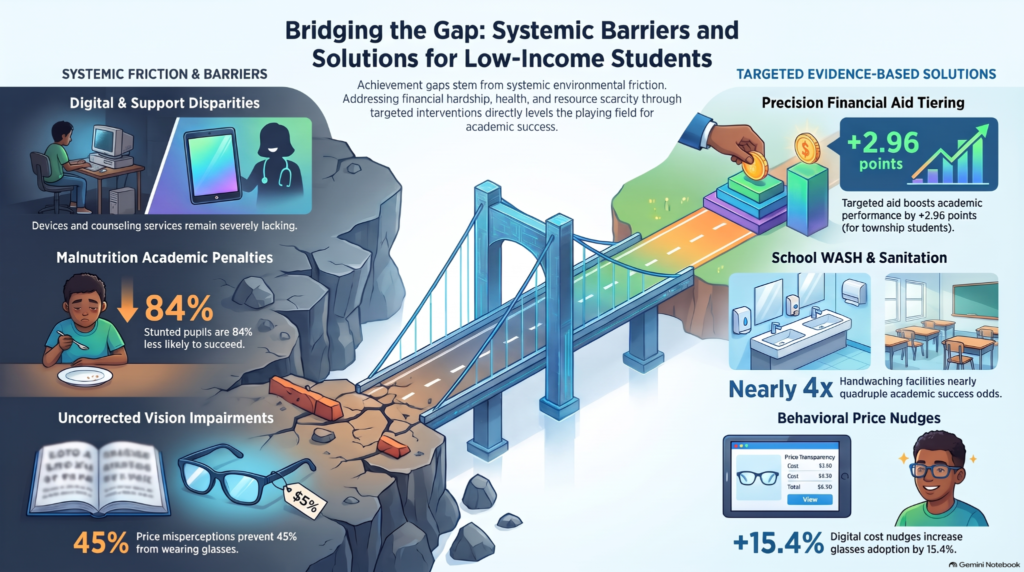
- Township Students: Mean ATT=0.296 (equivalent to +2.96 points on the 100-point scale; radius 0.218,p=0.042; nearest neighbor 0.374,p=0.008; kernel 0.296,p=0.011).
- Rural Students: Mean ATT=0.203 (equivalent to +2.03 points on the 100-point scale; radius 0.208,p<0.001; nearest neighbor 0.215,p<0.001; kernel 0.186,p<0.001).
- Relative Difference: The treatment effect for township students was 0.093 GPA points (45.8%) higher than for rural peers, confirming Hypothesis 3.
Economic, Behavioral, and Structural Interpretations
- The Economic Threshold of the Urban Household: Official national statistics show that urban low-income per capita disposable income (11,434 yuan) is over four times that of rural low-income cohorts (2,583 yuan). Urban families possess informal safety nets and discretionary cash; thus, baseline aid sufficiently covers tuition gaps. Additional funding above 14,000 yuan does not alter urban students’ time allocation or study behaviors, explaining the null effect.
- The “Optimal Gap Closure” Mechanism in Townships: Township students originate from households with moderate financial deficits. High-tier financial aid (~3,500+ yuan annually) is sufficient to close their expected family contribution gap almost entirely. Alleviating their financial anxiety allows them to withdraw completely from informal, exhausting part-time jobs and invest time in study groups, office hours, and academic integration, driving large achievement gains (+2.96 points).
- The Incomplete Coverage Deficit in Rural Households: Rural students face deep structural poverty, where families live near or below the national poverty line (2,300 yuan/year). Even with high-tier financial aid, funding falls short of total educational and living expenses. Rural students must still work part-time or send money home, limiting their time for study. Furthermore, rural youth encounter cultural transition barriers and stereotype threat when labeled “impoverished,” which attenuates the academic returns of aid (+2.03 points vs. +2.96 points).
Policy Recommendations and Systemic Implementation Roadmap
- Macro-Level Resource Allocation Reforms:
- Incorporate Student Hometown Demographics into Institutional Funding Formulas: National and provincial education departments currently allocate financial aid budgets to universities based primarily on total enrollment headcount. Resource formulas should be reformed to incorporate the proportion of enrolled students originating from township and rural areas, directing larger financial aid endowments to institutions serving higher shares of disadvantaged students.
- Expand Direct Education Transfer Payments: Subsidize targeted grants to raise minimum funding ceilings above the current 3,000–3,500 yuan annual benchmark for deeply impoverished rural undergraduates.
- University-Level Financial Aid Restructuring:
- Precision Need-Based Tiering: Eliminate uniform grant distributions. Universities should tier financial assistance according to regional cost-of-living deficits, allocating maximum grant packages to rural students.
- Holistic Development Packages for Rural Students: Because monetary aid alone cannot fully offset rural educational deficits, universities must bundle financial grants with academic support services: guaranteed on-campus work-study positions, subsidized skill workshops, peer tutoring, and mental health counseling to mitigate social stigma and foster campus integration.
- Upstream Integration Across Compulsory and Secondary Education:
- Total public spending on basic education financial aid (58.57 billion yuan) is disproportionately lower than higher education aid (217.64 billion yuan). Interventions must expand upstream to rural primary and junior secondary schools.
- Providing rural students with nutritional subsidies, boarding grants, and digital learning infrastructure during compulsory schooling prepares them to enter higher education with stronger foundational competencies, reducing academic failure and remedial costs in college.
Study Limitations and Future Research Directions
- Sample and Institutional Boundaries: Data were gathered from two graduating cohorts at a single provincial university in Fujian, featuring a high proportion of female students (86.1%); findings should be replicated across multi-institutional and national samples.
- Binary Treatment Dichotomization: Operationalizing financial aid as a binary variable (<14,000 vs. 14,000 yuan) restricted the analysis from testing continuous dose-response curves. Future research should employ Generalized Propensity Score (GPS) modeling to evaluate continuous marginal monetary thresholds.
- Sample Sizes in Urban and Township Cells: Smaller sample sizes in urban (n=91) and township (n=146) subgroups produced wider confidence intervals and lower sample retention under radius matching, rendering township estimates more sensitive to unobserved bias above =1.7.
- Cross-Sectional Outcome Metric: Academic achievement was assessed via final cumulative GPA without tracking term-by-term grade trajectories or specific study-time logs. Future research should incorporate multi-wave panel tracking to evaluate how financial aid dynamics interact with student retention, graduation, and post-collegiate labor market outcomes.
| REFERENCE: Biao Zeng, Qile Liu, Hongbo Wen, The impact of financial aid on academic performance of low-income college students: A financial aid supply and demand hypothesis, Heliyon, Volume 12, Issue 15, 2026, e45367, ISSN 2405-8440, https://doi.org/10.1016/j.heliyon.2026.e45367. (https://www.sciencedirect.com/science/article/pii/S2405844026008820) |
Nutrition, diet, and academic performance among school-age children in urban low-income settings: a case-control study in Addis Ababa, Ethiopia
Conceptual Framework and Research Rationale
- The Interplay of Nutrition, Cognition, and Academic Achievement: Nutrition and dietary patterns play a foundational role in neurodevelopment and scholastic success, particularly among school-age children in low-income urban environments where food insecurity and micronutrient deficiencies (e.g., iron, iodine, vitamin B12, zinc) are prevalent. Inadequate dietary intake during critical developmental windows can impair neural morphology, cognitive processing, and general intelligence (IQ).
- The “Double Burden” and Environmental Vulnerabilities in Urban Slums: In rapidly urbanizing low-income settings, children encounter overlapping nutritional challenges characterized by the coexistence of undernutrition (stunting, wasting, underweight) and emerging overnutrition (overweight/obesity). These physical vulnerabilities interact directly with inadequate Water, Sanitation, and Hygiene (WASH) infrastructure and varying pedagogical quality, compounding academic risks.
- The Role of the School Ecosystem: While home dietary factors are vital, school-level determinants—such as classroom instructional effectiveness, basic sanitation access, and hygiene practices—can either mitigate or exacerbate the cognitive detriments of poverty.
- Core Research Objectives:
- Investigate the independent and combined effects of nutritional status, dietary habits, and nutrient absorption inhibitors on academic performance among primary school children in urban low-income subcities of Addis Ababa, Ethiopia.
- Evaluate the concurrent impact of school WASH facilities (toilet access, handwashing) and teaching effectiveness on student academic achievement.
- Determine the nutritional, dietary, and educator-level predictors of cognitive capacity (Raven’s Standard Progressive Matrices IQ levels) within this cohort.
Methodology and Epidemiological Design
- Study Design, Setting, and Sampling Architecture:
- A school-based case-control study conducted from March to August 2023 across low-income districts within two randomly selected subcities of Addis Ababa, Ethiopia: Kolfe Keraniyo and Nifas Silk Lafto.
- Sampling Strategy: Multistage cluster sampling across 10 primary schools (2 public, 8 private) across the two subcities.
- Sample Size: Calculated via a double population proportion formula with a 2:1 control-to-case ratio (N=309 total participants; 103 cases and 206 controls) among children aged 6 to 14 years.
- Case vs. Control Definitions:
- Cases (n=103): Children exhibiting poor academic performance (PAP), defined as a cumulative grade point average (GPA) $<80\%$ over two consecutive academic semesters.
- Controls (n=206): Children exhibiting good academic performance (GAP), defined as a cumulative GPA $\ge 80\%$ over the same two-semester period.
- Data Collection Protocols and Nutritional Assessment:
- Dietary Assessment: Two non-consecutive 24-hour dietary recalls using the multiple-pass method with local food photo atlases. Energy and nutrient intakes were computed via NutriSurvey software and standardized using the nutrient density method (intake per 1,000 kcal). Dietary diversity scores were classified based on six food groups from the Ethiopian Food-Based Dietary Guidelines (high 4 vs. low <4 groups).
- Anthropometric Categorization (WHO Child Growth Standards): Assessed stunting (height-for-age z-score), wasting (weight-for-height z-score), underweight (weight-for-age z-score), and overweight/obesity (BMI-for-age z-score).
- Cognitive Testing: Intelligence Quotient (IQ) was evaluated using Raven’s Standard Progressive Matrices, categorized into percentile rankings: intellectually superior (>90th percentile), definitely above average (>75th percentile), intellectually average (>50th percentile), definitely below average (25th–50th percentile), and intellectually deficient (<25th percentile).
- School Environmental and Instructional Measures: Audited access to functional school toilets and handwashing facilities. Teaching effectiveness was evaluated via a 10-item Likert scale (dichotomized into poor vs. good). Caregiver nutritional awareness regarding iron- and vitamin-rich foods was scored according to FAO guidelines.
- Statistical Modeling:
- Binary logistic regression identified independent predictors of good academic performance (reporting Crude Odds Ratios [COR] and Adjusted Odds Ratios [AOR] with 95% Confidence Intervals).
- Multinomial logistic regression estimated factors predicting discrete Raven’s IQ categories. Model fit was assessed via the Hosmer-Lemeshow test, with statistical significance established at p<0.025.
Key Empirical Findings
- Anthropometric and Nutritional Predictors of Academic Performance:
- The Detriment of Malnutrition: In adjusted multivariable models, abnormal nutritional status was strongly associated with diminished odds of achieving good academic performance (GAP):
- Stunting (Chronic Malnutrition): Stunted children were 84% less likely to achieve GAP compared to normal-height peers (AOR = 0.16, 95% CI: 0.04 – 0.59, p < 0.01).
- Underweight: Underweight children were 75% less likely to attain GAP (AOR = 0.25, 95% CI: 0.09 – 0.70, p < 0.01).
- Overweight: Overweight children exhibited an even steeper penalty, being 96% less likely to attain GAP (AOR = 0.04, 95% CI: 0.01 – 0.14, p < 0.01).
- Wasting: Wasting status severely lowered GAP odds in the adjusted analysis (AOR = 0.05, 95% CI: 0.01 – 0.24, p < 0.01).
- Dietary Absorption Inhibitors: Regular consumption of coffee or tea with meals (inhibiting iron and micronutrient bioavailability) significantly lowered the odds of GAP by 68% (AOR = 0.32, 95% CI: 0.12 – 0.87).
- WASH Infrastructure and Instructional Predictors:
- School Handwashing and Sanitation: The presence of functional handwashing practices nearly quadrupled the likelihood of achieving GAP (AOR=3.70, 95% CI: 1.40–9.80). Similarly, school toilet facility access increased GAP likelihood by more than threefold (AOR=3.37, 95% CI: 1.25–9.09).
- Instructional Effectiveness: Students taught by highly effective teachers were nearly three times more likely to achieve good academic grades compared to those taught by less effective instructors (AOR = 2.94, 95% CI: 1.04 – 8.33).
- General School Climate: A positive psychosocial school environment substantially supported achievement (AOR = 3.70, 95% CI: 1.30 – 10.60).
- Multinomial Predictors of Intelligence Quotient (Raven’s IQ):
- Academic Alignment: Academic achievement was closely coupled with cognitive percentiles; children with poor academic performance were 99% less likely to be classified as intellectually superior (AOR = 0.01, 95% CI: 0.01 – 0.28, p = 0.005) and 94% less likely to be intellectually average (AOR = 0.06, 95% CI: 0.02 – 0.21, p < 0.001).
- Meal Frequency: Consuming fewer than three meals per day was an independent predictor of cognitive deficits, increasing the odds of scoring in the definitely below-average IQ tier by 2.65 times (AOR = 2.65, 95% CI: 1.06 – 6.67, p = 0.04).
- Caregiver Nutritional Literacy: Parental lack of nutrition awareness significantly increased the odds of children falling into lower cognitive percentiles (AOR = 0.35, 95% CI: 0.13 – 0.97, p = 0.04 for informed parents).
- Teacher Credentials and Cognitive Deficits: Students instructed by teachers holding only a Bachelor’s degree (BA/BSc) had nearly seven times higher odds of scoring in the below-average IQ category compared to peers taught by Master’s-level (MA/MSc) educators (AOR = 6.97, 95% CI: 1.14 – 42.68, p = 0.04). Ineffective teaching similarly tripled the odds of below-average cognitive performance (AOR = 2.95, 95% CI: 1.12 – 7.83, p = 0.03).
Nutritional, Physiological, and Educational Interpretations
- The Double Burden of Malnutrition on Neurocognition: The findings demonstrate that undernutrition and overnutrition are both deleterious to academic outcomes in urban low-income settings. Stunting and underweight status reflect chronic caloric and micronutrient deprivation that arrests brain maturation, reduces attention spans, and compromises memory encoding. Concurrently, childhood overweight/obesity—often fueled by low-cost, nutrient-poor, ultra-processed carbohydrates in urban slums—induces chronic systemic inflammation, lethargy, and psychosocial stigma, each depressing academic participation.
- WASH Pathways to Learning Continuity: The strong association of handwashing (AOR=3.70) and toilet access (AOR=3.37) with academic success reflects infection pathways. Poor school sanitation exposes children to recurring gastrointestinal illnesses (diarrhea incidence was 68.0% among cases vs. 50.0% in controls) and parasitic infections, causing absenteeism and micronutrient malabsorption that diminish scholastic stamina.
- Bioavailability and Dietary Practices: A high prevalence of tea and coffee consumption alongside meals (62.1% among cases) introduces polyphenol and tannin compounds that inhibit non-heme iron and zinc absorption. This contributes to subclinical anemia and cognitive fatigue, explaining the 68% performance drop among habitual consumers.
- Teacher Competence and Cognitive Stimulation: The large disparity in cognitive scores between students taught by Master’s- versus Bachelor’s-level teachers suggests that advanced pedagogical training fosters higher-order problem-solving and cognitive flexibility, shielding disadvantaged children from environmental under-stimulation.
Public Health and Educational Policy Recommendations
- Implement Integrated School Feeding and Nutrition Programs:
- Municipal education bureaus should mandate school feeding programs providing at least one balanced, micronutrient-dense meal daily, ensuring minimum meal frequencies (3 meals/day) for impoverished pupils.
- Regulate campus food vendors to curtail the consumption of empty-calorie, highly processed foods linked to childhood overweight and metabolic lethargy.
- Upgrade School WASH Infrastructure:
- Prioritize municipal budget allocations to construct, rehabilitate, and maintain gender-segregated flush toilets and dedicated handwashing stations with continuous soap supplies in all urban primary schools.
- Community-Based Nutritional Literacy Campaigns:
- Public health agencies must educate caregivers on food-combining practices, explicitly counseling against serving tea or coffee concurrently with iron-rich meals to avoid micronutrient absorption inhibition.
- Elevate Primary Teacher Professional Development:
- Expand continuous in-service pedagogical training and advanced certification for primary educators, focusing on active learning, student engagement techniques, and cognitive stimulation strategies.
Study Limitations and Future Directions
- Case-Control Architecture: The observational case-control design establishes correlational associations but cannot confirm longitudinal causality between nutritional deficits, environmental factors, and cognitive decline.
- Self-Report and Recall Bias: Dietary evaluations utilized 24-hour recalls from caregivers, which are susceptible to memory decay, portion misestimation, and social desirability bias.
- Unmeasured Biochemical Biomarkers: The study did not collect serum laboratory biomarkers (e.g., serum ferritin, hemoglobin, zinc, urinary iodine), relying on dietary recalls and anthropometry as proxies for micronutrient status.
- Geographical Specificity: The sample was drawn exclusively from low-income subcities of Addis Ababa, limiting generalizability to affluent urban enclaves or rural agrarian districts across Ethiopia.
- Future Research: Longitudinal birth-cohort studies and randomized controlled trials evaluating combined school-feeding and WASH interventions are needed to trace long-term neurocognitive trajectories across East Africa.
| REFERENCE: Yimer Mihretie Adugna, Abebe Ayelign, Tadesse Alemu Zerfu, Nutrition, diet, and academic performance among school-age children in urban low-income settings: a case-control study in Addis Ababa, Ethiopia, Preventive Medicine Reports, Volume 64, 2026, 103429, ISSN 2211-3355, https://doi.org/10.1016/j.pmedr.2026.103429. (https://www.sciencedirect.com/science/article/pii/S2211335526000574) |
Information for vision: Experimental evidence on nudging low-income students to wear eyeglasses
Conceptual Framework and Research Rationale
- The Vision Health and Educational Equity Paradox: Myopia is a primary cause of visual disability worldwide, affecting over 312 million individuals under age 19 globally, with adolescent prevalence exceeding 70% in China. Uncorrected refractive error disproportionately harms low-income and rural students, impairing classroom learning and compounding socioeconomic inequality.
- The Failure of Pure Supply-Side Interventions: While previous field trials demonstrated that providing free spectacles or vouchers increases standardized test scores by 0.11 to 0.22 standard deviations (SD), real-world compliance remains stubbornly low. A global meta-analysis indicates that the overall take-up rate of free eyeglasses interventions is only 53.11%, meaning nearly half of treated students refuse to wear them.
- Behavioral Barriers and Cognitive Biases: Low-socioeconomic status (SES) households face distinct cognitive and behavioral barriers. Students frequently hold biased beliefs regarding the utility and costs of vision correction, driven by three primary obstacles:
- Underestimation of Academic Benefits: Skepticism that glasses will improve learning or grades.
- Present Bias and Lack of Salience: Overlooking long-term eye health and future labor-market consequences due to adaptation to blurred vision.
- Social Stigma and Misperceptions of Norms: Underestimating peer myopia rates, resulting in fear of ridicule, appearance anxiety, and viewing glasses as a physical disability.
- Severe Price Misperceptions: Dramatically overestimating the out-of-pocket costs of purchasing standard corrective lenses.
- Core Research Objectives:
- Test whether light-touch, low-cost digital information nudges can shift students’ stated preferences regarding personal glasses-wearing and peer encouragement.
- Disentangle whether nudges operate via belief updating (correcting misinformed priors) or salience (elevating the cognitive prominence of already-known facts).
- Identify treatment effect heterogeneity across myopia duration, baseline academic performance, and peer-group compositions to guide precision policy targeting.
- Conduct a conservative cost-benefit analysis benchmarking academic gains against market educational investments.
Methodology and Experimental Design
- Field Setting and Population:
- A large-scale lab-in-the-field randomized controlled trial (RCT) conducted in March 2022 across all 20 middle schools in Yun County, Yunnan Province, China—a remote, underdeveloped mountainous county with a substantial Yi ethnic minority population.
- Pre-intervention clinical vision screenings administered by local hospitals in October 2021 established objective myopia diagnoses across the student body.
- Sample Size: 8,262 middle school students across Grades 7 and 8 (50.1% female, 60.4% ethnic minorities, 36.6% urban hukou, mean age 14.3 years).
- Subsample Breakdown: 3,420 myopic students already wearing glasses (41.4%), 2,229 myopic students without glasses (27.0%), and 2,613 non-myopic students (31.6%).
- Experimental Protocol and Randomization:
- Administered via desktop computers in school digital classrooms, with individual-level randomization stratified across classes. Demand effects were minimized by embedding distractor tasks in mathematics and English.
- Participants were randomized into one of five experimental arms (1-minute message display):
- Control: Neutral rest message (“Have a 30-second rest and please click to continue”).
- Treatment 1 (T1 – Short-Term Academic Benefits): Emphasized that uncorrected myopia impairs blackboard visibility, leading to classroom learning difficulties and grade declines.
- Treatment 2 (T2 – Long-Term Health & Labor Impacts): Highlighted that delaying glasses accelerates vision deterioration and harms future labor-market prospects.
- Treatment 3 (T3 – National Prevalence & Anti-Stigma): Shared national statistics showing that 74% of middle schoolers have myopia, framing glasses-wearing as a common, sensible norm rather than a stigma.
- Treatment 4 (T4 – Price Transparency): Clarified that standard eyeglasses can be purchased online for RMB 200–500 (28–69 USD), substantially cheaper than offline retail stores.
- Outcome Measures:
- Outcome 1 (Private Adoption): Stated willingness to wear eyeglasses upon developing/acknowledging myopia (answered by non-wearers, n=4,842).
- Outcome 2 (Public Endorsement & Norm Shifting): Stated willingness to encourage myopic friends to wear glasses (answered by all participants, N=8,262).
- Econometric Strategy:
- Ordinary Least Squares (OLS) intention-to-treat (ITT) regressions with school-class fixed effects and cluster-robust standard errors. P-values were adjusted for multiple hypothesis testing using sharpened False Discovery Rate (FDR) q-values.
- Regressions controlled for student gender, minority ethnicity, age, urban hukou, baseline beliefs, and prior academic test scores from county-wide unified examinations.
Key Empirical Findings
- Average Treatment Effects Across Outcomes:
- Full Cohort Stated Adoption (Col. 3): T1 (short-term benefits) significantly increased willingness to wear glasses by 5.6 percentage points (pp) (a 9.3% increase over the control mean of 60.4%, p<0.05,q=0.028). T3 (prevalence) increased adoption by 4.7 pp (p<0.05,q=0.062).
- Peer Endorsement and Norm Shifting (Col. 6): T1 increased the likelihood of encouraging friends by 5.8 pp (an 8.3% increase over the control mean of 70.1%, p<0.001,q=0.007). T2 (long-term impacts) increased peer encouragement by 4.5 pp (a 6.4% increase, p<0.001,q=0.028).
- Subsample Dynamics: The High-Need Untreated Population:
- Baseline Resistance: Myopic students without glasses exhibited severe baseline resistance, with a control-group willingness to wear glasses of only 44.9% (compared to 73.1% among non-myopic students). Yet, 60.8% of these same non-wearers were willing to encourage friends, demonstrating that personal adoption costs (stigma, perceived expense) bound tightly on private behavior.
- Impact on Myopic Students Without Glasses (Col. 1):
- T4 (Eyeglasses Price) was the single most effective intervention, increasing personal willingness to wear glasses by 6.9 pp (p<0.05,q=0.098), a 15.4% increase over the control mean.
- T1 (Short-Term Benefits) increased personal willingness by 7.0 pp (p<0.10,q=0.217).
- Impact on Existing Wearers (Col. 5): For students already wearing glasses, T1 and T2 increased peer encouragement by 6.1 pp (p<0.05) and 6.5 pp (p<0.01), respectively. Having already overcome the private social cost of wearing glasses, these students responded to future-consequence salience by reinforcing positive norms among peers.
- Behavioral Mechanisms: Belief Updating vs. Salience:
- T1 (Academic Benefits) operated via belief updating; treatment effects were concentrated exclusively among students who initially believed glasses had no impact on study (+8.5 pp, p<0.01), with zero effect on those who already held positive beliefs.
- T2 (Long-Term Consequences) operated via salience; treatment effects were concentrated among high-achieving students (+7.6 pp, p<0.05) whose baseline dedication to future schooling made long-term health warnings cognitively actionable.
- T3 (Prevalence) operated via belief updating; gains were largest among students who had previously underestimated peer myopia rates (+7.2 pp, p<0.05).
- T4 (Price) operated via belief updating; baseline perceived prices averaged RMB 1,778 ($245 USD)—nearly a full parent’s monthly income—against actual online costs of RMB 200–500. T4 significantly shifted willingness among students whose perceived baseline price exceeded the median (+8.4 pp, p<0.05).
- Heterogeneous Windows of Opportunity and Peer Reinforcement:
- Myopia Duration: Nudges were highly effective for students diagnosed within the past year (overall nudge effect +11.5 pp, p<0.05; T4 +16.7 pp, p<0.05). For students myopic for longer than a year, all nudge effects attenuated to zero (+0.3 pp, p>0.10), indicating that behavioral habituation to uncorrected blur sets in rapidly.
- Academic Achievement: Above-average students responded strongly (overall nudge effect +7.8 pp, p<0.05; T1 +9.5 pp, p<0.10; T3 +9.0 pp, p<0.05). Low-achieving students exhibited zero significant responses across all arms (-0.5 pp).
- Peer Composition:
- Classroom Eyeglass Prevalence: Price nudges (T4) were effective only in classrooms where the proportion of glasses-wearing peers exceeded the median of 35% (+11.1 pp, p<0.05). Visible peer adoption lowers stigma, allowing price information to become the final binding lever.
- Classroom Academic Climate: Being in a classroom with high-achieving peers significantly magnified overall nudge responsiveness (+8.5 pp, p<0.01; a 19% increase).
Academic Value and Cost-Benefit Synthesis
- Academic Performance Returns:
- Local Administrative Evidence: In OLS regressions controlling for study time, uncorrected myopia was negatively associated with test scores (-0.051 SD), whereas wearing glasses was positively associated with average scores by +0.111 SD (p<0.001) and mathematics scores by +0.131 SD (p<0.05).
- National Longitudinal Benchmark (CEPS): Value-added panel models tracking Grades 7 to 8 across China confirmed that eyeglasses adoption counteracted the academic penalties of myopia (+0.037 SD overall, +0.042 SD math).
- Economic Shadow Pricing:
- Test-score gains were monetized using market replacement costs for private academic tutoring in China, where a 0.150 SD gain in mathematics costs RMB 1,000 ($137 USD). Thus, the 0.131 SD gain from vision correction is valued at RMB 873.30 ($120 USD) per student.
- Net Benefit Projections:
- Digital Delivery Cost: Approximately $0.10 USD per student.
- Conservative Modeling: Assuming only a 10% translation of stated willingness into physical purchases (yielding a 1.57 pp adoption increase among responsive minority girls), an intervention delivered to 1,000 myopic minority girls costs $1,204 USD (digital delivery plus purchasing 16 pairs of glasses at $69 USD each) and generates $1,920 USD in tutoring-equivalent gains.
- Per-Capita Surplus: Yields a net benefit of 716USD(0.716 per capita) in the baseline upper-bound scenario, and up to 1,124USD(1.124 per capita) under lower glasses price benchmarks.
- Sensitivity Robustness: Threshold modeling confirmed that net benefits remain positive even under a minimal 5% take-up conversion rate and the highest retail glasses costs ($69 USD).
Policy Recommendations and Systemic Implementation Roadmap
- Precision Information Targeting Over Blanket Campaigns:
- Standard public health campaigns that combine generic messages into a single broadcast dilute efficacy. Interventions should deliver targeted messages matched to student profiles: short-term academic gains and price transparency for untreated myopic students; long-term vision preservation for existing wearers and high achievers.
- Exploit the Critical First-Year “Window of Opportunity”:
- Screening and nudging must occur immediately upon myopia onset during the Grade 7 transition. Once students adapt to visual impairment for more than 12 months, behavioral inertia hardens, rendering information nudges ineffective.
- Dismantle Severe Price Misperceptions:
- Educational authorities must publish localized price guides clarifying that quality corrective spectacles are available via accredited e-commerce or centralized public procurement for RMB 200–500, dismantling the belief that glasses require an entire month’s family income.
- Harness Social and Peer Spillovers:
- Leverage existing eyeglass wearers as peer advocates to normalize glasses-wearing and counter classroom teasing, priming the social terrain before distributing subsidies or vouchers.
Study Limitations and Future Directions
- Stated Preferences vs. Revealed Behavior: The primary outcomes measure stated willingness immediately post-intervention; although administrative test data and secondary panel models validate performance gains, unobserved physical purchase rates were not directly tracked in this trial.
- Indirect Proxy Measurement: Psychological mechanisms (stigma, long-term orientation) were inferred from baseline prevalence estimations and academic scores rather than psychometric scales, to avoid priming participants.
- Geographical and Economic Focus: Conducted within a single rural, ethnic-minority county in Southwest China under a standardized school assignment system, warranting evaluation across diverse urban and international LMIC contexts.
- Future Research: Subsequent trials should integrate mobile e-commerce vouchers directly with digital nudges to track real-time conversion from stated willingness to physical spectacle acquisition and longitudinal academic growth.
| REFERENCE: Jiusheng Zhu, Xinjie Zhang, Yu Zhao, Xiaoyang Ye, Information for vision: Experimental evidence on nudging low-income students to wear eyeglasses, Economics of Education Review, Volume 115, 2026, 102835, ISSN 0272-7757, https://doi.org/10.1016/j.econedurev.2026.102835. (https://www.sciencedirect.com/science/article/pii/S0272775726000774) |
CONCLUSION
Looking back at the trajectory of our educational systems, our greatest failure has been asking marginalized students to adapt to broken frameworks rather than rebuilding the frameworks to serve them. Educational equity is not an act of charity, nor is it about lowering academic expectations; it is about providing the precise structural scaffolding necessary for high standards to be attainable by everyone.
When we invest in targeted student resources, strong community partnerships, practical family support, and proper physical infrastructure, we are not handing out unearned advantages. We are simply calibrating the playing field so that genuine effort translates into tangible achievement. Much like improvising around a melody in jazz, effective education requires deep listening and adaptive responsiveness. We cannot continue to rely on standardized, one-size-fits-all curricula while expecting diverse, under-resourced communities to magically thrive.
Closing the opportunity barrier requires a persistent, collective commitment to ensure that every student who walks through a school door receives the dignity, tools, and real-world support they need to succeed. If we are serious about social mobility, our classrooms must become the most dependable, nurturing spaces in our students’ lives—places where their socioeconomic background does not dictate the ceiling of their potential.
