

Whenever I consult with school districts across different regions, I am continually struck by how heavily zip codes dictate the cognitive and psychological architecture of a child’s learning environment. As an educational psychologist, I often sit with teachers, school counselors, and parents who are trying to solve the exact same fundamental puzzle: how do we nurture curious, resilient, and academically capable young minds? Yet, the playing field where this puzzle is being solved is drastically uneven. In urban classrooms, the conversation frequently centers on mitigating sensory overload, integrating digital platforms, and leveraging collaborative resources.
But when I visit rural schools, the reality changes immediately. You see passionate, deeply committed educators who are forced to stretch every dollar, navigate severe teacher shortages, and manage classrooms where high-speed broadband isn’t a given, but a luxury. From a cognitive developmental lens, learning outcomes aren’t merely scores on a standardized test; they reflect a child’s sustained sense of psychological safety, mental well-being, and genuine access to cognitive enrichment.
When a school lacks specialized teachers, advanced coursework, or reliable digital tools, it isn’t just an administrative shortfall—it creates persistent cognitive strain on both the students and the staff. As we explore the divide between urban and rural education, we must look beyond superficial statistics and examine how physical environments, systemic resource distribution, and community structures directly shape how children think, adapt, and build their futures.
Urban and rural education systems reveal marked disparities in achievement, resources, and access. Urban schools benefit from higher funding, diverse curricular offerings, and extensive extracurricular activities, leading to improved educational outcomes. In contrast, rural schools face challenges such as limited budgets, geographic isolation, and teacher shortages, which hinder student success. This resource imbalance exacerbates educational inequities. Understanding the underlying factors influencing these differences highlights the complexity of rural educational challenges and potential strategies for improvement.
KEY TAKEAWAYS
- Urban schools typically have greater financial resources, leading to better infrastructure and access to technology compared to rural schools.
- Teacher retention and collaboration are stronger in urban settings, fostering improved educational quality and innovative teaching methods.
- Rural schools face geographic isolation and socioeconomic challenges, limiting access to extracurricular activities and diverse curricular offerings.
- Community engagement and support are often higher in urban areas, enhancing student involvement in clubs and extracurricular programs.
- Disparities in funding and resources significantly impact educational outcomes, with urban students generally achieving higher academic success than their rural counterparts.
COMPARING URBAN AND RURAL EDUCATION RESOURCES
Rural education systems serve small and often isolated communities with lower population density. Community engagement in rural schools often fosters connections across generations of families. The United States Department of Education defines rural schools as those located outside urbanized areas and clusters, including farming regions, small towns and remote communities.
Although urban and rural education systems serve the same fundamental purpose of fostering student learning, the resources available to them vary markedly, impacting educational outcomes.
Funding disparities often characterize these systems, with urban schools typically receiving more financial support due to higher property tax revenues and state allocations. In contrast, rural schools frequently struggle with limited budgets, which constrains their ability to hire qualified educators and provide essential materials.
Resource allocation is another critical factor; urban areas tend to invest in technology and extracurricular programs that enhance student engagement, whereas rural schools may lack access to these resources, resulting in a narrower educational experience.
This uneven distribution not only affects the quality of instruction but also influences student achievement and engagement. Consequently, understanding these disparities is essential for stakeholders aiming to bridge the gap and improve educational equity across both urban and rural contexts.
What Makes Urban Education More Effective?
Effectiveness in urban education can often be attributed to a combination of factors that enhance student learning and engagement. One significant aspect is urban teacher collaboration, which fosters a professional community where educators share best practices, resources, and support. This collaborative environment encourages innovation in teaching methods, leading to improved student outcomes.
Additionally, effective curriculum strategies tailored to the diverse needs of urban students play an essential role. These strategies often incorporate culturally relevant materials and experiential learning opportunities that resonate with students’ lived experiences, increasing motivation and retention.
Moreover, urban schools frequently have access to specialized programs and partnerships with community organizations, enriching the educational experience. As a result, urban education systems can effectively address the varied challenges students face, providing a more thorough educational framework that promotes success.
What Are the Challenges Faced by Rural Schools?
Rural schools encounter a distinct set of challenges that can hinder educational outcomes and limit opportunities for students. These difficulties are often compounded by geographic and socioeconomic factors, resulting in significant disparities.
Key challenges include:
- Funding Disparities: Rural schools frequently receive less funding per student compared to their urban counterparts, affecting resources and facilities.
- Transportation Issues: Limited public transportation options can impede student access to schools and extracurricular activities, isolating communities.
- Teacher Shortages: Attracting and retaining qualified teachers in rural areas is a persistent problem, leading to larger class sizes and diminished educational quality.
- Curriculum Limitations: Rural schools often lack diverse curricular offerings, which can restrict students’ exposure to critical subjects and advanced placement opportunities.
Community support plays an essential role in addressing these challenges, yet it is often insufficient to overcome the systemic barriers present in rural education. Understanding the educational inequality definition helps explain how differences in school funding, transportation, teacher availability, and access to learning opportunities create unequal academic conditions for students in rural and urban communities.
How Does Geography Affect Student Success?
Geography plays a critical role in shaping educational outcomes, particularly through the lens of resource availability in urban settings compared to rural environments.
Urban schools often benefit from greater access to funding, advanced technologies, and extracurricular programs, which can enhance student engagement and achievement.
Conversely, rural areas frequently struggle with teacher retention, leading to staffing shortages that negatively impact educational quality and student success. These differences in access to qualified educators, funding, and learning resources can also contribute to the racial achievement gap in education, as students from marginalized communities may face additional barriers that affect their academic performance and opportunities for success.
Urban Resource Availability
A significant disparity exists in resource availability between urban and rural educational settings, which directly impacts student success. Urban schools generally benefit from enhanced resources, yet disparities still exist within urban environments.
Key factors influencing resource availability in urban settings include:
- Urban school facilities: Many urban schools feature modern infrastructure, providing students with better learning environments.
- Access to technology: Urban institutions often have greater access to digital tools, enhancing educational experiences.
- Urban teacher support**: Urban areas may offer more professional development opportunities** for teachers, equipping them with essential skills.
- Community partnerships: Urban schools frequently collaborate with local organizations, enriching educational resources and experiences.
These elements collectively contribute to varying levels of educational achievement among urban students, highlighting the importance of resource availability in fostering academic success.
Rural Teacher Retention
In recent years, increasing attention has been devoted to the influence of urban–rural background disparities on students’ educational outcomes. Focusing on undergraduate students with comparable performance on the National College Entrance Examination, this study examines whether urban–rural background disparities remain associated with academic outcomes in higher education in China.
In contrast to urban educational environments, rural schools face significant challenges in teacher retention, which can adversely affect student success.
High rates of teacher mobility in rural areas often stem from limited access to professional development opportunities and socio-economic factors. Teachers in these settings frequently encounter isolation, resulting in a lack of support and resources essential for their growth.
This instability disrupts the continuity of instruction and hinders the development of strong student-teacher relationships, critical for effective learning. Additionally, rural schools may struggle to offer competitive salaries and benefits, further exacerbating retention issues.
Addressing these challenges through targeted professional development initiatives and community support can enhance teacher retention and ultimately improve educational outcomes for rural students.

WHAT ROLE DOES TECHNOLOGY PLAY IN URBAN VS RURAL EDUCATION?
Throughout my research on educational technology and cognitive development, one principle has remained crystal clear: technology is only an amplifier of existing educational infrastructure, never an automatic equalizer. In urban centers, digital devices and interactive platforms are increasingly utilized to foster self-directed inquiry and collaborative problem-solving. However, when I review findings like the recent studies from India and China highlighted in this post, the structural dissonance is stark. Handing a student a digital tablet or assigning online modules means very little if that child lacks stable home internet, private learning space, or basic physical sanitation at school.
From a mental health perspective, these compounding disparities induce subtle but corrosive chronic stressors. When rural learners constantly encounter hurdles—whether it is spotty broadband, a revolving door of under-resourced educators, or having to choose between academic activities and basic household chores—their executive functioning and working memory pay the price. I often observe students who internalize these systemic gaps as personal cognitive failures.
They begin to believe that because their school cannot offer advanced laboratory software or diverse electives, they are inherently less capable than their urban peers. We cannot discuss evidence-based teaching without acknowledging that a student’s cognitive capacity cannot fully flourish when basic environmental and structural support systems are compromised. Bridging this gap demands intentional, localized interventions that pair technology with actual physical and emotional support.
Education inequality between the rural and urban areas of the People’s Republic of China (PRC)—a potential bottleneck for human capital accumulation—has long been of interest to researchers and policymakers. This paper uses data from the China Family Panel Survey (CFPS) and the Rural–Urban Migration in China (RUMiC) survey to compare the education performance of rural children, children of rural-to-urban migrants, and urban children over the period 2009–2010. Results show that education performance of rural children and migrants’ children is significantly lower than that of their urban counterparts even after accounting for differences in personal attributes such as nutrition and parenting style. This provides useful insights for policymaking to reduce rural–urban education inequality and assist human capital accumulation in the PRC.
Technology greatly influences educational outcomes in both urban and rural settings, but its impact varies considerably between these environments. Urban areas often benefit from superior infrastructure and community connectivity, facilitating tech integration and access to online resources.
In contrast, rural schools frequently face access disparities due to infrastructure challenges, exacerbating the digital divide.
Key factors distinguishing technology’s role include:
- Access to Resources: Urban schools typically have greater access to online educational materials.
- Remote Learning Capabilities: Rural students may struggle with remote learning due to limited internet connectivity.
- Educational Equity: Urban districts often have more funding for technology, enhancing educational equity.
- Community Support: Urban communities may better support tech initiatives, while rural areas may lack local engagement.
How Do Extracurricular Opportunities Compare Between Urban and Rural Schools?
Extracurricular opportunities in urban and rural schools often differ notably regarding availability and participation rates.
Urban schools typically offer a wider variety of clubs and sports, leading to higher engagement levels among students.
Conversely, rural schools may face limitations in resources and community engagement, impacting the breadth and depth of extracurricular activities available to students.
Availability of Clubs
While urban schools often boast a wider variety of clubs and extracurricular activities due to larger student populations and more resources, rural schools frequently face significant limitations in these offerings. This disparity impacts club diversity and student engagement in meaningful ways.
Key differences include:
- Variety of Clubs: Urban schools may offer over 20 clubs, while rural schools often have fewer than 10.
- Accessibility: Urban students can easily access multiple clubs due to proximity and transportation options, unlike their rural counterparts.
- Funding: Urban clubs typically receive more financial support, enhancing their operational capacity.
- Community Involvement: Rural schools often rely on local resources, which may limit the scope of available activities.
These factors contribute to differing educational experiences, ultimately affecting student development and engagement.
Sports Participation Rates
Although urban schools generally provide a wider array of sports programs, rural schools often face challenges that limit student participation in athletics.
Urban institutions typically offer diverse athletic programs, enhancing sports engagement through various options for students. Conversely, rural schools frequently contend with fewer available sports, geographical isolation, and resource constraints, which can hinder participation rates.
Additionally, the smaller population in rural areas can result in fewer teams and limited competition. Research indicates that these disparities in access to athletic programs can affect not only physical development but also social skills and community bonding among students.
Ultimately, addressing these challenges is essential for promoting equitable sports engagement and ensuring that all students have the opportunity to benefit from athletic participation.
Community Engagement Opportunities
When comparing community engagement opportunities in urban and rural schools, significant disparities emerge, reflecting the broader socio-economic contexts of these environments.
Urban schools often benefit from extensive community outreach programs, while rural schools may struggle with limited resources.
Key differences include:
- Parental Involvement: Urban schools typically see higher participation in school events due to greater accessibility.
- Extracurricular Activities: Urban settings offer diverse options, including arts and sports, enhancing student engagement.
- Partnerships: Urban schools often collaborate with local organizations, providing additional resources and support.
- Volunteer Opportunities: Rural schools may lack such initiatives, limiting community participation.
These factors contribute to varying levels of community engagement, ultimately impacting student achievement and development in both settings.
Improving Rural Education
Improving rural education requires a multifaceted approach that addresses the unique challenges faced by these communities. Effective teacher training programs are essential, equipping educators with the skills necessary to adapt to diverse learning environments and student needs.
Financial support is vital, as rural schools often operate with limited budgets, hindering access to educational resources and technologies. Schools and educators can also explore the engineering teacher shop for practical teaching materials and classroom resources that support engaging instruction, strengthen student learning, and help address the resource limitations often experienced by rural schools. Additionally, fostering community partnerships can enhance educational opportunities; collaboration with local businesses and organizations can provide mentorship, internships, and additional funding.
Furthermore, curriculum development tailored to rural contexts can guarantee relevance and engagement, integrating local culture and economy into learning experiences. Research indicates that a combination of these strategies can greatly improve educational outcomes in rural areas, ultimately contributing to student achievement and community development.

RELATED STUDIES ABOUT URBAN VS RURAL EDUCATION OUTCOMES
In the landscape of education, urban and rural schools represent two distinct terrains, each with unique challenges and resources. Urban schools often serve as bustling hubs of opportunity, akin to vibrant cities, while rural schools resemble quiet villages, often overlooked yet rich in potential. The disparity in educational outcomes highlights the need for targeted interventions, much like a bridge connecting these two worlds. Addressing these gaps is essential for nurturing equitable educational growth, allowing all students to flourish, regardless of their geographic roots.
Digital pathways to menstrual health education in India: Bridging urban-rural gaps through inclusive technologies
Conceptual Framework and Research Rationale
- Menstrual Health Literacy as an Overlooked Public Health Domain: Over 120 million adolescent girls in India navigate puberty within an educational context historically constrained by cultural silences, pervasive stigma, and inadequate school instruction. Most girls reach menarche with incomplete or inaccurate knowledge, resulting in fear, anxiety, and unhygienic practices.
- The Potential of Digital Health Communication: Expanding mobile connectivity, interactive mobile applications, social media platforms, virtual reality (VR), and school-based Information and Communication Technologies (ICT) offer private, self-paced, and stigma-free learning environments that bypass traditional communicative taboos.
- The Intersecting Structural and Gendered Digital Divide: Although digital tools offer educational promise, access remains unequal. While urban adolescents benefit from personal smartphones, high-speed internet, and ICT-enabled classrooms, rural girls face shared device ownership, strict male guardianship/surveillance, weak connectivity, and low digital literacy.
- Theoretical Integration: Grounded across four intersecting frameworks:
- Digital Divide Theory: Identifies tiered disparities across physical access, digital skills, and meaningful opportunities for use.
- Information and Communication Technologies for Development (ICT4D): Positions technological tools within institutional and infrastructural ecosystems.
- The Capability Approach (Sen, Nussbaum): Asserts that technological availability alone does not guarantee empowerment unless individuals possess the freedom, privacy, and capability to translate tools into actionable health choices.
- Feminist and Intersectional Theories: Highlights how patriarchal norms, caste, poverty, and geographical isolation compound digital health exclusions.
- Core Research Objectives:
- Examine rural-urban disparities in digital access and school ICT infrastructure across India.
- Synthesize evidence regarding how digital learning tools influence menstrual knowledge, attitudes, autonomy, and hygiene behaviors.
- Situate India’s educational indicators within a comparative South Asian regional context.
- Articulate a conceptual “Digital Pathway Framework” linking digital inclusion to equitable menstrual health and academic participation.
Methodology and Synthesis Framework
- Review Typology and Scope:
- A narrative conceptual review synthesizing multidisciplinary literature published between 2010 and 2025 across public health, digital education, gender studies, and ICT4D.
- Analyzed over 120 sources, including 33 core peer-reviewed experimental, randomized controlled, quasi-experimental, and observational studies identified via a structured Scopus search.
- Secondary Contextual Datasets:
- Supplemented by secondary descriptive indicators from the National Family Health Survey (NFHS-5, 2019–2021), UNICEF Multiple Indicator Cluster Surveys (MICS), the International Telecommunication Union (ITU), the Unified District Information System for Education Plus (UDISE+), and NCERT surveys.
- Thematic Coding and Analysis:
- Iterative thematic synthesis extracted five core dimensions: digital access and infrastructure; digital learning tools; knowledge and attitude formation; autonomy and empowerment; and behavioral/educational outcomes.
Key Empirical and Comparative Findings
- India’s Internal Digital Divide (Urban vs. Rural Disparities):
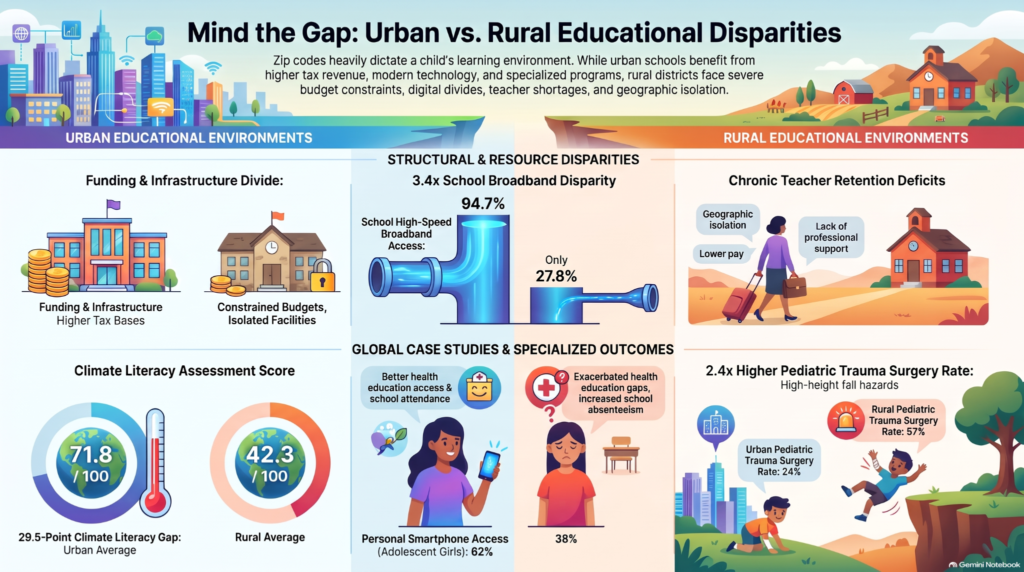
- Smartphone Ownership Among Adolescent Girls: 62% of urban girls report personal smartphone ownership compared to only 38% of rural girls.
- Internet Connectivity: 55% of urban adolescent girls have internet access compared to just 25% of rural girls.
- Digital Learning Exposure: 48% of urban adolescents are exposed to digital learning tools versus 22% in rural areas.
- School ICT Infrastructure: Only 24% of rural schools possess functional ICT laboratories and 17% have smart classrooms, compared to 57% and 41% of urban schools, respectively. Furthermore, only 32% of rural teachers are trained in digital pedagogy compared to 61% of urban teachers.
- Regional South Asian Comparative Tendencies:
- Smartphone Ownership: Sri Lanka reports the highest adolescent female smartphone ownership (78%), followed by Urban India (62%), Nepal (55%), Bangladesh (49%), Rural India (38%), and Pakistan (32%).
- Internet Access: Sri Lanka leads regional internet access (68%), followed by Urban India (55%), Nepal (40%), Bangladesh (35%), Rural India (25%), and Pakistan (23%).
- Hygienic Product Adoption: Use of hygienic menstrual products (sanitary napkins or clean materials) is highest in Sri Lanka (89%) and Urban India (77%), followed by Nepal (72%) and Bangladesh (65%), while dropping substantially in Rural India (52%) and Pakistan (44%).
- School Absenteeism During Menstruation: Absenteeism is highest in Pakistan (40%), Bangladesh (30%), and Rural India (23%), and lowest in Urban India (11%) and Sri Lanka (15%).
- Pedagogical Efficacy of Digital Tools:
- Comprehension and Stigma Mitigation: Multimedia learning (animated videos, illustrated modules) significantly outperforms lecture-based teaching in improving biological comprehension and premenarche preparedness.
- Gamification and Mobile Interventions: Randomized controlled trials of interactive mobile games (e.g., Go Nisha Go) demonstrated significant gains in reproductive health knowledge and confidence in personal decision-making.
- Emerging Technologies: Immersive virtual reality (VR) modules create safe learning spaces that alleviate embarrassment when navigating human anatomy and menstrual physiology.
- Social Media Dynamics: Platforms such as YouTube and Instagram normalize open discussion, model peer experiences, and encourage the adoption of sustainable menstrual products among connected youth.
The Digital Pathway Conceptual Framework
The review constructs a non-linear, reciprocal ecosystem consisting of five interacting components:
- Digital Access and Inclusion: Hardware ownership, broadband connectivity, digital literacy, and personal autonomy.
- Digital Learning Tools: Gamified applications, video modules, social media, and school ICT networks.
- Knowledge and Attitude Formation: De-stigmatization, biological comprehension, and hygiene awareness.
- Autonomy and Empowerment: Privacy, self-efficacy, and unconstrained health-seeking agency.
- Behavioral Outcomes and Wellbeing: Hygienic product use, continuous school attendance, and reduced health risks.
- Feedback Loops and Structural Dependencies: The framework emphasizes that increased knowledge feeds back to promote deeper digital engagement. However, these pathways remain contingent on external enabling conditions, notably school Water, Sanitation, and Hygiene (WASH) infrastructure, cultural restrictions, and digital privacy.
Structural Barriers and Unintended Consequences
- The Privacy Paradox and Patriarchal Surveillance: In rural households, mobile devices are typically owned and controlled by male heads of household. A lack of personal devices and strict surveillance restrict girls from privately seeking sensitive information regarding menstrual pain, abnormalities, or hygiene.
- The “Hardware Without Water” Bottleneck: Digital learning tools cannot compensate for deficient physical school environments. Rural schools across states like Karnataka, Odisha, and Maharashtra continue to lack functional, lockable toilets, running water, soap, and pad disposal mechanisms/incinerators. When schools lack adequate WASH facilities, digital literacy alone cannot prevent menstrual absenteeism.
- Digital Vulnerabilities: Expanding online exposure without adequate digital literacy risks exposing adolescent girls to commercialized misinformation, unverified medical advice, data privacy violations, and online harassment.
Policy, Pedagogical, and Practical Implications
- Gender-Responsive Digital and Physical Infrastructure:
- Public investments must target the expansion of free, secure broadband and school-based ICT laboratories in rural secondary schools.
- Digital health programs must be paired with physical investments in school WASH facilities, ensuring clean water, private sanitation, and safe waste disposal.
- Community-Embedded Delivery Channels:
- Scale government mobile platforms (such as Kilkari and Mobile Academy) to train Accredited Social Health Activists (ASHAs) and Anganwadi workers to deliver digital modules directly to rural girls within community centers, bypassing household device shortages.
- Teacher Training and Curriculum Integration:
- Institutionalize digital pedagogy and culturally responsive menstrual health instruction within pre-service and in-service teacher development curricula.
- Advancing Sustainable Development Goals (SDGs):
- Integrating menstrual literacy into digital education policies directly advances SDG 3 (Good Health and Well-being), SDG 4 (Quality Education), SDG 5 (Gender Equality), and SDG 10 (Reduced Inequalities).
Study Limitations and Future Directions
- Methodological Scope: As a narrative review relying primarily on Scopus and public secondary datasets, the study is interpretive and did not conduct a formal meta-analytic effect-size estimation or systematic risk-of-bias protocol.
- Data Harmonization Constraints: Secondary survey datasets (NFHS, UNICEF, ITU, UDISE+) varied in sampling years, cohort age definitions, and methodology, restricting cross-national data to descriptive comparisons rather than direct causal inferences.
- Future Research: Longitudinal intervention studies and mixed-methods evaluations are needed to track how digital interventions impact rural adolescents’ long-term reproductive health behaviors, school retention, and agency across caste and economic gradients.
| REFERENCE: Sangeetha George, Sheeja Remani B. Karalam, S. Bhavana, Digital pathways to menstrual health education in India: Bridging urban-rural gaps through inclusive technologies, Social Sciences & Humanities Open, Volume 14, 2026, 103367, ISSN 2590-2911, https://doi.org/10.1016/j.ssaho.2026.103367. (https://www.sciencedirect.com/science/article/pii/S2590291126009332) |
China’s rural-urban climate education divide: addressing environmental justice in climate literacy
Conceptual Framework and Research Rationale
- The Intersection of Climate Education and Environmental Justice: Climate education encompasses the systematic development of knowledge, adaptive competencies, and behaviors necessary to navigate climate change. Environmental justice examines how environmental benefits and burdens are distributed, asserting that historically marginalized communities face disproportionate climate vulnerabilities while being systematically excluded from critical adaptation resources and educational opportunities.
- China’s Urbanization and the Rural-Urban Paradox: Rapid urbanization in China (rising from 36% in 2000 to 65% in 2023) has entrenched spatial and educational stratification, largely codified through the hukou (household registration) system. China’s rural population of approximately 491 million (accounting for nearly 6% of the global population) produces 70% of the nation’s agricultural output and manages vital ecological barriers (forests, grasslands, watersheds), bearing the brunt of climate-related disasters (droughts, floods, extreme weather) despite low historical emissions. This creates an acute environmental justice paradox: those most vulnerable to climate hazards possess the least access to formal climate literacy and adaptation training.
- Three-Dimensional Environmental Justice Lens (Schlosberg, Fraser, Walker): The study investigates climate education inequities across three mutually reinforcing justice dimensions:
- Distributive Justice: The inequitable spatial allocation of certified environmental science educators, digital infrastructure, curriculum materials, and per-pupil funding.
- Recognition Justice: The epistemic devaluation or erasure of rural lived experiences, traditional ecological knowledge (TEK), and local agricultural adaptation strategies in standardized curricula, which privilege urban-centric, Western scientific frameworks.
- Participatory/Procedural Justice: The systematic exclusion of rural educators, students, and community leaders from educational policymaking and curriculum design, reducing consultation to tokenistic “participation theater”.
- Core Research Objectives:
- Quantify the magnitude of rural-urban climate literacy disparities across geographical and socioeconomic zones in China using standardized psychometric instruments.
- Identify intermediate institutional mechanisms (teacher quality, technology infrastructure, curriculum integration) mediating these disparities through multilevel statistical modeling.
- Capture stakeholder experiences of environmental injustice and grassroots adaptation through qualitative thematic analysis.
- Formulate an evidence-based, phased policy roadmap linking climate education equity to national and global climate resilience.
Methodology and Empirical Data Architecture
- Convergent Parallel Mixed-Methods Design:
- Combines large-scale standardized quantitative assessments with in-depth semi-structured qualitative interviews across matched pairs of rural and urban communities.
- Data collection spanned September 2019 to June 2025 across 12 provinces representing diverse geographic and development tiers: Eastern developed (Beijing, Shanghai, Jiangsu), Central transitional (Hubei, Hunan, Anhui), Western developing (Gansu, Xinjiang, Guizhou), and Northeastern industrial (Liaoning, Heilongjiang, Jilin).
- Quantitative Sample and Measurement Instruments:
- Quantitative Cohort: 2,847 participants aged 15 to 64 years (1,523 rural, 1,324 urban; 1,247 students, 423 teachers, 867 parents, 310 community leaders).
- Climate Literacy Assessment Tool (CLAT): A standardized 100-point instrument measuring five 20-point domains: climate science understanding, impacts awareness, mitigation knowledge, adaptation strategies, and communication skills. Exhibited high reliability (=0.89 rural, 0.91 urban), verified five-factor CFA fit, and demonstrated configural, metric, and scalar measurement invariance across groups.
- Educational Resources Survey (ERS): Systematic audits across 247 schools (134 rural, 113 urban) evaluating teacher qualifications, lab equipment, and curriculum integration (ICC = 0.92).
- Digital Access and Learning Support Scale (DALS): Assessed broadband connectivity, digital devices, and operational digital literacy (=0.82–0.85).
- Qualitative Sample and Thematic Protocol:
- 89 semi-structured in-depth interviews (45 rural: 18 teachers, 15 students, 12 community members; 44 urban: 17 teachers, 16 students, 11 administrators), producing 847 pages of verbatim text.
- Analyzed via reflexive thematic analysis in NVivo 12 with dual independent coding (=0.84), achieving verified thematic saturation across groups.
- Multilevel Modeling Specifications:
- Three-level hierarchical linear modeling estimated via Restricted Maximum Likelihood (REML) in R (lme4): Level 1 individuals (N=2,847) nested within Level 2 communities (ICC=0.23) nested within Level 3 provinces (ICC=0.11).
- Modeled sequential blocks: Model 1 (demographics), Model 2 (+digital access), Model 3 (+community resources), and Model 4 (+provincial GDP and policy).
Key Empirical Findings
- Pronounced Disparities in Climate Literacy:
- Overall Assessment Gap: Urban participants scored an average of 71.8/100 (SD=9.8), whereas rural participants averaged 42.3/100 (SD=12.1), reflecting a massive, statistically significant disparity of 29.5 points (p<0.001, Cohen’s d=2.70).
- Domain-Specific Deficits: Disparities exceeded large effect-size thresholds across all domains:
- Climate Science Understanding: Rural 7.8/20 vs. Urban 15.6/20 (d=2.62,p<0.001).
- Mitigation Knowledge: Rural 8.1/20 vs. Urban 13.9/20 (d=1.64,p<0.001).
- Climate Impacts Awareness: Rural 8.9/20 vs. Urban 14.2/20 (d=1.61,p<0.001).
- Adaptation Strategies: Rural 9.2/20 vs. Urban 14.3/20 (d=1.52,p<0.001).
- Climate Communication: Rural 8.3/20 vs. Urban 13.8/20 (d=1.43,p<0.001).
- Development Magnification: Disparities were widest in economically developed Eastern provinces (average rural-urban gap of 34.2 points) and narrower in Western provinces (23.7 points), disproving the assumption that economic growth automatically produces educational convergence.
- Disproportionate Distribution of Educational Resources (Distributive Injustice):
- Teacher Qualifications: Only 23.4% of rural teachers held environmental science training versus 78.9% of urban teachers (a 3.37-fold urban advantage). Specialized climate change training existed for only 8.7% of rural educators compared to 45.2% of urban educators (a 5.20-fold disparity).
- Technological Divide: High-speed broadband was accessible in only 27.8% of rural schools vs. 94.7% of urban schools (3.41-fold disparity). Computer labs equipped with climate simulation software were available in only 12.3% of rural schools vs. 67.8% of urban schools (5.51-fold disparity).
- Curriculum Delivery: Formal climate courses existed in only 18.9% of rural schools vs. 84.7% of urban schools (4.48-fold disparity).
- Multilevel Modeling: Mediating Pathways of Structural Inequality:
- In baseline models, rural status strongly predicted lower climate literacy (=-0.52,p<0.001).
- When community-level resources (teacher qualifications, digital infrastructure, curriculum) and provincial factors (GDP per capita, environmental policy index) were added, the rural status coefficient attenuated to =-0.24 (a 54% reduction).
- Community-level variables explained substantial variance (marginal R2 increased from 0.41 in Model 2 to 0.52 in Model 3, reaching a total conditional R2 of 0.78 in Model 4).
- Teacher qualifications (=0.31,p<0.001) and technology infrastructure (=0.25,p<0.001) emerged as the strongest structural mediators of the divide.
- Qualitative Findings Across Environmental Justice Dimensions:
- Distributive Injustice (Present in 85% of interviews): Documented severe material scarcity, outdated textbooks, lack of laboratory apparatus, and “educational desertification” caused by the outward migration of educated youth.
- Recognition Injustice (Present in 75% of interviews; 87% rural vs. 64% urban): Standardized curricula focused exclusively on abstract, global-scale phenomena (e.g., polar ice caps, parts-per-million CO2) while ignoring localized agricultural impacts, weather anomalies, and intergenerational farming adaptations.
- Participatory Injustice (Present in 80% of interviews; 93% rural vs. 66% urban): Rural educators and community leaders described being completely excluded from provincial curriculum committees, characterizing official consultative meetings as “participation theater”.
- Productive Tension (Epistemic Measurement Bias): While quantitative CLAT scores indicated low rural literacy, qualitative interviews revealed sophisticated rural Traditional Ecological Knowledge (TEK)—including phenological cues (insect/bird behavior predicting droughts), wind/cloud forecasting, and soil-moisture management—that was entirely unmeasured by Western-centric standardized instruments.
Environmental Justice, Social, and Systemic Interpretations
- The Cycle of Layered Injustice: The rural-urban climate education divide is not an accident of geography; it is an institutionalized product of urban-normative resource allocation and hukou restrictions. Distributive shortfalls (underfunded schools) lead to low performance on standardized metrics, which administrators interpret as low student capacity, justifying further underinvestment.
- Epistemic Injustice and Epistemicide: By validating only formal scientific discourse and ignoring place-based agricultural knowledge, national curricula commit epistemic injustice. Rural youth are alienated from their own cultural identities and local environments, while their communities lose access to practical adaptation strategies.
- Threat to National and Global Climate Resilience: Food security for China’s 1.4 billion people relies on rural farming communities. Ill-prepared rural populations cannot interpret climate projections, adopt climate-smart agriculture, or manage water catchments effectively. Unmitigated rural climate vulnerability risks driving distress-induced climate migration into urban centers, straining municipal infrastructure and eroding social stability.
Policy Recommendations: A Phased, Feasibility-Based Implementation Strategy
The study proposes a concrete, three-tiered policy intervention framework:
- Short-Term Interventions (Years 1–2; Estimated Annual Cost: ¥280 Million):
- Mobile Climate Education Units: Deploy specialized mobile laboratory vans equipped with digital simulation tools and experimental equipment to visit rural schools for intensive week-long workshops (reaching 450 schools in Year 1, expanding to 1,500 schools in Year 2).
- Teacher Residential Bootcamps: Conduct mandatory two-week summer residential training institutes in climate pedagogy and science, paired with year-round virtual mentorship.
- Emergency Broadband Expansion: Subsidize public-private telecom partnerships to ensure baseline broadband connectivity and hardware access for rural educational centers.
- Medium-Term Capacity Building (Years 3–5; Estimated Five-Year Cost: ¥1.45 Billion):
- Regional Resource Centers: Establish 50 county-level climate education centers staffed by local educators to co-develop place-based curricula tailored to local ecological vulnerabilities.
- Rural Educator Retention Incentives: Provide 30% salary supplements, housing allowances, and accelerated professional promotion pathways to attract and retain certified environmental science educators in rural postings.
- Cross-Curricular Mandates: Integrate experiential climate modules across biology, geography, and social studies, allowing flexibility for localized agricultural adaptation.
- Long-Term Structural Transformation (Years 5–10+):
- Fundamental Hukou and Fiscal Reform: Transition to a unified national per-student educational funding formula with portable benefits, eliminating resource disparities tied to household registration status (projected to require over ¥50 billion annually at scale).
- Participatory Governance Structures: Legally institutionalize rural representation by reserving 30% of seats on provincial climate education advisory committees for rural educators, farmers, and community leaders, coupled with participatory district budgeting.
Study Limitations and Future Directions
- Cross-Sectional Architecture: The study design measures associations at a single cross-section, precluding strict causal attribution regarding the long-term impact of resource deprivation on adult adaptive behaviors. Longitudinal panel cohorts are needed.
- Standardized Epistemic Bias: Standardized CLAT instruments prioritized Western, technical climate science, systematically under-scoring individuals with deep but informal traditional ecological and agricultural knowledge.
- Population Representativeness: While 12 provinces were sampled, remote ethnic minority populations, internal seasonal migrants, and “left-behind” rural children warrant deeper ethnographic and intersectional investigation.
- Future Research: Subsequent inquiries should develop co-created, pluriversal climate literacy metrics that evaluate Western scientific understanding alongside Traditional Ecological Knowledge (TEK), testing intervention efficacy across diverse Global South contexts.
| REFERENCE: Joshua Ampofo, Jiacheng Li, Weiwei Zhu, China’s rural-urban climate education divide: addressing environmental justice in climate literacy, Climate Risk Management, Volume 51, 2026, 100799, ISSN 2212-0963, https://doi.org/10.1016/j.crm.2026.100799. (https://www.sciencedirect.com/science/article/pii/S2212096326000124) |
Pediatric Traumatic Brain Injury in Northwest Ethiopia: Epidemiology, Surgical Management, and Rural–Urban Disparities at a Tertiary Referral Center
Clinical Rationale and Conceptual Framework
- The Global and Regional Burden of Pediatric Neurotrauma: Pediatric traumatic brain injury (TBI) is a leading cause of childhood morbidity and mortality worldwide, with children in low- and middle-income countries (LMICs) disproportionately affected by resource constraints, delayed care, and limited neurosurgical access. Disruption of the developing pediatric brain carries enduring risks of cognitive, behavioral, and psychosocial deficits.
- Regional Discrepancies in Injury Mechanisms: While road traffic accidents (RTAs) predominate in high-income settings and urban cohorts (e.g., pedestrian injuries leading pediatric trauma in Southern Ethiopia), pediatric neurotrauma in Northwest Ethiopia is heavily shaped by rugged mountainous terrain, agrarian lifestyles, and herding activities that expose children to unprotected heights.
- Rural-Urban Disparities and Structural Inequity: In Ethiopia, specialized neurosurgical services remain centralized in few tertiary facilities. Rural pediatric populations encounter hazardous physical environments (e.g., farming equipment, trees, cliffs) and face severe transportation barriers and referral delays, heightening the risk of secondary brain injury.
- Core Research Objectives:
- Characterize the epidemiology, injury mechanisms, clinical severity, and surgical management of pediatric TBI at the University of Gondar Comprehensive Specialized Hospital (UoGCSH) in Northwest Ethiopia.
- Quantify structural disparities in injury severity, diagnostic imaging, and operative rates between rural and urban children.
- Identify multivariable independent clinical and demographic predictors of surgical intervention.
Methodology and Study Design
- Study Setting and Population:
- A single-center retrospective cohort study conducted at the University of Gondar Comprehensive Specialized Hospital, the primary tertiary referral and neurosurgical facility serving a catchment population exceeding 13 million people across Northwest Ethiopia.
- Inclusion Criteria: Complete enumeration of all pediatric patients aged 18 years presenting with clinically or radiologically diagnosed TBI between September 1, 2022, and September 30, 2025 (N=224).
- Variable Extraction and Operational Definitions:
- Demographics & Exposure: Patient age (stratified by developmental stages), sex, and residential status (rural vs. urban kebeles based on official municipal boundaries).
- Clinical & Injury Parameters: Mechanism of trauma (falls, RTAs, assaults, animal kicks/bullet/axe), fall height (classified as high-height [3 meters or from trees/roofs/cliffs] vs. low-height), admission Glasgow Coma Scale (GCS; mild 14–15, moderate 9–13, severe 3–8), and time to arrival (early 24 hours vs. delayed >24 hours).
- Diagnostic & Surgical Interventions: Diagnostic modality (CT scan, plain skull X-ray, MRI), skull fracture patterns (linear vs. depressed), surgical procedure types, and postoperative complications.
- Primary Outcomes: Functional status at hospital discharge measured via the Glasgow Outcome Scale (GOS; GOS 5 = good recovery, GOS 4 = moderate disability, GOS 1 = mortality) and length of hospital stay.
- Statistical Analysis:
- Analyzed using EpiData 3.1 and Stata 17. Bivariate group comparisons between rural and urban patients utilized Chi-square or Fisher’s exact tests.
- Multivariable logistic regression modeled independent predictors of surgical intervention, adjusting for age, GCS severity, trauma mechanism, skull fracture, and rural residence (reporting Adjusted Odds Ratios [aOR] with 95% Confidence Intervals [CI]; model fit: Pseudo R2=0.214,p<0.001).
Key Empirical Findings
- Epidemiological and Clinical Demographics:
- Cohort Profile: Median patient age was 8 years (IQR: 4–12 years). School-age children (6–12 years) comprised 52% (n=116), followed by toddlers/preschoolers (28%, n=62), adolescents (17%, n=38), and infants (4%, n=8).
- Sex and Residential Imbalance: Male patients predominated at 73% (n=164). Rural residents accounted for 78% of the entire cohort (n=174), with urban patients comprising 22% (n=50).
- Mechanisms of Trauma: Falls represented the single largest injury mechanism (63%, n=142), followed by physical assault (14%, n=31), RTAs (9%, n=21), and other causes (13%, n=30, including animal kicks and penetrations).
- TBI Severity on Admission: Mild TBI occurred in 76% (n=171), moderate TBI in 19% (n=42), and severe TBI in 5% (n=11).
- Care Delays: 31% of children (n=69) experienced delayed hospital presentation exceeding 24 hours from initial trauma.
- Diagnostic Modalities and Surgical Interventions:
- Resource Constraints in Imaging: Due to machine availability and financial constraints, CT scans were performed in only 41% of patients (n=91), while plain skull radiography was the primary modality in 58% (n=129); MRI was utilized in 3% (n=6).
- Structural Cranial Pathology: Skull fractures were diagnosed in 75% of patients (n=167), of which 43% (n=97) were depressed skull fractures.
- Operative Burden: Exactly 50% of the entire cohort (n=111) underwent surgical intervention.
- Surgical Typology: Elevation of depressed skull fracture was the predominant procedure (87%, n=97 of operated cases), dural repair with elevation/craniotomy occurred in 45% (n=50), and formal craniotomy for hematoma evacuation was performed in 7% (n=8). 55% of surgical patients underwent multiple concurrent procedures.
- Rural vs. Urban Disparity Gradient:
- High-Height Fall Mechanism: Among fall victims, rural children were significantly more likely to have fallen from high elevations (3 m, such as trees, cliffs, or roofs) than urban children (88% vs. 27%, 2=49.89,p<0.001).
- Injury Severity and Pathology: Rural children presented with significantly higher rates of skull fracture (74% vs. 42%, 2=18.13,p<0.001) and higher proportions of moderate-to-severe TBI (28% vs. 10%, 2=7.26,p=0.026).
- Disproportionate Operative Rates: Rural patients underwent neurosurgical intervention at more than double the rate of urban patients (57% [n=99/174] vs. 24% [n=12/50], 2=16.81,p<0.001).
- Presentation Latency: Delayed presentation (>24 hours) was higher among rural children (34% vs. 20%), bordering statistical significance (p=0.060).
- Multivariable Predictors of Surgical Intervention:
- In the adjusted multivariable logistic regression model, two factors independently predicted the need for surgery:
- Presence of a Skull Fracture: Increased operative odds by more than sevenfold (aOR=7.37, 95% CI: 3.89–13.98, p<0.001).
- Rural Residence: Remained an independent predictor of surgery, nearly tripling the odds (aOR=2.74, 95% CI: 1.19–6.28, p=0.018), independent of age, GCS severity, and fall mechanism.
- Collinearity of Neurologic Scores: Admission GCS severity (aOR=0.80,p=0.451), patient age (aOR=1.06,p=0.155), and fall mechanism (aOR=1.66,p=0.147) were not independently predictive once structural cranial fractures and residence were controlled.
- Short-Term Outcomes and Complications:
- Functional Discharge Status: Despite systemic delays and high surgical rates, short-term outcomes were favorable: 83% (n=185) achieved good recovery (GOS 5), and 17% (n=37) demonstrated moderate disability (GOS 4).
- In-Hospital Mortality: Overall mortality was 0.9% (n=2); both fatalities occurred in non-operated patients presenting with initial severe TBI (GCS 3–8). No patients were discharged in a vegetative state.
- Postoperative Morbidity: Complications developed in 20% of surgical patients (n=22/111), dominated by surgical site infections, meningitis, and subdural empyema (16%, n=18). Infection rates did not differ significantly between rural (18%) and urban (0%) surgical patients (p=0.12), nor did delayed presentation correlate with increased infection rates (16% in delayed vs. 23% in early; p=0.56). Median length of hospital stay was 4 days (IQR: 3–5 days).
Clinical, Structural, and Surgical Interpretations
- Structural Cranial Pathology Trumps GCS in Surgical Triage: While international algorithms rely heavily on advanced neuroimaging and GCS score drops, surgical triage in this resource-limited cohort was driven by palpable and radiographic structural cranial disruption. Depressed skull fractures and underlying dural lacerations served as clear, actionable indications for operative elevation and debridement, rendering GCS non-significant in adjusted predictive models.
- The Environmental Etiology of Rural Neurotrauma: The heightened surgical risk among rural children reflects high-energy kinetic trauma unique to agrarian livelihoods. In Northwest Ethiopia, children engage in agricultural labor, tree climbing for foraging/firewood, and livestock herding along steep topography without safety barriers, predisposing them to high-velocity cranial impact.
- Survivorship and Referral Center Selection Bias: The low mortality rate (0.9%) and high functional recovery rate (83%) must be contextualized within low-resource trauma systems. In rural terrains where emergency prehospital transit is lacking, children suffering catastrophic primary brain injuries or diffuse axonal trauma may expire prior to reaching tertiary neurosurgical care. Those reaching the hospital frequently present with survivable, mechanically correctable focal lesions (such as compound depressed fractures).
- Unmeasured Chronic Sequelae in “Mild” TBI: Although 76% presented with mild clinical GCS scores and 83% achieved favorable discharge scores, mild pediatric TBI frequently causes long-term neurocognitive, executive, and behavioral deficits that remain undetectable at acute hospital discharge.
Policy, Prehospital, and Clinical Recommendations
- Region-Specific Pediatric Injury Prevention:
- Health extension programs in Northwest Ethiopia must prioritize fall prevention education tailored to rural agrarian routines, focusing on tree climbing hazards, rooftop safety, and supervision during high-risk agricultural tasks.
- Decentralization of Emergency Trauma Networks:
- Regional health bureaus should strengthen district hospital emergency capacity by training primary medical officers in basic cranial stabilization, wound debridement, and early referral triage.
- Implement mobile- and telemedicine-supported triage linkages between rural health centers and UoGCSH to expedite surgical transfers and decrease the 31% rate of delayed presentations.
- Hospital Resource Scaling and Diagnostic Access:
- Expand reliable, subsidized CT scanning infrastructure at tertiary hubs to decrease diagnostic reliance on plain radiography and avoid missing occult intracranial hemorrhages.
- Implement standardized infection-control bundles for open cranial fractures to reduce the 16% intracranial and surgical site infection rate.
- Post-Discharge Neurorehabilitation and Tracking:
- Establish specialized outpatient pediatric neurotrauma clinics to systematically screen for chronic post-concussive symptoms, school difficulties, and social dysfunction.
Study Limitations and Future Directions
- Retrospective Single-Center Design: Data collection relied on medical records without long-term outpatient follow-up beyond hospital discharge, precluding assessment of chronic neurocognitive disability and quality of life.
- Underdiagnosis Due to Imaging Scarcity: With only 41% receiving CT scans, non-displaced fractures, small contusions, and non-operative intracranial hemorrhages were likely under-ascertained.
- Prehospital Catchment Bias: Hospital enumeration excludes community deaths occurring prior to facility arrival, potentially underestimating the true population incidence and mortality of pediatric TBI.
- Future Research: Prospective, multi-center longitudinal registries incorporating formal 6- and 12-month neuropsychological evaluations and geospatial modeling of transport times are needed to optimize trauma referral corridors in East Africa.
| REFERENCE: Yohannis Derbew Molla, Esayas Adefirs Tefera, Biniyam Alebachew Tegegne, Suleiman Ayalew Belay, Pediatric Traumatic Brain Injury in Northwest Ethiopia: Epidemiology, Surgical Management, and Rural–Urban Disparities at a Tertiary Referral Center, World Neurosurgery, Volume 212, 2026, 125166, ISSN 1878-8750, https://doi.org/10.1016/j.wneu.2026.125166. (https://www.sciencedirect.com/science/article/pii/S1878875026003827) |
CONCLUSION
Closing the gap between urban and rural education requires us to stop measuring success solely through a one-size-fits-all, urban-normative standard. In my consulting work with educators, I regularly remind teams that true learning resilience emerges when students feel deeply connected to their environment and supported in their whole well-being. Rural communities possess remarkable cultural assets: multi-generational relationships, close-knit community accountability, and practical, place-based ecological knowledge that standardized exams often fail to capture. Yet, we cannot romanticize rural resilience to excuse systemic neglect.
If we genuinely care about cognitive growth and student mental health, policy solutions must be multifaceted. We must provide rural educators with competitive compensation and continuous pedagogical development so they feel valued rather than isolated. Simultaneously, we must invest in functional digital infrastructure paired with essential school facilities and mental health services.
Whether a child grows up looking out a classroom window at high-rise buildings or open farmland, their cognitive potential is limitless. It is our collective responsibility—as researchers, educators, and community members—to ensure that our educational policies build bridges rather than walls, giving every learner the tools, stability, and emotional security they need to thrive.