

In my years collaborating with international education agencies, local ministries, and grassroots schooling initiatives across diverse regions, I have repeatedly encountered a comfortable yet deeply flawed narrative: the belief that education functions as a pure meritocracy where innate drive and intellectual capacity alone dictate a child’s trajectory. On paper, policy documents frequently treat educational mobility as an open ladder available to anyone willing to climb.
However, whenever I sit inside classrooms in under-resourced districts or speak with families in marginalized communities, a far more sobering reality comes into view. The rungs of that ladder are shaped long before a student ever sets foot on a university campus or enters an advanced training program.
Socioeconomic status does not merely influence test scores or graduation rates on a spreadsheet; it dictates whether a child receives early enrichment, whether their school has running water and modern learning materials, and whether their household can afford to take risks on academic pathways. I have watched exceptionally gifted students in peripheral communities get sidelined simply because their daily reality demanded survival and immediate labor over academic exploration. True educational mobility cannot be evaluated in a vacuum of abstract aspiration; it is bounded by real-world infrastructure, familial capital, and systemic barriers that either lift a learner up or systematically hold them back.
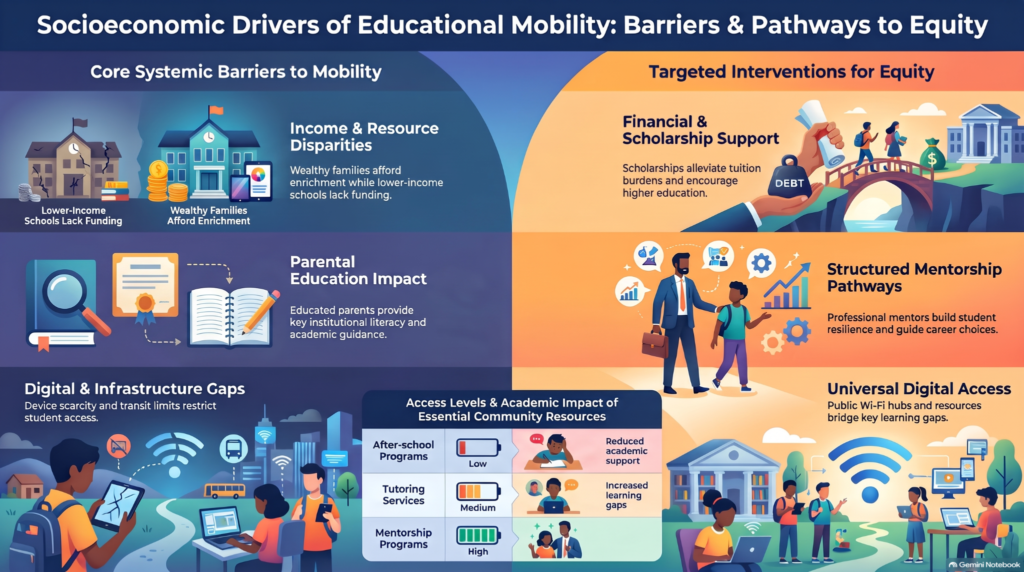
Educational mobility is greatly influenced by socioeconomic factors, impacting access to resources and academic opportunities. Higher-income families can invest in superior schooling and extracurriculars, while lower-income families face barriers that hinder educational attainment. Parental education also plays an essential role, as educated parents provide better support and resources for their children. Community resources and support systems further shape educational outcomes. Understanding these interconnections reveals deeper insights into achieving equitable educational environments and addressing systemic challenges.
KEY TAKEAWAYS
- Educational mobility is hindered by socioeconomic status, creating disparities in access to quality education and resources among different income levels.
- Higher-income families can invest in better educational opportunities, while lower-income families face limitations that impact their academic achievement.
- Community resources play a crucial role in educational access, with wealthier communities providing more support and funding for schools.
- Parental education levels significantly influence student success, as educated parents tend to provide more resources and support for their children’s education.
- Strategies like scholarships, mentorship programs, and policy reforms are essential to addressing barriers and enhancing educational mobility for low-income students.
WHAT IS EDUCATIONAL MOBILITY?
Intergenerational educational mobility (IEM), an indicator depicting the influence of parental education on their children’s education, is widely recognized for its fundamental association with educational opportunity, significant impact on the acquisition of status, and structural reflection of social fairness (Corak, 2013). Higher IEM implies lower intergenerational educational association or persistence, suggesting a more equitable educational environment that enables individuals to transcend their family background. Conversely, lower IEM corresponds to higher educational persistence, where parental education strongly predicts children’s educational attainment. This indicates a more rigid educational structure in which socioeconomic advantages or disadvantages are transmitted across generations, limiting opportunities for upward mobility and perpetuating inequalities.
While educational mobility generally refers to the ability of individuals to change their educational status, it encompasses a broader spectrum of factors that influence access to and success within educational systems.
Educational mobility is fundamentally linked to educational attainment, which serves as a critical indicator of an individual’s qualifications and skills. It reflects the opportunities available for individuals to navigate various academic pathways, ranging from vocational training to higher education.
Factors such as geographical location, institutional resources, and community support play pivotal roles in shaping one’s educational journey. The interplay of these elements can either facilitate or hinder an individual’s progress.
Consequently, understanding educational mobility requires an analysis of the systemic barriers and enablers that impact access to quality education. By addressing these factors, stakeholders can foster a more equitable educational environment that empowers individuals to achieve their full potential, thereby enhancing overall societal well-being.
How Does Socioeconomic Status Shape Academic Opportunities?
Socioeconomic status (SES) encompasses not just income but also educational attainment, financial security, and subjective perceptions of social status and social class. Socioeconomic status can encompass quality of life attributes as well as the opportunities and privileges afforded to people within society. Poverty, specifically, is not a single factor but rather is characterized by multiple physical and psychosocial stressors. Further, SES is a consistent and reliable predictor of a vast array of outcomes across the life span, including physical and psychological health. Thus, SES is relevant to all realms of behavioral and social science, including research, practice, education and advocacy.
Socioeconomic status considerably influences academic opportunities by creating disparities in income that affect access to educational resources.
Families with higher income levels are often able to invest in better schooling options, extracurricular activities, and tutoring, which enhances their children’s educational experiences.
Conversely, lower-income families may struggle to provide similar support, resulting in a lack of community resources that can hinder academic achievement.
Income Disparities Impact Access
Access to academic opportunities is profoundly influenced by income disparities, which create a layered complexity in the educational landscape. Income inequality often leads to significant differences in educational attainment, impacting students’ futures.
Key factors include:
- Funding Discrepancies: Schools in affluent areas receive more financial support, allowing for better resources and facilities.
- Extracurricular Opportunities: Families with higher incomes can afford tutoring and extracurricular programs that enhance learning and college readiness.
- Social Capital: Wealthier families often possess networks that provide information and access to prestigious educational institutions.
These elements illustrate how socioeconomic status can dictate the quality and variety of educational experiences available, ultimately shaping academic outcomes and long-term success for students from varying income backgrounds. Examining urban vs rural education outcomes also highlights how differences in community wealth, school funding, and access to extracurricular opportunities can influence students’ academic experiences and long-term educational success.
Community Resources and Support
Income disparities not only affect funding and opportunities directly tied to schools but also shape the community resources and support systems available to students. Effective resource allocation often hinges on socioeconomic status, influencing community engagement initiatives and access to essential programs. Students from lower socioeconomic backgrounds frequently encounter barriers due to limited support networks, thereby impacting academic success.
| Community Resource | Access Level | Impact on Students |
| After-school programs | Low | Reduced academic support |
| Tutoring services | Medium | Increased learning gaps |
| Parental involvement | Low | Lower motivation |
| Extracurricular activities | Medium | Limited skill development |
| Mentorship programs | High | Enhanced personal growth |
Understanding these dynamics is vital for fostering equitable educational opportunities.
How Does Parental Education Affect Student Success?
The context where a young person lives has a significant impact on their ability to succeed academically and to achieve financial stability and professional success in adulthood. Decades of international and Canadian research demonstrate that youth in low-income communities face specific socioeconomic barriers that impact their chances of graduating from high school and pursuing post-secondary opportunities in education, training, and meaningful employment.
Research indicates a significant correlation between parental education levels and student academic performance, suggesting that higher parental education often leads to better outcomes for students.
This relationship can be attributed to increased motivation and the establishment of robust support systems within the home environment.
Consequently, understanding the impact of parental education is essential for addressing educational disparities and promoting student success.
Academic Performance Correlation
While various factors contribute to student success, parental education emerges as a significant predictor of academic performance. Research indicates that the educational background of parents directly influences their children’s academic achievement and student engagement in school activities.
This relationship can be attributed to several key factors:
- Resource Availability: Educated parents are more likely to provide educational resources, such as books and tutoring.
- Expectations and Support: Higher parental education levels often correlate with increased expectations for academic success and active involvement in their children’s education.
- Skill Development: Parents with higher education levels typically foster critical thinking and problem-solving skills, enhancing their child’s learning.
Thus, parental education plays an essential role in shaping the academic outcomes and engagement levels of students in modern educational contexts.

MOTIVATION AND SUPPORT SYSTEMS
When we examine why parental education and household wealth so heavily dictate student performance, the academic literature often discusses “motivation” and “support structures” in broad, detached terms. In the field, however, these dynamics manifest in very subtle, persistent ways. A student who comes from a multi-generational college-educated family inherits an invisible institutional literacy: their parents know which secondary coursework matters, how to advocate for gifted program placement, how to prepare for competitive entrance requirements, and how to navigate career networks.
By contrast, during field visits with first-generation learners and their parents, I have routinely witnessed extraordinary dedication matched by profound institutional alienation. A parent may work multiple shifts and care deeply about their child’s academic future, yet they are unfamiliar with higher education prerequisites, complex financial aid applications, or the culture of academic gatekeeping.
Even when we deliver modern pedagogical methods, project-based curricula, or digital devices, we must acknowledge that a child’s capacity to benefit from these tools is filtered through their home stability, transportation access, and community infrastructure. Without addressing the fundamental absence of community-level support services—such as localized mentoring, transparent guidance counseling, and wraparound community aid—we place the full, unfair burden of navigating broken, stratified systems squarely on the shoulders of vulnerable young learners.
Parental education considerably shapes the motivation and support systems available to students, influencing their academic success.
Research indicates that parents with higher educational attainment often employ effective motivation techniques, such as goal-setting and positive reinforcement, which cultivate a growth mindset in their children. These parents are also more likely to establish robust support networks, connecting their children to resources, mentors, and extracurricular opportunities that enhance learning.
Conversely, lower levels of parental education may limit both the strategies used to motivate children and the development of strong support systems, potentially hindering academic achievement.
Consequently, the educational background of parents plays a critical role in shaping the motivational landscape and the support structures that ultimately affect students’ educational outcomes.
How Community Resources Influence Educational Mobility
How do community resources shape the educational trajectories of individuals within various socioeconomic contexts? The influence of community resources is significant, as they often dictate the level of educational mobility achievable by individuals.
Effective resource allocation in communities can enhance educational outcomes and foster greater community engagement. Key elements include:
- Access to Quality Educational Programs: Communities with well-funded schools and access to extracurricular activities provide better learning environments.
- Parental Involvement Opportunities: Programs that encourage parents to engage in their children’s education can lead to improved academic performance.
- Support Services Availability: Access to tutoring, mentoring, and counseling services can help bridge educational gaps for disadvantaged students.
Overcoming Barriers to Educational Mobility for Low-Income Families
Community resources play an essential role in shaping educational opportunities, yet low-income families often face considerable barriers that hinder their educational mobility. Financial constraints frequently limit access to quality educational resources, such as tutoring and extracurricular activities. Addressing low-income students academic challenges requires more than financial assistance, as schools must also provide accessible learning resources, academic guidance, and support programs that help students overcome barriers to educational success.
To overcome these barriers, scholarship opportunities serve as a critical avenue for enabling low-income students to pursue higher education without the burden of financial strain. Additionally, mentorship programs can provide invaluable guidance and support, connecting students with professionals who can help navigate academic and career pathways.
Research indicates that mentorship considerably enhances educational outcomes, fostering resilience and motivation among students from disadvantaged backgrounds. By addressing the dual challenges of financial limitations and lack of guidance, targeted initiatives can considerably improve educational mobility for low-income families.
Ultimately, the combination of scholarships and mentorship not only empowers individuals but also contributes to community-wide socioeconomic advancement.
Ways to Improve Educational Access and Equity
Although numerous factors contribute to disparities in educational access and equity, targeted interventions can greatly mitigate these issues. Educators can also explore the engineering teacher shop for practical teaching materials and classroom resources that support effective instruction, strengthen student engagement, and help improve access to quality learning opportunities. To effectively enhance educational opportunities for underrepresented communities, a multi-faceted approach is necessary.
Key strategies include:
- Community partnerships: Collaborations between schools, local organizations, and businesses can facilitate resource sharing and support for disadvantaged students.
- Digital access: Expanding internet access and providing technology resources guarantees that all students can engage with online learning platforms.
- Mentorship initiatives: Connecting students with mentors can provide guidance, encouragement, and insights into steering educational pathways.
Additionally, implementing policy reforms that promote inclusive curricula and equitable funding for early childhood education is vital.
Transportation solutions can help students reach schools, while afterschool programs and financial literacy education offer further support to families.
Future Trends in Educational Mobility Affecting Socioeconomic Status
Emerging trends in educational mobility are poised to considerably impact socioeconomic status across various demographics.
The rise of digital learning platforms has democratized access to quality educational resources, allowing students from diverse backgrounds to engage with advanced curricula. This shift is expected to enhance educational attainment, particularly for those in underserved communities.
Additionally, ongoing policy reforms aimed at supporting equitable funding and resources for educational institutions will likely sustain this momentum. These reforms can address systemic barriers that have historically limited access to higher education, thereby promoting upward mobility.
Research indicates that as more individuals attain higher education degrees, there will be a corresponding increase in economic opportunities and stability.
Ultimately, the interplay between digital learning advancements and strategic policy changes could lead to a more equitable educational landscape, fostering greater socioeconomic mobility and reducing disparities across populations.

RELATED STUDIES ABOUT EDUCATIONAL MOBILITY AND SOCIOECONOMIC FACTORS
In summary, educational mobility serves as a vital indicator of societal equity, akin to a rising tide that lifts all boats. The interplay between socioeconomic factors and educational opportunities reveals significant disparities that can hinder progress for low-income families. Addressing these issues through targeted interventions is essential for fostering an inclusive environment where all students can thrive. As educational policies evolve, understanding these dynamics will be important for creating a more equitable landscape in modern education.
Socioeconomic mobility and the prevalence and incidence of difficulties in daily living in US Hispanic/Latino adults
Research Rationale and Conceptual Framework
- Disability Burden Among US Hispanic/Latino Adults: Up to 27% of US adults experience some type of disability, with disproportionately elevated rates among Hispanic/Latino populations, particularly in middle and older age (reaching 50.5% among adults aged 65 and older). Functional impairments—limitations in sensory, cognitive, mobility, and independent living tasks—compromise quality of life and healthy aging.
- Limitations of Static Socioeconomic Measures: Socioeconomic status (SES) is an established determinant of health; however, traditional investigations rely heavily on cross-sectional, adult-only metrics that fail to capture the cumulative impacts of economic adversity over time.
- Life Course Epidemiology Lens: Grounded in life course theory (specifically the accumulation-of-risk and mobility frameworks), healthy aging is shaped by the timing, duration, and trajectory of socioeconomic position (SEP) across the lifespan. Evaluating transitions across childhood and adulthood SEPs clarifies whether adult socioeconomic gains can mitigate early-life disadvantage or whether socioeconomic decline triggers distinct functional risks.
- Core Research Objectives:
- Measure the prevalence and 6-year incidence of overall and domain-specific difficulties in daily living in a diverse cohort of US Hispanic/Latino adults.
- Characterize the relationship between life course socioeconomic mobility trajectories (enduring adversity, downward mobility, upward mobility, and enduring advantage) and functional difficulties.
- Evaluate heterogeneity across distinct Hispanic/Latino heritage backgrounds and identify concurrent behavioral and clinical risk factors.
Methodology and Cohort Architecture
- Study Cohort and Design:
- Utilized longitudinal data from the Hispanic Community Health Study/Study of Latinos (HCHS/SOL), a probability-sampled multicenter cohort across four US urban centers: the Bronx (NY), Chicago (IL), Miami (FL), and San Diego (CA).
- Cross-Sectional Analytic Sample (Visit 2, 2014–2017): 11,446 participants aged 23 to 95 years who completed the Participant Disability Screening Form.
- Prospective Incidence Analytic Sample (Visit 3, 2020–2024): 5,568 participants who were completely free of functional difficulties at Visit 2 and completed clinical follow-up at Visit 3 (average follow-up = 6.4 ± 0.7 years; median = 6.3 years).
- Operationalizing Socioeconomic Mobility:
- Childhood SEP: Highest parental education reported at baseline (low = less than high school; high = high school diploma or greater).
- Adulthood SEP: A 5-point composite index (score 0–5) derived from five binary indicators: participant education ( high school), household annual income ( $30,000), homeownership, current employment/retirement, and lifetime primary occupation (skilled/professional vs. non-skilled/service labor). Dichotomized into low (0–1) and high (2–5) adult SEP.
- Four Mobility Trajectories:
- Enduring Adversity: Low childhood SEP Low adulthood SEP (16% of cohort).
- Downward Mobility: High childhood SEP Low adulthood SEP (11% of cohort).
- Upward Mobility: Low childhood SEP High adulthood SEP (32% of cohort).
- Enduring Advantage (Reference Group): High childhood SEP High adulthood SEP (41% of cohort).
- Measuring Difficulties in Daily Living:
- Derived from the validated 8-item screening battery aligned with the CDC Behavioral Risk Factor Surveillance System (BRFSS) and the American Community Survey (ACS).
- Evaluated across four functional domains: sensory (vision/hearing), cognitive (concentrating, remembering, decision-making), mobility (walking or climbing stairs), and independent living (dressing, bathing, running errands alone); overall difficulty was defined as having an impairment in any domain.
- Statistical Modeling Specifications:
- Handled missing covariates (10% parental education, 6% income) using Multiple Imputation by Chained Equations (MICE; 50 imputed datasets).
- Applied multivariable survey-weighted logistic regression for prevalent difficulties (reporting Adjusted Odds Ratios [OR] and 95% Confidence Intervals [CI]).
- Applied multivariable survey-weighted Poisson regression with robust standard errors and offset terms ([yearselapsed]) for incident difficulties (reporting Incidence Rate Ratios [IRR]).
- Fully adjusted models controlled for age, sex, heritage background, US nativity, field center, marital status, health insurance, smoking, alcohol consumption, physical activity, diet quality (AHEI-2010), depressive symptoms (CES-D-10), and major comorbidities (hypertension, diabetes, cardiovascular disease, class III obesity [BMI40], chronic kidney disease, low lung function, and peripheral artery disease).
Key Empirical Findings
- Prevalence and Burden of Functional Difficulties (Visit 2):
- Overall Burden: 31% of the cohort (n=4,008) reported at least one difficulty in daily living.
- Domain Specifics: Mobility was the most prevalent limitation (21%), followed by sensory (14%), cognitive (9%), and independent living deficits (7%).
- Demographic and Socioeconomic Gradients: Difficulties were more common among females (34% vs. 27% in males) and older adults (59% in ages 65–95 vs. 17% in ages 23–44). Rates were higher among individuals with household incomes under $30,000 (41% vs. 19%), those with less than high school education (43% vs. 24%), and the retired (60%).
- Heritage Background Variations: Wide disparities emerged across heritage groups: Puerto Rican adults exhibited the highest prevalence of overall difficulties (49%; 38% mobility, 23% sensory, 16% cognitive), followed by Dominican adults (38%), with lower prevalence observed among Mexican (23%) and South American participants (27%).
- Multivariable Cross-Sectional Associations:
- Compared to the enduring advantage group, individuals facing lifelong disadvantage exhibited the steepest functional risk: Enduring Adversity was associated with 75% higher odds of overall difficulties in daily living (OR=1.75, 95% CI: 1.40–2.18).
- Downward Mobility was associated with 40% higher odds of overall difficulties (OR=1.40, 95% CI: 1.07–1.84).
- Subgroup Heterogeneity (pinteraction=0.052):
- For Cuban (OR=2.48, 95% CI: 1.53–4.03) and Puerto Rican adults (OR=2.18, 95% CI: 1.23–3.84), downward socioeconomic mobility had the strongest association with overall difficulties.
- For Mexican adults, enduring adversity drove the highest risk (OR=1.93, 95% CI: 1.34–2.78).
- Six-Year Prospective Incidence of Difficulties (Visit 3):
- Among 5,568 adults initially free of impairments at Visit 2, 21% (n=1,476, weighted) developed a new difficulty in daily living over an average follow-up of 6.4 years.
- Downward Mobility as an Incident Risk: Individuals experiencing downward mobility had a 5% higher rate of developing overall incident difficulties compared to enduring advantage (IRR=1.05, 95% CI: 1.00–1.11), primarily driven by incident mobility impairment (IRR=1.05, 95% CI: 1.00–1.09).
- Cognitive Decline in Enduring Adversity: The enduring adversity group experienced a 4% higher rate of incident cognitive difficulties over the 6-year follow-up (IRR=1.04, 95% CI: 1.01–1.07).
- Modifiable Behavioral, Affective, and Clinical Predictors:
- Protective Lifestyle: Higher diet quality (AHEI-2010) was inversely associated with overall functional difficulties (OR=0.98, 95% CI: 0.97–0.996).
- Depression and Comorbidities: Elevated depressive symptoms (CES-D-10) were consistently associated with higher odds of prevalent difficulties (OR=1.09, 95% CI: 1.07–1.10) and faster incident onset across all domains. Strong clinical predictors of difficulty included class III obesity (OR=2.13, 95% CI: 1.61–2.81), peripheral artery disease (OR=2.32, 95% CI: 1.36–3.95), leg pain medication usage (OR=4.08, 95% CI: 2.93–5.70), diabetes (OR=1.26, 95% CI: 1.09–1.46), and hypertension (OR=1.27, 95% CI: 1.07–1.51).
Epidemiological and Sociological Interpretations
- Support for the Accumulation of Risk Model: The high odds of overall difficulties and incident cognitive impairment among the enduring adversity group support the life course accumulation-of-risk model. Decades of accumulated economic hardship, subpar educational opportunities, chronic stress, and hazardous physical labor exert wear-and-tear (allostatic load) on bodily systems, accelerating functional aging.
- The Unique Pathophysiological Toll of Downward Mobility: Downward mobility emerged as a risk factor for incident physical and mobility limitations. Transitioning from a childhood of relative advantage into adult economic precarity introduces acute psychological distress, status loss, and structural shocks (e.g., loss of stable employment or homeownership), which disrupt healthcare continuity and limit resources for managing early chronic conditions.
- The Lingering Cost of Upward Mobility: Individuals in the upward mobility group had higher odds of prevalent difficulties than those with enduring advantage. Known in sociological literature as the “cost of striving,” navigating upward mobility from impoverished origins can involve chronic psychological stress, systemic marginalization, and high exertion that can compromise physical health.
- Heterogeneity Across Latino Heritages: Marked differences between Puerto Rican/Cuban and Mexican cohorts highlight distinct migration histories, regional labor markets, and baseline chronic disease profiles. Higher disability rates among Puerto Rican adults align with documented disparities in asthma, cardiovascular risk, and poverty in the Northeast.
Public Health and Clinical Policy Implications
- Adopting Life Course Approaches to Disability Prevention: Clinical risk assessments must look beyond current income and education to consider early-life socioeconomic conditions and adult downward trajectories when screening middle-aged Hispanic/Latino adults for functional decline.
- Targeting Cardiometabolic and Mental Health Comorbidities: Because depression, class III obesity, and diabetes drive functional limitations, chronic disease management programs in community health centers must integrate behavioral health, nutrition support, and early physical therapy to prevent mobility limitations.
- Structural Upstream Interventions: Promoting healthy aging requires policies that address economic determinants across life phases: expanding educational equity and vocational pipelines for youth, enforcing workplace safety in physically demanding occupations, and establishing social safety nets to prevent downward mobility during economic downturns.
Study Limitations and Future Directions
- Proxy Measures of Early-Life SES: Childhood SEP relied on retrospectively self-reported parental education, which may introduce recall bias and omits direct measures of childhood household income or food insecurity.
- Self-Reported Functional Difficulties: Impairments were assessed via self-reported screening questionnaires rather than objective, performance-based functional testing (e.g., gait speed, grip strength).
- Urban Center Sampling: HCHS/SOL participants were sampled from four large metropolitan areas, limiting generalizability to Hispanic/Latino adults residing in rural or agricultural settings.
- Future Research: Longitudinal studies are needed to evaluate how specific structural barriers (e.g., state-level Medicaid expansion differences, built neighborhood environments) mediate the pathway between life course socioeconomic mobility, chronic disease progression, and late-life functional independence.
| REFERENCE: Wenyan Ma, Paola Filigrana, Robert C. Kaplan, Ryung S. Kim, Christina Cordero, Martha L. Daviglus, Linda C. Gallo, Pablo Martinez Amezcua, Kunihiro Matsushita, Amber Pirzada, Daniela Sotres-Alvarez, Jennifer A. Schrack, Carmen R. Isasi, Socioeconomic mobility and the prevalence and incidence of difficulties in daily living in US Hispanic/Latino adults, Annals of Epidemiology, Volume 122, 2026, 110238, ISSN 1047-2797, https://doi.org/10.1016/j.annepidem.2026.110238. (https://www.sciencedirect.com/science/article/pii/S104727972600236X) |
“You’ve made it if you can, not have to live to survive, but live to live”: Beliefs about socioeconomic success and mobility among youth and parents in public housing
Conceptual Framework and Research Rationale
- Inequality and the Developmental Significance of Mobility Beliefs: Income and wealth inequality in the United States have widened substantially since the 1980s, altering the landscape in which young people form aspirations. Adolescence and emerging adulthood (ages 12–24) represent a critical developmental stage characterized by expanding cognitive complexity, identity consolidation, and heightened sensitivity to socioeconomic status hierarchies. Beliefs about whether upward mobility is attainable heavily condition youth mental health, academic persistence, and behavioral choices.
- Gaps in Extant Mobility Literature: Prior research on social mobility has predominantly relied on quantitative paradigms using researcher-imposed metrics centered on income maximization, educational attainment, and occupational prestige. Furthermore, existing samples predominantly reflect middle- and upper-middle-class populations, leaving the perspectives of low-income families and public housing residents under-examined.
- Theoretical Grounding: Master Narratives and Cultural Scripts: Grounded in bioecological models and narrative identity theory (McLean & Syed), individuals construct personal meaning within broader macrosystem cultural scripts. In the United States, the dominant “master narrative” is the American Dream—which posits that socioeconomic success is universally accessible to anyone who exerts sufficient individual effort, regardless of starting background. Pushback occurs through “alternative narratives,” which emphasize non-monetary, communal, and relational markers of a well-lived life without necessarily rejecting traditional aspirations.
- Core Research Objectives:
- Examine how youth and parents living in public housing define success and “making it” in their own words.
- Identify the processes, facilitators, and structural obstacles participants describe as promoting or impeding upward mobility.
- Explore developmental variations in mobility beliefs across early, middle, and late adolescence.
Methodology and Qualitative Architecture
- Setting and Study Context:
- Embedded within Wave 1 of the Housing Opportunity and Mobility Experiment (HOME) Study, a mixed-methods investigation of residents in one of the oldest and largest public housing developments in New England (~1,000 households, ~2,000 residents), situated within an urban neighborhood undergoing rapid gentrification and redevelopment into a mixed-income community.
- Participant Cohort:
- In-depth, semi-structured qualitative interviews conducted between August 2023 and January 2024 with 57 participants: 25 youth and 32 parents.
- Youth Cohort: Ages 12 to 24 years (M=17.043.85 years; 44% female; 8 early adolescents [<15], 10 mid-adolescents [15–19], 7 emerging adults [20–24]).
- Parent Cohort: Ages 26 to 72 years (M=44.1611.23 years; 94% female).
- Racial/Ethnic Diversity: 39% Hispanic/Latino (44% parents, 32% youth), 19% Non-Hispanic Black (19% parents, 20% youth), 16% Non-Hispanic White (16% parents, 16% youth), 16% Non-Hispanic Asian (13% parents, 20% youth), and 11% multiracial (9% parents, 12% youth).
- Linguistic Diversity: All youth were interviewed in English; parents completed interviews in English (53%), Spanish (34%), or Cantonese/Mandarin (13%).
- Data Collection Protocol:
- Face-to-face interviews (average length: 55 minutes for parents, 44 minutes for youth) using open-ended questions targeting life goals, definitions of “making it,” perceived barriers, individual agency versus structural constraints, and neighborhood examples of mobility.
- Analytical Approach (Reflexive Thematic Analysis):
- Analyzed in NVivo 14 following Braun and Clarke’s six-phase Reflexive Thematic Analysis (RTA).
- Combined deductive coding (informed by master narrative and social class theory) with inductive coding (grounded in participant terminology such as “better future” and “live to live”). Coding pairs used consensus-based discussions and analytical memoing to resolve interpretations, supplemented by explicit researcher positionality and reflexivity audits.
Key Qualitative Findings
- Defining Success: Coexistence of Traditional and Alternative Narratives:
- Traditional Views of Success (Endorsed by 92% of youth and 81% of parents):
- Education: Viewed as the primary vehicle for upward mobility. Early adolescents focused on school grades, mid-adolescents prioritized broad college completion, and parents took pride in financing college access to ensure their children “got out of the projects”. In contrast, older youth (ages 20–24) exhibited tempered aspirations, often pursuing GEDs after facing systemic barriers. Unlike affluent cohorts who target elite universities, public housing families emphasized college completion generically as a protective floor against poverty.
- Careers, Money, and Financial Stability: While older youth recognized earnings as an indicator of societal status and younger youth focused on consumer goods (e.g., tech products), parents and older teens defined monetary success as financial peace and basic stability—having food on the table, paying bills without sacrificing essentials, and avoiding living paycheck to paycheck.
- Homeownership: Quintessential symbol of the American Dream. Youth used visceral imagery (suburban homes with porches, yards, and triangular roofs) to denote class elevation. Parents viewed homeownership primarily as an escape from the physical hazards, elevator breakdowns, and social disorder of public housing apartment complexes into safe, stable environments.
- Better Future (Intergenerational Mobility): Parents defined their personal success through their children’s advancement, desiring to spare their offspring the physical exhaustion of manual labor and low-wage service jobs.
- Alternative Views of Success (Endorsed by approximately 50% of participants):
- Career Satisfaction and Happiness: 46% of youth emphasized that “making it” meant personal fulfillment, autonomy, and psychological well-being rather than wealth—captured by the perspective of “not having to live to survive, but living to live”. Parents balanced this view with practical demands, seeking careers that offered happiness alongside dependable income.
- Moral Values and Prosocial Character: Nearly 25% of parents defined success as raising respectful, honorable, and community-minded children despite the negative environment of the housing projects, explicitly rejecting consumerism (e.g., luxury cars or mansions) in favor of living an honest life.
- Familial Relationships and Communal Ties: Success was framed through strong family bonds and collective well-being (“rising with your class” rather than “rising out of it”).
- Attributions for Mobility: Personal Agency vs. Structural Barriers:
- The Dominance of Personal Attributions (Endorsed by 58% of participants):
- The vast majority of youth and parents attributed mobility to individual effort, hard work, focus, and perseverance, closely mirroring the meritocratic American Dream.
- Parents frequently deployed redemptive personal narratives (e.g., overcoming immigration challenges, learning English, working multiple jobs).
- Participants identified self-doubt and lack of faith in oneself as the primary obstacle to mobility, maintaining that internal motivation could overcome environmental limitations.
- Recognition of Structural Impediments (Endorsed by ~33% of participants):
- Only about a third of participants acknowledged that systemic forces constrained mobility alongside individual effort.
- Financial Barriers: Severe college tuition debt, unaffordable housing, and the “benefits cliff”—where minor wage increases triggered immediate, punitive rent hikes or the loss of public assistance—discouraged incremental earnings.
- Neighborhood Context: Concentrated poverty, peer pressures toward substance use or delinquency, and the absence of centralized service hubs were cited as structural drags.
- Classist and Racialized Stigma: Exclusively raised by Hispanic, Black, and multiracial mothers (and unmentioned by White or Asian parents), who reported being marginalized by affluent neighbors and educators who stereotyped public housing children as delinquents who would “never amount to anything”.
Sociological, Psychological, and Developmental Interpretations
- System Justification as a Psychological Shield: The heavy reliance on individual effort and meritocracy among residents facing severe structural inequality aligns with system justification theory. Rather than reflecting naive optimism, attributing mobility to hard work allows marginalized youth and parents to maintain an internal locus of control, preserving personal agency and hope in the face of structural precarity.
- The “Live to Live” Shift in Adolescent Subjective Well-Being: Low-income youth’s emphasis on career satisfaction and happiness challenges the assumption that economically disadvantaged adolescents prioritize only material survival. Witnessing parental burnout in low-wage service jobs prompts youth to reframe success around work that provides emotional fulfillment without constant existential strain.
- Developmental Trajectory of Social Class Cognition: Understanding of social status evolves across adolescence: younger youth rely on visible material signifiers (gadgets, suburban house architecture), mid-adolescents center on higher education credentials, and emerging adults face structural barriers (debt, GED tracking) that force a recalibration of early aspirational optimism.
Policy, Programmatic, and Community Implications
- Rethinking Workforce Development Metrics (e.g., Jobs Plus): Public housing employment programs must move beyond tracking entry-level job placement or short-term earnings. Initiatives should account for participants’ desires for career satisfaction, long-term stability, and work aligned with communal values.
- Reforming the “Benefits Cliff” in Housing Policies: Housing authorities should implement graduated rent adjustment phase-outs and asset-building escrow accounts, ensuring that youth and parents entering the workforce are not penalized with immediate rent spikes that prevent household savings.
- Centralizing Resource Access: Municipalities must establish centralized community service navigators within housing developments to streamline access to food pantries, college financial aid, tax prep, and vocational programs, dismantling the fragmented word-of-mouth barriers reported by residents.
- Decoupling Mobility Programs from Deficit-Based Narratives: Interventions must validate communal, family-centered definitions of success rather than framing individual out-migration from public housing as the sole metric of achievement.
Study Limitations and Future Directions
- Geographic and Contextual Specificity: The study examined a single public housing development undergoing gentrification and mixed-income transformation in New England; findings may differ in non-gentrifying, rural, or disinvested public housing environments.
- Non-Dyadic Analytic Scope: Although 15 parent-child pairs were included, data were analyzed as separate cohorts rather than evaluating within-family transmission or dyadic belief congruence.
- Cross-Sectional Qualitative Snapshot: Interviews captured perceptions at a single baseline time point prior to physical redevelopment.
- Future Research: Longitudinal qualitative and dyadic studies should track how adolescents’ mobility beliefs shift across the transition into the workforce, particularly as they encounter real-world labor market constraints and physical relocation.
| REFERENCE: Lindsay Lanteri, Jane Leer, Gabriella Valencia, Rebekah Levine Coley, Samantha Teixeira, “You’ve made it if you can, not have to live to survive, but live to live”: Beliefs about socioeconomic success and mobility among youth and parents in public housing, Children and Youth Services Review, Volume 179, 2025, 108604, ISSN 0190-7409, https://doi.org/10.1016/j.childyouth.2025.108604. (https://www.sciencedirect.com/science/article/pii/S0190740925004876) |
Digital and socioeconomic inequalities in perceived mobility restrictions for activity participation: Captive users in Madrid
Conceptual Framework and Research Rationale
- The Transport Disruption of COVID-19 and Captive Transit Users: Pandemic-related mobility restrictions triggered profound shifts in global travel behaviors, causing severe ridership collapses on public transit while private automobile use surged. These disruptions disproportionately impacted “captive” public transit users—individuals whose travel choices are constrained by household vehicle allocation, economic hardship, licensing deficits, or an absence of viable alternatives.
- The Intersecting Digital Divide: While information and communication technologies (ICT) enabled remote alternatives (teleworking, e-learning, e-commerce) for higher-income professionals, digital alternatives remained inaccessible or fragmented for socially vulnerable populations due to device scarcity, high connectivity costs, or low digital literacy. In many cases, telework emerged not as high-status flexibility but as precarious, platform-mediated digital labor.
- Shift to Perceived Rather Than Observed Accessibility: Prior transport literature has overwhelmingly focused on objective, observed metrics (trip frequencies, ticket validations, vehicular volumes). However, subjective appraisals—how individuals perceive their own mobility restrictions and ability to participate in mandatory work and educational activities—are central to understanding lived transport exclusion.
- The Multidimensional Vulnerability Lens: Grounded in transport social exclusion frameworks (Lucas), individual constraint during crises is conceptualized across three interacting axes: exposure to transit disruption, sensitivity to socioeconomic and digital barriers, and household-level adaptive capacity.
- Core Research Objective: To examine how digital and socioeconomic constraints shaped the perception of mobility restrictions for participating in mandatory work and educational activities among captive transit users in the Madrid Metropolitan Region.
Methodology and Empirical Data Architecture
- Spatial Laboratory and Case Study Context:
- Conducted across the Madrid Region, Spain (6.75 million residents), an area marked by pronounced socio-spatial segregation.
- In the dense central core, active transport and transit account for up to 75% of daily trips. In contrast, the southern industrial belt and peripheral rings are characterized by lower transit coverage (11%–16% mode share), lower household incomes, long-distance commutes (>10 km) to central employment hubs, and acute transit captivity.
- Survey Protocol and Sampling:
- Utilized the E-MORES dataset collected by the Transport Research Centre (TRANSYT) between October and December 2022 across 16 stratified territorial zones.
- Data were gathered through a multimodal strategy: Computer-Assisted Telephone Interviewing (CATI) complemented by targeted online surveys and field interviews to capture hard-to-reach, digitally marginalized cohorts.
- Target Subsample: Filtered for strictly “captive” transit users (individuals who never used private motor vehicles and depended exclusively on public transit for mandatory work/school commutes), yielding 840 respondents.
- Data Rebalancing (SMOTE):
- To correct severe class imbalance in the ordered outcome variable, the Synthetic Minority Over-sampling Technique (SMOTE) was applied.
- Two-sample Z-tests for proportions across the 16 geographic zones verified that the synthetic data accurately preserved the underlying demographic structure and spatial distribution. In the adjusted sample, 69.3% lived in zero-car households, 66.8% reported having no modal alternative, and 28.3% earned <€1,000 monthly.
- Principal Component Analysis (PCA):
- Applied to 11 standardized socioeconomic, ICT, and mobility variables with varimax rotation to eliminate multicollinearity (KMO>0.6; Bartlett’s test p<0.05).
- Extracted 10 orthogonal principal components explaining 83.76% of total cumulative variance:
- PC1: Remote Work Adaptability (28.4% variance; telework frequency loading 0.874, income 0.367).
- PC2: Socioeconomic Status and Digital Divide of Workers (13.0% variance; income –0.639, telework 0.455).
- PC3: Digital Exclusion and Educational Constraints (10.51% variance; sufficient devices –0.938, education –0.201).
- PC4: Social Contact and Economic Insecurity (6.62% variance; social activity reduction –0.917, income –0.251).
- PC5: Household Structure and Work Intensity (6.06% variance; working-age adults 0.837, education –0.325).
- PC6: Educational Disadvantages and Financial Burdens (5.24% variance; education –0.808, working-age adults –0.322).
- PC7: Commute Burden and Economic Impact Perceptions (4.51% variance; trip duration 0.712, financial impact –0.499).
- PC8: Workforce Commuting Patterns and Financial Resilience (3.85% variance; financial impact 0.769, trip duration 0.467, COVID infections –0.310).
- PC9: Financial Support Reliance and Income Uncertainty (3.07% variance; financial aid application 0.782, income 0.362).
- PC10: Private Mobility Access and Health Exposure Risks (2.50% variance; cars in household 0.615, COVID infections 0.516, income –0.326).
- Ordinal Logistic Regression:
- Modeled the 5-point ordered categorical outcome: Perceived Mobility Restrictions for Activity Participation (1 = No restrictions, 2 = Minor restrictions, 3 = Moderate restrictions, 4 = Major restrictions, 5 = Complete restrictions/exclusion).
- Model diagnostics confirmed strong fit: Likelihood Ratio Test 2=1,086.5 (p<0.001), Nagelkerke Pseudo-R2=0.1461.
Key Empirical Findings
- The Protective Mechanism of Remote Work Adaptability:
- PC1 (Remote Work Adaptability) was strongly and negatively associated with perceived restrictions (=-0.400,SE=0.019,p<0.001).
- Individuals in professional, knowledge-intensive sectors who transitioned smoothly to teleworking avoided public transit crowding, frequency cuts, and infection anxieties, thereby reporting significantly fewer barriers to daily participation.
- Precarious Digital Labor and Compounded Vulnerability:
- In contrast to PC1, PC2 (Socioeconomic Status Divide of Digital Workers) showed a positive association with perceived mobility restrictions (=+0.400,SE=0.027,p<0.001).
- Low-income captive commuters who engaged in digital or remote work (e.g., informal, gig-economy, or precarious service tasks) reported heightened mobility difficulty. Digital connectivity in the absence of employment security or living stability did not protect against travel disruption.
- The Paradox of Digital Exclusion and Habitual Resignation:
- PC3 (Digital Exclusion and Educational Constraints) exhibited a significant negative coefficient (=-0.547,SE=0.031,p<0.001).
- This counterintuitive finding indicates that individuals lacking technological devices and possessing lower education reported fewer perceived mobility restrictions. Rather than indicating an absence of barriers, this reflects a “resignation/withdrawal effect”: highly excluded individuals in peripheral municipalities adjusted their expectations downward or withdrew from activity participation entirely, leading them to report fewer active mobility frustrations.
- Commuting Burdens vs. Financial Resilience:
- PC7 (Commute Burden and Economic Perceptions) was positively associated with perceived restrictions (=+0.087,SE=0.044,p<0.05). Captive riders facing long travel times (>60 minutes) combined with financial precarity were acutely vulnerable to service cuts and timetable reductions.
- PC8 (Workforce Commuting and Financial Resilience) was also positively associated with perceived restrictions (=+0.150,SE=0.049,p<0.01). Stable suburban commuters making long journeys into the urban core felt substantial disruption to their established routines.
- Buffering Mechanisms: Household Solidarity and Vehicle Assets:
- PC5 (Household Structure and Work Intensity) was negatively associated with restrictions (=-0.364,SE=0.040,p<0.001). Larger households with multiple working-age adults deployed informal carpooling, trip-chaining, and cooperative task-sharing, buffering members from transit disruptions.
- PC9 (Financial Support Reliance) was negatively linked to restrictions (=-0.684,SE=0.056,p<0.001), reflecting structural labor detachment or normalization of pre-existing disadvantages.
- PC10 (Private Mobility Access) was negatively associated with perceived restrictions (=-0.445,SE=0.060,p<0.001). Merely having a car present in the household—even among captive users who did not drive it daily—offered a psychological safety net and emergency fallback, reducing perceived constraints.
Sociological, Spatial, and Systemic Interpretations
- Transport Poverty as an Intersectional Condition: The findings confirm that transit captivity cannot be evaluated in isolation from digital exclusion, labor precarity, and spatial segregation. Severe mobility restrictions are concentrated where physical transit dependency intersects with a lack of remote work options and low digital access.
- The Normalization of Disadvantage in the Urban Periphery: The negative associations of digital exclusion (PC3), low education (PC6), and financial aid reliance (PC9) with perceived restrictions demonstrate that perceived accessibility is filtered by expectations. In chronic poverty pockets (e.g., Parla, Villaverde, southern peripheral rings), transit delays and lack of remote options are normalized parts of everyday life, leading residents to underreport subjective barriers compared to more affluent cohorts.
- The Household as an Informal Shock Absorber: When public transport infrastructure contracts during crises, the household functions as the primary unit of spatial resilience. Cooperative chore distribution, informal car-sharing, and caregiving adjustments within extended families provide adaptive buffers that formal transport models overlook.
Policy Recommendations and Planning Implications
- Integrate Digital Accessibility into Transport Equity Frameworks:
- Transportation planning must evaluate digital access as a core accessibility determinant. Municipalities should invest in public high-speed Wi-Fi, community digital learning hubs, and subsidized hardware in low-income neighborhoods to ensure that digital alternatives to physical travel are equitably distributed.
- Prioritize Suburban and Peripheral Transit Service:
- Public transport authorities must avoid cutting service frequencies on peripheral and cross-suburban routes during emergencies, as low-income captive commuters cannot telework.
- Deploy flexible, demand-responsive transit (DRT) and microtransit feeders to connect isolated suburban housing estates with primary rail and bus corridors, reducing commuting burdens.
- Recognize and Leverage the Household in Transit Planning:
- Shift transportation policy from an individual-only focus to household-centered models. Implement pooled household transit passes, family mobility credits, and neighborhood-based car-sharing subsidies to support informal family carpooling and trip-chaining networks.
Study Limitations and Future Directions
- Cross-Sectional Retrospective Design: Data were gathered retrospectively in late 2022 regarding earlier pandemic phases, which introduces potential recall bias regarding the exact timing and intensity of perceived travel constraints.
- Synthetic Sampling Constraints (SMOTE): While SMOTE mitigated class imbalance, linear interpolation between minority cases can introduce class overlap and may smooth over unobserved, complex heterogeneity in hard-to-reach cohorts.
- Geographical Specificity: Findings reflect the radial transit network and housing configurations of the Madrid Metropolitan Region, which may not translate directly to polycentric or car-dominated metropolitan areas.
- Future Research: Longitudinal panel tracking combining objective GPS travel data, real-time mobile diary apps, and subjective accessibility surveys is needed to monitor how perceived transport equity evolves across post-pandemic recovery and ongoing transit decarbonization policies.
| REFERENCE: Segundo Paico-Saavedra, Alberto Rojas-Rivero, Raúl F. Elizondo-Candanedo, Aldo Arranz-López, Julio A. Soria-Lara, Digital and socioeconomic inequalities in perceived mobility restrictions for activity participation: Captive users in Madrid, Journal of Urban Mobility, Volume 8, 2025, 100142, ISSN 2667-0917, https://doi.org/10.1016/j.urbmob.2025.100142. (https://www.sciencedirect.com/science/article/pii/S2667091725000445) |
CONCLUSION
Looking at both the sociological evidence and the lived realities of learners around the globe, it is abundantly clear that incremental or superficial reforms will not resolve deep-seated educational inequities. We often celebrate the exceptional individuals who overcome staggering odds to attain high degrees and upward economic mobility, but treating individual resilience as an educational strategy is an abdication of systemic responsibility. When only a tiny fraction of underrepresented students manage to cross systemic hurdles, that is not evidence of an open educational system; it is proof of structural rationing.
Achieving genuine educational equity requires dismantling the institutional rigidities that tie a child’s academic ceiling to their parents’ postal code and income bracket. This means policy must move beyond measuring simple enrollment counts and actively fund holistic learning ecosystems: investing in equitable digital infrastructure, institutionalizing comprehensive school-to-work pipelines, and embedding robust social safety nets that insulate low-income households from economic disruption.
Educational mobility must not simply mean helping a fortunate few escape their environments. Rather, our policies and classroom practices must uplift entire communities, ensuring that every learner—regardless of their socioeconomic origin—has access to high-quality, practical, and transformative education that enriches both individual lives and broader society.
